

On February 20, 2026, Immigration, Refugees and Citizenship Canada (IRCC) conducted its fourth Express Entry draw of the week, issuing 4,000 Invitations to Apply (ITAs). This brings the total number of ITAs issued between February 16 and 20 to an impressive 10,670 across four separate draws. The latest round specifically targeted 37 healthcare and social services occupations, with a minimum Comprehensive Ranking System (CRS) score requirement of 467. Book Your Consultation for Canadian Immigration The rapid succession of draws highlights Canada’s intensified efforts to address urgent labour shortages—particularly in the healthcare sector. With four draws held in just five days, the February 16–20 period stands out as one of the most active weeks for Express Entry in recent memory. Express Entry Draw #398 Overview When multiple candidates have the minimum CRS score of 467, IRCC applies a tie-breaking rule based on profile submission time. For this draw, only candidates who submitted their Express Entry profile before December 9, 2025 at 18:22:06 UTC received an ITA if they had exactly 467 points. Candidates who submitted or updated their profiles after this timestamp remain in the pool for future draws. 10,670 ITAs Issued in One Week Between February 16 and 20, 2026, Canada issued a total of 10,670 ITAs across four different draws: Draw # Date Category ITAs CRS 398 Feb 20 Healthcare & Social Services 4,000 467 397 Feb 19 Physicians (Canadian Experience) 391 169 396 Feb 17 Canadian Experience Class 6,000 508 395 Feb 16 Provincial Nominee Program 279 789 This week’s draws reflect a broad and strategic selection approach. IRCC invited candidates through the Provincial Nominee Program (PNP), the Canadian Experience Class (CEC), a specialized physicians category with a notably low CRS score of 169, and a larger healthcare-focused category at 467. Such diversity enables candidates across different experience levels and CRS ranges to receive invitations. Reports of ITAs Issued to Ineligible Profiles To qualify under this healthcare-focused round, candidates needed more than just a CRS score of 467 or higher. Applicants were required to have at least 12 months of full-time work experience (or equivalent part-time) within the past three years in one of the 37 designated healthcare or social services occupations. This experience could be obtained in Canada or abroad and did not need to be continuous. However, it had to be in a single eligible occupation. There are reports that some candidates with only six months of experience in eligible occupations received ITAs. While IRCC’s category instructions clearly state that candidates must “meet all requirements in the instructions for that round,” and specifically require “at least one year of full-time work experience — or the equivalent in part-time work — in one of the targeted occupations,” the responsibility ultimately lies with the applicant. Candidates who do not meet the 12-month requirement but received an ITA should strongly consider declining it. Submitting an application without meeting eligibility criteria could result in refusal and potential consequences for future applications. 37 Eligible Occupations for This Healthcare Draw Candidates were eligible if they had qualifying experience in one of the following NOC 2021 occupations: TEER 1 (Professional Occupations) TEER 2 (Technical Occupations) TEER 3 (Support Occupations) Next Steps After Receiving an ITA Candidates invited in this round have 60 days to submit a complete permanent residence application through their IRCC online account. Failure to submit within the 60-day period will result in the ITA expiring, and the candidate must re-enter the Express Entry pool. Applicants must provide comprehensive documentation, including: Healthcare professionals should also review provincial licensing requirements, as these vary significantly by province and profession. Frequently Asked Questions What was the CRS cut-off for this draw?The minimum CRS score for the February 20, 2026 healthcare and social services draw was 467. How many ITAs were issued this week?A total of 10,670 ITAs were issued across four Express Entry draws between February 16 and 20, 2026. Is foreign work experience eligible?Yes. Qualifying healthcare or social services experience can be gained in Canada or abroad, provided it was accumulated within the past three years and totals at least 12 months full-time (or equivalent). When is the next Express Entry draw expected?While IRCC does not announce draw dates in advance, based on typical biweekly patterns, the next round may take place in early March.
Canada Conducts First Express Entry Draw Under New Category, Marking Lowest CRS Score Since 2021
Immigration, Refugees and Citizenship Canada (IRCC) has issued additional Invitations to Apply (ITAs) through the Express Entry system. In its latest round, IRCC invited 391 candidates under the newly introduced Physicians with Canadian work experience category. Book Your Consultation for Canadian Immigration To qualify for this draw, candidates were required to: Express Entry Draws in 2026 (So Far) Draw Date Draw Type CRS Cut-Off ITAs Issued February 19 Physicians with Canadian work experience 169 391 February 17 Canadian Experience Class 508 6,000 February 16 Provincial Nominee Program 789 279 February 6 French-language proficiency 400 8,500 February 3 Provincial Nominee Program 749 423 January 21 Canadian Experience Class 509 6,000 January 20 Provincial Nominee Program 746 681 January 7 Canadian Experience Class 511 8,000 January 5 Provincial Nominee Program 711 574 Key Highlights IRCC first announced the physician category in December 2025 as part of broader efforts to strengthen Canada’s healthcare workforce through both federal and provincial immigration pathways. Eligibility Requirements for the Physician Category To qualify under this category, candidates must: Draw Trends in 2026 So far in 2026, IRCC has primarily focused on candidates already in Canada—particularly those with provincial nominations or Canadian work experience. Number of Draws by Category Draw Type Number of Draws Provincial Nominee Program 4 Canadian Experience Class 3 French-language proficiency 1 Physicians with Canadian work experience 1 Total ITAs Issued in 2026 To date, IRCC has issued 30,848 ITAs across the following categories: Draw Type ITAs Issued Canadian Experience Class 20,000 French-language proficiency 8,500 Provincial Nominee Program 1,534 Physicians with Canadian work experience 391 This year’s selection patterns indicate a continued emphasis on in-Canada candidates and targeted category-based draws aligned with labour market priorities.
Latest Express Entry Draw on February 17 Issues 6,000 PR Invitations
On February 17, 2026, Immigration, Refugees and Citizenship Canada (IRCC) held a program-specific Express Entry draw under the Canadian Experience Class (CEC), issuing 6,000 Invitations to Apply (ITAs) to candidates with Canadian work experience. This latest round reflects IRCC’s continued emphasis on selecting skilled workers who have already demonstrated their ability to integrate into Canada’s labour market and society. The Comprehensive Ranking System (CRS) cut-off score was 508, highlighting the competitive nature of the CEC stream in 2026. Book Your Consultation for Canadian Immigration The Canadian Experience Class remains one of the most active categories within Express Entry, with multiple CEC-focused draws taking place throughout 2025 and continuing into 2026. February 17, 2026 – Express Entry Draw Overview Program: Canadian Experience Class (CEC)Date: February 17, 2026Invitations Issued: 6,000CRS Cut-Off Score: 508Minimum Rank Required: 6,000 or aboveTie-Breaking Rule: March 16, 2025 at 09:35:59 UTC When multiple candidates share the lowest CRS score in a draw, IRCC applies a tie-breaking rule. In this round, candidates with exactly 508 points were invited only if they had submitted their Express Entry profile before March 16, 2025 at 09:35:59 UTC. This timestamp determined the order of selection among those with identical scores. About the Canadian Experience Class The Canadian Experience Class is one of three federal economic immigration programs managed under Express Entry, alongside the Federal Skilled Worker Program (FSWP) and the Federal Skilled Trades Program (FSTP). CEC was designed to provide a pathway to permanent residence for skilled workers who have already gained qualifying Canadian work experience. IRCC prioritizes these applicants because they have proven their ability to integrate into Canadian society and contribute to the economy. CEC candidates are often well-positioned for success: The program is especially popular among international graduates who obtained work experience through Post-Graduation Work Permits (PGWP), as well as temporary foreign workers already employed in Canada. The CEC pathway recognizes the time, effort, and economic contribution these individuals have already made. CEC Draw Trends in 2026 In 2026, the Canadian Experience Class has emerged as one of IRCC’s preferred immigration pathways. The department has shown a consistent focus on candidates already living and working in Canada. Earlier in the year: These larger draw sizes indicate IRCC’s intent to reduce the Express Entry pool inventory while maintaining competitive CRS thresholds. The frequency and scale of CEC draws align with Canada’s broader immigration strategy, which aims to transition more temporary residents to permanent status. This approach supports controlled population growth while ensuring newcomers are well-integrated from the outset. Under the 2026–2028 Immigration Levels Plan, permanent resident admissions remain at 380,000 per year, with economic immigration forming the largest share. As a result, CEC draws are expected to continue at a steady pace throughout 2026. What to Do After Receiving an ITA Candidates invited in the February 17, 2026 draw have 60 calendar days to submit a complete electronic Application for Permanent Residence (e-APR). Missing this deadline will result in the cancellation of the invitation. A complete application must include: IRCC aims to process 80% of Express Entry applications within six months of receiving a complete submission. However, timelines may vary depending on application complexity, background checks, and overall processing volumes. Submitting accurate and consistent documentation is essential to avoid delays. Common Mistakes to Avoid in CEC Applications Many applicants face delays or refusals due to preventable errors. Key mistakes include: 1. Incorrect NOC AlignmentYour job title does not determine eligibility, your actual duties do. Ensure your reference letters match the lead statement and primary duties of your selected NOC code. 2. Claiming Ineligible Work ExperienceWork experience gained during full-time studies, through self-employment, or unpaid internships does not count toward CEC eligibility. Only qualifying paid work experience should be claimed. 3. Inconsistent DocumentationAll dates, job titles, and employment details must match across your Express Entry profile, reference letters, and tax documents. Discrepancies may trigger additional review or refusal. Careful preparation and document verification can significantly reduce processing issues. Looking Ahead The February 17, 2026 draw demonstrates IRCC’s continued commitment to selecting skilled workers who have already proven their value to the Canadian economy. With 6,000 ITAs issued at a CRS cut-off of 508, this round offered strong opportunities for candidates with Canadian work experience. For those currently in the Express Entry pool or considering applying, the Canadian Experience Class remains one of the most dependable pathways to permanent residence. Improving your CRS score through higher language results, additional Canadian work experience, or strategic planning can increase your chances in future draws. Candidates who received invitations should begin gathering documentation immediately. With a complete and accurate submission, successful applicants can generally expect a decision within approximately six months.
Third Express Entry Draw in February 2026 Issues 279 ITAs
Immigration, Refugees and Citizenship Canada (IRCC) conducted its third Express Entry draw of February 2026, issuing 279 Invitations to Apply (ITAs) for permanent residence. This round targeted candidates in the Express Entry pool who had already received a provincial nomination from a Canadian province. Book Your Consultation for Canadian Immigration The Comprehensive Ranking System (CRS) cutoff score was 789, representing a 40-point increase compared to the previous Provincial Nominee Program (PNP) draw held on February 3, 2026. Express Entry Draw Summary – February 16, 2026 The increase in CRS score is largely due to the smaller number of invitations issued. In comparison, the February 3 PNP draw invited 423 candidates, which resulted in a lower cutoff score of 749. Recent Express Entry Draws – February 2026 Date Round Type Invitations Issued CRS Score February 16, 2026 Provincial Nominee Program 279 789 February 6, 2026 French-language Proficiency (2026 Version 2) 8,500 400 February 3, 2026 Provincial Nominee Program 423 749 So far in February 2026, IRCC has issued 9,202 ITAs. Notably, a Canadian Experience Class (CEC) draw has not yet taken place this month. If IRCC conducts a CEC draw later this week, the CRS cutoff could rise above 511, given the current distribution of candidates in the pool. Latest CRS Score Distribution (As of February 15, 2026) Below is the CRS score distribution in the Express Entry pool, compared with the previous snapshot from February 2, 2026. CRS Score Range Feb 15, 2026 Feb 2, 2026 Change 601–1200 280 423 -143 501–600 16,559 14,911 +1,648 451–500 73,609 74,811 -1,202 491–500 13,504 13,586 -82 481–490 13,248 13,417 -169 471–480 16,531 16,617 -86 461–470 15,426 15,791 -365 451–460 14,900 15,400 -500 401–450 64,305 68,262 -3,957 441–450 14,142 14,700 -558 431–440 14,239 14,923 -684 421–430 12,425 13,267 -842 411–420 12,183 13,197 -1,014 401–410 11,316 12,175 -859 351–400 53,650 53,276 +374 301–350 19,009 18,949 +60 0–300 8,283 8,288 -5 Total 235,695 238,920 -3,225 The total number of candidates in the pool has decreased slightly, but there has been a notable increase in candidates scoring between 501–600, which may influence future cutoff scores. Expert Strategies to Secure a Provincial Nomination in 2026 A provincial nomination adds 600 CRS points, virtually guaranteeing an ITA. Below are the most effective strategies for 2026: 1. Apply to Multiple Provinces Avoid limiting yourself to a single province. Each province operates different PNP streams with unique eligibility criteria and occupation lists. Consider applying to multiple streams where eligible to maximize your chances. Provinces with active Express Entry-aligned streams include: 2. Indicate Provincial Interest in Your Express Entry Profile When creating or updating your Express Entry profile, indicate that you are open to being contacted by provinces. Some provinces actively search the pool and issue Notifications of Interest (NOIs) to qualified candidates. If you do not select this option, you may miss potential nomination opportunities. 3. Target In-Demand Occupations Each province maintains its own in-demand occupation list based on local labour shortages. If your occupation is targeted, your nomination chances increase significantly. For example: Check occupation lists regularly, as they frequently change. 4. Gain Work or Study Experience in Your Target Province Many PNP streams prioritize candidates already working or studying in the province. If possible, secure a work permit or study permit and gain local experience. This can open additional pathways not available to overseas applicants and substantially strengthen your application. 5. Improve Your Language Scores While Express Entry has minimum language requirements, many PNP streams require higher thresholds depending on the TEER category of your occupation. Achieving CLB 7 or higher in all language abilities significantly expands your eligibility options. If your current score is borderline, retaking your language test can make a meaningful difference. 6. Demonstrate Strong Intent to Settle Provinces nominate candidates who genuinely intend to live and work in their region. Clearly explain why you want to settle there. Highlight: Weak proof of settlement intent is a common reason for refusal. 7. Monitor PNP Openings Closely Some PNP streams operate on a first-come, first-served basis and can fill within hours. Set alerts and monitor provincial websites regularly. Apply immediately once eligible streams open. 8. Prepare Complete Documentation in Advance Incomplete or inconsistent documentation is a frequent cause of refusal. Ensure that the following are ready before applying: Having documents prepared allows you to apply quickly when opportunities arise. Final Thoughts The February 16, 2026 PNP draw highlights once again that provincial nominations remain one of the most reliable routes to securing permanent residence through Express Entry. The high CRS cutoff of 789 reflects the smaller number of ITAs issued—not a fundamental change in eligibility. If you are waiting for a Canadian Experience Class draw, keep your profile active and accurate. Use this time to: Most importantly, treat your provincial nomination strategy as an ongoing pipeline: track multiple provinces, stay prepared, and act quickly when opportunities arise. We will continue monitoring upcoming IRCC invitation rounds and provide timely updates as soon as a CEC or category-based draw is announced.

How Does IRCC Set the Cut-Off Scores for Express Entry Draws?
When conducting draws through Express Entry, the federal government does not set a cut-off score under the Comprehensive Ranking System (CRS) to determine which candidates are invited to apply for permanent residence. In reality, the process works the other way around. The government first decides how many candidates to invite in a particular draw. It then issues invitations to the highest-ranking candidates in the pool, and the cut-off score is simply the score of the lowest-ranked candidate who receives an invitation. Book Your Consultation for Canadian Immigration In other words, the cut-off score is determined by the composition of the Express Entry pool at the time of the draw, not by a predetermined decision. For example, imagine a basketball coach selecting five players for a team based on height. He chooses the five tallest players, and the shortest among them happens to be 6’2”. It would be correct to observe that all selected players are at least 6’2” tall—but the coach didn’t set a rule to pick players above 6’2”. He simply picked the tallest available. Similarly, Express Entry draws select candidates based on rank, not based on achieving a specific score. Thus, the cut-off score in an Express Entry draw is a result of selecting the top candidates, not the reason they were selected. Candidates are invited because they are the highest-scoring profiles, and the cut-off score merely reflects the score of the last profile chosen. If multiple candidates have the same score at the cut-off, a tie-breaking rule is applied, based on the date the profile was submitted. Candidates with scores at the cut-off who submitted their profiles before the tie-breaking date will receive invitations, while those who submitted later will not. Changes in cut-off scores can occur due to several factors: smaller or less frequent draw sizes, an increase in the number of high-scoring profiles entering the pool, or improvements in scores among existing candidates. Ultimately, the government decides how many invitations to issue and which candidates to invite. The cut-off score is simply a consequence of those decisions, not a cause.

Ontario Expands 2026 PR Quota: Which Workers Have the Best Chances?
The Ontario Immigrant Nominee Program OINP has officially received its 2026 nomination allocation from the federal government, marking a strong recovery from last year’s reductions. Ontario has been allocated 14,119 nominations for 2026, representing a 31 percent increase compared to the 10,750 spots the province received in 2025. Book Your Consultation for Canadian Immigration However, the significance of this year’s allocation goes beyond the higher number. Through its first draws of 2026 and proposed program reforms, Ontario has clearly signaled which occupations and worker profiles it intends to prioritize throughout the year. For temporary residents, international students, and immigration professionals advising clients, understanding Ontario’s 2026 strategy is essential to improving selection prospects. Why the 2026 Allocation Is Important Ontario’s 14,119 nominations represent a partial recovery from the sharp 50 percent reduction the province experienced in 2025. To provide context: In 2024, Ontario had 21,500 nomination spaces.In 2025, that number was reduced to 10,750.The 2026 allocation restores approximately 67 percent of Ontario’s 2024 capacity. Further increases may occur later in the year. This expansion aligns with Canada’s updated Immigration Levels Plan, which set a national target of 91,500 Provincial Nominee Program admissions in 2026. This is a 66 percent increase from the previous target of 55,000. As Canada’s most populous province, Ontario received a proportionally larger share of this expansion. However, a higher allocation does not necessarily mean easier access for all candidates. Ontario has made it clear that it will use these nominations strategically, focusing on sectors facing labour shortages rather than conducting broad general draws. Shift Away from Express Entry Streams Ontario’s direction became clear in 2025: No invitations were issued under the Express Entry streams such as Human Capital Priorities and French Speaking Skilled Worker.The Express Entry Skilled Trades stream was suspended in November 2025 due to compliance concerns. These developments strongly suggest that employer driven streams will dominate OINP selections in 2026. Who Is Most Likely to Benefit in 2026 Based on early 2026 draws and policy signals, several worker categories appear well positioned. Healthcare Professionals Healthcare workers received the majority of invitations in early 2026, confirming that staffing shortages in Ontario’s healthcare system remain the province’s top priority. Ontario is recruiting across the healthcare spectrum, from physicians to support staff, to address workforce gaps in hospitals, clinics, long term care homes, and community health facilities. Recent changes reinforce this commitment. As of January 2026, self employed physicians with a provisional CPSO registration and an OHIP billing number can now apply under the Employer Job Offer Foreign Worker stream. Ontario has also proposed a new Priority Healthcare Stream, which would allow regulated healthcare professionals to receive nominations without requiring a job offer. This stream has not launched yet. Healthcare occupations invited in early 2026 include: Physicians and SpecialistsNOC 31100 Specialists in clinical and laboratory medicineNOC 31101 Specialists in surgeryNOC 31102 General practitioners and family physicians Nursing ProfessionalsNOC 31300 Nursing coordinators and supervisorsNOC 31301 Registered nurses and registered psychiatric nursesNOC 31302 Nurse practitionersNOC 32101 Licensed practical nurses Allied Health and SupportNOC 31303 Physician assistants, midwives and allied health professionalsNOC 33102 Nurse aides and patient service associatesNOC 33103 Pharmacy technical assistants and pharmacy assistantsNOC 12111 Health information management occupations Early Childhood Educators Early childhood educators NOC 42202 were invited in multiple early 2026 draws, including healthcare focused and REDI pilot draws. This reflects Ontario’s urgent need for childcare workers. In July 2025, Ontario reduced education requirements for this occupation in the French Speaking Skilled Worker stream by removing the requirement for a Canadian bachelor’s degree. This change expanded eligibility for internationally trained educators. Temporary residents working in licensed childcare centres or early learning programs may see strong selection prospects throughout 2026. TEER 4 and 5 Essential Workers One of the most significant opportunities lies within the Employer Job Offer In Demand Skills stream, which targets TEER 4 and 5 occupations. These intermediate skilled roles are generally not eligible under federal Express Entry programs, making OINP one of the few viable permanent residence pathways for these workers. Early 2026 draws showed minimum scores as low as 34 in this stream, the lowest across OINP categories. Ontario’s proposed restructuring would consolidate employer streams and create a dedicated TEER 4 and 5 track. It may also expand eligibility for additional essential occupations and introduce a possible construction pathway for union supported workers without requiring a permanent full time job offer. TEER 4 and 5 occupations invited include: Available province wideNOC 44101 Home support workers and caregiversNOC 65202 Meat cutters and fishmongersNOC 75110 Construction trades helpers and labourers Available outside the Greater Toronto AreaNOC 75101 Material handlersNOC 84120 Specialized livestock workers and farm machinery operatorsNOC 94100 Machine operators mineral and metal processingNOC 94111 Plastics processing machine operatorsNOC 94140 Process control and machine operators food and beverage processingNOC 94202 Assemblers and inspectors electrical appliance manufacturingNOC 94203 Assemblers fabricators and inspectors industrial electrical motorsNOC 94204 Mechanical assemblers and inspectors For workers who do not qualify under Express Entry, this stream may represent the most realistic pathway to permanent residence. Tech Workers in Regional Areas While healthcare remains the primary focus, tech professionals working outside the Greater Toronto Area may benefit from the REDI pilot program. REDI draws in early 2026 featured lower score thresholds compared to province wide draws. Communities in Eastern, Northern, and Southwestern Ontario offer reduced competition compared to Toronto. Tech occupations invited under REDI include: NOC 21222 Information systems specialistsNOC 21231 Software engineers and designersNOC 22310 Electrical and electronics engineering technologists and techniciansNOC 52120 Graphic designers and illustrators Business and Social Service Occupations Ontario’s REDI pilot also targeted key support roles in regional communities, including: NOC 12200 Accounting technicians and bookkeepersNOC 13111 Legal administrative assistantsNOC 22232 Occupational health and safety specialistsNOC 42201 Social and community service workers Candidates in these fields may benefit from lower score thresholds in regional draws. Structural Changes Expected in 2026 Ontario has proposed major program reforms that may roll out in two phases. Phase 1 involves consolidating the three Employer Job Offer streams into a single

Latest Update on the 2026 Canada Working Holiday Visa Draw
Canada has officially opened the 2026 season of the International Experience Canada (IEC) program, and the pace is already accelerating. As of February 6, 2026, three major invitation waves have been issued under the Working Holiday Visa category, making this one of the fastest moving IEC starts in recent years. By early February, 24,728 Invitations to Apply (ITAs) had already been issued across participating countries and territories. This represents more than half of the total 2026 Working Holiday quota of 45,523. With 28,004 spots still technically available and 24,728 candidates currently in the pools, early data suggests that the 2026 IEC season will be highly competitive, particularly for traditionally oversubscribed countries. Book Your Consultation for Canadian Immigration Why the Working Holiday Category Moves First For young travellers and early career professionals, the Working Holiday work permit remains the most flexible and accessible pathway to work in Canada. Key advantages include: Because of this flexibility, Working Holiday pools typically see the highest demand and the earliest invitation activity. The first rounds are critical because they indicate how quickly quotas may shrink and which country pools are likely to clear early. Working Holiday Visa Draw Results as of February 6, 2026 The table below reflects country by country invitation activity and remaining quota levels for the Working Holiday category during the opening weeks of the 2026 IEC season. Why Some Countries Show “To Be Announced” During the IEC season opening phase, it is common for certain countries to display “to be announced” in invitation or quota columns. This usually means that the season is open, candidate pools are forming, but invitation rounds for that country have not yet started or are awaiting operational updates. From a candidate perspective, “to be announced” should be interpreted as open but not yet moving. Eligible candidates are generally advised to enter the pool early and ensure their profile is accurate, as invitations often arrive in clusters once rounds begin. What to Do Immediately If You Received an ITA An IEC Working Holiday ITA is time sensitive, and delays are a common reason candidates lose their opportunity. If you received an invitation, your immediate priorities should be: Receiving an ITA does not guarantee approval. Applications must be complete, truthful, and consistent across travel history, address history, and prior visa records. If You Are Still in the Pool Candidates who are still waiting should avoid a passive approach and instead focus on readiness. Recommended actions include: Prepared candidates are better positioned to submit quickly and correctly once invited. Understanding the Three IEC Pathways While many applicants focus exclusively on Working Holiday, early 2026 data highlights the importance of understanding all IEC options. Working Holiday Young Professionals International Co op (Internships) In 2026, candidates who can secure a valid job offer or internship may experience faster and more predictable outcomes outside the Working Holiday category. Young Professionals Draw Results as of February 6, 2026 Early Young Professionals activity shows meaningful movement in several countries, with some pools displaying low congestion and strong invitation potential. What the Young Professionals Numbers Reveal International Co op (Internships) Results as of February 6, 2026 The International Co op category continues to be underestimated despite offering favorable invitation ratios in many countries. Why International Co op Can Be a Strategic Advantage in 2026 International Co op requires structured internship placements, which limits eligibility but significantly reduces competition. Key trends include: For students and recent graduates who can secure compliant Canadian internships, International Co op may represent the most reliable IEC option in 2026. Common Reasons for IEC Refusals Even with high invitation numbers, refusals still occur, often due to avoidable errors: What the Early Data Suggests for the Rest of the 2026 IEC Season Based on first round activity, the 2026 IEC season is likely to unfold in stages. January to FebruaryHigh volume early invitations and the start of movement for countries previously marked as to be announced. March to MayTightening Working Holiday pools for oversubscribed countries, with steadier and more predictable movement in Young Professionals and International Co op categories. June onwardReduced availability in many pools, increased risk for late entrants, and greater reliance on alternative work permit strategies. Final Takeaway The first IEC draws of 2026 confirm that this will be a fast moving and competitive season. Timing and preparation are already playing a decisive role. Candidates should use early draw data as a planning tool by monitoring their country pool pressure, preparing documents in advance, and seriously evaluating non Working Holiday pathways where appropriate. In a year where timing may determine who arrives in Canada first, readiness remains the strongest advantage.
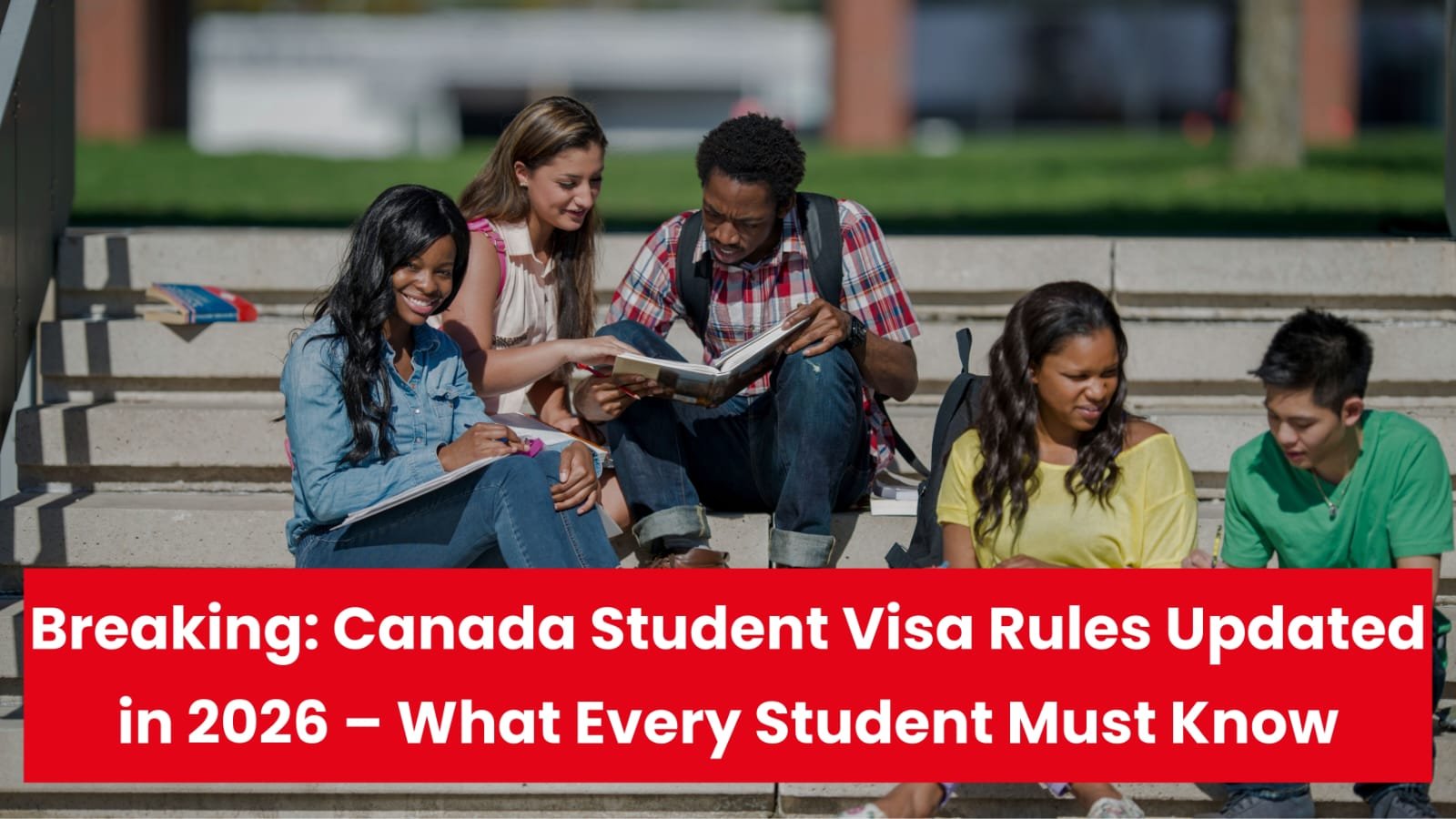
Breaking: Canada Student Visa Rules Updated in 2026 – What Every Student Must Know
The Canada Student Visa process is undergoing a major change in 2026 as Immigration, Refugees and Citizenship Canada (IRCC) introduces new rules for processing study permit applications. Announced on February 6, 2026, the updated instructions aim to simplify requirements related to Provincial and Territorial Attestation Letters (PALs/TALs) while continuing Canada’s efforts to control international student intake. Book Your Consultation for Canadian Immigration The latest update brings positive relief for students enrolled in joint programs, confirms long-awaited exemptions for master’s and doctoral students, and provides clearer guidance on who still needs a PAL/TAL. At the same time, the changes reflect Canada’s stricter approach to managing student numbers in 2026. Here is a step-by-step explanation of what the new Canada Student Visa rules mean for international students planning to study in Canada. What Are the New IRCC Instructions for Canada Student Visa Applications? Immigration, Refugees and Citizenship Canada (IRCC) has updated its official guidelines for visa officers on how to process Canada Student Visa and study permit applications that require Provincial Attestation Letters (PALs) or Territorial Attestation Letters (TALs). These updated IRCC study permit rules are part of Canada’s broader strategy to regulate international student admissions while easing pressure on housing, healthcare, and public services. The new IRCC instructions apply specifically to Canada Student Visa applications received in 2026, making it essential for international students to understand the revised PAL/TAL requirements before submitting their study permit applications. Major Relief for Joint Program Students Under Canada Student Visa Rules 2026 Only One PAL/TAL Required for Joint Programs – IRCC Confirms Under the new IRCC instructions for Canada Student Visa applications, international students enrolled in joint programs now need only one Provincial or Territorial Attestation Letter (PAL/TAL) to apply for a Canada study permit. This important study permit update 2026 simplifies the application process and reduces documentation requirements for students. Who Benefits From the Single PAL/TAL Rule? Earlier, students had to obtain separate PALs/TALs from each DLI and province, which often delayed Canada student visa processing. The revised rule brings clarity and ease for international students planning to study in Canada in 2026. What Was the Rule Earlier for Canada Study Visa Applicants? Earlier, international students enrolled in joint programs faced stricter Canada Study Visa requirements. Under the previous rules, students had to obtain: This made the Canada study visa application process complex, time-consuming, and confusing. The new IRCC update significantly simplifies the process for students applying for a Canada study visa in 2026. PAL/TAL Exemption for Master’s and PhD Students IRCC has officially implemented a previously announced exemption that benefits higher-education students applying for a Canada Study Visa. Who is exempt? • Master’s students • Doctoral (PhD) students • Studying at publicly funded DLIs These students do not need a PAL/TAL to apply for a Canada study permit. IRCC has also clarified that master’s and doctoral programs are considered the same level of study, removing confusion for Canada study visa applicants. Canada Study Visa Rules That Still Remain in Effect Despite the recent updates, several Canada Study Visa rules remain unchanged: • Students applying for restoration of status must submit a new PAL/TAL • Visiting students, including visiting graduate students, must provide a PAL/TAL • Students renewing a valid Canada study permit to change programs: Quebec Vocational Programs: More Clarity for Canada Study Visa Applicants IRCC has clarified which Quebec vocational programs qualify for a PAL/TAL exemption because they are considered secondary-level programs. Exempt programs include: • Diploma of Vocational Studies (DVS / DEP) • Attestation of Vocational Specialization (AVS / ASP) • Pre-Work Training Certificate (PWTC / CFPT) • Training Certificate for a Semiskilled Trade (TCST / CFMS) Important: Students studying at CEGEPs in Quebec still require a PAL/TAL Canada Study Visa Application Timeline: Who Do the New Rules Apply To? • Applications received in 2026 → processed under new IRCC rules • Applications submitted before January 1, 2026 → processed under old rules Since January 22, 2024, PAL/TAL has been mandatory for most postsecondary Canada study visa applications, unless exempt. What Happens If PAL/TAL Is Missing in a Canada Study Visa Application? If a Canada study visa application is submitted without the required PAL/TAL: • The application will not be accepted • It will be returned without processing • The application fee will be refunded Special Rule for Quebec Canada Study Visa Applicants Students planning to study in Quebec can meet the PAL/TAL requirement for a Canada study visa by submitting: • An attestation of issuance of a Quebec Acceptance Certificate (CAQ) • Issued by MIFI (Quebec Immigration Ministry) Why Did Canada Introduce These Canada Study Visa Restrictions? The Canadian federal government introduced a cap on Canada study visa applications to: • Reduce pressure on housing • Ease strain on social services • Manage the rapid increase in international students and post-graduation work permit holders Canada’s International Student Targets Canada has significantly tightened its study visa intake: • 2026 target: 155,000 new international students • 2025 target: 305,900 • January–November 2025: Canada admitted 105,870 new study permit holders This confirms a stricter approach to Canada study visa approvals. Conclusion The new IRCC Canada Study Visa rules for 2026 simplify requirements for joint program students, confirm PAL/TAL exemptions for master’s and PhD candidates, and clarify study permit rules across provinces. While Canada is reducing overall student intake, these updates provide greater transparency, efficiency, and fairness for genuine Canada study visa applicants. Frequently Asked Questions (FAQ) – Canada Study Visa What are the new Canada study visa rules for 2026? IRCC now allows joint program students to submit only one PAL/TAL and exempts master’s and PhD students studying at publicly funded DLIs. Do joint program students need multiple PALs/TALs for a Canada study visa? No. Under the new rules, only one PAL/TAL is required. Are master’s and PhD students exempt from PAL/TAL for Canada study visa? Yes, if they are studying at a publicly funded DLI. Do visiting students need PAL/TAL for a Canada study visa? Yes. Visiting students, including visiting graduate

Canada Holds Record-Breaking Category-Based Express Entry Draw
Immigration, Refugees and Citizenship Canada (IRCC) has issued additional Invitations to Apply (ITAs) through the Express Entry system. Book Your Consultation for Canadian Immigration In the latest draw, IRCC issued 8,500 ITAs to candidates with French-language proficiency. Eligibility Criteria To be considered in this draw, candidates were required to: Express Entry Draws in 2026 (So Far) Draw Date Draw Type CRS Cut-off ITAs Issued February 6 French-Language Proficiency 400 8,500 February 3 Provincial Nominee Program (PNP) 749 423 January 21 Canadian Experience Class (CEC) 509 6,000 January 20 Provincial Nominee Program (PNP) 746 681 January 7 Canadian Experience Class (CEC) 511 8,000 January 5 Provincial Nominee Program (PNP) 711 574 This draw marks the sixth Express Entry selection of 2026. Trends in 2026 Express Entry Draws So far in 2026, IRCC has focused primarily on candidates already in Canada, particularly those with: Number of Draws by Category in 2026 Draw Type Number of Draws Canadian Experience Class 2 Provincial Nominee Program 2 French-Language Proficiency 1 Total ITAs Issued in 2026 To date, IRCC has issued 24,178 ITAs across the following categories: Draw Type ITAs Issued Canadian Experience Class 14,000 French-Language Proficiency 8,500 Provincial Nominee Program 1,255

A Two-Year College Degree Can Lead to Canadian PR—Here’s How
A two-year college program in Canada can be a smart first step toward Canadian PR. Graduates may qualify for a three-year post-graduation work permit (PGWP), giving them enough time to gain Canadian work experience and strengthen their chances of permanent residency—especially when they plan ahead. When planning your journey to Canadian PR through a study-to-immigrate pathway, it’s important to think ahead. This includes meeting the requirements for a post-graduation work permit (PGWP), gaining eligibility for the Canadian Experience Class (CEC), improving your CRS score under Express Entry, qualifying for category-based draws, and exploring any other PR options linked to your program or province of study. Book Your Consultation for Canadian Immigration PGWP After Graduation: A Smart First Step Toward Canadian PR For many Indian and US students, studying in Canada is not just about education—it’s also about building a future. After graduation, the most important step toward Canadian PR is getting a Post-Graduation Work Permit (PGWP). The PGWP allows you to work legally in Canada and gain local job experience, which is a key requirement for most PR pathways. Why a Two-Year College Program Makes Sense If you complete a two-year college program in Canada, you may be eligible for a PGWP of up to three years. This gives you enough time to: For students coming from other country, this extra time is extremely valuable when planning long-term settlement. Choosing the Right Program Matters Not all programs lead to a PGWP. Your course should be linked to in-demand fields such as: As long as your program was approved when you applied for your study permit—or when you apply for your PGWP—you can stay eligible. Basic PGWP Rules You Should Know To qualify for a PGWP, you must: These rules are especially important for international students planning Canadian PR. How Long Can You Work in Canada? Why PGWP Is Crucial for Canadian PR The PGWP gives you real Canadian work experience, which helps you: For many Indian and US students, the PGWP is the bridge between studying in Canada and achieving Canadian PR. How Your PGWP Can Turn Into Canadian PR (With Real Student Examples) For most international students, Canadian PR doesn’t happen overnight. It’s built step by step—starting with a PGWP and turning Canadian work experience into a strong Express Entry profile. Below are realistic student scenarios that show how this works in real life. Student Example 1: Indian IT Graduate → Canadian PR Rohit, an IT diploma graduate from Ontario, completed a two-year college program and received a three-year PGWP. With strong English scores and Canadian work experience, Rohit received his PR invitation through Express Entry. Student Example 2: US Healthcare Student Using PGWP Smartly Emily, from the United States, studied a healthcare program at a Canadian college. Her Canadian education + work experience boosted her CRS score, helping her move closer to Canadian PR. Student Example 3: Business Graduate Who Started Early Aman, a business management student from India, planned his PR pathway before graduating. Carefully avoided ineligible work (self-employment or remote work outside Canada) By the end of his first PGWP year, Aman met CEC requirements and improved his CRS score enough to stay competitive for PR draws. What These Examples Teach New Students These real scenarios highlight a few key lessons: Express Entry Category-Based Selection: Boost Your Canadian PR Chances You can improve your chances of Canadian PR by qualifying for Express Entry category-based selection. These draws target in-demand jobs and strong French speakers and often require lower CRS scores. You may qualify if you have: Current categories include: Healthcare, STEM, Trades, Agriculture, Education, and Physicians. Why it matters: Choosing the right program or job during study or PGWP can fast-track your path to Canadian PR. Eligible candidates usually have at least 6 months of recent work experience in priority fields like Healthcare, STEM, Trades, Agriculture, Education, or Physician roles, or strong French language skills (NCLC 7). Why it matters: Planning your studies and PGWP job around these categories can significantly speed up your journey to Canadian Permanent Residency.