

In its third draw of 2025, Immigration, Refugees and Citizenship Canada (IRCC) issued more invitations to apply (ITAs) to candidates in the Express Entry pool. The department extended 4,000 ITAs to candidates under the Canadian Experience Class (CEC). To be eligible for an invitation, candidates needed a minimum Comprehensive Ranking System (CRS) score of 527 and had to submit their Express Entry profile before 7:06:43 am Coordinated Universal Time (UTC) on January 23, 2024. This draw follows a Provincial Nominee Program (PNP) draw on January 7 and a CEC draw on January 8. IRCC has announced its intention to continue drawing for these candidates, in line with the “In-Canada Focus” allocation outlined in the 2025-2027 Immigration Levels Plan. Under this allocation, Canada has dedicated 82,890 new immigrant landings in 2025. Summary of Express Entry Draws in 2025 Date Draw Type Number of ITAs Cut-off CRS Score January 23 Canadian Experience Class 4,000 527 January 8 Canadian Experience Class 1,350 542 January 7 Provincial Nominee Program 471 793 How Can I Increase My CRS Score? The Comprehensive Ranking System (CRS) assigns scores based on multiple factors, including: To increase your CRS score, consider the following steps: Note: Points vary depending on whether you have a spouse or common-law partner in your application. You can use the CRS calculator to estimate your score and potential changes. Book Your Consultation Now The Continued Importance of Express Entry Although experts expected Provincial Nominee Programs (PNPs) to surpass Express Entry in 2024, Express Entry-managed programs remain Canada’s leading pathways for economic immigration. The 2025-2027 Immigration Levels Plan sees an increase in the Express Entry allocation, rising from 110,770 landings in 2024 to 124,590 in 2025. Meanwhile, PNP landings allocations have been reduced from 110,000 in 2024 to 55,000 in 2025. These changes will likely impact the number of ITAs issued through both Express Entry and PNPs. As a result, Express Entry will likely play a more prominent role in Canada’s immigration system, making it a crucial route for skilled foreign workers seeking to immigrate to Canada in 2025. CIKH SEO
IRCC Announces New Study Permit Cap for Canada in 2025
The Canadian government has implemented a cap on study permit applications for 2025, limiting them to 505,162 for the year. This move is expected to have significant effects on international students, educational institutions, and Canada’s broader immigration strategy. Immigration, Refugees, and Citizenship Canada (IRCC) officially announced the cap through ministerial instructions on January 18, 2025, and the policy will be in effect from January 22 to December 31, 2025. The objective is to manage the growing influx of international students and address the challenges tied to temporary residency in Canada. Once the cap is reached, the government will stop processing further study permit applications. They will return any applications submitted after the cap limit without processing and refund the associated fees. Importantly, the cap applies to applications accepted for processing, not the number of study permits the government will approve in 2025. This article delves into the implications of this cap, including exemptions, processing targets, and the broader impact on Canada’s international student program. Why Has the Canadian Government Implemented the Cap? The decision to cap study permit applications is a response to the rapid growth of the international student population in Canada over the past decade. While international students contribute significantly to Canada’s economy and cultural diversity, their increasing numbers have also strained housing, infrastructure, and integration efforts. By capping study permit applications, the Canadian government seeks to: Who Is Exempt from the Study Permit Cap? Certain groups of applicants will be exempt from this cap, ensuring that those in special circumstances can still pursue their education in Canada. The following categories are not subject to the processing cap: These exemptions allow for flexibility while maintaining the cap, ensuring vulnerable or high-priority groups are not adversely affected. Book Your Consultation Now Processing vs. Approval: What’s the Difference? It’s important to distinguish between the number of applications processed and the number of study permits approved. The 505,162 cap applies to the total number of applications IRCC will process in 2025. However, this number does not directly correlate with the number of study permits that will ultimately be approved. Here’s how the process works: For example, in 2024, IRCC processed 606,250 study permit applications with an approval target of 364,000. In contrast, the government has significantly reduced the processing cap for 2025 to 505,162 applications. They have yet to disclose the specific approval target for the year. The 2025-2027 Immigration Levels Plan The government’s broader immigration strategy, detailed in the 2025-2027 Immigration Levels Plan, aims to balance the intake of international students with Canada’s infrastructure and economic capacity. According to the plan, Canada intends to welcome 305,900 new international students annually during this period. This figure refers to new arrivals, not study permits issued within a given year. It’s essential to understand that due to delays in processing, the number of student arrivals often differs from the number of permits approved. This distinction highlights the complexity of managing the Canadian international student program. Implications for Prospective International Students The new study permit cap introduces several challenges for international students planning to study in Canada: To maximize their chances, students should: Impact on Educational Institutions Designated Learning Institutions (DLIs) in Canada will also feel the effects of the study permit cap: Educational institutions must adapt by collaborating with policymakers, streamlining their admission processes, and providing clear guidance to prospective students. Broader Impact on Canada’s Immigration System This cap reflects Canada’s commitment to sustainable immigration policies. The government aims to: While the cap may present challenges, it is part of the broader goal of ensuring that Canada’s immigration system remains sustainable and equitable. Conclusion The introduction of the study permit cap for 2025 marks a significant change in Canada’s approach to international students. While it presents challenges for students and institutions, it also offers an opportunity to enhance the sustainability and efficiency of Canada’s immigration system. Prospective students must act quickly and be well-prepared to secure their place in the Canadian education system. Educational institutions and policymakers must collaborate to navigate this new policy, ensuring a smooth transition for all involved. Despite these changes, Canada remains committed to welcoming international students and fostering a diverse, inclusive society while maintaining the capacity to manage growth in a sustainable way. CIKH SEO

Canada to Implement Stricter Regulations for Immigration Consultants
The Immigration, Refugees, and Citizenship Canada (IRCC) has released draft regulations designed to overhaul the immigration consulting industry in Canada. These changes aim to redefine the structure and operations of the College of Immigration and Citizenship Consultants (CICC), which regulates immigration consultants, and strengthen the overall integrity of Canada’s immigration system. The proposed reforms are part of a broader effort to combat fraud, hold immigration representatives accountable, and restore public trust in the immigration system. The draft regulations, published in the Canada Gazette, are open for feedback from stakeholders before their expected implementation in late 2025. Key Highlights of the Proposed Regulations: 1. Enhancing the Role of the College of Immigration and Citizenship Consultants (CICC) Established in 2021 under the College of Immigration and Citizenship Consultants Act, the CICC plays a critical role in regulating immigration consultants. The new regulations will broaden the College’s powers and operational scope, ensuring it can effectively respond to emerging challenges. Key proposed measures include: According to IRCC, these measures will help strengthen the CICC’s ability to protect the public and maintain the integrity of the immigration consulting profession. Book Your Consultation Now 2. Tougher Penalties for Paid Immigration Representatives The IRCC has proposed stricter penalties for authorized and unauthorized immigration representatives who breach the law. Notable aspects of these regulations include: 3. Public Engagement and Feedback The draft regulations invite input fromvariousf stakeholders, including immigration consultants, advocacy groups, and the general public. This open consultation process aims to ensure the final regulations are thorough, effective, and meet the needs of all involved parties. The Need for Reform Canada’s immigration system remains one of the most sought-after in the world, attracting millions of applicants annually. However, the rising number of immigration consultants has been accompanied by an increase in fraud and unethical practices. Unlicensed consultants and fraudulent representatives often exploit vulnerable applicants, putting their immigration prospects and financial security at risk. The proposed regulations aim to address these issues by strengthening safeguards against fraud and ensuring only authorized representatives operate in the field. As an IRCC spokesperson noted, “The integrity of Canada’s immigration system depends on the honesty and professionalism of those who assist applicants.” The new measures aim to hold representatives accountable and reinforce public confidence in the system. Addressing the Challenge of Unlicensed and Fraudulent Consultants Despite the government’s ongoing efforts to regulate the industry, unlicensed and unpaid consultants continue to be a significant problem. These individuals often work outside the regulatory framework, offering fraudulent services, giving misleading advice, falsifying documents, or charging excessive fees without delivering results. These unethical practices not only endanger the immigration applications of their clients but also undermine the integrity of Canada’s immigration system. As noted by a Bank of Montreal (BMO) employee, some international students have even set up businesses posing as immigration companies, demonstrating a lack of awareness about the licensing requirements for immigration consultants. Additionally, unpaid consultants who present themselves as helpful intermediaries may engage in fraudulent activities, exposing applicants to further risks. Although the proposed regulations will empower the CICC and impose stricter penalties on licensed consultants, there is still no clear resolution to address the issue of “ghost consultants.” Public awareness and vigilance remain essential in tackling this persistent problem. What These Changes Mean for Applicants For those seeking to immigrate to Canada, these reforms promise a safer and more transparent process. The enhanced public register will allow individuals to verify the credentials of consultants before engaging their services. Additionally, the new compensation fund provides a safety net for those who fall victim to fraudulent practices, ensuring they have access to restitution. The Role of the College of Immigration and Citizenship Consultants (CICC) The CICC’s role in regulating the immigration consulting profession has become more critical than ever. Its responsibilities include: The proposed regulations will further empower the CICC to take a proactive approach in fulfilling these duties, reinforcing its central role in maintaining the integrity of Canada’s immigration system. While the government and the CICC are key players in regulating immigration consultants, applicants must also take responsibility for verifying the credentials of those they hire. The IRCC advises applicants to: The draft regulations will remain open for feedback until mid-2025, after which IRCC will finalize and implement the new rules. Looking Ahead These new regulations mark a significant shift in the regulation of immigration consultants in Canada. By strengthening oversight, imposing harsher penalties, and improving transparency, IRCC is aiming to enhance the integrity of the immigration system. The measures will not only protect applicants but also ensure that Canada maintains its reputation as a global leader in immigration. As these regulations move closer to implementation, all eyes will be on their impact in addressing fraud and ensuring a fair and transparent immigration process for everyone involved. Stay tuned for updates as IRCC continues to shape the future of immigration consulting in Canada. CIKH SEO

Government of Canada Job Openings Across Multiple Locations
Are you in search of well-paying Government of Canada jobs that don’t require a university degree or extensive experience? We’ve got great news! There are numerous administrative roles currently open across different federal departments and agencies, with competitive salaries of up to $74,000 per year. These positions are ideal for individuals looking for stability, career growth, and the chance to work in various cities across Canada. Below are some of the top opportunities available with the Government of Canada. These positions offer attractive salaries, manageable requirements, and the opportunity to join respected organizations such as Global Affairs Canada, Parks Canada, and more. Take a look at these fantastic roles and apply today! 1. Administrative Assistant – Global Affairs Canada Salary: $62,533 to $74,180 per yearLocation: Vancouver, Calgary, Winnipeg, Toronto, Ottawa, Gatineau, Montreal, HalifaxJob Requirements: Application Deadline: January 21, 2025, at 11:59 p.m. PTHow to Apply: Submit your application on GCJobs. 2. Admin and Clerical Positions – Parks Canada Salary: $56,131 to $60,587 or $60,613 to $67,788 per yearLocation: Radium Hot Springs, Field, Lake LouiseJob Requirements: Application Deadline: February 2, 2025, at 11:59 p.m. PTHow to Apply: Click here to apply online. 3. Administrative Assistant – Public Safety Canada Salary: $60,424 to $67,582 per yearLocation: OttawaJob Requirements: Application Deadline: October 17, 2025, at 11:59 p.m. PTHow to Apply: Apply online here. 4. Administrative Positions – Office of the Chief Electoral Officer Salary: $61,786 to $69,106 per yearLocation: Ottawa, GatineauJob Requirements: Application Deadline: March 31, 2025, at 11:59 p.m. PTHow to Apply: Apply online here. 5. Administrative Assistant – Department of Justice Canada Salary: $62,533 to $67,699 or $61,786 to $69,106 per yearLocation: Vancouver, Calgary, Edmonton, Saskatoon, Winnipeg, Yellowknife, Whitehorse, Iqaluit, Toronto, Ottawa, Gatineau, Montreal, HalifaxJob Requirements: Application Deadline: March 16, 2025, at 11:59 p.m. PTHow to Apply: Apply online here. These government jobs offer excellent opportunities to start or advance your career, even without a degree or extensive experience. Don’t miss out on these amazing openings—apply today and take the first step toward a fulfilling career with the Government of Canada! Book Your Consultation Now Why Choose a Government of Canada Job? Working for the Government of Canada comes with numerous advantages, including: Tips for Applying to Government of Canada Jobs: Don’t miss the opportunity to work with one of Canada’s esteemed institutions. Apply now and take the next step in your career! CIKH SEO
10,274 Canada Work Permit Invitations Issued in First IEC 2025 Draw
The International Experience Canada (IEC) 2025 season has officially begun, offering international youth a wealth of opportunities to live, work, and explore Canada. In the initial rounds of invitations, which concluded on January 17, 2025, a total of 10,274 work permit invitations were issued, marking a strong start to this year’s program. Book Your Consultation Now The IEC program supports cultural exchange and professional development, with three key categories for applicants: Working Holiday Visa, Young Professionals, and International Co-op (Internship). Here’s a breakdown of the invitation distribution: Working Holiday Visa: Young Professionals: International Co-op (Internship): IEC 2025 Country-Wise Invitation Breakdown The IEC 2025 season officially opened on December 16, 2024, allowing youth from eligible countries to submit their profiles into the pools. The Canadian government had earlier announced that the first rounds of invitations would begin the week of January 13, 2025. By January 17, thousands of invitations had already been sent, with more rounds scheduled in the coming weeks. Below is a detailed look at the invitations issued by country and category: 1. Working Holiday Visa Invitations by Country: This visa provides recipients the flexibility to work for multiple employers and travel across Canada. 2. Young Professionals Category Invitations by Country: This stream is for those with a valid job offer, allowing them to work for the same employer in the same location. 3. International Co-op (Internship) Invitations by Country: This category allows postsecondary students to gain practical experience in Canada through work placements or internships. IEC 2025 Fees The application fees for the IEC 2025 season are as follows: With over 10,000 invitations already issued, the IEC 2025 season is off to a promising start. Eligible candidates are encouraged to complete and update their profiles to maximize their chances in upcoming invitation rounds. Keep an eye out for future invitations and get ready to embark on an unforgettable Canadian adventure! CIKH SEO
Ontario Introduces New Pilot Program for Canadian Permanent Residence Pathway
The Ontario Immigrant Nominee Program (OINP) has launched a new regional economic immigration initiative called the Regional Economic Development through Immigration (REDI) pilot program. This program is set to run from January 2 to December 31, 2025, and aims to attract up to 800 highly skilled immigrants to four rural and northern regions of Ontario: Successful applicants to the REDI pilot program will receive a provincial nomination from the OINP, which they can use to apply directly to Immigration, Refugees and Citizenship Canada (IRCC) for permanent residence (PR). This article provides an overview of how the REDI pilot will operate and outlines the eligibility criteria for applicants. Book Your Consultation Now How Will the REDI Pilot Program Work? The REDI pilot program will process applications through the OINP’s Employer Job Offer streams. Each of the four targeted regions will receive an additional 200 nominations, which will be distributed through the OINP’s three job-offer streams. The program’s focus is on addressing labor shortages in critical sectors that support local economic growth, particularly in healthcare, technology, and skilled trades, including construction. Eligibility Criteria To apply for the REDI pilot program, applicants must meet the eligibility requirements of one of the OINP’s job offer streams. A key requirement is that candidates must have a qualifying job offer from an employer in one of the identified regions. In addition, applicants must: Below are the specific eligibility criteria for each stream. Employer Job Offer: Foreign Worker Stream Employer Job Offer: International Student Stream Employer Job Offer: In-Demand Skills Stream Candidates with foreign education must provide an Education Credential Assessment (ECA) to confirm their qualifications meet Canadian standards. For a complete list of eligibility criteria and more details on the application process, visit the OINP’s dedicated webpage. Background The REDI pilot program is a continuation of the OINP’s earlier Regional Pilot, which ended in 2020. That pilot successfully allocated additional provincial nominations to the regions of Chatham-Kent, Cornwall, and Belleville/Quinte West to help fill critical labor gaps. The REDI program reflects the OINP’s ongoing commitment to using skilled immigration to fill labor shortages and boost local economic development. It is estimated that by enabling skilled newcomers to work in their trained professions, the program could contribute up to CAD 100 billion to Ontario’s GDP over the next five years. About the PNP Canada’s Provincial Nominee Programs (PNPs) allow provincial governments to nominate foreign nationals for permanent residence, helping to spread the benefits of immigration across the country. While most immigrants settle in Canada’s major cities, PNPs encourage the growth of smaller communities by attracting skilled workers to fill labor gaps and meet demographic needs. Federal Rural and Regional Immigration Initiatives The Canadian federal government has also introduced two new pilot programs to encourage regional and rural immigration: CIKH SEO
New Guidelines for International Students Transferring Schools in Canada
Immigration, Refugees and Citizenship Canada (IRCC) has implemented new regulations for international students who are transferring schools. Depending on your specific situation, you may need to apply for a new study permit to make the transfer. This article provides essential information and steps for international students in Canada who are considering transferring schools in 2025. It covers: Do I need to apply for a new study permit when changing schools? Whether you need to apply for a new study permit depends on the type of transfer you’re making. Below is a summary of different scenarios: Situation Required Procedure Changing Designated Learning Institutions (DLIs) at the post-secondary level Apply for a new study permit by requesting an extension of your current permit. Moving between post-secondary programs at the same DLI Continue studying under your current study permit, as long as you meet all necessary conditions. Moving from secondary to post-secondary levels Apply for a new study permit by requesting an extension of your current study permit. Moving from post-secondary to secondary levels Apply for a new study permit by requesting an extension of your study permit. Changing DLIs at the primary or secondary levels Continue studying under your current study permit, as long as it is valid, unless specific conditions on your permit restrict you. Moving from primary to secondary levels at the same DLI Continue studying under your current study permit, as long as it is valid, unless specific conditions on your permit restrict you. Changing DLIs in Quebec In most cases, you will need to apply for a new study permit and submit a Quebec Acceptance Certificate (CAQ). If transferring between vocational training centers (VTCs), you don’t need a new study permit but will need a new CAQ. DLIs are institutions approved to accept international students. Study permits are only issued for enrollment at DLIs. Note: Secondary students transferring to post-secondary studies will no longer have their study permit valid for 90 days after completing secondary school, even if the permit shows a later expiry date. What happens if I don’t inform IRCC of my school transfer? Failing to inform IRCC about your school transfer can have serious consequences, including invalidating or canceling your study permit. IRCC may also require you to leave Canada or change your status, which could affect your ability to stay or return to Canada in the future. Book Your Consultation Now How can I apply for a new study permit via a study permit extension? If you need to apply for a new study permit via an extension due to your transfer, follow these steps: Special measures for students transferring schools between January and May 1, 2025 IRCC has introduced temporary measures that allow some students accepted to a new DLI for the Winter or Spring 2025 intake to begin their studies while waiting for the approval of their new study permit. To qualify, you must: Important PGWP Considerations for Students Transferring Schools If you’re transferring schools and applying for a new study permit, you may need to meet additional requirements for Post-Graduation Work Permit (PGWP) eligibility. Since November 2024, international graduates must meet language and, depending on the program, field of study requirements to qualify for a PGWP. PGWP Eligibility for Study Permit Applications Before November 1, 2024: Level of Study Language Requirements Field of Study Requirements University bachelor’s, master’s, or doctoral programs CLB/NCLC 7 in all four language abilities None Other university programs CLB/NCLC 7 in all four language abilities None College or non-university programs CLB/NCLC 5 in all four language abilities None PGWP Eligibility for Study Permit Applications After November 1, 2024: Level of Study Language Requirements Field of Study Requirements University bachelor’s, master’s, or doctoral programs CLB/NCLC 7 in all four language abilities None Other university programs CLB/NCLC 7 in all four language abilities Must have graduated from an eligible field of study College or non-university programs CLB/NCLC 5 in all four language abilities Must have graduated from an eligible field of study Fees for School Transfers Depending on your circumstances, you may need to pay additional fees, such as for restoring your student status or submitting biometrics if required by IRCC: Category Fee Study permit (including extensions) – per person $150 Restore your student status (includes $239.75 for restoration and $150 for new study permit) $389.75 Biometrics Fees: Category Fee Biometrics (per person) $85 Biometrics (per family – 2 or more people) $170 What is a PGWP? A Post-Graduation Work Permit (PGWP) is an open work permit that allows international students who graduate from eligible post-secondary programs at DLIs to work in Canada for any employer. The permit’s duration ranges from 8 months to 3 years, depending on the length of the study program. A key benefit of the PGWP is that it provides valuable work experience in Canada, which is important for those planning to apply for Canadian immigration. CIKH SEO
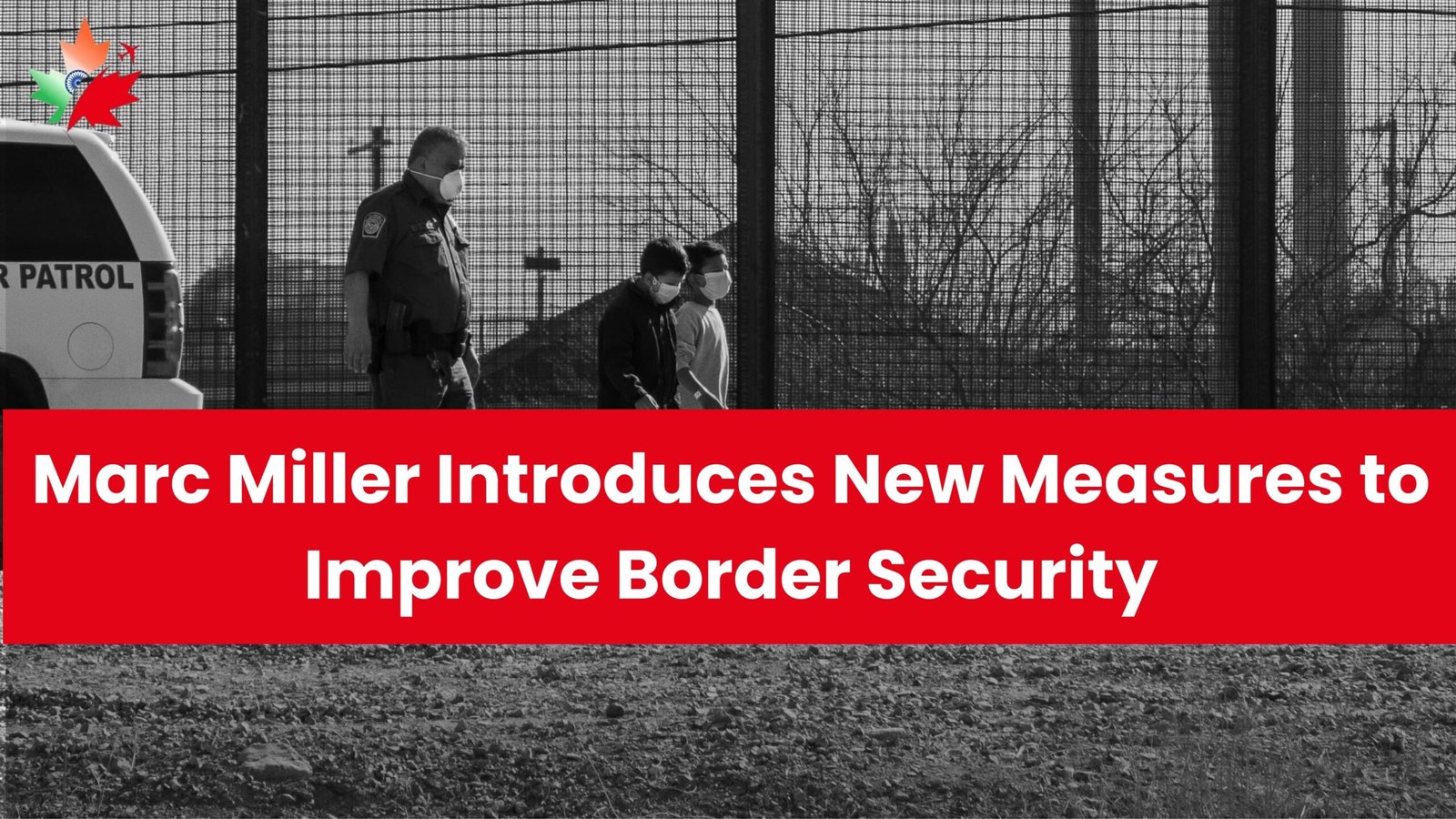
Marc Miller Introduces New Measures to Improve Border Security
In a press conference held yesterday, Canadian Minister of Immigration Marc Miller, alongside Minister of Public Safety David McGuinty, revealed new initiatives to enhance border security and ensure the integrity of Canada’s immigration system. Minister Miller discussed updates on visitor visa policies, actions to reduce abuse in Canada’s asylum system, and the potential for future adjustments to the international student program. Stricter Penalties for Fraudulent Immigration Actors To combat fraudulent activities, Immigration, Refugees and Citizenship Canada (IRCC) will introduce tougher regulations for immigration consultants and representatives who assist in abusing Canada’s asylum system. These new measures will allow IRCC and the College of Immigration and Citizenship Consultants to impose fines of up to $1.5 million and publicly name those involved in fraudulent practices on the IRCC website. Book Your Consultation Now Broader Information-Sharing Agreement with the US Minister Miller also announced the expansion of Canada’s information-sharing agreement with the United States, which will now include data on permanent residents in both countries. This will allow for faster processing of applications, better migration decision-making, and greater prevention of fraud, while maintaining privacy safeguards. Enhanced Scrutiny on Visitor Visa Applications Miller emphasized the increased scrutiny on visitor visa applications, which has resulted in a significant reduction in asylum claims. Since implementing these measures, illegal crossings into the US have dropped by 89%, and visa refusals have increased by more than 61% from countries with high abuse rates. Possible Adjustments to the International Student Program When asked about potential changes to the international student program, Minister Miller stated that no major reforms are planned, but some adjustments could be made in the future to strengthen the system. He also noted a 91% reduction in illegal US crossings by Canadian study permit holders, thanks to enhanced verification of acceptance letters from Designated Learning Institutions (DLIs). This announcement comes as the IRCC continues to enhance border security, including the recent end of the flagpoling practice in December. CIKH SEO
IRCC to Apply Restrictions on Family Open Work Permits Beginning January 2025
The Canadian government is introducing stricter rules on work permits for the family members of international students and foreign workers, following the announcement made in September 2024. Starting January 21, 2025, family open work permits (OWPs) for international students will be limited to the spouses or common-law partners of students enrolled in: Previously, a Master’s program did not need to be 16 months or longer for a student’s spouse to qualify for a Spousal Open Work Permit (SOWP). Furthermore, family OWPs for foreign workers will now only be granted to spouses or common-law partners of individuals working in: A full list of eligible TEER 2 and 3 occupations will be released by IRCC on January 21, 2025. For a spouse to qualify under these rules, the foreign worker must have at least 16 months of validity left on their work permit when the spouse applies. Additionally, dependent children of foreign workers will no longer be eligible for family OWPs. Renewal of Work Permits Any OWPs issued under previous policies and not yet expired will remain valid. In cases where a spouse receives a shorter work permit than the sponsoring student or worker (under past family OWP guidelines), family members in Canada (including spouses and dependent children) can apply to renew their permits, provided the renewal duration matches the length of the sponsoring individual’s permit. Book Your Consultation Now Educational Programs Eligible for Family OWPs Students in the following programs, outside of Master’s and Doctoral degrees, can still be eligible for a family OWP for their spouse or common-law partner: Who Is Not Affected by These Changes? These new restrictions do not apply to spouses or common-law partners of workers covered under free trade agreements (FTAs). Additionally, spouses or common-law partners who are being sponsored by their Canadian partner for permanent residence (PR) and already hold legal temporary status in Canada may still apply for a Spousal Open Work Permit (SOWP). Part of Broader Immigration Reforms This change is part of a larger suite of reforms announced by Immigration, Refugees, and Citizenship Canada (IRCC) in September 2024. During the announcement, Minister of Immigration Marc Miller emphasized that the restriction on family OWPs is part of an effort to manage housing shortages and affordability issues. The government estimates that these changes will result in a reduction of 50,000 fewer permits for international students and 100,000 fewer for foreign workers over the next three years. Advantages of an Open Work Permit Open Work Permits (OWPs) provide significant flexibility, allowing holders to work for any employer in Canada and in most industries. Unlike employer-specific or Labour Market Impact Assessment (LMIA)-based work permits (called “closed” permits), OWPs remain valid for a set period and do not tie holders to a specific job, making them a preferred choice for newcomers to Canada. CIKH SEO

Manitoba and Alberta Offer Invitations to Apply for Provincial Nomination
In the first Provincial Nominee Program (PNP) draw of the year, Manitoba invited more candidates to apply through the Skilled Worker Overseas and Skilled Worker in Manitoba streams. Alberta also held a large draw on December 23, 2024, updating its provincial nominations for the previous year. Here are the results of both draws. Manitoba On January 9, 2025, Manitoba’s Provincial Nominee Program (MPNP) held two draws. The first draw was for the Skilled Worker in Manitoba stream, where 145 candidates were invited. The lowest-ranked candidate had a score of 838. To be eligible, applicants or their spouses must have completed post-secondary education in Manitoba. Book Your Consultation Now The second draw was for the Skilled Worker Overseas stream, focusing on the Winkler area. In this draw, 52 candidates were invited, with the lowest-ranked candidate having a score of 615. In total, Manitoba issued 197 Letters of Advice to Apply (LAAs), including 52 invitations to candidates with a valid Express Entry profile number and job seeker validation code. Alberta On December 23, 2024, Alberta held a draw through the Alberta Opportunity stream. A total of 588 invitations were sent out, with the lowest-ranked candidate having a score of 55. To qualify, applicants needed to meet these requirements: CIKH SEO