

In 2026, searching for an LMIA job is no longer just a “better option” for many temporary residents. For thousands of people, it is the difference between remaining in Canada legally and running out of time. A growing number of workers now hold permits that have already expired or will expire soon. For many of them, an LMIA-supported job offer is one of the few remaining pathways to apply for an employer-specific work permit and extend their stay. Book Your Consultation for Canadian Immigration and LMIA This pathway can work—but only if it is handled correctly and with a clear understanding of how the LMIA market actually operates. It is also critical to avoid the scams and illegal practices that have spread around LMIA hiring. One rule must be absolutely clear from the start: paying for an LMIA or an LMIA job is illegal. Employers are not allowed to charge workers—directly or indirectly—for LMIA fees or recruitment costs. Any request for payment in exchange for a job offer or LMIA support is a serious red flag. The good news is that legitimate employers do exist. If you use the right platforms, focus on the right industries, and apply with a realistic strategy, it is still possible to find genuine LMIA opportunities in 2026. Quick Snapshot: The LMIA Job Market Right Now Here is what the official Job Bank data shows. On Job Bank’s “Temporary Foreign Workers” section, employers post jobs where they have already applied for or obtained an LMIA. As of January 13, 2026, the portal shows 4,023 total job postings, broken down as follows: These numbers change frequently, but the pattern remains consistent: postings with an already approved LMIA are a much smaller subset. This is why volume, consistency, and a repeatable search method matter. What Is an LMIA Job? An “LMIA job” usually means a job offer where the employer is willing to support you under the Temporary Foreign Worker Program (TFWP) by either: Job Bank confirms that the Temporary Foreign Workers job search is designed for people already in Canada who may be changing employers, and it is free to use. LMIA Requested vs. LMIA Approved: The Difference That Matters This distinction is where many applicants lose valuable time. Only a positive LMIA can support the LMIA document requirement for an employer-specific work permit. You should not ignore “LMIA requested” jobs—many legitimate employers start there. However, expectations must match reality: How LMIA Jobs Can Help If Your Work Permit Is Expiring If your work permit is expiring soon If you apply to extend or change your work permit before it expires, IRCC allows you to remain in Canada under maintained status until a decision is made. In many cases, you may also continue working under the conditions of your current permit while you wait. For LMIA job seekers, this means: If your work permit has already expired If your permit expired and you did not apply in time, IRCC generally requires you to restore your status within 90 days. You cannot work while restoration is in progress. An LMIA job can still be part of the solution, but only if you: The 3 Best Places to Find Legitimate LMIA Jobs in 2026 1) Job Bank – Temporary Foreign Workers This is the cleanest starting point. It is specifically designed for LMIA-related hiring and includes an LMIA status filter. 2) Quarterly lists of positive LMIA employers ESDC publishes lists of employers who received positive LMIAs on the Open Government Portal. These are not job ads, but they are valuable for: 3) Employer compliance lists (who to avoid) IRCC maintains a public list of employers found non-compliant. Reasons include charging recruitment fees or failing to ensure workers were not charged by recruiters. Step-by-Step: How to Find LMIA Jobs on Job Bank Step 1: Use the Temporary Foreign Workers portal Start directly from Job Bank’s Temporary Foreign Workers section. All jobs there are tied to LMIA activity. Step 2: Search broadly, then narrow Begin with: Refine only after you see results. Step 3: Use the LMIA status filter strategically Step 4: Apply credibility filters Focus on postings that show: Step 5: Apply quickly and consistently Speed matters in LMIA hiring. Daily target: Step 6: Track everything Create a simple tracker: Patterns usually emerge within 2–3 weeks. Turning a Job Posting into a Real LMIA Offer A job ad alone is not an LMIA. When an employer shows interest, confirm they can actually support you. Your checklist: Defensiveness when you ask basic questions is itself a warning sign. Paying for an LMIA Is Illegal: What to Do LMIA processing fees cannot be paid by workers or recovered from them. Employers are also required to ensure that no recruiter acting on their behalf charges fees. Violations can lead to negative LMIA decisions or bans. If anyone asks for money for: Treat it as high risk. Safer steps: Why Many LMIA Job Ads Feel Unresponsive Some postings exist to meet recruitment requirements. Others remain open while paperwork is underway. Some employers are still deciding whether to apply—or are seeking money illegally. This is frustrating, but it does not mean the entire market is fake. It means LMIA job searching must be treated as pipeline building, not a one-time application burst. Application Strategy That Works for LMIA Hiring Industries Where LMIA Hiring Is More Common Your odds are higher in sectors with chronic shortages, including: Focus on 1–2 sectors where your experience is strongest. Final Perspective An LMIA is proof from ESDC/Service Canada that hiring a temporary foreign worker is expected to have a neutral or positive impact on Canada’s labour market. In practice, it can support an employer-specific work permit. In 2026, this matters more than ever. Open work permit options are limited, and status pressure is increasing. The LMIA market is noisy, but knowledge is your advantage. When you understand where legitimate signals appear, what they mean, and how to act quickly, you put yourself on the right side of

Increase Your PR Chances Through Canada’s Expression of Interest Programs
Many Canadian immigration programs use an Expression of Interest (EOI) system to select candidates for permanent residence (PR). Canada’s immigration framework allows individuals to submit EOIs to multiple immigration programs at the same time. Doing so can significantly improve a candidate’s chances of receiving an invitation to apply for PR. Book Your Consultation for Canadian Immigration This article explains what is allowed and what is not when submitting EOIs across different programs, and how to navigate the invitation and application stages. Canada’s three main economic immigration pathways are Express Entry, the Provincial Nominee Program (PNP), and the Atlantic Immigration Program (AIP). Express Entry To be considered for PR through Express Entry, candidates must meet the eligibility requirements for at least one of the programs managed under the system and submit an EOI by creating an Express Entry profile. You may only have one active Express Entry profile at a time. However, you can be eligible for more than one Express Entry program simultaneously. Immigration authorities consider candidates in the following order: Canadian Experience Class, Federal Skilled Worker Program, and Federal Skilled Trades Program. Each candidate is assigned a Comprehensive Ranking System (CRS) score based on factors such as age, education, work experience, and language ability. Candidates with the highest scores are issued Invitations to Apply (ITAs) during Express Entry draws. You may maintain an active Express Entry profile while also having an active EOI under another PR pathway, such as a Provincial Nominee Program. If you receive an ITA through Express Entry, you can apply to Immigration, Refugees and Citizenship Canada (IRCC) for PR. Even after submitting a PR application through Express Entry, you may remain eligible under other programs, such as a PNP or Quebec’s Skilled Worker Selection Program (PSTQ), in case the Express Entry application is unsuccessful. Provincial Nominee Program (PNP) To obtain PR through the PNP, candidates must first receive a provincial nomination. After securing a nomination, they can apply to IRCC for PR. To receive a nomination, candidates must meet the eligibility criteria of a specific provincial stream and demonstrate a genuine intention to live and settle in the nominating province. Submitting EOIs under the PNP Rules for submitting multiple EOIs vary by province: At the EOI stage, candidates are generally allowed to submit profiles to multiple provinces because they are not yet required to demonstrate intent to reside. Intent to reside becomes mandatory at the nomination application stage. This typically involves submitting a written declaration and supporting evidence, such as employment, family ties, or housing plans in the province. If a candidate receives invitations to apply for provincial nomination from more than one province, they must choose only one. It is not permitted to have multiple provincial nomination applications in progress at the same time. Doing so would be considered misrepresentation and may lead to serious consequences, including refusal of applications, removal from Canada, or a five-year ban from entering the country. Express Entry and the PNP Candidates are allowed to have an active Express Entry profile and an active EOI under a PNP at the same time. In fact, this approach often increases the likelihood of obtaining PR. Most provinces operate both Express Entry aligned (enhanced) streams and non Express Entry linked (base) streams. If a candidate receives a nomination through an enhanced PNP stream, they can add it to their Express Entry profile. This grants an additional 600 CRS points, virtually guaranteeing an ITA in a future Express Entry draw. Having an Express Entry profile also allows provinces to identify suitable candidates. Provinces may issue a Notification of Interest (NOI), inviting candidates to apply for provincial nomination. A candidate may receive NOIs from more than one province, but they may only proceed with one provincial nomination application. Any additional invitations must be declined. Unless a province explicitly prohibits it, candidates may also submit EOIs under both enhanced and base PNP streams at the same time, provided eligibility requirements are met. At the EOI stage, candidates may simultaneously have EOIs under Express Entry, one or more PNPs, Quebec’s Skilled Worker Selection Program, the AIP, and other programs. Atlantic Immigration Program (AIP) The Atlantic Immigration Program offers a PR pathway for skilled workers and certain international graduates who wish to settle in New Brunswick, Newfoundland and Labrador, Prince Edward Island, or Nova Scotia. The AIP is employer driven. Candidates must secure a job offer from a designated employer in Atlantic Canada, and the employer must obtain provincial endorsement of the offer. Once an endorsement certificate is issued, the candidate can apply to IRCC for PR. Many Atlantic provinces now use an EOI-style system under the AIP, treating initial candidate or employer submissions as EOIs. To submit an EOI under the AIP, a candidate must already have a qualifying job offer. As a result, candidates cannot be considered across multiple Atlantic provinces unless they hold job offers in each province. Candidates may be considered under multiple AIP streams until they receive an endorsement certificate from one province. Receiving an endorsement confirms intent to reside in that province. Unless otherwise stated by a province, candidates are generally allowed to have an active AIP EOI and a PNP application at the same time for the same province. At the same time, candidates may also maintain an Express Entry profile and indicate interest in settling in one or more Atlantic or non Atlantic provinces, allowing provinces to issue NOIs if they identify the candidate as a strong match. Fictional example Rayesha has worked in Alberta as a dental assistant on a Post Graduation Work Permit for two years. Before that, she studied in Saskatchewan, where her family currently lives. She wishes to obtain Canadian PR and prefers to settle in Alberta, but she also has strong ties to Saskatchewan. Rayesha qualifies under the Canadian Experience Class and creates an Express Entry profile, indicating interest in both Alberta and Saskatchewan. Her CRS score is 505, which is below recent Express Entry cut off scores. To improve her chances, she

Faster and More Affordable Alternatives to the PGP for Bringing Parents or Grandparents to Canada
As of January 1, 2026, Immigration, Refugees and Citizenship Canada (IRCC) confirms on its official website that no new applications will be accepted under the Parents and Grandparents Program (PGP) this year. Book Your Consultation for Canadian Immigration While this means Canadian citizens and permanent residents currently cannot sponsor their parents or grandparents for permanent residence (PR), there are still options available to bring them to Canada for extended visits, sometimes for several years at a time. At present, families typically rely on one of two visitor-based pathways: Below is an overview of how these options work and how they differ in purpose, requirements, and outcomes. Option 1: Parent and Grandparent Super Visa The Super Visa is a multiple-entry visitor visa that can be valid for up to 10 years. For applications submitted on or after June 22, 2023, it allows parents and grandparents to stay in Canada for up to five years per entry. IRCC has emphasized that while the PGP only opens for limited intakes, the Super Visa remains available year-round for extended family visits. Key Differences in Immigration Outcomes The most important distinction between the Super Visa and the PGP is the outcome: While the Super Visa does not replace the permanent residence pathway offered by the PGP, it is a practical solution for families seeking extended time together in Canada. It also generally involves lower costs and much shorter processing times than the PGP, while still allowing multi-year stays. Eligibility Requirements For the Canadian host (child or grandchild): For the parent or grandparent: Medical Insurance Requirements Super Visa applicants must provide proof of paid private medical insurance that: As of January 28, 2025, IRCC allows Super Visa applicants to purchase insurance from certain providers outside Canada, provided the insurer meets specific Office of the Superintendent of Financial Institutions (OSFI) requirements. Super Visa holders should also be prepared to show proof of valid, paid insurance when entering Canada. Option 2: Visitor Visa or Electronic Travel Authorization (eTA) Both visitor visas and eTAs fall under Canada’s visitor rules. The required document depends on the traveller’s citizenship: Most visitors are allowed to stay in Canada for up to six months per entry, although border officers have discretion to grant a shorter or longer stay. In some cases, a visitor record may be issued with a specific departure date. eTA Overview An eTA is available only to citizens of visa-exempt countries. It has relatively minimal requirements and is often approved within minutes of applying online. Most eTAs are valid for up to five years, or until the passport expires. Visitor Visa Overview Visitor visas are required for non–visa-exempt foreign nationals and must be applied for before travel. They may be issued as single-entry or multiple-entry visas and can be valid for up to 10 years (or until passport or biometrics expiry), though validity and entry limits are determined at the discretion of the immigration officer. Basic Visitor Visa Requirements IRCC generally requires applicants to demonstrate: Visitors wishing to remain in Canada beyond their authorized stay must apply for an extension (visitor record) and pay the applicable fee. Choosing the Right Option The Super Visa is generally the better choice when a parent or grandparent plans to spend an extended period in Canada rather than making a short visit. It is particularly suitable when longer stays per entry, up to five years, are the priority. This option makes the most sense when: A regular visitor visa or eTA is usually more appropriate for shorter visits, such as trips lasting a few weeks or months, or when a simpler and less demanding application process is preferred. One key advantage of visitor visas and eTAs is their lighter requirements, making them more practical when meeting the Super Visa’s income or insurance conditions is not feasible. These applications typically focus on standard visitor factors, including ties to the home country, available funds, travel purpose, intent to depart Canada, and overall admissibility. Visitor visas also tend to have shorter processing times than Super Visas, though timelines can vary by visa office. eTAs, in particular, may be approved within minutes.

Canada Issues 8,000 Invitations in Major Canadian Experience Class Draw: What It Signals for 2026
Canada kicked off 2026 with a clear focus on temporary residents already boosting its economy. On January 7, 2026, Immigration, Refugees and Citizenship Canada (IRCC) held a major Canadian Experience Class (CEC) Express Entry draw, extending 8,000 Invitations to Apply (ITAs) for permanent residency. This draw is notable both for its scale and for what it signals about Canada’s wider immigration goals for the coming year: keeping skilled workers already in the country and supporting the labor market with experienced individuals. Book Your Consultation for Canadian Immigration Why This Draw Matters More Than the Numbers Suggest At first glance, a CRS cut-off of 511 may still appear high to many candidates. However, context is critical. Throughout much of 2024 and 2025, CEC draws were: In a single CEC round, IRCC issued 8,000 ITAs, signaling a focus on volume over exclusivity. This move gives more candidates with mid-range scores a genuine shot at permanent residence. It also reflects Canada’s consistent strategy of welcoming international graduates and temporary foreign workers as permanent residents, leveraging their existing Canadian work experience, language skills, and economic integration. How This Draw Compares to Previous Years Compared to earlier CEC draws: The January 2026 draw represents a rebalancing — using larger invitation rounds to manage inventory while still maintaining selection standards. What Candidates Can Expect from Future Express Entry Draws in 2026 While IRCC does not pre-announce draw details, current immigration policy, labour shortages, and recent draw patterns offer strong indicators of what lies ahead. 1. Continued Emphasis on In-Canada Applicants CEC candidates are likely to remain a priority as Canada works to: 2. CRS Scores Will Fluctuate — Not Move in One Direction CRS cut-offs are expected to rise and fall depending on: Larger draws typically result in lower CRS cut-offs, while targeted or smaller draws push scores higher. 3. Category-Based and French-Language Draws Will Continue IRCC has made it clear that category-based selection is now a permanent feature of Express Entry. Candidates who qualify under: may continue to see lower CRS thresholds compared to general CEC rounds. 4. Provincial Nominee Program Will Remain Competitive PNP draws will continue alongside CEC, but with higher CRS scores because of the additional 600 nomination points. For candidates with CRS scores below the CEC range, provincial pathways remain a strong alternative. Practical Advice for CEC Candidates Going Forward If you are currently in the Express Entry pool under CEC: The January 7 draw shows that patience, preparation, and profile optimization still matter — even in a competitive system. Final Take This recent Canadian Experience Class draw underscores Canada’s ongoing appreciation for skilled workers already living and working here. Despite the competitive CRS scores, the draw’s size offers renewed hope to the thousands of candidates striving for permanent residency. As we move towards 2026, flexibility and a well-defined strategy are crucial, but the path to PR remains particularly accessible for CEC candidates. Sources
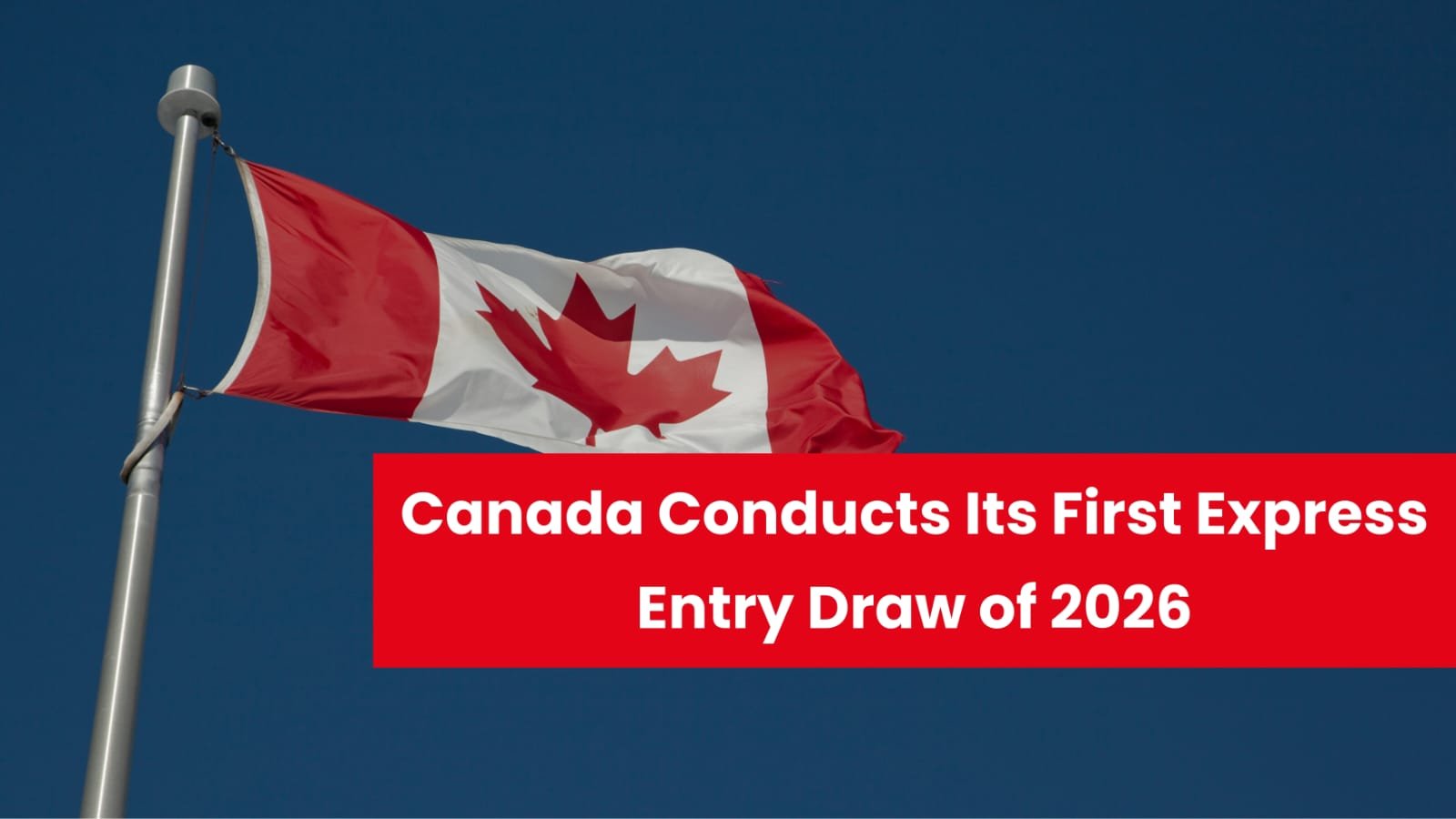
Canada Conducts Its First Express Entry Draw of 2026
Immigration, Refugees and Citizenship Canada (IRCC) has issued a new round of Invitations to Apply (ITAs) through the Express Entry system. In the latest draw, IRCC invited 574 candidates under the Provincial Nominee Program (PNP). To be eligible for this round, candidates were required to have a minimum Comprehensive Ranking System (CRS) score of 711 and must have created their Express Entry profile before 1:54 a.m. (UTC) on October 6, 2025. Book Your Consultation for Canadian Immigration This draw represents the first Express Entry selection of the year. Although IRCC has indicated in its Immigration Levels Plan that it will continue to prioritize in-Canada applicants for permanent residence and maintain category-based Express Entry draws, the overall pattern of selections for the remainder of the year remains uncertain. However, based on previous announcements, an increase in French-language category draws is expected, as Canada continues to raise its targets for Francophone immigration outside Quebec. Additionally, IRCC is anticipated to begin selections under its newly announced “Physicians with Canadian Work Experience” category. To date, IRCC has issued a total of 574 ITAs through the Express Entry system in 2026.

Five Ways International Students Can Improve Their Chances of Permanent Residence
With careful planning, international students who hope to immigrate to Canada can take early, strategic steps that significantly improve their chances of success during and after their studies. Many international students on a study-to-immigrate pathway understandably plan to worry about permanent residence (PR) applications later on. However, failing to consider PR eligibility early can result in missed opportunities, especially since students are often best positioned to strengthen their profiles while they are still studying. Book Your Consultation for Canadian Immigration Enroll in a Co-op Program For many international graduates, entering the Canadian job market for the first time can be challenging. Enrolling in a co-op program can make this transition smoother by providing Canadian work exposure before graduation. Strong performance during a co-op placement may even lead to a full-time job offer immediately after graduation. Entering the workforce sooner allows you to qualify more quickly for the Canadian Experience Class (CEC)* pathway to PR and strengthens your immigration profile. Each year of Canadian work experience (up to five years) earns additional points under Canada’s Comprehensive Ranking System (CRS). *The CEC is one of the three Express Entry programs and is the most popular route for international graduates. Among other requirements, it requires at least one year of eligible Canadian work experience. A higher CRS score increases your likelihood of receiving an Invitation to Apply (ITA) for PR through Express Entry. It is important to note that work experience gained while studying full-time does not count toward the CEC or as Canadian work experience under the CRS. The real advantage of a co-op program lies in how it accelerates your entry into the Canadian workforce after graduation. Gain Foreign Work Experience Foreign work experience can contribute up to 50 points under the CRS, often making a decisive difference in whether a candidate receives an ITA. Unlike Canadian work experience, foreign work experience can be gained while you are enrolled as a full-time student. If you arrive in Canada without prior skilled work experience, building foreign experience during your studies can significantly strengthen your profile. This experience can be gained by working abroad, such as returning to your home country during summer breaks—or by working remotely from Canada for a foreign employer. Target In-Demand Occupations Gaining experience in certain in-demand occupations can improve your chances of receiving PR, even with a lower CRS score. Through Express Entry’s category-based selection system, ITAs are issued to candidates with work experience in specific priority fields. Most categories require at least six months of work experience in occupations related to healthcare and social services, STEM, trades, agriculture and agri-food, or education. Review the list of eligible occupations and consider pursuing one that aligns with your interests. In some cases, you may even choose a profession outside your field of study and focus on gaining the necessary qualifications during your education. For example, working as a roofer during summer breaks could help you secure a full-time role in the trades after graduation, an occupation eligible under Express Entry’s trades category. This experience can then count toward your eligibility for category-based draws. Network With Alumni Connecting with alumni can provide many of the same advantages as a co-op program when it comes to launching your career in Canada. Unlike co-op placements, alumni networking opportunities are available to students in all programs and at all institutions. Alumni can offer valuable guidance based on their own experiences and may introduce you to professionals in your industry or even potential employers. Building a strong professional network in Canada supports both your career growth and your personal integration into Canadian society. Study French While this option is not for everyone, developing intermediate French proficiency can be one of the most powerful ways to boost your competitiveness for economic immigration. Achieving an intermediate level of French proficiency (NCLC 7 across all language skills) can earn you an additional 50 CRS points. It also makes you eligible for French-language category-based draws, which have had the lowest CRS cut-off scores of all draw types in 2025. If you are enrolled in a three- or four-year program, consistent daily practice can lead to meaningful progress over time. Spreading out your language learning reduces the pressure of having to master French quickly after graduation. Studying in Canada may also give you access to French-speaking communities, conversation groups, language courses, or even immersion programs where you live in a French-speaking environment for several weeks.

Top 5 Pathways to Canada Permanent Residency in 2026
Canada enters 2026 with a more selective and strategically targeted permanent residency (PR) system. Admission levels, labour-market priorities, and program design now matter more than ever. The good news? Several core PR pathways remain structurally open year-round, even though invitations, nominations, and endorsements may be issued in controlled waves. Book Your Consultation for Canadian Immigration This guide breaks down the top 5 Canada PR pathways in 2026, ranked by year-round availability and real-world accessibility. For each pathway, you’ll find: 2026 Immigration Levels Plan: What the Targets Really Mean Canada’s 2026–2028 Immigration Levels Plan sets overall permanent resident admissions at 380,000 for 2026, with an operational range. These figures represent actual landings, not invitations issued, nominations granted, or applications submitted. PR Admissions Targets That Align With the 5 Pathways in This Guide Pathway Levels Plan Category 2026 Target (Range) Express Entry Economic: Federal High Skilled 109,000 (85,000–120,000) Provincial Nominee Programs (PNPs) Provincial Nominee Program 91,500 (82,000–105,000) Atlantic Immigration Program (AIP) Atlantic Immigration Program 4,000 (3,000–5,000) RCIP + FCIP Federal Economic Pilots (incl. Community Pilots) 8,175 (5,000–11,800) Spousal Sponsorship Family: Spouses, Partners & Children 69,000 (63,000–75,000) Key clarifications These are considered “stay-open” pathways: 1) Express Entry (Federal Skilled Immigration System) Express Entry is Canada’s primary system for selecting skilled workers under federal economic programs. How it works:Eligible candidates create a profile, enter a pool, receive a CRS score, and may be invited to apply (ITA) based on draw criteria. Express Entry Snapshot for 2026 Item Details Best for Skilled workers with strong language, education, and work experience (especially Canadian experience) 2026 target 109,000 admissions Fees From $1,525 (principal applicant) Processing time ~6 months after full application submission Availability Profile creation open year-round; invitations vary Programs Managed Through Express Entry Core Eligibility Requirements Most applicants need: Settlement funds are required for FSW and FST (not CEC or candidates with valid job offers). Why Express Entry Still Matters in 2026 With a target of 109,000 admissions, Express Entry remains Canada’s largest skilled-worker intake—but competitiveness is intense, and eligibility alone does not guarantee selection. 2) Provincial Nominee Programs (PNPs) PNPs are often the most realistic alternative—or backup—to Express Entry. A province or territory nominates candidates who meet local labour-market needs, after which the applicant applies federally for PR. PNP Snapshot for 2026 Item Details Best for Candidates with provincial ties, job offers, or in-demand skills 2026 target 91,500 admissions Streams Enhanced (Express Entry) & Base (non-Express Entry) Fees Federal PR fees + provincial fees Processing time ~1–3 years total Availability Ongoing but intake-controlled Common PNP Eligibility Elements Why PNPs Feel Unpredictable PNPs remain open, but: Official PNP websites are the only reliable source for current intake status. 3) Atlantic Immigration Program (AIP) AIP is a highly practical employer-driven PR pathway for Atlantic Canada: AIP Snapshot for 2026 Item Details Best for Workers or Atlantic graduates with a designated employer job offer 2026 target 4,000 admissions Core requirement Job offer from a designated employer Processing time Up to ~37 months Structure Employer-driven + settlement plan + provincial endorsement How the AIP Process Works AIP is not competitive in a points sense—but designation and endorsement are the real gatekeepers. 4) Rural & Francophone Community Immigration Pilots (RCIP & FCIP) These pilots direct PR to specific rural and Francophone-minority communities facing chronic labour shortages. RCIP & FCIP Snapshot for 2026 Feature RCIP FCIP Communities 14 rural 6 Francophone-minority Best for Job offer in a participating community 2026 target Included within 8,175 pilot admissions Fees From $1,525 Core model Employer + community-driven Core Eligibility (Both Pilots) Why These Pilots Are Competitive They are federally open, but controlled by: This is not a points pool—it is a community-managed selection system. 5) Spousal Sponsorship (Family Reunification) Spousal sponsorship is one of the most stable PR pathways because it is not governed by labour-market selection. Spousal Sponsorship Snapshot for 2026 Item Details Best for Couples with a genuine qualifying relationship 2026 target 69,000 admissions Fees Spouse: from $1,205 Processing time 14–20 months (non-Quebec); ~36 months (Quebec) Availability Continuous intake Sponsor Eligibility (Baseline) Sponsors must: Who Can Be Sponsored Spousal PR is documentation-heavy—relationship evidence quality directly affects outcomes. Quick Decision Guide: Best PR Pathway for You in 2026 Your Situation Priority Pathway Strong CRS profile Express Entry (+ PNP backup) Provincial job offer PNP Atlantic employer offer AIP Rural/community employer offer RCIP / FCIP Qualifying partner in Canada Spousal Sponsorship Programs Paused or Closed Going Into 2026 Paused Closed to New Intake Previously submitted applications continue to be processed. What Applicants Most Underestimate in 2026 The strongest PR strategies in 2026 are dual-track: Both should strengthen the same core assets: language scores, work history, education proof, and clean documentation. Frequently Asked Questions (FAQs) Is there an “easiest” PR pathway in 2026?No. The easiest pathway is the one where you already meet the main gate—competitive CRS, provincial fit, designated employer offer, or qualifying family relationship. Which PR pathway is fastest?Express Entry remains the fastest, with ~6-month processing after ITA. French-language draws continue to have much lower CRS cutoffs. Can I apply without a consultant or lawyer?Yes. The system is designed for self-representation. However, applicants are fully responsible for accuracy and completeness. Does a PR application give me legal status?No. You must maintain status separately or apply for a bridging open work permit if eligible. Can applications be refused even if I meet eligibility?Yes. Refusals can occur due to inadmissibility, weak evidence, or failure to respond to requests. When can I apply for citizenship after PR?After meeting physical-presence, tax, and language requirements—usually 1,095 days in Canada.
8 Ontario Laws and Rule Changes Coming in January 2026
Ontario enters 2026 amid one of the most extensive waves of legal, regulatory, and policy reform in recent years. From labour mobility and hiring practices to taxation, safety requirements, public sector work rules, and rising household costs, January 2026 represents a broad reset in how people live, work, hire, and operate businesses across the province. Book Your Consultation for Canadian Immigration The scope of these changes extends well beyond any single industry. Professionals relocating between provinces, employers advertising jobs, landlords and tenants, homeowners, public servants, and nearly every Ontario taxpayer will feel the effects. While many measures are provincial, others align with new federal legislation or originate at the municipal level, particularly in Toronto. This guide outlines the most significant Ontario laws and policy changes taking effect in January 2026, why they matter, and who will be impacted the most. Ontario Introduces “As of Right” Labour Mobility Rules One of the most significant shifts coming in 2026 is Ontario’s adoption of “As of Right” rules under the Ontario Free Trade and Mobility Act. The goal is to remove internal Canadian barriers that slow workforce movement and business expansion, positioning Ontario as part of a broader national economic integration effort. Under the new system, goods and services legally produced or provided in other participating provinces and territories will be accepted in Ontario without additional approvals or re-certification. This mutual recognition approach reduces red tape, cuts compliance costs, and accelerates access to domestic markets. Labour mobility reforms are a central feature of the change. Professionals licensed in other Canadian jurisdictions will be permitted to work in Ontario on an interim basis while completing local registration requirements. What Takes Effect on January 1, 2026 Beginning January 1, 2026, qualified professionals will be able to start working in Ontario within 10 business days after regulators confirm their credentials and minimum standards. Covered professions include engineers, physicians, architects, electricians, and other regulated occupations. These workers may practice in Ontario for up to six months while completing registration with provincial regulatory bodies. The healthcare sector is expected to benefit significantly. By easing administrative barriers for doctors and healthcare professionals trained elsewhere in Canada, Ontario aims to expand service capacity and reduce patient wait times. For employers, this means faster access to skilled talent. For workers, it means fewer delays and a clearer path to interprovincial mobility. Ontario Income Tax Changes for 2026 Ontario’s provincial income tax brackets and rates will be updated in 2026 as part of annual indexation and fiscal adjustments. 2026 Ontario Taxable Income Brackets 2026 Ontario Tax Rates These rates apply only to the provincial portion of income tax and are in addition to federal taxes. Ontario Surtax Remains in Place Ontario will continue applying its two-tier surtax system in 2026, increasing effective tax rates for higher-income earners. 2026 Surtax Thresholds As a result, marginal tax rates increase sharply once these thresholds are crossed, particularly affecting middle- and upper-income households. Ontario Tax Reduction for Lower-Income Residents Ontario’s non-refundable tax reduction remains unchanged and continues to benefit lower-income individuals and families. 2026 Reduction Amounts These credits are applied against provincial tax payable and can eliminate Ontario income tax entirely for some households. New Pay Transparency Rules Take Effect Major amendments to the Employment Standards Act, 2000 will take effect on January 1, 2026, changing how employers recruit and communicate with candidates. Mandatory Salary RangesEmployers with 25 or more employees must include expected compensation or salary ranges in public job postings. The range cannot exceed $50,000 between the minimum and maximum, unless the role pays more than $200,000 annually. The aim is to reduce wage opacity and address pay inequities. Disclosure of AI in HiringJob postings must also disclose whether artificial intelligence is used to screen or assess candidates, addressing concerns about transparency and algorithmic bias. Limits on Candidate GhostingEmployers must inform interviewed candidates of the outcome within 45 days of their final interview. This requirement does not apply to applicants who only submitted resumes or completed preliminary screening. Expanded Fire Code and Carbon Monoxide Safety Rules New Ontario Fire Code amendments will affect homeowners, landlords, tenants, and building owners starting January 1, 2026. Carbon Monoxide Alarm RequirementsCO alarms will be required in more residential settings, including homes with: Alarms must be installed near sleeping areas and on every storey of the home. Apartments and CondominiumsCO alarms will be required if units are near fuel-burning appliances, service rooms, garages, or receive air heated by fuel-burning systems elsewhere in the building. Public corridors heated by fuel-burning systems will also require alarms. ResponsibilitiesLandlords must install, maintain, and test alarms annually and provide tenants with maintenance instructions. Tenants must report malfunctions promptly. Ontario Public Service Returns to Full-Time Office Work As of January 5, 2026, the Ontario Public Service and related agencies will return to five days per week of in-office work. The government has positioned the change as aligning public sector practices with broader workplace norms. A phased transition began earlier, moving many employees from three to four in-office days before full implementation. Toronto Indoor Temperature Standards Approved Toronto has approved a new Indoor Temperature Standards bylaw taking effect June 1, 2026. Apartment buildings without air conditioning must provide tenants with access to at least one cooled amenity space. Key Rules Toronto Water and Waste Fees Increase Toronto households will see higher municipal fees starting January 1, 2026. Estimated Annual Solid Waste Fees Water RatesFor an average household using 230 cubic metres annually, water costs will rise by about $40 per year, bringing total estimated charges to $1,118. Federal Free Trade and Labour Mobility Act Comes into Force January 1, 2026 also marks the implementation of the federal Free Trade and Labour Mobility in Canada Act under Bill C-5. The law ensures that: What This Means Going Forward Together, these changes reflect a clear policy direction: Ontario is prioritizing labour mobility, economic integration, transparency in hiring, public safety, and administrative efficiency. At the same time, residents will face higher municipal costs, stricter compliance obligations, and evolving

From Student to PR: Realistic Timelines in Today’s Canadian Immigration System
For many foreign students, coming to Canada is more than just studying overseas; it’s the beginning of a long-term life, career, and future in a nation renowned for its welcoming immigration policy and high standard of living. However, the route from student status to Permanent Residence (PR) isn’t always clear-cut or quick.This journey has several phases in 2025, each with its own schedule, obstacles, and expectations. In this piece, we’ll explain what to anticipate at every stage, the reasons behind delays, and how timelines now differ from those in the past in a realistic and approachable manner. Book Your Consultation for Canadian Immigration Stage 1 — Study Permit: Your First Step to Canada The journey begins long before you arrive in Canada with your Study Permit application. Expected Timeline Today Incomplete paperwork, sluggish biometrics scheduling, or a large number of applications from particular nations frequently result in longer wait times. Many study permits could be easily processed in 6–8 weeks prior to the pandemic. These times have been somewhat extended in recent years due to traffic and increased volumes, particularly for extensions. Students frequently share personal accounts of waiting more than 100 days for extensions of their study permits in Canada in online forums, particularly when background checks or correspondence letters are involved. Stage 2 of Getting a Post-Graduation Work Permit (PGWP): Gaining Canadian Experience After graduation, most students apply for a Post-Graduation Work Permit (PGWP), a critical bridge toward permanent residency. Expected Timeline Today Nowadays, PGWP processing times are around 4–6 months for completed applications. Why It Feels Longer in Practice Even when official service standards suggest 4–6 months, many applicants report waits up to 7–8 months or more, particularly if they submitted when volumes were high or during office slowdowns. This means while 4–6 months is a typical estimate, personal experiences can differ widely depending upon the application. Stage 3 Applying for Permanent Residence (PR) Permanent residency is the next objective after obtaining some work experience in Canada, typically through PGWP. The majority of students utilize either a Provincial Nominee Program (PNP) or Express Entry (CEC). Current PR Timelines (Late 2025) According to the latest IRCC processing reports: Program Typical Processing Time Express Entry – Canadian Experience Class (CEC) ~7 months Express Entry – Federal Skilled Worker ~6 months PNP (Enhanced – via Express Entry) ~6–8 months PNP (Base – not via Express Entry) ~16–19 months Note: These times begin after you’ve received an Invitation to Apply (ITA) and submitted a full PR application to IRCC. Why do some streams take much longer than others? The Real Story Behind the Numbers and Reason for Its Delays Understanding timelines means understanding why things take the amount of time they do. 1. Volume of Applications is increasing Canada is still one of the world’s most popular destinations for study and immigration. Higher volumes slow down decision-making, especially for popular pathways like study permits and PNPs. 2. More Security and Completeness Checks Required IRCC must verify identity, criminality, medical results, and biometrics, steps that take time and, occasionally, extra clarification. 3. Incomplete or Incorrect Applications Missing information or documents commonly leads to Requests for Further Evidence (RFEs), and every response adds another layer of delay. 4. Policy Shifts & System Changes Canada has been adjusting its student and immigration policies recently, including international student caps and changes to PGWP eligibility tied to labour needs, leading to changes in who is prioritized and how decisions are scheduled. 5. Operational Backlogs & Technology Shifts While IRCC has introduced personalized processing time tracking, this helps estimate wait times but doesn’t necessarily speed up the queue. Then vs. Now Stage Typical Before 2020 Typical 2025 Study Permit ~ 6–8 weeks ~ 6–10+ weeks PGWP ~ 3–4 months ~ 4–6+ months CEC PR ~ 6 months ~ 6–7 months Base PNP ~ 11–13 months ~ 16–19 months Temporary residence pathways (like study permits) have seen modest delays, while some PR streams like base PNPs have stretched significantly. Final Take on this The path from student visa to permanent residence in Canada in 2025 is still feasible and fulfilling, but it calls for perseverance, preparation, and a clear grasp of reasonable deadlines. Even though wait times occasionally seem lengthy, applicants have more insight than ever before thanks to improved tools and communication from IRCC. By knowing what to expect and why delays occur, you can reduce stress and better plan your Canadian immigration journey. For more queries related to PR , PGWP or STUDY , Book your consultation with us today .

Who Has Successfully Obtained Permanent Residence Through Express Entry in 2025?
As 2025 draws to a close, reviewing the Express Entry draws conducted throughout the year provides a clear picture of the types of candidates Canada prioritized for permanent residence (PR). In 2025, Immigration, Refugees and Citizenship Canada (IRCC) hosted a total of 58 Express Entry draws, spanning across various categories (as of December 22). This article highlights hypothetical candidate profiles that most likely received an Invitation to Apply (ITA) for PR through the Express Entry system this year. Book Your Consultation for Canadian Immigration Key Insights from the 2025 Draws: Based on these trends, here are four fictional profiles of candidates who were most likely to receive an ITA in 2025: Example 1: Felix, a French-Speaking Banking Professional from Cameroon Felix Hamadou, a 32-year-old banking operations manager from Cameroon, holds a two-year diploma in finance and has three years of foreign work experience. Felix is fluent in French (NCLC 9) and has adequate English skills (CLB 7). Despite having no Canadian work experience or education, Felix’s French language proficiency makes him eligible for French-language Express Entry draws, where the CRS cut-off ranged between 379 and 481 in 2025. CRS Breakdown: Total CRS Score: 453 Felix’s score would have qualified him for several of the French-language draws held in 2025. Example 2: Anjana, a Data Analyst with Canadian Work Experience Anjana Patel, originally from India and raised in Beirut, completed a Bachelor’s degree in Data Science in Canada and secured a Post-Graduation Work Permit (PGWP). She worked for over two years as a data analyst in Canada before submitting her Express Entry profile at the age of 26. Anjana’s strong English proficiency (CLB 10) and her Canadian work experience make her an ideal candidate for the Canadian Experience Class (CEC) stream. CRS Breakdown: Total CRS Score: 549 With her score of 549, Anjana would have easily qualified for the CEC draws in 2025, likely receiving an ITA for PR. Example 3: Marie, a Social Worker from Brazil Marie Silva, a 28-year-old social worker from Brazil, holds a Master’s degree and has four years of foreign work experience in social services. She speaks English fluently (CLB 9) but does not speak French. Marie, motivated by the addition of social service occupations to the healthcare category, submits her Express Entry profile to take advantage of the new category-based selection in 2025. CRS Breakdown: Total CRS Score: 472 Marie would have likely received an ITA through the healthcare and social service occupations draws, which occurred three times in 2025. Example 4: Jack, a UX Designer from England Jack Andrews, a 35-year-old UX designer from Reading, England, holds a two-year post-secondary diploma and has three years of foreign work experience. After receiving a job offer from a fintech company in Alberta, Jack moved to Canada and worked there for a year. He then received a provincial nomination, adding 600 CRS points to his total. CRS Breakdown: Total CRS Score: 959 Jack’s CRS score of 959 ensures that he would have received an ITA through any of the Express Entry PNP draws held in 2025. These examples demonstrate how different factors, such as language proficiency, work experience, and education, played key roles in a candidate’s chances of receiving an ITA for Canadian permanent residence through the Express Entry system in 2025.