

What is an open work permit? An open work permit allows you to work for any employer in Canada, except for those who: Open work permits are only granted in specific circumstances. Since they are not tied to a specific job, you don’t need: Typically, you will need to pay the open work permit holder fee along with the work permit application fee. Be sure to check the current fee list for accurate information. Restrictions on Open Work Permits Some open work permits may have restrictions regarding: If you have a restricted open work permit, these limitations will be clearly stated on your permit. Eligibility for an open work permit You may be eligible for an open work permit if you meet one of the following conditions: In each scenario, you must meet additional eligibility criteria.
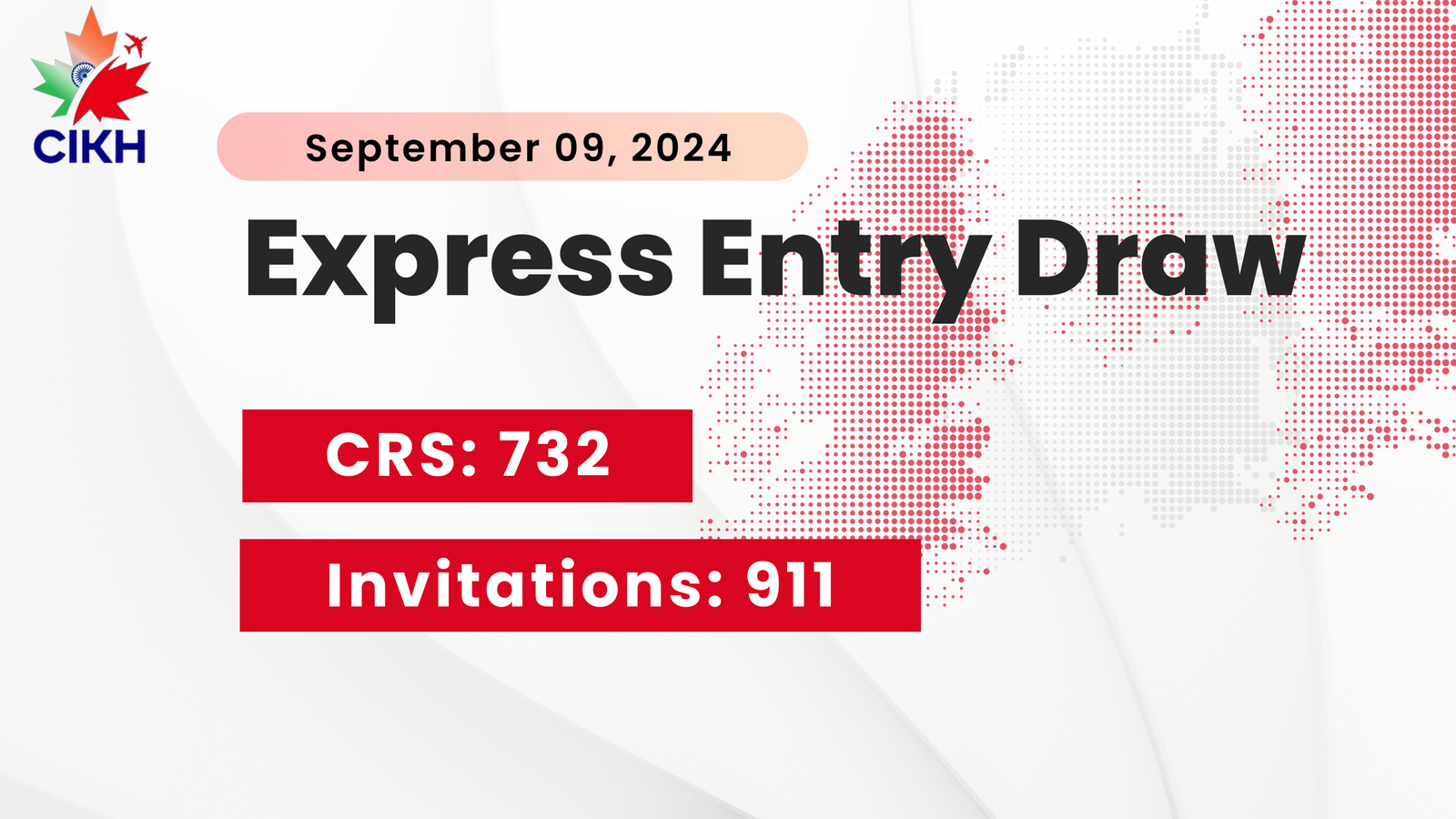
The IRCC has extended 911 invitations to apply to candidates in the Express Entry system under the Provincial Nominee Program (PNP).
Immigration, Refugees, and Citizenship Canada (IRCC) has recently held an Express Entry draw, issuing 911 Invitations to Apply (ITAs) exclusively to candidates in the Provincial Nominee Program (PNP). To qualify, candidates needed a minimum Comprehensive Ranking System (CRS) score of 732. This marks the first draw of the month, following a busy summer of activity. In July and August, IRCC conducted 14 Express Entry draws, setting a new record for the most monthly draws since the system’s introduction in 2015. Specifically, nine draws occurred between July 2 and July 31. The last Express Entry draw, held on August 27, targeted 3,330 candidates from the Canadian Experience Class program. Lately, IRCC has been conducting multiple draws every two weeks, often including at least one for PNP candidates. This approach aligns with their commitment to holding more “domestic” draws to provide greater opportunities for temporary residents in Canada to transition to permanent residency, while reducing the intake of new temporary residents. Full Details of Express Entry Draw: 09 September 2024 Program: Provincial Nominee Program (PNP)Number of Invitations Issued: 911Rank Required to Be Invited: 911 or aboveDate and Time of Draw: September 9, 2024, at 15:42:40 UTCCRS Score of Lowest-Ranked Candidate: 732Tie-Breaking Rule Date: March 13, 2024, at 19:56:16 UTC Summary of Express Entry draw results in 2024

How to Apply for Canada’s 2024 Provincial Nominee Program Without a Job Offer
Canada is a top destination for individuals looking to enhance their financial, educational, healthcare, professional, and social opportunities. The country is renowned for its openness to immigrants and skilled foreign workers through an immigration system that features 60 different categories. In addition to the well-known Express Entry Program, aspiring immigrants should also consider the Canada Provincial Nominee Program (PNP), which does not require a job offer. Securing a PNP nomination can provide applicants with a competitive edge in the Express Entry pool, significantly improving their chances of obtaining a Canadian Permanent Residence Visa. Canada’s Provincial Nominee Program (PNP) serves as an excellent immigration option for those without a job offer. It’s worth noting that several provinces in Canada accept immigrants without requiring employment. The PNP process is user-friendly, with a simple application procedure and easy-to-follow documentation steps. Canada PNP Selection Process Without a Job Offer for 2024 Canada’s immigration program is structured to address the gap between workforce demand and supply. It aligns with the needs of the Canadian job market and economy. The Provincial Nominee Program (PNP) helps Canadian employers overcome challenges in sourcing skilled workers across various sectors, thereby boosting industrial productivity and economic growth. This program allows skilled foreign workers to enter specific provinces, with each province having its own immigration criteria based on the National Occupational Classification (NOC) system, which outlines jobs within Canada’s official job classification framework. To encourage young skilled workers to live and contribute to Canada’s economy, five Canadian provinces offer immigration pathways that do not require a valid job offer. These provinces, whose PNP programs allow applicants to immigrate without a job offer, include: Applicants who meet the eligibility requirements and follow immigration rules during their application process can be nominated by a Canadian province, earning an additional 600 points on the Comprehensive Ranking System (CRS) scale. It’s important to note that obtaining a nomination through the Canada PNP can significantly simplify the process of securing a Permanent Resident (PR) visa. Saskatchewan Immigrant Nominee Program (SINP) This immigration pathway includes two sub-categories: Saskatchewan is renowned for its grain farming and natural resources, including rivers and freshwater lakes. It is also the world’s leading producer of potash, a key chemical. Known as the ‘Land of the Living Skies,’ Saskatchewan has a population of over 1.1 million. The capital, Regina, is known for its modern outlook and welcoming attitude towards immigrants and their families from diverse backgrounds. The province actively seeks qualified candidates and skilled workers to fill roles in modern industries and contribute to the Canadian economy by leveraging their skills and talents. To be eligible for the Saskatchewan Immigrant Nominee Program, applicants must meet the following criteria: Please note that the Saskatchewan Immigrant Nominee Program through Express Entry is available only to applicants who have an active application in the Express Entry pool, along with a concurrent application under the Saskatchewan Occupation in Demand category. The eligibility criteria for this program are the same as those for the PNP through Occupation in Demand. Quebec Skilled Worker Program (QSWP) Quebec is the second most populous province in Canada, following Ontario. The majority of its residents speak French, which is also the province’s official language. Most of the population is concentrated in urban areas along the Saint Lawrence River, particularly between Montreal and Quebec City, the provincial capital. Quebec is rich in natural resources, and its economy benefits from a variety of sectors including resource extraction, manufacturing, and advanced fields like information and communication technology, aerospace, biotechnology, and pharmaceuticals. These industries have significantly bolstered the provincial economy over time. The Quebec Provincial Nominee Program, also known as the Quebec Skilled Worker Program (QSWP), offers a pathway to immigration without requiring a job offer. The eligibility criteria for this Canada PNP visa program are as follows: Interested individuals should submit an Expression of Interest (EOI) through the Arrima portal for the QSWP. Nova Scotia Nominee Program (NSNP) The name “Nova Scotia” translates to “New Scotland” in Latin. This province is a key seaport in Canada and serves as a major gateway to the Atlantic Ocean, with Halifax as its capital. Covering an area of 55,284 square kilometers, Nova Scotia is the second smallest province in Canada and also the second most densely populated. It is home to Canada’s oldest African-Canadian community. Immigrants can move to Nova Scotia without a job offer through the Nova Scotia Priorities Stream. To qualify for the Nova Scotia Labour Priorities Stream, applicants must meet the following criteria: Alberta PNP through Express Entry Named after Princess Louise Caroline Alberta, the fourth daughter of Queen Victoria, Alberta is Canada’s fourth most populous province. It is bordered by British Columbia, Saskatchewan, and the Northwest Territories. The provincial capital, Edmonton, is a key hub for the supply and service of crude oil, sand, and other resources, which are vital to the provincial economy. Alberta also boasts stunning tourist destinations such as Banff, Jasper, Lake Louise, Drumheller, Canmore, and Sylvan Lake. For those seeking immigration, it is important to note that Alberta does not have a specific list of occupations, meaning that skilled workers from various fields can apply through the Alberta PNP via Express Entry. The eligibility criteria for the Alberta PNP through Express Entry include: Prince Edward Island PNP through Express Entry Prince Edward Island, often referred to as the ‘Garden of the Gulf,’ ‘Birthplace of Confederation,’ or ‘Cradle of Confederation,’ is the smallest Canadian province by land area and population, yet it is the most densely populated. The capital of the province is Charlottetown. The economy here relies on agriculture, particularly potato farming, fisheries, as well as modern sectors like aerospace, ICT, biotechnology, renewable energy, and tourism. The province is known for its diverse cultural community, with residents from various nationalities and backgrounds. Individuals who have an active profile in the Express Entry pool and are interested in living and working in Prince Edward Island are eligible for the PEI Express Entry stream. It is crucial for applicants to qualify for
Which Permanent Residence Programs are Eligible for a Bridging Open Work Permit (BOWP)?
A Bridging Open Work Permit (BOWP) allows you to continue working while awaiting the outcome of your permanent residence application. You might qualify if you’ve submitted an application under one of the permanent residence programs listed below. Which permanent residence program did you apply to? Express Entry for permanent residence If you applied through Express Entry, these instructions pertain to permanent residence applications under: Eligibility for a Bridging Open Work Permit (BOWP) To qualify for a BOWP, you must: If You’re Not Yet Eligible for a BOWP Avoid letting your work permit expire while waiting for an invitation to apply. Maintain your status in Canada by extending your work permit. Your employer may need to obtain a new Labour Market Impact Assessment or submit a new offer of employment to facilitate this extension. Supporting Documents When applying for a BOWP, include: For Online Applications: How to Apply To apply: In most cases, you must apply online. If you encounter difficulties with online applications, you can apply on paper. Provincial Nominee Program (PNP) If You Applied for the Provincial Nominee Program via Express Entry Who Can Apply To qualify for a Bridging Open Work Permit (BOWP), you need to: If You’re Not Yet Eligible for a BOWP To avoid issues, do not let your work permit expire while awaiting an invitation to apply. Extend your work permit to maintain your status in Canada. Your employer may need to get a new Labour Market Impact Assessment or provide a new offer of employment to facilitate this. Supporting Documents When applying for a BOWP, ensure you include: For Online Applications: Check how to upload multiple documents to a single field in your online application. Application Instructions To apply: Typically, you must apply online. If you encounter issues with the online process, you can submit a paper application. If You Applied for the Provincial Nominee Program (Not Through Express Entry) Eligibility Criteria for a Bridging Open Work Permit (BOWP) To be considered for a Bridging Open Work Permit (BOWP), you must: Required Supporting Documents When applying for a BOWP, include: For Online Submissions: Application Instructions To apply: Applications are generally submitted online. If you face issues with the online process, you may apply using a paper application. mitted online. If you face issues with the online process, you may apply using a paper application. If You Applied for Permanent Residence as a Quebec Skilled Worker Eligibility for a Bridging Open Work Permit (BOWP) To be eligible for a Bridging Open Work Permit (BOWP), you must: Supporting Documents When applying for a BOWP, you need to include: For Online Applications: How to Apply To apply: Applications are usually submitted online. If you encounter difficulties with the online process, you have the option to apply on paper. If You Applied for the Home Child Care Provider Pilot or Home Support Worker Pilot Eligibility for a Bridging Open Work Permit (BOWP) To be eligible for a Bridging Open Work Permit (BOWP), you must: Supporting Documents When applying for a BOWP, include: For Online Applications: How to Apply To apply: Most applications must be made online. If you encounter issues with the online process, you can submit a paper application. If You Applied for the Caring for Children Class or Caring for People with High Medical Needs Class Eligibility for a Bridging Open Work Permit (BOWP) To qualify for a Bridging Open Work Permit (BOWP), you must: Supporting Documents When applying for a BOWP, include: For Online Applications: How to Apply To apply: Typically, applications must be submitted online. If you encounter difficulties with the online process, you may submit a paper application. If You Applied for the Agri-Food Pilot Eligibility for a Bridging Open Work Permit (BOWP) To be eligible for a Bridging Open Work Permit (BOWP), you must: Supporting Documents When applying for a BOWP, include: For Online Applications: How to Apply To apply: Most applications must be submitted online. If you encounter difficulties with the online system, you can submit a paper application.

A recent Ontario Express Entry French-Speaking Skilled Worker Stream draw has set the CRS score range between 290 and 393.
On September 5, 2024, Ontario held a new Express Entry draw targeting candidates eligible for the French-speaking Skilled Worker stream. In this draw, 86 profiles created between September 5, 2023, and September 5, 2024, were invited, with Comprehensive Ranking System (CRS) scores ranging from 290 to 393. The limited number of invitations suggests a smaller pool of candidates with CRS scores below 290. Those who are invited and qualify for the OINP French-speaking Skilled Worker stream can receive a provincial nomination, adding 600 CRS points to their score. This significant boost greatly enhances their chances of obtaining an Invitation to Apply (ITA) for permanent residency in the upcoming federal Express Entry draw. Decrease in CRS Scores for French-Speaking Workers This draw is the third of 2024 under the OINP French-speaking Skilled Worker stream, bringing the total number of provincial nominations this year to 1,282. The maximum CRS score required has decreased by 16 points since the June draw and by 75 points compared to a similar draw in January. Additionally, the minimum cutoff score has fallen by 15 points from the June draw and by 27 points since January. Date and time NOIs issued Number of NOIs issued CRS score range Profiles created in the IRCC Express Entry system June 20, 2024 212 305-409 June 20, 2023:June 20, 2024 January 18, 2024 984 317-469 January 18, 2023January 18, 2024 Requirements for the Ontario Express Entry French-Speaking Skilled Worker Stream To be eligible for the OINP French-Speaking Skilled Worker stream, candidates must:
Current IRCC Processing Times as of September 2024
On September 4, Immigration, Refugees, and Citizenship Canada (IRCC) updated their processing times for various immigration applications. Keeping up with these changes is essential for applicants to plan their immigration journey effectively. By regularly checking the latest IRCC processing times, applicants can set realistic expectations and better prepare for their application process. These updates demonstrate IRCC’s ongoing commitment to improving and simplifying the immigration system. Here’s a detailed breakdown of the latest processing times for different immigration categories and their significance for applicants. Summary of Processing Time Updates Beginning in May 2024, IRCC introduced monthly updates on average processing times for citizenship applications, family sponsorships, and economic immigration. In contrast, processing times for business immigration, temporary residency applications, and permanent resident (PR) cards are refreshed on a weekly basis. These updates provide applicants with a more accurate expectation of how long their applications may take to be processed. PR Card and Citizenship Processing Times Citizenship (Updated Monthly): PR Cards (Updated Weekly): Family Sponsorship Processing Times (Monthly Updates) Family sponsorship processing times are updated on a monthly basis, with variations depending on factors like the volume of applications received, the staff allocated to process them, and projected future submissions. As of July 2024, the latest processing times are as follows: Spouse or Common-law Partner: Parents or Grandparents: Processing Times for Economic Immigration Economic immigration processing times are updated on a monthly or weekly basis, depending on the specific program. Express Entry: Non-Express Entry: Temporary Residency Processing Times (Updated Weekly) Processing times for temporary residency applications are updated weekly and reflect the average time IRCC takes to process the majority of applications, excluding biometric processing times. For the latest updates on processing times and specific case inquiries, it’s advised to regularly check the IRCC website or consult an immigration professional. Frequently Asked Questions (FAQs)

Saskatchewan Launches New Immigration Pathways for Agriculture and Healthcare Workers
The Government of Saskatchewan has introduced two new talent pathways under the Saskatchewan Immigrant Nominee Program (SINP) aimed at expanding the workforce in the agriculture and healthcare sectors. “By adjusting our immigration program to meet the current demands of the labor market, these new pathways will bring in skilled international workers with specialized industry experience to address the high-demand roles in healthcare and agriculture,” said Immigration and Career Training Minister Jeremy Harrison. “As labor shortages are being experienced nationwide, developing new provincial immigration pathways and simplifying credential recognition will assist Saskatchewan employers in acquiring the workforce needed to support their business growth.” Agriculture is a key pillar of Saskatchewan’s economy, and the newly established Agriculture Talent Pathway will provide producers access to the skilled labor required to maintain global food supply, boost export value, expand value-added agriculture, and leverage cutting-edge technologies and innovations. This initiative is designed to meet the growing need for skilled workers in the agricultural sector. “A dynamic and skilled agricultural workforce is vital to strengthening our role in global food security, keeping our producers competitive and profitable, and bolstering our economy,” said Agriculture Minister David Marit. “Labor shortages are limiting growth for our agricultural producers, and by helping them fill critical roles, this new pathway will strengthen the sector and allow them to meet rising global demand.” The Health Talent Pathway will play a critical role in supporting the Government of Saskatchewan’s Health Human Resources (HHR) action plan, offering an efficient route for recruiting and retaining healthcare professionals. All healthcare-related recruitment through the SINP will now be consolidated into this streamlined pathway. “The SINP is crucial in enhancing our healthcare system,” remarked Health Minister Everett Hindley. “Simplifying immigration and credential recognition processes for internationally trained healthcare professionals will strengthen our recruitment efforts and improve access to healthcare services for residents of Saskatchewan.”

BC PNP Draw: 158 Invitations for PR Issued on September 4, 2024
In the latest BC PNP draw held on September 4, 2024, approximately 158 invitations to apply (ITAs) for permanent residency (PR) were issued in both general and targeted invitation rounds. A total of 75 invitations were issued in a general draw under the Skilled Worker and International Graduate streams, including their Express Entry variants. The cutoff score for this draw decreased by 6 points compared to the BC PNP general draw on June 25. Additionally, 31 invitations were extended to profiles with experience as early childhood educators’ assistants or instructors (NOC 42202). 19 invitations were issued to profiles with experience in 39 different healthcare-related occupations. In British Columbia’s latest category-based draw, introduced in late 2023, 33 applicants with experience in 25 construction-related occupations also received invitations to apply for permanent residency. Full Details of Latest BC PNP Draw: September 4 Previous BC PNP Draw : 2024

Canada Implements Stricter Immigration Policies in Response to Growing Anti-Immigration Sentiment
Canada is tightening its immigration policies as political tensions over immigration rise ahead of the federal election. Recent data shows a significant increase in the ratio of refused visitor visa applications compared to approvals in 2024, reaching the highest levels since the peak of the COVID-19 pandemic. Notably, in January, February, May, and June of this year, more visa applications were rejected than approved. Additionally, there has been a marked decrease in the approval rates for study and work permits. In July 2024, Canada denied entry to nearly 6,000 foreign travelers, including students, workers, and tourists, the highest number recorded since at least January 2019. This shift appears significant but informal, as no official policy changes have been announced. Shifting Public Opinion on Immigration in Canada The ongoing cost of living crisis has led to a significant change in Canadian public opinion on immigration, aligning with stricter immigration measures. A Nova Scotia-based immigration lawyer has observed a rise in client rejections and a growing hostility towards immigrants. The lawyer mentioned that remarks and attitudes previously deemed unacceptable are now being openly voiced. In response to these developments, Immigration Minister Marc Miller announced that his ministry would reevaluate the number of permanent residency applications. Miller stressed the importance of implementing “real, significant change” rather than making superficial adjustments to address public concerns. Prime Minister Justin Trudeau also indicated that his government plans to scale back the temporary foreign worker (TFW) program, following a surge in applications. The program, criticized by a UN special rapporteur as a “breeding ground for contemporary forms of slavery,” saw employers approved to hire 239,646 temporary foreign workers in 2023, more than double the 108,988 hired in 2018. Restriction of the Temporary Foreign Worker Program The temporary foreign worker program is increasingly being utilized to fill positions in sectors such as fast food and construction. Significantly, the number of low-wage jobs filled in the healthcare sector has surged by over 15,000% since 2018. In response to these concerns, Trudeau announced that employers in regions with an unemployment rate of 6% or higher would no longer be permitted to hire low-wage temporary foreign workers, with the exception of “food security sectors” like agriculture, food, and fish processing. Exemptions have also been granted to the construction and healthcare sectors. Trudeau further hinted at the possibility of reducing the number of permanent residents accepted each year, marking a notable shift from his administration’s previous stance of increasing immigration levels. He underscored the importance of responsible immigration that ensures successful integration for all newcomers. Political Consequences Before the Federal Election With a federal election approaching, immigration has become a central issue for political leaders. The Conservative Party, led by Pierre Poilievre, has strongly criticized the Liberal government’s current immigration policies, accusing them of permitting too many people to enter the country too quickly. Poilievre, whose party is leading in the polls, has criticized Trudeau’s government for increasing the population faster than new housing can be built. He has promised that, if elected, his party will link Canada’s population growth to the rate of new housing construction. Despite these criticisms, both Trudeau and Miller have defended high immigration levels, arguing they are essential for Canada’s economic growth. They have, however, acknowledged that the rapid rise in immigration, combined with inadequate infrastructure investment, has contributed to current challenges. In response, the federal government announced in late 2023 that it would freeze permanent resident targets for the next three years to keep immigration levels manageable. The plan targets admitting 485,000 permanent residents in 2024, with an increase to 500,000 for both 2025 and 2026. This represents a notable rise from the 296,000 permanent residents admitted in 2016. As Canada deals with these complex issues, the debate over immigration is expected to significantly influence the outcome of the upcoming federal election, with major implications for the country’s future.

Temporary Measure Announced for Expiring Work Permits in 2024 | August 26, 2024
New Temporary Policy Supports Alberta Nominees with Expiring Work Permits The Alberta Advantage Immigration Program (AAIP) has launched a temporary policy, developed in partnership with the Federal Government, to aid applicants in the Alberta Opportunity Stream and Rural Renewal Stream. Under this policy, eligible nominees can receive a letter of support to apply for an open work permit lasting up to two years from Immigration, Refugees, and Citizenship Canada (IRCC). Eligibility Criteria This policy is available to nominees who meet the following conditions: Important Details Here’s a rephrased version to ensure originality: Communication Process: The AAIP will directly reach out to eligible applicants, using the work permit expiry date that was given when they initially applied. Benefits of the New Policy Prioritizing Other Applications: This policy allows the AAIP to prioritize completing applications from those with work permits that expired between January 1, 2024, and May 6, 2024, as well as from those whose permits will expire in early 2025. This focused effort will continue throughout the remainder of 2024 within the program’s allocation limits.