

Who can apply Eligibility requirements You can study in Canada if you meet the following requirements: Get your study permit faster through the Student Direct Stream If you are a legal resident of certain countries, you may be eligible to obtain your study permit more quickly by applying online through the Student Direct Stream. Your responsibilities While studying in Canada, you must: Your study permit may also include specific conditions, such as: Get the right documents Additional documents that might be necessary include: How to apply Generally, you must apply for a study permit before you come to Canada. Some people can apply for a study permit from within Canada. In some cases, you can apply when you arrive in Canada at the port of entry. Make sure you understand which option is available to you. Apply online If you’re applying for a study permit, you must apply online, whether you’re outside of Canada or already in Canada. You’re only eligible to apply on paper if you After you apply Processing time: 14 weeks (This processing time doesn’t include the time you need to give biometrics.) 1.Your fingerprints and photo (biometrics) Book your biometrics collection appointment as soon as you can to avoid processing delays. Find out how to give biometrics. 2. We process your study permit applicationWe’ll check your application to make sure you have all the necessary documents. If it’s incomplete, we may return your application without processing it, or request the missing documents. IRCC may also ask you to: You may also need to get a: Missing documents If you weren’t able to submit all the required documents with your application, you can submit the missing documents through your online account or our web form. We won’t process your study permit until you’ve submitted a complete application. Waiting to submit documents will cause delays in processing. Updating your applicationIf you move or change your address, telephone number or any other contact information after you apply, you must update your application. Use the application status tracker to get updates about your application. To create an account you need your If IRCC approve your applicationYou’ll get your study permit If you applied for your study permit from outside Canada IRCC will send you a port of entry letter of introduction that says you’re allowed to study in Canada. This letter is not your study permit. You need to bring this letter with you and show it to a border services officer when you arrive in Canada. IRCC will also send you an electronic travel authorization (eTA) or a visitor visa (temporary resident visa) to enter Canada, if you need one. If you’re from a country where you need an eTA, the letter of introduction will include information about your eTA. Your eTA will be linked to your passport and is valid for 5 years or until your passport expires, whichever comes first. It’s important that you travel with the passport you used when you applied for your study permit. If you’re from a country where you need a visitor visa, the visa will be in your passport. It’ll show if you can enter Canada once or multiple times. You must enter Canada before your visa expires. If you’re a lawful permanent resident of the United States, travel with a valid green card (or equivalent official proof of status in the U.S.) and a valid passport from your country of nationality (or an equivalent document). If you applied for your study permit from inside CanadaIf you were eligible to apply from inside Canada IRCC will mail your study permit to the Canadian address you included in your application.If you followed the instructions to apply for a study permit from outside Canada If you followed the instructions to apply for a study permit from outside Canada In this case, you filled out the form called Application for Study Permit Made Outside of Canada [IMM 1294]. If your application is approved, you’ll get an approval letter that says you’re allowed to study in Canada. This letter is called the port of entry letter of introduction. Once you have this letter, you must leave and ask to get your study permit on return to Canada. If we refuse your applicationIRCC will send you a letter explaining why. We may refuse your application if you don’t If you have questions about why you were refused, contact the visa office that sent you the refusal letter. Prepare for your arrival Before you come to CanadaBefore you arrive, read the pre-departure guide for tips and information about student life in Canada. To help ensure a smooth arrival in Canada, please check the Canadian Border Service Agency’s information for international students, and download their PDF pamphlet (PDF, 592 KB). How early can you arrive in Canada before you start studyingThere is no set time frame for you to arrive in Canada before you begin your studies. You should just arrive to give yourself a reasonable amount of time to prepare before you start studying. You are not allowed to work on or off campus until you begin your studies in Canada. Changing your designated learning institution if you’re outside CanadaIf your application for a study permit has been approved and you change your designated learning institution, you must submit a new study permit application with a new letter of acceptance. You must also pay all the fees for the new application. When you arrive in CanadaWhen you arrive in Canada, you’ll meet a border services officer who will make sure you meet some basic requirements. To enter Canada, you must InadmissibilitySome people are inadmissible—they’re not allowed to come to Canada. Several things can make you inadmissible, including involvement in criminal activity, in human rights violations or in organized crime. You can also be inadmissible for security, health or financial reasons. While you study While you’re studying in Canada as an international student, you must meet the conditions of your study permit and keep your profile information updated in your online

First CEC Express Entry Draw in 32 Months Sent 3,000 PR Invites
On May 31, 2024, The Canadian Experience Class (CEC) saw the first Express Entry draw since September 2021, and 3,000 invitations to apply (ITAs) for permanent residency were distributed. Although candidates with CEC profiles benefit from this draw, the Comprehensive Ranking System (CRS) cut-off score was high at 522. Details about Express Entry Draw Category: Canadian Experience Class (CEC)Number of invitations issued: 3,000Rank required to be invited to apply: 3,000th or aboveDate and time of round: May 31, 2024, at12:48:30 UTCCRS score of lowest-ranked candidate invited: 522Tie-breaking rule: March 19, 2024, at 18:58:58 UTC Since IRCC has now resumed CEC draws, the chances of a drop in the cutoff score depend on the frequency and size of these rounds of invitations. When was the previous Express Entry draw? On May 30, the Express Entry draw was held specifically for candidates in the pool who had received a provincial nomination. The draw sent out 2,985 invitations to apply for permanent residency (PR) with a Comprehensive Ranking System (CRS) score of 676 or above.

IRCC to introduce advanced analytics and automation to speed up processing for spousal and partner sponsorship
Immigration, Refugees, and Citizenship Canada (IRCC) has announced that it will make use of advanced analytics and automated technologies to process all spousal and partner applications for family class immigration. In an effort to improve processing efficiency, the department has created two new tools that will be utilized for various aspects of the sponsorship application. What applications will these changes affect? According to the notification posted by IRCC, these processing steps will apply to all spousal and partner applications in the family class. Sponsorship applications for spouses, common-law partners, and conjugal partners under family class immigration will be processed using these new technologies How will IRCC implement these new processing tools? Spousal and partner sponsorship applications are divided into two parts: the sponsorship component (an application by a Canadian permanent resident or citizen to sponsor their spouse or partner) and the principal applicant section. IRCC will introduce a new tool at each level that will apply rules defined by officers and generated through machine learning based on previous applications. IRCC will employ the first automation tool to identify cases that “can automatically be approved” in order to reduce processing times at this level. Applications that are not automatically approved at this stage will be referred to an IRCC officer for manual evaluation. For the major applicant portion, IRCC will use the second tool to conduct a preliminary analysis of application eligibility. When the tool meets typical applications, it is able to evaluate whether a principle applicant is eligible and forward the file to an IRCC official to determine whether an applicant is admitted. If an applicant’s eligibility cannot be automatically approved, the tool will route the application to an IRCC officer for human evaluation. IRCC is clear that automated techniques employed at either step cannot provide final approval for an application; this responsibility remains with a reviewing immigration officer. Furthermore, these technologies cannot decline or recommend declining applications. How will these tools impact spousal and partner sponsorship processing? As part of the notice introducing the new capabilities, the IRCC reaffirmed its commitment to appropriately use “data-driven technologies” in accordance with privacy regulations and human rights protections. In accordance with this, the department conducted an algorithmic impact assessment (AIA) to analyze the influence of these new tools on application processing. The AIA rated the impact as “moderate,” with the department promising to additional efforts to “mitigate potential risks.” While it is too early to predict the impact of these new processing procedures, IRCC has committed to earlier applications of technology, including artificial intelligence, in the processing phase, which may provide some clue. Former Minister of Immigration Sean Fraser explained in 2023 that AI was employed in the processing of spouse temporary resident visa (TRV) applications, resulting in a 98% processing rate and a 30-day wait period.

BREAKING: IRCC invites 2,985 Express Entry candidates after month-long pause
Immigration Refugees and Citizenship Canada (IRCC) has issued invitations to apply (ITAs) in Canada’s most recent Express Entry draw. The department issued 2,985 ITAs in a program-specific draw for candidates in the Provincial Nominee Program (PNP). Candidates required a minimum Comprehensive Ranking System (CRS) score of 676 to be considered. Since the start of category-based selection drawings in June 2023, this was the first Express Entry draw that was specifically for a program. Program-specific draws, as opposed to general draws, which invite applications from all programs, take into account just those candidates from the Express Entry pool who have applied through a particular permanent residency program. Following a one-month break in drawings, today’s is also the first since April 24. The IRCC has not provided an explanation for the hold-up. Nonetheless, the government stated in a recent Access to Information Request that this year’s drawings will all take place according to a set timetable. That timetable is not publicly available, per IRCC. Additionally, it stated that the size and frequency of draws will be decided by the admissions objectives for 2024 and 2025. There were four draws in April before to the break. On April 10, 1,280 applicants were invited to the general draw for the first April draw. In a category-based selection draw for STEM vocations, the government awarded 4,500 ITAs to Express Entry hopefuls the next day.The last two drawings were held on April 23 and 24. The IRCC invited 1,400 candidates to a selection draw based on French proficiency categories on the 24th, and 2,095 candidates to a general draw on the 23rd.A recent Access to Information Request states that in 2024, competency in French is anticipated to top category-based selection draws. According to the IRCC, this is because hiring multilingual candidates is rather common. Additionally, according to the department, applicants who speak French well typically score higher on the CRS, increasing their chances of achieving effective economic integration as a whole.Healthcare vocations will have 15% ITAs, whereas STEM occupations will have 25% ITAs. This year, 5% or fewer of all ITAs awarded in category-based draws will come from the transportation, trade, agricultural, and agri-food sectors.There were plans to issue general drawings for the remaining 21.5% of ITAs. Notably, program-specific drawings were not mentioned. Summary of Express Entry draw results in 2024 What is Express Entry? Three of Canada’s most well-known economic immigration programs are managed by Express Entry, an application management system: the Federal Skilled Worker Program (FSWP), the Canadian Experience Class (CEC), and the Federal Skilled Trades Program (FSTP).Although the qualifying conditions for each program vary, they are always assessed using the same Comprehensive Ranking System (CRS). Express Entry candidates receive a point score via the CRS for a number of human capital variables, including age, education, job experience, vocation, language proficiency, and whether or not they are coming with a spouse or partner.The ultimate CRS score for applicants is calculated by adding each score. The candidates most likely to get an ITA in a future Express Entry lottery are those with higher scores.Additionally, the IRCC implemented category-based selection draws in May 2023 for Express Entry applicants who meet certain language or work experience requirements. The following six categories are: These categories will remain in place throughout 2024 but may change in 2025. Immigration candidates must be in the Express Entry pool and meet other category requirements to be considered.
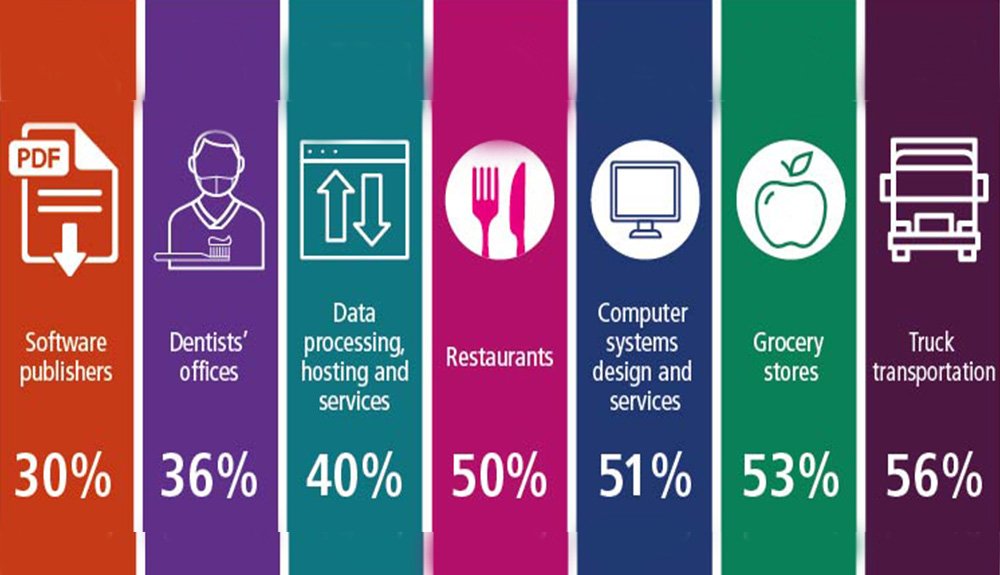
Benefits of immigration to Canadian sectors
Immigrants help grow Canada’s future. According to Statistics Canada, immigrants are making an important contribution across every sector of Canada’s economy. As of May 2021, immigrants aged 25 to 54 represented Learn more about how they contribute to different sectors. Immigration matters in healthcare In order to maintain access to high-quality treatment, the healthcare industry in Canada employs more than 1.6 million people, and in the years to come, many more will be required. The majority of the almost 500,000 over-55 employees in the healthcare industry will be retiring during the next 10 to 15 years. Additionally, there are now difficulties in hiring nurses, home health care providers, and residential care professionals from all throughout Canada. Immigrants have a clear chance to contribute significantly to the goal of having a sufficient labor force in the healthcare industry. The sustainability and effectiveness of the Canadian healthcare system depend on an integrated and diverse workforce. We value the important contribution of immigrants to our healthcare system and welcome them to Canada! Claire Betker, RN, MN, PhD, CCHN(C), President of the Canadian Nurses Association Impact of immigration All statistics are from the Statistics Canada 2016 Census. Immigration matters in business In Canada, the business sector employs about 12 million people. A vital component of both the Canadian economy overall and the business sector are entrepreneurs. Over 2.7 million Canadians work by themselves, and over 800,000 of them have paid staff. From coast to coast, these business owners make sure that consumers have options and competition for goods and services in both big and small towns. Future-focused, immigrant entrepreneurs and company executives will be critical to maintaining our economy’s expansion and prosperity. Economic immigration has always been the lifeblood of Canada’s economic success and has played a key role in the building of our great nation. Dan Kelly, President and Chief Executive Officer, Canadian Federation of Independent Business Impact of immigration All statistics are from the Statistics Canada 2016 Census. Immigration matters in sports How we practice sports in Canada today is influenced by a number of factors, including our 4 seasons, and our geographic and social diversity. For example, lacrosse, our national summer sport, has been played by Indigenous peoples for close to 1000 years. Hockey, our national winter sport, was invented in Canada in the 1800s. Basketball was invented by Canadian Dr. James Naismith in 1891 to condition young athletes during the winter. Our sport system allows people from all segments of Canadian society to get involved in sport activities at all levels and in all forms of participation. Football – like citizenship – is the ultimate team game. It requires people of every size, strength, and skillset to work together as a team to achieve great things. [Canada’s] new citizens, and our players, are part of a proud history that has made our league and country stronger. Randy Ambrosie, Commissioner of the Canadian Football League Impact of immigration All statistics are from the Statistics Canada 2016 Census. Immigration matters in science and technology Because of its internationally recognized quality of life and post-secondary educational institutions, Canada attracts talent from around the world to help build the country’s economy and grow the science and technology sector. With an aging Canadian work force and the need for more technology workers, there’s an opportunity for immigrants to make their mark in the field. Canada has an opportunity to be a country where the best talent from around the world can move here and do their life’s work as never before. Alexandra Clark, Chief of Staff to the Chief Executive Officer, Shopify Impact of immigration Unless otherwise noted, all statistics are from the Statistics Canada 2016 Census. Immigration matters in arts and culture Canada is home to a vibrant and lucrative arts and culture sector. Canadian artists, musicians, actors and authors are known around the world. Immigrants play an important role in helping this sector grow and flourish. Let me express the hope that Canadians will always remember that immigrants have helped make us the envy of the world. Peter Herrndorf, former President and Chief Executive Officer, National Arts Centre We don’t all share the same backgrounds, but there are so many things we humans have in common throughout time and space in history: love, families, and the need to belong. Let’s spread empathy and solidarity. Sophie Deraspe, award-winning Canadian filmmaker Impact of immigration All statistics are from the Statistics Canada 2016 Census. Immigration matters in food services The food services sector is one of the top employers in Canada. There are 1.16 million employees in the sector, an increase of 9% since 2015. But restaurant and other food service businesses still need workers. As of September 2019, more than 67,000 jobs were unfilled, more than any other main sector of the Canadian economy. In 2019, more than half of Restaurants Canada’s members had trouble finding workers for “back-of-house” jobs (Restaurants Canada, 2019 employer survey). Immigrants will remain an important source of workers for this industry in the years ahead. Impact of immigration Unless otherwise noted, all statistics are from the Statistics Canada 2016 Census. Immigration matters in philanthropy The 2020 U.S. News and World Report ranked Canada #1 in the world for quality of life in 2019 and 2020. Our charities and non-profits play a crucial role supporting this high quality of life. Canada’s 170,000 registered charities and non-profits employ about 2 million people (Imagine Canada, 30 Years of Giving in Canada, 2018). Thirteen million Canadian volunteers give their time and a portion of their income to support worthy causes in the charitable sector. Nearly 1 in 4 workers in social advocacy, civic, social and giving-related organizations is over 55 and will be retiring in the near future. Newcomers are an important source of workers to ensure the charitable sector continues to thrive across the country. Impact of immigration Unless otherwise noted, all statistics are from the Statistics Canada 2016 Census or Statistics Canada, Giving and volunteering among Canada’s immigrants, 2012. Increase

Planning a move to Canada for work? Learn how to validate your credentials and get started
Discover the steps to get your credentials recognized for work in Canada. 1. Review the job profile Examine the job profile on Job Bank to learn important details about the job you have, like: 2. Find your occupational profile The Canadian Information Centre for International Credentials (CICIC) provides occupational profiles for a wide range of fields. 3. Compare your qualifications Compare your qualifications to the requirements for employment in the province or territory where you want to live. This includes: Determine what you need to do to achieve these standards. You may also need to compare your language skills to those required for your position. 4. Contact a regulatory body Contact the regulatory organization or apprenticeship authority in your province or territory. They will explain what you need to do to obtain a license or certification. You must prove to them that you meet the same criteria as those trained in Canada. This is shown via your In many circumstances, you can have your educational qualifications evaluated and start applying for a license or certificate before leaving your home country. The regulatory organization or apprenticeship authority can advise you on what actions to take before you arrive in Canada. Visit Job Bank to learn more. 5. Collect your documents Many documentation about your education and experience can help explain your foreign qualifications to: Before you go to Canada, you can: Documents that show your qualifications for employment in Canada include: These documents are required when applying for: Documents you may need include: You may need to send official documentation directly from schools or other organizations to Canada: Before you travel to Canada, check with the appropriate organization to see what they need. Translate your documents You may require your documents translated into English, French, or both. To determine whether you are required to: Missing documents If you aren’t getting the documents you need, contact the regulatory organization or apprenticeship authority to find out what you should do. 6. Consult an approved assessment agency If you are not required to have your credentials examined as part of the licensing process, you should consider having them analyzed by an approved assessment agency. It will allow you to demonstrate to companies how your training compares to that of persons schooled in Canada. Next steps: When you finish your assessment, you’ll know if you: 7. Upgrade your skills or education It might be easier to find work if you get more training in your field of interest. You can: Here are some ways to uncover education and training opportunities in Canada that will help you qualify for the job you want: Learn about skills training on Job Bank. If you want to continue your studies in Canada, visit the websites of the universities and colleges or by contacting the following institutions: Canadian citizens and permanent residents may be eligible for student loans or grants. Eligibility is determined by the sort of course you wish to attend and the province or territory in which you live. 8. Look for related jobs at job bank Because getting licensed takes time, you may need to work in a job related to but not in your field while you wait. Working in a connected job gives you the possibility to: Consider working in a job that is not related to your profession if: You may decide to stay in a similar field or use this expertise to help you obtain licensure in your initial occupation. Here are some strategies to locate alternative jobs:

IRCC Update: Canada’s Immigration Backlog Sees a Modest Increase
According to recently updated data from the IRCC, there is a modest increase in Canada’s immigration backlog as of April 30. There were 2,220,200 applications for citizenship, permanent residence, and temporary residence pending. This data was updated on May 27 by Immigration, Refugees and Citizenship Canada (IRCC). 897,100 of the more than 2.2 million applications being processed were backlogged, which is more than the typical IRCC service requirements. 892,000 was this figure for the month of March. Even though 1,323,100 applications were being processed in accordance with IRCC service requirements, the backlog only grew for applications for temporary residence. In March 2024, there were 538,600 applications for temporary residency; by April of the same year, there were 548,100 applications. Conversely, 665,400 applications in March and 661,300 in April met service standards, respectively. In March 2024, there were 47,400 pending citizenship petitions; by April 2024, that number had somewhat dropped to 46,600. This decline is indicative of the continuous attempts to streamline the naturalization process. As of April 30, there were 302,400 applications pending for permanent residency, compared to 304,300 at the end of March 2024. The goal of IRCC is to process 80% of applications within their service standards at any given point in time. The service requirements for work permits, study permits, and express entry PNPs, however, are not met by IRCC. For 80% of citizenship, express entry, and spousal sponsorship, IRCC is fulfilling service requirements.

The Top 10 In-Demand Jobs in Canada You Should Consider for 2024
Introduction The job market in Canada is expected to see continued growth and evolution in 2024. As the economy transforms and new technologies emerge, certain occupations are anticipated to be in high demand over the next few years. This list examines 10 of the top in-demand jobs projected for 2024 in Canada. It provides a brief overview of the labor market outlook and highlights occupations that are likely to see strong hiring, have abundant openings, and provide good wages. Factors driving job growth include an aging population requiring more healthcare services, data analytics and AI disrupting many industries, infrastructure projects necessitating skilled trades, and evolving business needs demanding more financial and analytical roles. While specific hiring needs will vary by province and city, these 10 occupations should provide job seekers with a useful guide to where some of the greatest opportunities lie. The list reflects positions projected to be both numerous and well-compensated. 1. Registered Nurse (RN) Registered Nursing is projected to be one of the most in-demand jobs in Canada by 2024 due to several factors: 2. Data Scientist Data scientists are in high demand as companies increasingly rely on data analytics and insights to drive business decisions. With the exponential growth of data, there is a pressing need for professionals who can collect, analyze and interpret large datasets to identify trends and opportunities. The key skills required to be a successful data scientist include mathematics and statistics, programming languages like Python and R, machine learning, and communication skills to explain technical findings to non-technical colleagues. A Master’s degree in a quantitative field like computer science, applied math or statistics is usually required. Data scientists earn a median salary of over $100,000 in Canada, with experienced professionals earning $130,000 or more. Job growth is projected to be over 25% from 2020 to 2024 as organizations continue to invest in big data. Major employment sectors include IT, finance, healthcare, retail and government. With demand outweighing supply for qualified candidates, data scientists have excellent job prospects and career advancement opportunities. Their analytical skills will be critical for organizations to unlock insights, improve efficiency and gain a competitive edge. 3. Electrical Engineer Electrical engineering is poised to be one of the most in-demand jobs in Canada by 2024 due to the country’s focus on updating infrastructure and integrating new technologies. Electrical engineers design, develop, test and supervise the manufacturing of electrical equipment like electric motors, navigation systems, and power generation equipment. As Canada continues to invest in clean energy and modernize things like the power grid, electrical engineers will be needed to take on these large-scale projects. Their main responsibilities include designing new ways to generate, distribute, and utilize electrical power. They may work on electric propulsion systems, communications systems, or electrical installations in buildings and factories. Electrical engineers have a median salary of $87,500 CAD per year. The job outlook for electrical engineers is excellent as demand is growing rapidly. Many new positions will open up by 2024 to design and integrate renewable energy systems across Canada. Electrical engineers are highly skilled professionals who will play a key role in building Canada’s infrastructure and technology capabilities for the future. 4. Marketing Specialist The marketing landscape has changed dramatically in the digital age. Marketing specialists need to adapt to new technologies and strategies to promote products and services. This evolving role requires certain skills and qualifications to stay competitive. Marketing specialists analyze market conditions to identify potential customers and promote an organization’s products or services. They often specialize in a specific area like social media, search engine optimization, email marketing, or data analytics. As marketing continues to move online, specialists need expertise in digital platforms and analytics tools. To succeed as a marketing specialist, you’ll need skills like: A university degree in marketing, communications or business is generally required. Coursework in consumer behavior, market research, data analytics, and digital marketing are assets. Certifications like Google Analytics Individual Qualification (GAIQ) can demonstrate expertise. Some on-the-job training may be provided. The average salary for marketing specialists in Canada is $56,000 per year. With the rise of digital marketing, demand for specialists is growing faster than average for all occupations. Job opportunities are projected to increase 15% from 2021 to 2031. 5. Business Analyst Business analysts are in high demand as companies seek to make data-driven business decisions. The role of a business analyst is to understand business objectives, processes, and needs, and provide insights and recommendations to help organizations operate more efficiently and profitably. With the exponential growth of data, there is a growing need for business analysts who can collect, analyze, and interpret data to identify opportunities, streamline operations, and support strategic decision making. Key responsibilities of a business analyst include requirements gathering, data analysis, process modeling, solution design, and project management. To succeed as a business analyst, certain skills are required including analytical thinking, business acumen, communication, problem-solving, and technical skills with data analysis tools and databases. A business analyst needs to understand the company’s goals and operations, while also having the data analytics skills to extract and analyze relevant information. Business analyst is a lucrative career with a median salary of around $83,000 in Canada according to PayScale. Job prospects are strong with a projected 9% growth from 2019 to 2028, according to the Government of Canada Job Bank. Business analysts are in demand across various industries from IT to finance to healthcare. With companies relying more on data insights, business analysts play a critical role in driving organizational success. 6. Truck Driver The trucking industry is essential for transporting goods across Canada. As e-commerce and manufacturing grows, the demand for truck drivers is increasing. There are several types of truck driving jobs available: The average salary for a truck driver in Canada is $45,000 to $65,000 per year. However, long-haul truckers and specialized transport can earn over $80,000 annually. The job outlook for truck drivers is strong due to rising transportation demands.There are many well-paying truck driving jobs available

In the most recent PNP results, Manitoba and British Columbia announce provincial nominations
The Provincial Nominee Programs (PNPs) of British Columbia (B.C.) and Manitoba have granted nominations to newcomers keen on pursuing Canadian permanent residence (PR) in the future. Applicants were encouraged to apply through streams focusing on skills immigration and family reunification. For a comprehensive overview of this week’s provincial immigration updates, continue reading. Please note: Various PNPs employ unique scoring criteria for evaluating immigration candidates, rendering comparisons between PNPs irrelevant as scores can significantly differ. Immigration outcomes (May 11th to 24th) British ColumbiaThe British Columbia Provincial Nominee Program (BCPNP) conducted two separate draws on May 14th and 22nd. On May 14th, BCPNP issued 37 invitations in a general draw encompassing all skilled worker streams within the program, including Skilled Worker, Skilled Worker Express Entry British Columbia (EEBC) option*, International Graduate, International Graduate EEBC option, and Express Entry & Semi-Skilled streams. Candidates required a minimum score of 131 to be invited under all streams except for the Express Entry & Semi-Skilled stream, where the minimum score was 107. Additionally, within the same draw on May 14th, BCPNP conducted targeted draws for candidates with professional experience in occupations in-demand in B.C. These draws were held under the Skilled Worker and International Graduate streams (including EEBC option) and invited at least 36 candidates. The cut-off scores were: On May 22nd, BCPNP conducted another targeted draw for in-demand positions under the Skilled Worker and International Graduate streams (including EEBC option). At least 75 invitations were issued, with cut-off scores as follows: Manitoba On May 23rd, the Manitoba Provincial Nominee Program (MPNP) conducted draws across three distinct programs. Under the Skilled Worker in Manitoba stream, invitations were extended to individuals whose profile identified a “Manitoba Supporter” as a close relative, who is either a Canadian permanent resident or citizen. Additionally, candidates were required to have been residing in Manitoba for at least one year to be considered in this draw. MPNP invited 121 candidates with a minimum score of 782 under this stream. Simultaneously, Manitoba held a draw under the International Education Stream, granting invitations to 93 eligible candidates. Lastly, MPNP conducted a draw under the Skilled Worker Overseas stream, inviting candidates whose profiles indicated they had been invited under a strategic recruitment initiative of the MPNP. The province issued 39 invitations to candidates with a minimum score of 688. Out of the total 253 candidates invited to apply, 29 indicated possessing a valid Express Entry profile and job seeker validation code.

Bill C-71: An Act to amend the Citizenship Act (2024)
A Canadian citizen parent may transfer citizenship to a child born outside of the country provided the parent was either born in Canada or became a naturalized citizen prior to the kid’s birth, according to the Citizenship Act’s first-generation limit on citizenship by descent. Citizenship for the adopted kid can be directly granted to Canadians who were born or naturalized in the country prior to adopting a child born abroad. The first-generation limit prevents Canadian citizens who were born outside of the country from granting citizenship to their adopted kid who was born outside of Canada, as well as from applying for a direct grant of citizenship for a child who was adopted outside of the country. The Ontario Superior Court of Justice ruled on December 19, 2023, that the first-generation limit for those born outside of the country is unconstitutional. We agree that the law has unacceptable repercussions for Canadians whose children were born outside of the nation, which is why the Government of Canada chose not to appeal the decision. To make the citizenship process as equitable and open as feasible, the government is proposing laws. The C-71 bill would • create a new framework for citizenship by descent going forward that would allow access to citizenship beyond the first generation based on a substantial connection to Canada. • automatically remedy the status of any person already born who would have been a citizen were it not for the first-generation limit. Substantial connection test With the passage of Bill C-71, a Canadian parent who was born outside the country but maintains a strong connection to it would be able to transfer citizenship to their child beyond the first generation. Additionally, it would provide them the opportunity to directly obtain citizenship for any kid they adopt beyond the first generation and who was born overseas. A Canadian parent who was born overseas would need to have spent a total of 1,095 days physically present in Canada prior to the birth or adoption of the child in order to prove a significant connection to the country. Lost Canadians People who lost or never obtained citizenship as a result of some antiquated clauses in previous citizenship laws are commonly referred to as “Lost Canadians.” The majority of instances were resolved by 2009 and 2015 legislative amendments. People were able to regain their lost citizenship or obtain Canadian citizenship as a result of these changes. In spite of this, further modifications are required to take into account other groups of Lost Canadians and their offspring who were left out of the 2009 and 2015 adjustments. Any remaining “Lost Canadians,” their descendants, and anyone born overseas to a Canadian parent in the second or later generations prior to the law’s enactment will all have their citizenship restored under Bill C-71.Those who lost their citizenship due to obligations under the previous Citizenship Act section 8 are included in this.