

Immigration, Refugees and Citizenship Canada (IRCC) has approved a new professional organization in Ottawa on May 22, 2024, to offer educational credential assessments (ECAs) to architects seeking immigration to Canada. In order to meet eligibility standards, applicants for programs leading to economic permanent residence must demonstrate that their foreign degrees, diplomas, or certificates are authentic and equivalent to Canadian credentials. To accomplish this, applicants must get an ECA from a professional body or multi-purpose ECA organization that has been designated by the IRCC. The Minister has assigned the Canadian Architectural Certification Board (CACB) the authority to grant ECAs as of May 20, 2024, to applicants who have indicated that their major or intended vocation is the National Occupational Classification (NOC) of “Architect” (NOC 21200). The CACB’s ECAs will establish how international degrees relate to Canadian qualifications required for architectural practice. ECAs are acknowledged as a stage in the architect licensing procedure. Note: IRCC will continue to accept your ECA if it is still valid if your principal occupation is “Architect”(NOC 21200) and it was issued by another recognized organization prior to October 31, 2024.

Community applications now open for new rural and Francophone immigration pilots
On May 21, 2024, in Ottawa, Ontario, it was announced that Canada recognizes the importance of rural and Francophone minority communities for its long-term growth and linguistic diversity. Acknowledging the unique challenges these communities face, the Government of Canada is initiating two new pilot programs this autumn to attract skilled workers vital for their economic and communal development. The Honourable Marc Miller, Minister of Immigration, Refugees and Citizenship, unveiled the community application process for the Rural Community Immigration Pilot and the Francophone Community Immigration Pilot. Economic development organizations nationwide are encouraged to apply for one or both pilots on behalf of their communities. These applications will need to demonstrate eligibility and articulate how immigration can enhance local economies. Immigration, Refugees and Citizenship Canada (IRCC) will carefully select up to 15 communities for participation in the pilots. Selection criteria will include economic requirements, availability of newcomer services, and the ability of economic development organizations to collaborate with IRCC. The chosen communities will be announced in the coming months and will undergo onboarding and training starting in the fall.
Canada Welcomed 121,620 New Permanent Residents In First Quarter
Canada welcomed 121,620 new permanent citizens in the first quarter of 2024, with 52,720 of them coming to Ontario and just 17,745 to British Columbia. In the first quarter of 2023, this figure was 145,495; however, it is too early to draw any conclusions. However, at least as of the start of 2024, we can claim that immigration to Canada has decreased as compared to last year. These figures do, however, represent an increase over the first quarter of 2022, when 113,805 new permanent immigrants were welcomed into the nation. In addition, from January to March, 135,291 authorizations and visas for permanent residents were granted. In 2023, during these months, the number was 156,272. Under the largest federal economic category of immigration, the Express Entry scheme, 36,635 new PRs have been allowed. This represents a 6% increase over the 34,555 PR entries from the first quarter of 2023. Province-Wise New PRs Admitted in Q1 2024 Ontario, the country’s most populous province, was the most popular destination for newcomers and landed 52,720 new permanent residents in the first three months of 2024. This constitutes around 44% of the total number of new permanent residents who landed in the country. Manitoba, Newfoundland and Labrador, British Columbia, and Saskatchewan recorded the largest decline in admitting new PRs Conversion of Short-Term to Long-Term ResidentsIn the first quarter of 2024, there were 7,180 temporary residents having a prior study permit holder status, down 2,370 (-24.82%) from the previous year. In a similar vein, 21,190 temporary residents who had previously held a Post-graduate Work Permit (PGWP) Holder Status made the switch to permanent residency; this is a decrease of 17.90% (4,620) from 25,810 in the first quarter of 2023.

From Temporary to Permanent is the key: Reducing Temporary Residence to 5% of total population by 2027: Says immigration Minister Marc Miller
Canada Immigration Minister Marc Miller has shown that everything is on the table in his overhaul of the Canada immigration system. In a tacit acknowledgement that the system has run out of hand under his Liberal government, Miller has spent his time since becoming the Minister for Immigration, Refugees and Citizenship setting out how he plans to fix it. His speech after the recent Forum of Ministers Responsible for Immigration in Montreal underlines his priorities and summed up much of what he has been doing in recent months. He spoke of the “significant progress” made on “the need to retain temporary workers with in-demand skills and help them transition to permanent residence, with our duty to safeguard job opportunities for Canadians and existing permanent residents”. Canada issued a combined 259,155 work permits through the International Mobility Program and Temporary Foreign Worker Program in 2015, the year Prime Minister Justin Trudeau and the Liberal party came to power. Last year, 949,270 work permits were issued, representing a 266 per cent rise in eight years. Study permit numbers have risen similarly, from 219,035 issued in 2015 to 682,900 last year, a 212 per cent rise. The fear is that Canada does not have the capacity to absorb these numbers. It is currently experiencing a housing supply problem, while Miller has moved to place caps on study permits to begin to tackle the problem. The move to include temporary residents in immigration levels planning is also part of measure to reset the balance. It does not mean the Liberals are suddenly anti-immigration. Canada will still welcome a record number of newcomers this year. Instead, Ottawa has simply realised it cannot let number continue to rise in such an uncontrolled manner. There was one very interest section in Miller’s speaking notes are the recent federal-provincial-territorial meeting. He described one of his priorities as: “Recognizing the importance of having good data to ensure we understand labour market needs and communities’ capacity to support newcomers.” Labour Market Need We’ve been told for years that Canada has welcomed new immigrants based on labour market need. This statement would imply that the data that has been used to decide those labour market needs has not been reliable. Miller says he has asked provinces and territories for data on temporary resident populations, rates of temporary to permanent transition and capacity to absorb. It has to be a source of concern to Canadians that the immigration minister does not know how many temporary residents are in the country. The Canadian government website has figures on temporary to permanent residency transition. It says that 156,580 former work permit holders and 25,605 former study permit holders become permanent residents last year. When you compare that to the number of permits issued, mentioned above, it reveals a wide mismatch. Miller’s intention is to bring those figures closer together, ensuring that those coming to Canada on study and work permits have a realistic chance of staying here permanently. Remaining immigration priorities outlined in Miller’s speech included spreading the benefits of immigration to smaller communities, strengthening Francophone communities outside Quebec, supporting the world’s most vulnerable people and improving Canada’s response to crises, such as wars and natural disasters.
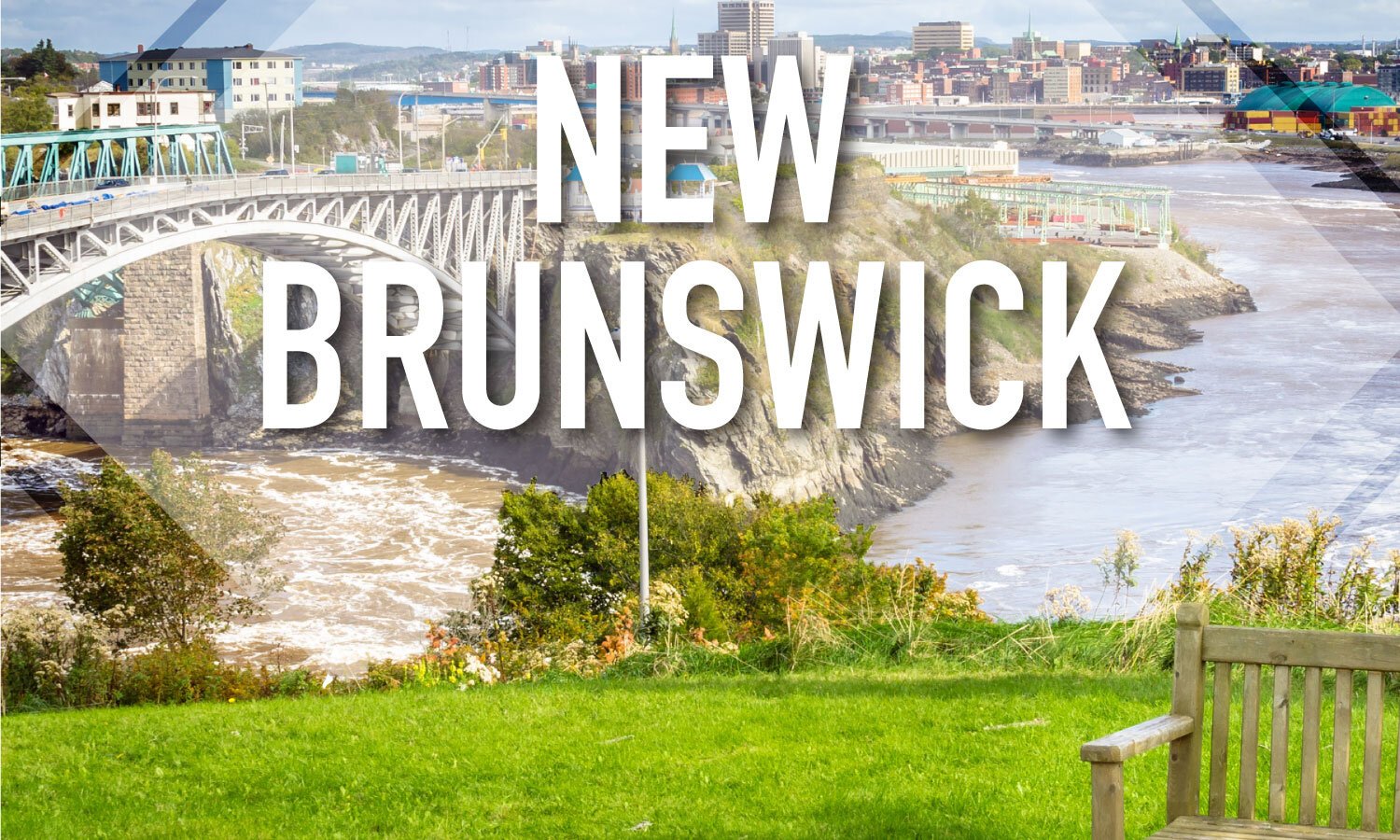
New Brunswick Skilled Worker Stream will be temporarily paused after May 17
Invitations to apply (ITAs) under the New Brunswick Skilled Worker stream will be temporarily paused for any expression of interest submitted after May 17th, 2024. This pause will allow us to properly manage the large inventory of candidates under the stream. Atlantic Immigration Program New Brunswick Skilled Worker Process Map Let’s Start Before applying to the New Brunswick Skilled Worker Stream, you must: Being PR Ready entails a better experience navigating the immigration procedures in New Brunswick and Canada, as well as more efficient processing and less delays. Please check our initial steps page to find out what you need to know before applying for Immigration Program Streams to ensure that you are PR ready. Submitting Your Application 1. Read Our Guide Comprehensive details on the program are available in the New Brunswick Skilled Worker Stream Guide. Before applying, please carefully read this. The eligibility conditions, selection criteria, application procedure, and other pertinent information are presented. 2. Submit an Expression of Interest (EOI) Through the INB Portal, you can create a candidate profile and submit an Expression of Interest (EOI) to the province if you meet the eligibility requirements, have a legitimate job offer, and are PR Ready. 3. Receiving an Invitation to Apply (ITA) An Invitation to Apply (ITA) will be sent to your INB account if you are chosen. You will have to provide verification for the data you entered in your profile. Once you receive an ITA, you have 45 calendar days to submit a completed electronic application.ITAs are not generated on autopilot. An ITA will only be extended to eligible registrants, and only those who accept it will be able to complete an application for the NB Skilled Worker Stream. 4. Complete Your Electronic Application You must use your INB account to electronically submit the application and all supporting materials. PDF files must be sent for every document. Ensure that all required papers and documentation are included in your application. A nomination is not assured even if you submit an application and fulfill the prerequisites for the New Brunswick Skilled Worker Stream. The New Brunswick government retains the authority to alter the requirements and/or stop streams. 5. Pay the Processing Fee You must use your online account to pay your costs before submitting your completed application. The processing fee includes your dependant children and your spouse or common-law partner. There is no reimbursement for processing fees. The payment methods accepted for the $250 Canadian processing fee include Visa, MasterCard, Discover, American Express, INTERAC Online, and Visa/Debit. 6. Wait for a Decision Your application will be evaluated based on selection criteria and eligibility conditions. The final judgment will be sent to you in writing by the New Brunswick government and uploaded to the dashboard of your online profile. The New Brunswick government will have the last say over whether to issue a nomination certificate. If you are selected, you can submit a direct application for permanent residence (PR) to Immigration, Refugees and Citizenship Canada (IRCC). Keep in mind that you have to uphold the terms of your nomination while you wait for your PR application to be approved. Forms to Submit with Your Online Application After Nomination You must apply directly for Permanent Residence (PR) with Immigration, Refugees and Citizenship Canada (IRCC) if the Government of New Brunswick grants you a nomination. Keep in mind that you have to uphold the terms of your nomination while you wait for your PR application to be approved. If you file a completed PR application before the nomination certificate’s expiration date, it will be deemed valid for an additional six months after it was issued. To find out more about the non-Express Entry route of applying for permanent status, go to immigrate as a provincial nominee. Other Forms

Learn about the Yukon Nominee Program process
Notice of application intake pause Currently, new applications from Whitehorse-based firms are not being accepted. However, processing will continue for the applications already received. The Yukon’s 2024 allotment are presently exceeded by applications. Immigration, Refugees and Citizenship Canada determine allocations. Employers in remote areas in Yukon may still submit applications. This is a stopgap action. In 2025, we want to start accepting applications from employers in Whitehorse again. Priority application criteria Employers can find qualified candidates in the Yukon by using the Yukon Nominee Program (YNP), which brings talented professionals to the region. Owing to a high number of applications, the Immigration Branch has created a list of requirements for priority. By giving applicants priority, we can make sure that companies who depend on the nominee program may carry on with their vital business activities. those in Category 1 will be evaluated first, then those in Category 2 and so on. Prioritization does not ensure that an application will be decided upon before the expiration of a foreign national’s legal status. It takes an average of 12 to 14 weeks for processing. The number of applications received and the priority application criteria affect how long this takes. Program streams The Yukon Nominee Program is made up of 4 program streams. These include: On the pages above you’ll find: Yukon Nominee Program process Each nominee’s eligibility for permanent residence and work permits is evaluated by the IRCC. The IRCC’s decision to approve or reject permits or permanent residency is independent of the YNP and the Government of Yukon. We are unable to challenge those rulings. Inquiring about an application The Yukon Nominee Program is an employer-driven program. Only employers can inquire about application status. Maintaining legal status Currently residing in Canada, foreign individuals are required to keep their legal status during the application process for the Yukon Nominee Program and during the evaluation process. We will reject your application if not. The foreign national might not be able to participate in the program if they are in maintained status. For instance, whether they are extending a working holiday visa or a post-graduate work permit. Employer responsibilities Required documents A list of required papers is included in the application form for the Yukon Nominee Program. We will return your application to you if you do not include all of the papers and documentation listed on the checklist. Applications that are not complete will not be processed or added to the processing queue. We will verify with you that your application is complete if you resubmit it with all supporting documentation. Based on the date we get the resubmission, that is when we will process it. During the application process and during the evaluation, employers are required to verify the validity of all supporting papers. This covers job postings, company licenses, language test results, Yukon Corporate Online Registry (YCOR), and any other relevant paperwork. Provide updated copies of any supporting papers that have expired to minimize Wages Throughout the application processes and at the time of assessment, employers must ensure the following: Canada updates the median wage annually in November. The Yukon updates the minimum wage annually in April. Statistics Canada updates the low income cut-off index annually mid-year.
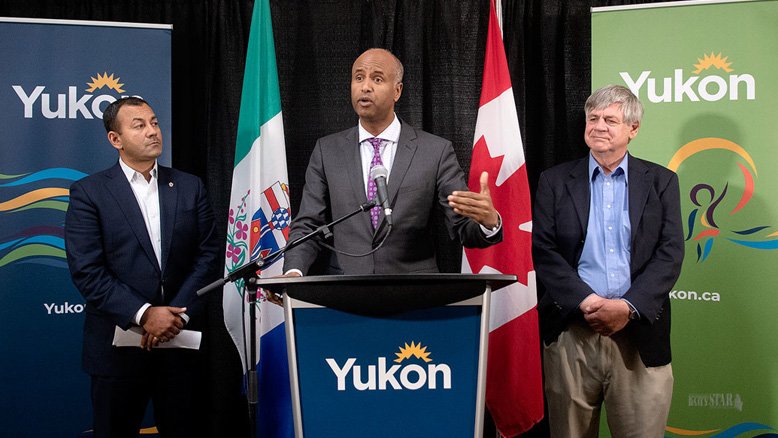
Temporary pause on Whitehorse-based Yukon Nominee Program applications
The Yukon government is temporarily suspending the acceptance of Whitehorse-based applications for the Yukon Nominee Program with effect immediately. The goal of this action is to expedite the processing of current applications. The program will continue to accept submissions for candidates in Yukon remote communities. Whitehorse’s applications have been temporarily suspended as a proactive effort to control the present level of submissions. Between January 1, 2024, and May 6, 2024, 590 applications were received by the Yukon Nominee Program. 483 applications were still undergoing processing as of May 6, with 107 of these nominations having been handled by the branch. This exceeds Immigration, Refugees and Citizenship Canada’s (IRCC) 430 nominee cap for the Yukon in 2024. The Yukon government is dedicated to making sure the Yukon Nominee Program can support the province’s long-term immigration and labor market objectives. Acknowledging the distinct obstacles that companies in remote Yukon towns have when recruiting staff, it is imperative that applications from these areas be consistently accepted in order to meet their local labor requirements. The current prioritizing criteria will stay in effect in order to support the continuation of vital business activities for enterprises that depend on the program. In 2025, the Yukon government plans to start accepting applications from companies in Whitehorse. “The Yukon Nominee Program is an excellent way for Yukon businesses to expand their workforce and enable newcomers to Canada to make the Yukon home. Despite the pause in Whitehorse, our team is diligently working on processing existing applications and continues to accept those to support rural Yukon. Our government is committed to providing and supporting essential initiatives to meet the needs of our growing territory and build a strong, sustainable economy.” Premier and Minister of Economic Development Ranj Pillai Quick facts

10 often asked questions by tourists traveling to Canada
Some foreign people wishing to visit Canada may find themselves wondering about their circumstances in light of recent revisions to the requirements for guest visas for some citizens of Mexico. In order to help, CIC News has put together a list of commonly asked questions that you might find useful to look over before investing the time, effort, and financial resources required to travel to Canada. How much time may I spend as a guest in Canada? Generally speaking, travelers to Canada are allowed to stay for six months from the date of entry (or until the expiration of their passport, whichever comes first). A stamp on a visitor’s passport or a paper given to them by a Canada Border Services Agency (CBSA) officer will specify the deadline for leaving the country. Visitors who would like to remain in Canada beyond their initially authorized stay can apply for an extension (more on this later). What distinguishes a multiple-entry visa from a single-entry visa? As the name suggests, a single-entry visa only permits the bearer to enter Canada once, but a multiple-entry visa enables several entries as long as the visa is still valid. Note: Although Immigration, Refugees and Citizenship Canada (IRCC) evaluates each application individually and grants each visitor a visa in accordance with their needs, all applicants for visiting visas are automatically assessed for a multiple-entry visa. The International Rescue Committee (IRCC) makes it clear that holders of single-entry visas need to get a new visa in order to re-enter Canada after leaving unless they are going immediately to the US or St. Pierre and Miquelon. In meanwhile, multiple-entry visas are good for one month or for the shorter of the two durations listed below: ten years or until the visa holder’s passport expires. A multiple-entry visa holder is permitted to stay in Canada for a maximum of six months at a time during each entrance. If my family and I are traveling together, may I submit a single visa application for them all? No. Each visitor visa applicant must fill out and sign their individual application, even if they are all filed for the same family group, and can be sent in the same envelope with a single payment receipt covering the entire cost of the applications. All other necessary forms are subject to this restriction as well, with the exception of the Family Information form, which is only for candidates who are 18 years of age or older to fill out. Note: Every applicant for a guest visa under the age of 18 must have a parent or legal guardian sign the applicable form(s), and parents and guardians can assist their children in filling them out. Is there a way I may support a friend or relative who wants to travel to Canada? You can send a letter of invitation to assist a loved one in visiting Canada, even though they will need to complete their own visa applications. It should be emphasized that while this paper outlines your potential assistance (e.g., offering to cover lodging costs), it does not ensure that the visiting visa applicant will be granted. Do I need a medical exam to get a visitor visa? The duration of the visitor’s stay in Canada will determine this. Generally speaking, unless they plan to work in a position where the “protection of public health is essential,” travelers visiting Canada for six months or less are exempt from needing a medical examination. You may see a list of jobs that meet this qualification here. Visitors who plan to stay in Canada for more than six months are likewise subject to the aforementioned public health protection requirement. Additionally, if a tourist meets one of the following two criteria, they must get a medical examination before staying in Canada for six months or longer: *This applies to all visitors, even those who are citizens of visa-exempt countries, who have been in any of the eligible countries “in the one year immediately preceding the date [the visitor] sought entry into Canada.” Is a visitor visa the same thing as a visitor record? No, foreign nationals wishing to go to and enter Canada as visitors must get a visitor visa. (in most circumstances, for up to six months). On the other hand, a visitor record is given by CBSA agents in order to limit or increase the recipient’s time in Canada. Foreign nationals may also get this kind of paperwork from the IRCC or CBSA following the approval of their application to change their status or prolong their stay in Canada. For further information on the distinction between a visitor record and a guest visa, click this link. My previous passport is still valid, even though I have a new one. Is my previous passport still valid for the visa? IRCC notes that it is possible to travel to Canada using a valid visitor visa placed in an old passport. However, travelers in this situation must bring both of the following documents with them to Canada: *Travellers may need to explain to CBSA officers why their old passport is no longer valid Note: To avoid processing delays at the Canadian border, IRCC recommends that all visitors to Canada obtain a new visitor visa in their new, valid passport. How can I extend my stay as a visitor? Extending your stay in Canada requires that you submit biometrics (fingerprints and a photograph) and apply for a visitor record. This document allows visitors to Canada three options to extend their stay in the country: The steps to applying for a visitor record online can be found on this IRCC webpage. Can I file an appeal if my visitor visa is denied? There is no appeal process for a visitor visa application from IRCC. When an applicant is denied a visitor visa to enter Canada, they may re-apply, but IRCC recommends that they only do so if their situation has changed, or they have new information to submit that may alter the outcome of their

Has the LOA verification method implemented by IRCC effectively safeguarded overseas students from Canada?
On December 1, 2023, Immigration, Refugees and Citizenship Canada (IRCC) implemented a new verification procedure for Letters of Acceptance (LOAs). Among other modifications to its foreign student program, IRCC announced the launch of its LOA verification system. These adjustments are meant to enhance overall program integrity and safeguard international students studying in Canada. All Canadian designated learning institutions (DLIs) are required under the new verification system to manually verify each Letter of Authority (LOA) they receive from IRCC via the department’s web portal within ten calendar days. Note: International students were previously obliged to provide LOAs as supporting documentation when applying for a student visa in Canada. The IRCC hopes to safeguard foreign students in a number of ways with this verification method, one of which is to ensure that they are not squandering time, money, or other resources in their pursuit of a study visa in Canada. The system will return the foreign student applicant’s student visa application and cancel it: Has IRCC’s system been successful? In the first four months of its implementation, between December 1, 2023, and April 1, 2024, the IRCC’s LOA verification system has, according to data released by the organization in a news release on April 29, “identified almost 9,000 LOAs that [either did not] match any [letter] issued by a DLI or that the DLI had already canceled before the foreign national applied for a study permit.” Stated differently, thousands of overseas students have presumably already been shielded by the IRCC’s new approach from possibly squandering time and money by pursuing a study visa based on an erroneous LOA. On the plus side, the IRCC reports that in just four months, about 142,000 LOAs have been successfully processed as genuine using this LOA mechanism. According to IRCC, they were “verified as valid directly with [DLIs across Canada].” Note: IRCC says it has received nearly 162,000 total LOAs for verification in this timeframe. Although there is no data or projections available for how the department expects its LOA verification system to perform in the future, IRCC says that this new procedure has thus far “been a success.” Other ways to stay safe as an international student Although the IRCC has so far regarded its LOA verification mechanism successful, there are other ways overseas students may safeguard themselves and avoid falling victim to fraud. Be aware of bad actors Due in large part to their determination to study in Canada, international students are frequently the focus of dishonest bad actors in the immigration field. These players could promise overseas student candidates quicker application processing and success assurances. Many of these actors are just interested in stealing money from kids and their families, even if they claim to be acting in the best interests of the students. For further information on how to protect yourself as an international student, see this page. For information on what to look out for when hiring an immigration representative, click this link. Make sure your LOA has all the information the IRCC has advised. Foreign students are advised to check their LOAs as an excellent approach to ensure that they are authentic and genuine, even if DLIs are not required to contain all suggested information. For example, there may be a higher likelihood that an LOA is fraudulent if it is lacking an important detail, such as the school’s DLI number. For overseas students hoping to eventually pursue a study permit in Canada, this is a decent beginning step, even though the IRCC’s LOA verification mechanism exists to establish whether a letter is legitimate. Other ways Canada is protecting international students Other steps that IRCC is taking, or has taken recently, towards this goal, include: *Master’s degree holders are now qualified for a three-year permit, however, some students are no longer eligible for a PGWP.
PEI
MAY 2 invited 6 candidates to apply through Labour and Express Entry streams targeting candidates from the Healthcare and Construction sectors.