

On May 1, 2024, Saskatchewan updated and expanded the occupations that are to be excluded from applying to the Occupations In-Demand and Express Entry program sub-categories. The exclusion list now contains 158 occupations that are not eligible for these programs. Eight of these were added to the exclusion list in the recent update. Principal Learnings Which Programs Are Affected? The Occupations In-Demand and Express Entry PNP category in Saskatchewan are affected by these modifications. Candidates who work in these fields and intend to immigrate through Saskatchewan’s PNP would be negatively impacted by this. It will affect applicants in the Express Entry pool for certain occupations who hoped to utilize Saskatchewan’s PNP to increase their CRS for Express Entry or to immigrate through the PNP rather than Express Entry while their points are very high. What Are The Updated Excluded Occupations and NOCs? The list of professions that Saskatchewan has kept out of these programs is long. The full list, which includes journalists, aeronautical engineers, and forestry specialists, is shown below. It further specifies that the NOC TEER 4 and 5 occupations are not qualified for either the Occupation In-Demand or Express Entry subcategories. This makes sense because better-skilled professionals are the target market for each of these segments. What Occupations Were Added To the List? It looks like Saskatchewan added 8 new occupations to the list that did not appear in the previous list. These are: 43200 Sheriffs and bailiffs 43201 Correctional Service officers 43202 By-law enforcement and other regulatory officers 63211 Estheticians, electrologists, and related occupations 73300 Transport truck drivers 73301 Bus drivers, subway operators, and other transit operators 73202 Pest controllers and fumigators 73400 Heavy equipment operators. This means applicants cannot use work experience under one of these NOC codes toward their SINP eligibility. What Occupations Were Removed From the List? Only 2 occupations were removed from the list. These are: 31103 Veterinarians 32104 Animal health technologists and veterinary technicians When the Lead NOC is now included on the Exclusion List, what will happen to SINP Expressions of Interest? An applicant will no longer be able to have an active Expression of Interest if they discover that their lead NOC is one of the eight NOCs added to the exclusion list. Either manually withdrawing their Expression of Interest or receiving news that it has been withdrawn from the pool are the options available to them. If they have work experience under a NOC that is not on the list, they can then file a fresh Expression of Interest. A one, active SINP Expression of Interest may be held by an applicant at any given time. The handling of SINP applications that have been submitted, where the lead NOC is now on the exclusion list, may also be a problem. Since SINP has only been accepting a small number of NOC codes and both impacted programs have application processing durations of around 30 business days, it is extremely improbable that any active SINP applications exist where the lead NOC is now listed as excluded. Why Were These Changes Made in Saskatchewan? Saskatchewan has not provided an explanation for these modifications. Since November 2022, this list hasn’t been updated, therefore the additions most likely suggest that there isn’t a significant need for professionals in these fields. The PNP draw results for Saskatchewan also show a discernible trend toward immigration preferences that are more focused. It also targeted immigration from certain nations in a variety of country- and occupation-specific drawings in August 2023. Its latest draws all target-specific vocations. When Can We Expect Another SINP Draw? Nearly two months have passed since the previous SINP draw for the Express Entry and Occupations In-Demand subcategories was held on March 7, 2024. We may anticipate another draw in May or June based on the previous several draw trends. It is unclear whether these two vocations will be chosen in subsequent drawings given that they were taken off the exclusion list, allowing candidates with prior work experience in one of these fields to apply. It will take time to tell on this. How Often Do The Eligible Programs Change? This list looks to have been updated most recently in November 2022. Nevertheless, the program pages mention that the standards are subject to modification at any time. Furthermore, employment in a profession that qualifies for Saskwatchewan’s Occupations In-Demand or Express Entry subcategories does not guarantee an invitation to apply or nomination for Saskatchewan’s PNP, given the tendency towards more focused draws. As previously mentioned, there is a discernible tendency toward more focused draws. Furthermore, while we will have to wait and see how the amended exclusion list affects these drawings, Saskatchewan may not choose to target any vocations other than those that are expressly prohibited.

5 things you need to know about Labour Market Impact Assessments
While some foreign employees in Canada are exempt from the Labour Market Impact Assessment (LMIA), others do. Before employing a temporary foreign worker, certain Canadian firms require an LMIA. Prior to filing for a work permit, the foreign national must receive this document. It confirms if the entry of a foreign worker will benefit or have no impact on the labor market in Canada. Note: This document is not needed in LMIA-exempt employment in order for an employer to approve a foreign national’s application for a work permit. Many foreign nationals seeking employment in Canada may be attempting to expedite their immigration process in light of the recent declaration made by Immigration, Refugees and Citizenship Canada (IRCC) that the number of temporary residents in Canada will be reduced over the course of the next three years. As a result, this essay will walk readers through the responses to five frequently asked concerns regarding LMIAs that many international workers have. What is a Labour Market Impact Assessment? A Labour Market Impact Assessment (LMIA) is a document that an employer in Canada may need to get before hiring a foreign worker. A positive LMIA will show that there is a need for a foreign worker to fill the job. It will also show that no Canadian worker or permanent resident is available to do the job. A positive LMIA is sometimes called a confirmation letter. Once an employer gets the LMIA, the worker can apply for a work permit. How do I know if I need an LMIA? Employers normally need an LMIA in order to hire foreign workers, unless they qualify for an exemption. Exemptions from and requirements under the LMIA are dependent on several circumstances. Further information regarding LMIA exemptions and requirements may be found here. Why do I need another LMIA to extend my work permit? A foreign national must confirm the validity of their LMIA before applying for a work visa in Canada. Put another way, a foreign worker’s LMIA must still be valid at the time they apply for a work permit even if a work permit may be granted for a longer duration than the LMIA itself. Before an employee may apply for a new work visa or an extension of their current one, their employer must get a new LMIA if the foreign worker’s first work permit expires and they wish to continue working in Canada. Furthermore, it is crucial for employers to be aware that Employment and Social Development Canada (ESDC) will start the evaluation procedure anew and handle the case as if it were a new application when they submit an application for a new LMIA. If necessary, EDSC will be able to verify that no Canadian citizens or permanent residents are still available to fill the role of temporary foreign worker as part of this new application. Do I need an LMIA to work in Canada as an entrepreneur? In order to apply for a work visa in Canada, entrepreneurs do not need to have an LMIA. However, foreign nationals who come to work as entrepreneurs in Canada need to demonstrate that the company they want to run here will either: How can an LMIA help me obtain more CRS points as an Express Entry applicant? While candidates under the Canadian Experience Class (CEC) are not required to have an LMIA in order to be qualified for this economic immigration program, it might nevertheless be advantageous for them and for all other Express Entry candidates in general to get an LMIA from their employer. The candidate will be eligible to get additional Comprehensive Ranking System (CRS) points as an Express Entry applicant if they have a legitimate employment offer backed by an LMIA. Recent IRCC news about LMIAs On March 21, Employment Minister Randy Boissonnault and Immigration Minister Marc Miller jointly announced a number of modifications to Canada’s Temporary Foreign Worker Program (TFWP). The two ministers said that one of the modifications would be a restoration to the pre-pandemic standard of six months for each LMIA’s validity term. The date of this modification is May 1, 2024. During the COVID-19 epidemic, Canada temporarily extended the validity of LMIAs for a period of 12 months prior to this policy adjustment. The goal of this policy was to “help ease labour market conditions” nationwide.

IRCC UPDATES EXPRESS ENTRY CANDIDATES’ PROOF OF FUNDS REQUIREMENTS FOR 2024
For anyone hoping to move to Canada, the recent notice from the IRCC proposing changes to the Express Entry proof of finances criteria for 2024 has important ramifications. Candidates for Express Entry must be aware of these changes, which Immigration, Refugees and Citizenship Canada (IRCC) will be implementing on May 3, 2024. Candidates for Express Entry must now fulfill the revised settlement money requirements, which are calculated using 50% of the low-income cut-off totals. The significance of financial readiness for potential immigrants is emphasized by this modification. To guarantee compliance with the new rules, applicants in the Express Entry pool must make the required changes to their profiles by May 27, 2024. Notably, candidates for the Federal Skilled Worker Program (FSWP) and the Federal Skilled Trades Program (FSTP) still need to provide proof of finances. However, this condition does not apply to those who have a valid work visa for Canada and a job offer, which emphasizes how important it is to secure employment possibilities in order to streamline the immigration process. In addition, applicants who meet the requirements of the Express Entry Canadian Experience Class (CEC) category do not need to submit evidence of their financial means, providing a quicker route for qualified persons with Canadian work experience.

Expiring federal work permits for thousands of Manitoba newcomers to be extended
Manitoba Immigration Minister Malaya Marcelino says she got a letter from her federal counterpart Tuesday, confirming the federal government has approved the province’s request to extend federal post-graduate work permits for more than 6,700 newcomers in Manitoba. (Travis Golby/CBC) According to Manitoba’s labor and immigration minister, more than 6,700 immigrants whose federal work permits were scheduled to expire this year will be permitted to remain in the province for a minimum of an additional two years. Malaya Marcelino reports that on Tuesday, she received a letter from federal Immigration Minister Marc Miller verifying that the province’s request to extend the post-graduate work permits that are about to expire had been accepted by the federal government. At the Manitoba Legislature, Marcelino told reporters, “This is really great news for our province.” “This is really great news for about 6,700 … workers, their families, and for employers across the province, who have been put into this desperate situation.” After providing 18-month extensions to post-graduate work permits in response to the COVID-19 outbreak, Ottawa had earlier stated in December that it was discontinuing the program. Temporary foreign workers have been protesting the policy change for months, coupled with another modification in the Manitoba provincial nominee program’s selection procedure that gives preference to new immigrants with familial ties to the province. A restricted number of candidates are accepted into the nomination program each year, therefore thousands of newcomers with expiring visas have applied and suffered lengthy wait times. Miller stated in a letter shared on social media on Tuesday that, if they are employed in Manitoba and meet the requirements of the province’s nominee program, he is willing to provide open work permits to immigrants whose permits expire in 2024. “Within two years, it is expected that eligible foreign nationals will receive an official nomination from Manitoba and eventually become permanent residents through the [provincial nominee program],” Miller wrote in the letter. Marcelino anticipates that almost every candidate will be able to join Manitoba’s nominee program thanks to the extension granted by the federal government. Marcelino declared, “Immigration is needed in Manitoba.” “We will work very hard to make sure that they can be included as part of the nominations for the Manitoba provincial nominee program, and at the same time, we are still going to be able to use a lot of our spots for other types of newcomers as well.” In 2024, the province may submit a maximum of 9,500 nominees. The previous year, Manitoba received the same amount of applications, although it was short by around 2,000. An extension gives newcomer father ‘a chance’ It’s a good development, according to Tianyu Xie, whose post-graduate work visa expires at the end of May. For the past two years, Xie has been employed in the social services industry and resides in Winnipeg. He hopes to bring his wife and three-year-old son to Manitoba with him. He responded that now it feels more plausible. In a phone conversation, Xie stated, “This policy… gave me a chance, so my emotions are more stable than before.” “I’m very thankful to governments.” But he’s eager to learn more information, especially about the terms and other qualifying requirements Miller mentioned in his letter. Miller said those will be released to the public shortly. Although Marcelino said those specifics are still being worked out, they could have to do with labor market requirements. Tianyu Xie is pictured here, protesting outside the provincial nominee program’s office in Winnipeg in March. On Tuesday, he expressed hope and relief that the federal government will offer open work permits to those newcomers in Manitoba whose post-graduate work permits expire in 2024. (Trevor Brine/CBC) Xie said that he would have been compelled to return to China if Ottawa had not approved the continuation of his work visa. “That plan is altered today,” Xie declared. “Manitowich is my favorite province. My goal is to remain in Manitoba.” Yatin Joshi, the Manitoba branch head of the International Students and Skilled Workers Union, was likewise pleased with the news. “Some of the candidates I personally know were in depression, but when this news came, and I saw the post on X by Mr. Miller, I was so thrilled to see that post.” Minister optimistic permit holders will stay in Manitoba Tuesday’s announcement comes after Marcelino was accused last month of threatening people who protested changes to Manitoba’s provincial nominee program. The nominee program, which pairs foreign laborers with particular labor requirements in Manitoba, is one of the ways the government picks individuals from expressions of interest. The permission to enter the province is then granted to a specific percentage of those applicants. Instead of being chosen at random, the drawings are made using a ranking system in which points are given for a variety of criteria. In an attempt to keep more immigrants in Manitoba, the NDP administration has emphasized skilled workers who already have relatives there. This policy has garnered criticism in addition to support from the province. During the April question period, the Opposition Progressive Conservatives, who demanded Marcelino’s resignation, produced a heavily redacted letter claiming that Marcelino had threatened to purposefully postpone some of the nominee program’s draws if individuals persisted in protesting the modifications. Marcelino strongly denied the allegation last month. “That is completely false,” she said. “I have never threatened folks.” In order to assist keep newcomers, many of whom depart Manitoba after obtaining permanent residency, Marcelino has previously stated that the government modified its nominee program selection procedure in favor of immigrants having familial links to the province. Although Marcelino did not provide specifics, she stated on Tuesday that she is planning to take further measures to ensure that the 6,700 people with work permits who are selected via the nominee program remain in Manitoba. “In general, I’m quite confident and optimistic that these folks are going to be staying in Manitoba, because they’ve told me that they would,” she continued. “It makes perfect sense to include these people in our nominations

CRS Calculator
CRS CalculatorThis Express Entry CRS Calculator helps you navigate Canada’s Express Entry immigration system by showing you what your CRS score could be. CRS Calculator Canada is now holding category-based Express Entry draws. Express Entry candidates may be selected for having French language ability or eligible work experience in STEM, healthcare, transportation, agriculture, or trades. By answering a few simple questions, you’ll instantly receive: an initial assessment of how you may enter the Express Entry pool, a breakdown of Comprehensive Ranking System (CRS) points for each factor, and some context on how candidates with those eligibility credentials and points totals may perform in the Express Entry pool. If you’re wondering why people use this Express Entry CRS Calculator instead of other versions, including the one provided by the Government of Canada, we have an explanation below. What’s a competitive CRS score for Express Entry? What’s a good CRS score? How many points do you need to be invited for Express Entry? Well, that always changes depending on a few factors. The points requirement (or “cut-off”) changes from draw to draw, and candidates with higher scores can be more confident of securing an invitation to apply. Also, keep in mind that category-based Express Entry draws tend to have lower score requirements. This is because, in these draws, Canada is only inviting the top-scoring candidates in a specific category. Therefore, there are fewer high-scoring candidates competing for an invitation in these draws. The information directly below gives a general sense of competitiveness currently, as well as potential next steps for candidates within certain points ranges. Score Message 0-300 Explore alternatives This also applies to candidates with scores above 300, but even more so to candidates with lower scores — especially if they don’t have skilled Canadian work experience. It’s probably a good idea to explore alternative ways to move to Canada. 300-399 Provinces may start looking for you => Some provinces (notably Alberta) have invited candidates with scores in this range through the Provincial Nominee Program. A PNP boost would provide 600 extra points, effectively guaranteeing an invitation to apply in a subsequent Express Entry draw. 400-499 Getting better Candidates in this range can shoot up the rankings with some seemingly minor improvements that can have a big effect, especially when it comes to language (CLB 9 or better for all abilities is the goal!). In this range, candidates may be invited through category-based draws. There may also be additional PNP options for candidates. 500-549 Competitive You’re in a good position to receive an ITA. However, IRCC has previously held all-program draws where the CRS cut-off was above 500. Therefore, candidates should always aim to increase their score to make their profile as competitive as possible. 550+ Strong This is a great CRS score — congratulations! Now, while it cannot be guaranteed that you will receive an invitation, a score above 550+ is nonetheless very competitive. If you do want to see about getting even more points, check out these points-boosting opportunities! Why use this Express Entry CRS Calculator? Given that Immigration, Refugees and Citizenship Canada (IRCC) has its own Express Entry Calculator, one may wonder why one should utilize Moving2Canada’s version. That is a legitimate query. Not only is the IRCC version created by the same government department that invites applicants and approves immigration petitions, it also tallies up the numbers accurately. Nevertheless, there are a few benefits to figuring out your score with the Moving2Canada Express Entry CRS score Calculator. For instance, the IRCC version asks you to enter the results of your language test; if you are unable to obtain the data, there is no other way to enter your language proficiency using descriptive language. The IRCC version considers you ineligible and prevents you from completing the questionnaire in the absence of language test results. Furthermore, the IRCC version does not specify which Express Entry program or programs you could qualify for. Furthermore, it is difficult to determine how competitive a candidate’s CRS score is in comparison to other applicants because the IRCC version does not provide the minimal scores required in prior Express Entry drawings. This extra context is provided by the Moving2Canada Express Entry Calculator (this one!), which aids users in navigating their path. It also offers an evaluation of one’s eligibility for the Express Entry pool, a breakdown of one’s CRS score, and a competitiveness analysis based on that score. What is the CRS score for Canada Express Entry in 2024? This is a difficult question to answer because of the advent of category-based draws, since your employment will determine the CRS you must score in order to be picked in 2024. In the event that your profession is not one that the category-based draws target, you must strive for a CRS of at least 500. You may receive a worse score if your occupation is targeted. For example, candidates seeking Canada 2024 healthcare jobs now have a CRS score of about 431, while STEM professionals require a CRS score of about 486 to be invited to apply for Canada PR (permanent residency). In either case, your objective while joining the Express Entry pool ought to be to obtain the maximum number of CRS points. What is the current/latest score draw for the CRS 2024? There are several draws that happen each month. Rather than focus on the current/ latest draw, you should be more concerned with the CRS draw trend and follow all draws. You can get an update on all Express Entry draws, and that they mean on our comprehensive Express Entry draws page.

The Canadian Immigration Quiz
The Canadian Immigration Quiz takes two minutes to complete and assesses your suitability for more than 20 different immigration pathways. When you complete the quiz, you’ll be given a confirmation email in your registered email account regarding the latest updates.
5 provinces invite candidates for provincial immigration in latest draws
This week, applications for provincial immigration have been extended to five provinces: Prince Edward Island (PEI), British Columbia (BC), Quebec, Alberta, Manitoba, and Quebec. Provincial Nominee Programs, a type of regional immigration program, are used in every Canadian province and territory—with the exception of Nunavut and Quebec—to choose applicants for economic immigration (PNPs). The goal of these programs is to assist each participating province and territory in welcoming talented immigrants who, in the opinion of their local government, can best assist in addressing the demands of the local labor market and demographic issues. Note: Because of its government’s agreement with the federal government to retain control over its own economic immigration, Quebec does not run a PNP. Provincial immigration results from April 27 to May 3 British Columbia On April 30, 2024, British Columbia held two provincial immigration drawings. The British Columbian government sent out 47 invitations in a general draw for the British Columbia Provincial Nominee Program (BCPNP). As with the other general BCPNP drawings this year, applicants from each of the following five streams were taken into consideration for this draw: For provincial immigration draws, meeting a minimum score of 131 was essential for invitation across all streams except for the Entry Level and Semi-Skilled applicant groups, where the threshold was 107. Beyond the primary draw, British Columbia conducted four additional drawings, extending invitations to candidates in the Skilled Worker and International Graduate streams, which also encompassed the EEBC option. Invitations targeted candidates within four distinct occupational groups, with specific percentages allocated as follows: Quebec Just now, the results of two different lotteries for provincial immigration were released by Quebec, one of the two provinces that do so. On April 11, 2024, the first of these two drawings took place. 1,036 persons were invited by the province to apply for permanent selection as a result of this draw. Note: The Minister of Immigration, Francization, and Integration (MIFI) is in charge of immigration in Quebec. On April 8, 2024, a drawing was held from the Arrima Bank in Quebec for this batch of invites. During this draw, candidates had to satisfy both of the following requirements in order to be invited: Furthermore, individuals whose occupations were included in one of two grouped lists of National Occupation Classification (NOC) codes were invited to participate in this draw. The website of the Government of Quebec provides further information on the particular NOCs that were invited. It should be noted that candidates with an NOC in group one of occupations had to receive a minimum score of 536, whilst candidates in group two of occupations had to receive a minimum score of 606. April 25 draw An additional 1,415 individuals were invited by Quebec to apply for permanent selection on April 25. On April 22, 2024, a selection was made from the Arrima bank for this round of invites. To receive an invitation during this draw, candidates were required to meet the following three criteria: Next Steps: Those who were invited by the Quebec government may now submit an application for a Quebec Selection Certificate. If an applicant for immigration is planning to settle in Quebec, they must have this certificate before submitting an application to the IRCC for permanent residence. Alberta Other than Quebec, only Alberta posts the results of its provincial immigration draw in a retroactive fashion. The Alberta Advantage Immigration Program (AAIP), the province’s PNP, announced this week the outcomes of a draw held on April 17, 2024. 49 Notifications of Interest (NOI) letters were sent out by the AAIP during this draw to individuals who qualified for its “dedicated healthcare pathway with Alberta job offer” category. All of these applicants had to have a CRS score of at least 302. Manitoba Manitoba released updated results for a recent PNP draw on April 30. In compliance with the province government’s special immigration policy for Ukraine, this specific draw was devoted to welcome immigration hopefuls. 451 Letters of Advice to Apply under this Special Immigration Measure were sent to qualified candidates by the Manitoba Provincial Nominee Program (MPNP) during this draw. On May 2, Manitoba held a second draw and invited applicants from three streams. 488 Letters of Advice to Apply were sent out by the MPNP in the first occupation-specific selection from the Skilled Worker in Manitoba stream. The following qualified candidates received these letters: Those with the following NOC 2021 occupations: Those with occupations under the following NOC 2021 sub-major group: Apart from the aforementioned, 66 letters were sent by the MPNP to applicants who met the requirements for the province’s International Education stream. For these applicants, there was no stated minimum score criterion. Ultimately, 26 individuals received letters from the PNP under the Skilled Worker Overseas stream. To be considered, these contenders had to get a minimum score of 796. Notably, applicants who claimed a valid Express Entry profile number and job seeker validation code received 181 of the 941 letters that were sent out on May 2. Island of Prince Edward Six invitations were sent out on May 2 by the PEI Provincial Nominee Program (PNP) to individuals employed in the construction and healthcare industries.

Canada processing proof of citizenship applications faster than pre-pandemic standards.
Applications for proof of citizenship are now being processed by Immigration, Refugees and Citizenship Canada (IRCC) in as little as three months, with application wait times having been slashed from even pre-pandemic levels. Some foreign people can now anticipate hearing back sooner on their citizenship application if they have at least one Canadian citizen parent, either biological or legal. What is proof of citizenship? Children born overseas to Canadian parents are not automatically granted Canadian citizenship under the Citizenship Act of Canada. Rather, in order to verify their citizenship, young kids must petition for evidence of citizenship and, if granted, get a Canadian citizenship certificate. The only two papers that Passport Canada accepts as proof of citizenship are this citizenship certificate and a Canadian birth certificate, making them essential when submitting an application for a Canadian passport. A person can begin this procedure at any point in their life, regardless of whether their Canadian parent is still living or has passed away. Note: This technique is not available to adoptive children of Canadian parents who were adopted after birth. To become citizens of Canada, they will have to take alternative paths. New changes to citizenship law The Superior Court of Justice in Ontario declared on December 19, 2023, that the second-generation citizenship cut-off statute in Canada was unconstitutional and needed to be changed. This rule would prevent Canadians who were born overseas from automatically transferring their citizenship to their offspring if those offspring were born overseas as well. The Superior Court of Ontario decided that this law separated citizens into two categories: those who were born in the nation and those who were not. The former group can automatically pass on their citizenship to their offspring, while the latter cannot. In addition, the court decided that the federal government had six months to change the Citizenship Act and remove the legislation. The federal government had one month to file an appeal against this ruling, but they decided not to. The implications of this judgment for applicants seeking citizenship by ancestry in Canada are not yet apparent, but since the federal government decided not to appeal the Ontario court case, changes are expected. CIC News will keep up with the story as it progresses. Benefits of Canadian citizenship Being a citizen of Canada has several benefits. In addition to having permanent residency and protected rights, Canadians can occupy political office and have access to social services and benefits, such as free or significantly discounted healthcare and education, as well as voting rights in the nation’s democracy. Furthermore, holders of a Canadian passport—one of the most widely recognized in the world—may sponsor family members to travel to and reside in Canada, and they can typically transfer their status to their offspring. Citizens of Canada are also permitted to possess dual citizenship with citizens of other countries that have comparable laws. Click this link to find out more about citizenship proof. Use this specialized calculator to determine your eligibility for citizenship.
As an Express Entry candidate, would my job offer earn me points in the Comprehensive Ranking System?
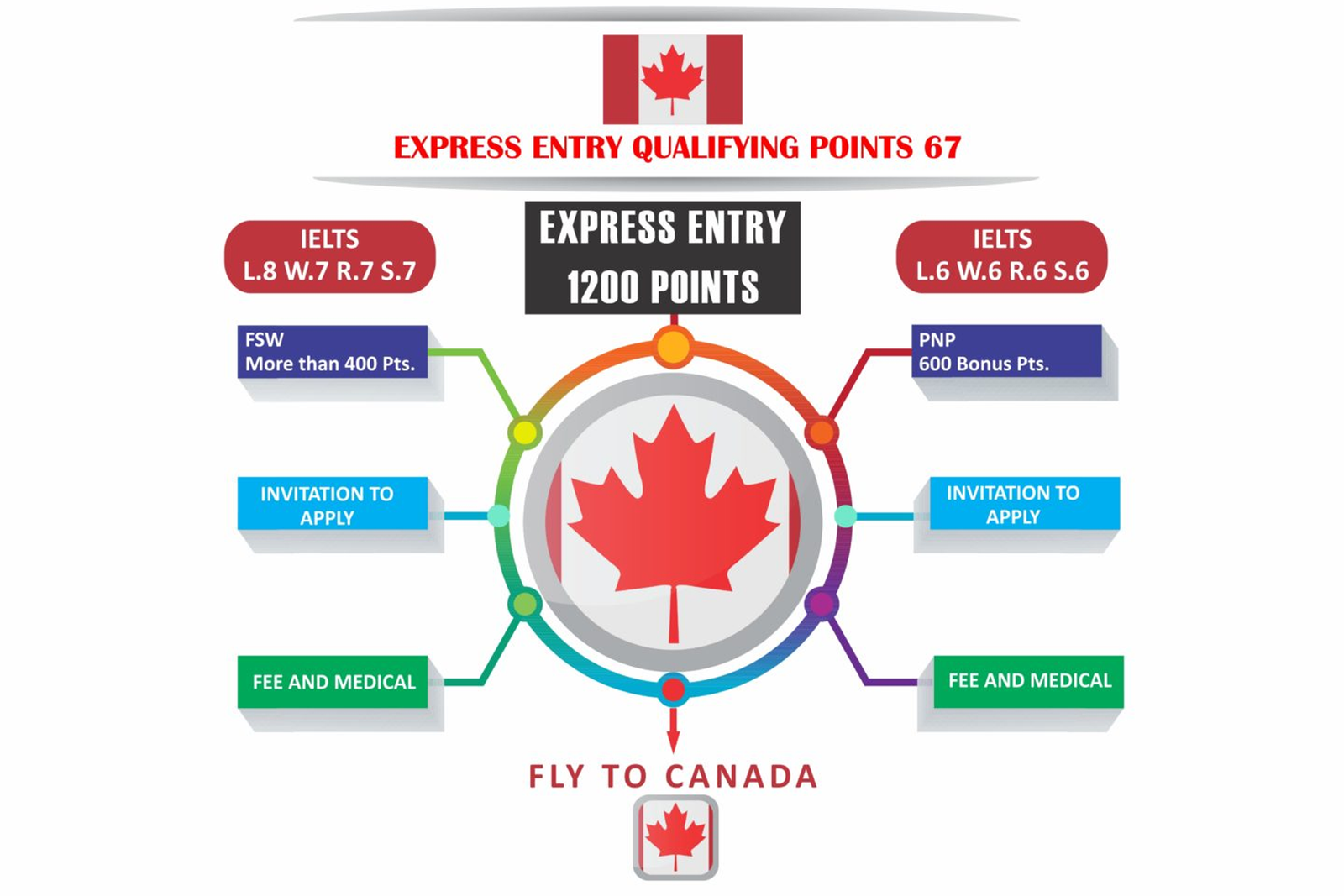
Candidates for Express Entry should be aware that the term “arranged employment” under the Comprehensive Ranking System (CRS) only applies to qualified job offers. Comprehensive Ranking System (CRS) points play a significant role in an applicant’s economic immigration path through Express Entry. These points are significant in deciding who gets an Invitation to Apply (ITA) from Immigration, Refugees and Citizenship Canada (IRCC). They are used to rank candidate profiles against each other. Therefore, regardless of whether they apply to the Canadian Experience Class (CEC), the Federal Skilled Worker Program (FSWP), or the Federal Skilled Trades Program (FSTP), all Express Entry candidates are continuously seeking methods to raise their CRS score and increase their chances of being granted permanent residence in Canada. A candidate’s CRS score might be raised by having “arranged employment” ready for their arrival in Canada. The benefit of arranged employment is that it might provide an applicant an extra 50 or 200 CRS points. FSWP and CEC For FSWP and CEC candidates to qualify for CRS points in the category of “arranged employment,” they need to have a job offer that is: The qualified employer(s) must possess a work permit that was issued* based on a positive Labour Market Impact Assessment (LMIA) or a fresh positive LMIA that accepts the offer and names the worker and their job. **This is applicable to foreign nationals who have NOC TEER 0, 1, 2, or 3 jobs and are actively employed in Canada. Those who apply for the FSTP and CEC and who currently hold an LMIA-based work permit are required to: A valid LMIA-exempt work permit in a NOC TEER 0, 1, 2, or 3 position allows foreign nationals to earn CRS points for “arranged employment” if they meet the following requirements: FSTP The following conditions must be met by FSTP personnel in order to qualify for CRS points under “arranged employment”: The eligible employer(s) must possess a work permit that was issued* on the basis of a positive LMIA, or a fresh positive LMIA that accepts the offer and names the worker and their position. **This is applicable to foreign nationals who hold skilled trade employment in Canada at the moment. It is important for FSTP candidates to know that foreign nationals with an active LMIA-based work permit are required to: Note: This full-time employment offer needs to be for a position in the same three-digit level of the NOC as your existing position, and it needs to be extended for at least a year. In addition, foreign nationals may earn CRS points for “arranged employment” provided they hold a valid LMIA-exempt work visa for any of the skilled trade jobs on the list. Does an Express Entry job offer come with a work permit? IRCC makes it clear that a work visa does not count as a job offer for the purpose of earning CRS points as an Express Entry applicant, regardless of the candidate’s employment status in Canada or elsewhere. A employment offer should include the following details for each Express Entry-managed program in addition to the ones mentioned above:

The parent and grandparent program reopens this month.
The IRCC has announced that it plans to extend invitations to applicants from the parent and grandparent program PGP’s 2020 intake. Accordingly, those who will be invited in the next round will have sent in their profiles in 2020. For the fourth year running, the parent and grandparent program PGP will only take into account profiles that were uploaded in 2020. In preparation for extending invitations to possible sponsors, Immigration, Refugees and Citizenship Canada (IRCC) has scheduled the reopening of the Parents and Grandparents program (PGP) for this month. In an announcement, the department stated that it will begin sending out 35,700 invites on May 21st, 2024, with the goal of granting 20,500 full applications. In preparation for extending invitations to possible sponsors, Immigration, Refugees and Citizenship Canada (IRCC) has scheduled the reopening of the Parents and Grandparents program (PGP) for this month. In an announcement, the department stated that it will begin sending out 35,700 invites on May 21st, 2024, with the goal of granting 20,500 full applications. Who is eligible for the next round of the parent and grandparent program PGP? The IRCC has announced that it plans to extend invitations to applicants from the PGP’s 2020 intake. Accordingly, those who will be invited in the next round will have sent in their profiles in 2020. For the fourth year running, the PGP will only take into account profiles that were uploaded in 2020. Candidates will be randomly recruited via the PGP method (via a lottery mechanism). Sponsors who indicate interest in sponsoring will get these invites via the email address they give on the form. It is recommended that sponsors begin monitoring their emails on May 21st. Invitations will be sent out within about two weeks of this date. How can one apply for permanent residency under the parent and grandparent program PGP? To receive permanent residence (PR) through the PGP, applicants must: About the parent and grandparent program. Through the PGP, eligible Canadian citizens or permanent residents can sponsor their parents or grandparents for permanent residence in Canada if they fulfill the qualifying requirements. A fundamental component of the department’s mandate, the program is a part of IRCC’s family reunification activities. Upon entering Canada under the program, parents and grandparents are granted permanent residence. Along with other requirements, sponsors must promise to support their parents and grandparents for 20 years while they are in Canada. Quebec-based sponsors submitting an application must agree to a ten-year endeavor. The PGP only accepts applications (and sends out invitations) once a year, and admits candidates by lottery. What if you are not selected? The IRCC operates the Super-Visa route, much like the PGP. Through this pathway, parents and grandparents of Canadian citizens and permanent residents can be sponsored to visit the country on an extended visiting visa, which grants family members a visa to enter the country rather than PR under the PGP. Those who are accepted into the program are allowed to remain in Canada for a maximum of five years, with two additional years of residence permitted. After their status expires, applicants may reapply for their super-visa. Sponsors can apply for the Super Visa program year-round, unlike the PGP, which is only offered by the IRCC. All completed Super Visa applications will be processed by IRCC within 112 days of receipt. The department processed 67% of applications to this criteria between 2022 and 2023. Click this link to visit our dedicated PGP homepage for additional information. Take a look at our dedicated webpage here to find out more about the Super Visa.