
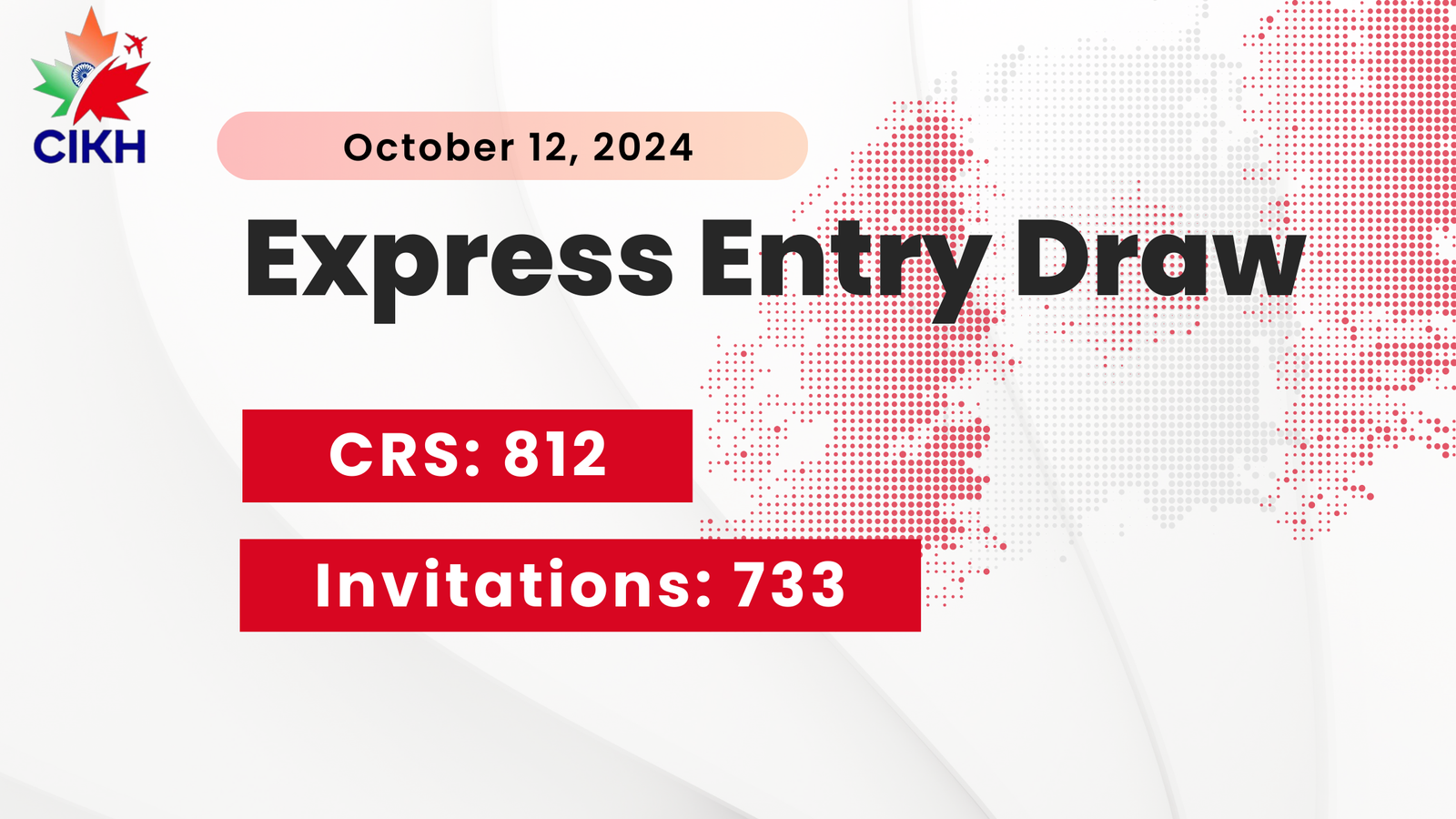
Immigration, Refugees, and Citizenship Canada (IRCC) has recently invited candidates to apply for permanent residency in the latest Express Entry draw. In this draw, IRCC issued 733 Invitations to Apply (ITAs) through the Provincial Nominee Program (PNP) category. To qualify, candidates needed a minimum Comprehensive Ranking System (CRS) score of 812. Additionally, on October 23, IRCC invited 1,800 candidates in a category-based draw focused on trade occupations. This was notable as it was the first draw for non-French-speaking trades since July. This draw marks the first of November and comes after the recent release of Canada’s 2025 Immigration Levels Plan. Under this plan, IRCC will admit 124,680 Express Entry candidates in 2025. The candidates invited today will be considered within targets set for next year, either through the newly introduced In-Canada Focus targets for Express Entry applicants or the Federal Economic Priorities category. The In-Canada Focus target aims for 82,980 admissions, primarily benefiting temporary residents already in Canada. This represents about 40% of Canada’s economic immigration for 2025 and will largely include candidates from the Canadian Experience Class (CEC) and PNP categories. Additionally, the Federal Economic Priorities target will bring in 41,700 permanent residents through various Express Entry programs. This category focuses on candidates who can address critical labor shortages in healthcare or trades or contribute to the goal of boosting French-speaking immigration outside of Quebec. Full Details of the Express Entry Draw: November 12, 2024. Summary of Express Entry Draw Results in 2024

How does IRCC decide if a visitor will receive a single-entry or multiple-entry visa for Canada?
Canada no longer automatically grants multiple-entry visas to visitors. Immigration, Refugees and Citizenship Canada (IRCC) has recently revised its guidelines for immigration officers, imposing stricter criteria for issuing multiple-entry visas versus single-entry visas. Ultimately, IRCC officers can decide which type of visa a visitor will receive. This article explores the key factors these officers consider when determining whether to grant a single-entry or multiple-entry visa to Canada. Who is required to have a visa? Most visitors from around the world need a visa to enter Canada. A visa grants foreign nationals permission to enter Canada as visitors, workers, or students and is usually stamped in their passport. You can find a list of countries that require a visa to enter Canada here. Certain countries have visa-exempt citizens who only need an Electronic Travel Authorization (eTA) to travel to Canada. An eTA also allows entry but is generally quicker and easier to obtain than a visa. A list of visa-exempt countries is available here. Some visitors, such as U.S. citizens and green card holders, don’t need a visa or an eTA to enter Canada. Note: Visa requirements for nationals of certain countries may vary depending on specific conditions. More details are available here. How does a single-entry visa differ from a multiple-entry visa? When applying for a Canadian visa, applicants may be eligible for either a single-entry or multiple-entry visa. A multiple-entry visa permits the holder to enter and exit Canada as often as needed within its validity period. These visas can remain valid for up to 10 years or until the expiration of the applicant’s passport, travel document, or biometrics—whichever occurs first. In contrast, a single-entry visa allows entry into Canada only once and is typically valid only for the duration of the applicant’s specific visit. If someone with a single-entry visa leaves Canada and wants to return, they would need to apply for a new visa. Considerations for Issuing Single-Entry vs. Multiple-Entry Visas According to the latest IRCC guidelines, immigration officers assessing whether to issue a single-entry or multiple-entry visa consider several key factors, grouped into four main categories: Purpose of the visit;Available financial resources;Requirement for medical treatment; andAdditional relevant factors. IRCC officers are advised to evaluate the following factors within each of these categories when issuing a visa for Canada: Purpose of Visit Funds Medical Other Factors Additional factors to evaluate when determining the duration of a visa’s validity For multiple-entry visas, the validity period might be shorter than the maximum permitted duration. The IRCC takes several additional factors into account when determining the visa validity period, such as: What steps to take if your visa application is denied A Canadian visa application may be denied if: There is no formal appeal process for a visa refusal. If an applicant wishes to reapply, the IRCC recommends doing so only if there has been a significant change in their circumstances. The IRCC also advises that reapplying with the same information will likely result in another denial. When is the right time to reapply for a visa after a refusal? The IRCC provides examples of situations where an applicant’s circumstances have significantly changed, making it appropriate to reapply: Newcomers who are considered criminally or medically inadmissible to Canada have several options to address their inadmissibility. More details are available here. IRCC officers are required to document refusal details in the Global Case Management System (GCMS), the system used to manage and assess immigration applications. These notes include (but are not limited to): Requesting GCMS notes can provide valuable insights for applicants facing a refusal. Additional information on how to request GCMS notes can be found here.
What International Students Should Know About Canada’s Immigration Targets for 2025-2027
On October 24, Canada revealed its Immigration Levels Plan for 2025-2027, introducing targets for temporary residents for the first time, including international students. Each year, Canada releases its Immigration Levels Plan to establish the number of permanent residents it intends to welcome, supporting economic growth, family reunification, and humanitarian obligations. The Immigration Levels Plan also included projected targets for 2026 and 2027, though these are tentative. Immigration, Refugees, and Citizenship Canada (IRCC) finalizes targets for the upcoming year by November 1 annually. Here are some key points from the latest announcement that international students should be aware of: Canada aims to welcome more new international students than individuals on work permits The plan for this year sets a steady goal of 305,900 new international students coming to Canada each year for 2025, 2026, and 2027. This number only counts new students arriving in Canada and does not include those who will renew their study permits. Meanwhile, the number of temporary workers — people coming through the International Mobility Program and Temporary Foreign Worker Program — will gradually decrease over these three years (from 367,750 in 2025 to 210,700 in 2026 and 237,700 in 2027). This means that, by 2026 and 2027, a larger share of temporary residents coming to Canada will be international students. Canada intends to welcome more new permanent residents from within the country The plan for this year sets a consistent goal of 305,900 new international student arrivals each year for 2025, 2026, and 2027. These numbers apply only to new arrivals and do not include expected study permit renewals for students already in Canada. In contrast, the number of temporary resident workers—covering those in the International Mobility Program and Temporary Foreign Worker Program—gradually decreases over the three years (from 367,750 in 2025 to 210,700 in 2026 and 237,700 in 2027). This shift means that by 2026 and 2027, a larger percentage of temporary residents arriving in Canada will be international students. Canada aims to bring in more new permanent residents from within its borders The Immigration Levels Plan for 2025-2027 highlights the goal of making it easier for those already in Canada—whether as students or workers—to transition to permanent residency under the “in-Canada focus” category. In 2025, IRCC expects that more than 40% of total permanent resident admissions will come from students or workers already residing in Canada. The plan also indicates that the Federal High Skilled (FHS) category has been divided into two sections: Federal Economic Priorities and In-Canada Focus, with the latter receiving a larger share of admissions over the next three years. For instance, in 2025, the target for Federal Economic Priorities is 41,700, while the target for In-Canada Focus is 82,980—almost double. This suggests that IRCC may explore more opportunities to help temporary residents in Canada transition to permanent residency, potentially through increased Canadian Experience Class (CEC) Express Entry draws or new policies that favor individuals already in the country. Provincial Nominee Programs (PNPs) are set to be reduced The Plan also revealed significant reductions in the targets for PNP admissions in the coming years. In 2025, the government has set a target of only 55,000 PNP admissions, a sharp decrease from last year’s target of 110,000 for 2024 and 120,000 for 2025. Students who were considering provincial nominations as a route to permanent residence may now face increased competition in the PNP streams. Increased emphasis on French language proficiency Aligned with IRCC’s previous approach to francophone immigration, the Levels Plan aims to increase the share of French-speaking permanent resident targets outside of Quebec. In 2025, 8.5% of the total planned permanent resident admissions will be French speakers (outside Quebec), rising to 9.5% in 2026 and 10% in 2027. This marks an increase from the targets set in the 2024-2026 plan, which aimed for 7% in 2025 and 8% in 2026. Students with limited or no French proficiency may want to consider learning French to boost their chances of receiving an invitation to apply for permanent residence. Increased emphasis on high-demand occupations In 2023, Canada introduced category-based selection draws to issue ITAs to skilled workers in high-demand fields such as healthcare, STEM, trades, and transportation, aiming to address labor shortages across the country. These categories are designed to evolve over time based on changing labor market and demographic needs. For 2025, priority categories include healthcare and trade occupations. The government has not indicated plans to remove any of the other priority categories like STEM, transportation, agriculture, or agri-food. To qualify for a category-based selection draw, candidates must have at least six months of full-time, continuous work experience (or the equivalent part-time experience) in an in-demand occupation within the last three years. Students expecting to graduate with Post Graduate Work Permits (PGWPs) and planning to pursue Canadian PR may want to target jobs that align with these category-based draws.

MPNP November 2024 Draw: 274 PR Invitations Issued
The Manitoba Provincial Nominee Program (MPNP) held its most recent draw on November 8, 2024, issuing a total of 274 invitations for permanent residency across multiple categories. Among these, 33 invitations were sent to candidates who had a valid Express Entry profile number. Here are the specifics of the November 8 MPNP draw: Skilled Worker in Manitoba (Occupation-Specific Selection)Candidates currently employed in Manitoba in the following National Occupational Classification (NOC) unit group were considered: International Education StreamThis category targeted profiles that met the eligibility criteria for the International Education Stream. Skilled Worker OverseasThis category was for individuals directly invited by the MPNP through a strategic recruitment initiative. This draw reflects Manitoba’s continued efforts to attract skilled professionals, international graduates, and overseas talent to apply for permanent residency in Canada.

IRCC ends the Student Direct Stream with immediate effect
As of November 8, 2024, Immigration, Refugees and Citizenship Canada (IRCC) has officially stopped accepting study permit applications through the Student Direct Stream (SDS). Additionally, the Nigeria Student Express (NSE) program for Nigerian applicants has also been discontinued. From now on, all study permit applications must follow the standard application process. The Student Direct Stream (SDS) was introduced in 2018 to speed up study permit processing for international students from 14 countries, including India, China, Pakistan, and the Philippines. Unlike the standard process, SDS applicants needed to submit language test scores and proof of a Canadian Guaranteed Investment Certificate (GIC) valued at $20,635 CAD, along with other study permit requirements. Initiating your study permit application early The SDS program traditionally offered higher approval rates and quicker processing times than the standard study permit application process. With the closure of SDS, prospective students should now anticipate longer processing times. Standard study permit processing times differ by country. For instance, as of November 8, the average processing time for applications from India is now 8 weeks. Latest updates to Canada’s international student program In 2024, Canada introduced new measures for its international student program as the federal government aims to manage the number of temporary residents (study and work permit holders) in the country. Over the past year, IRCC has:

Canada Revises Visa Policy, Ends Ten-Year Tourist Visa Validity
Canada has introduced changes to its visa policy, shifting from its previous practice of issuing long-term, multiple-entry visas. Under the updated policy, tourist visas with a validity of up to ten years will no longer be offered. Instead, immigration officers now have the flexibility to grant either single-entry or multiple-entry visas based on each applicant’s circumstances. Officers will also determine the appropriate duration of validity for each visa. Previously, multiple-entry visas allowed holders to enter Canada as many times as they wished within the visa’s validity period, which could extend up to ten years or until the associated travel document or biometrics expired. Multiple-entry visas “Guidance has been updated to indicate that multiple-entry visas issued to maximum validity are no longer considered to be the standard document. Officers may exercise their judgment in deciding whether to issue a single or multiple-entry visa and in determining the validity period,” the Canadian immigration department stated in a recent update. This change aligns with efforts by Prime Minister Justin Trudeau’s administration, which is addressing public dissatisfaction over high living costs and a housing shortage by reducing both permanent and temporary immigration. Last month, Immigration Minister Marc Miller acknowledged that Canada could have acted sooner to manage the rising number of temporary residents contributing to housing pressures. In an interview with Reuters, Miller described the increase in migration as “aggressive” and accepted that the government shares responsibility for the current situation. He noted that Canada’s approach to temporary migration could have been more proactive. Under this new approach, Canada anticipates that over a million temporary residents will leave as their visas expire in the coming years. Those who do not depart voluntarily will face deportation, as Miller emphasized the importance of maintaining a clear distinction between temporary and permanent residency.

BC PNP Issues 51 ITAs in Targeted Draw on Nov 6
The latest BC PNP draw on November 6 invited 51 candidates to apply for permanent residency (PR) in a targeted selection round. This draw included 31 invitations specifically for tech roles under the skilled worker and international graduate streams, including the Express Entry options, with a cutoff score that increased by 11 points from the previous BC PNP general draw. Additionally, 7 invitations were issued to profiles with experience in early childhood education roles (NOC 42202), while 8 invitations went to those with expertise in one of 39 healthcare occupations. In the construction sector, 5 candidates with experience in 25 related occupations were also invited under BC’s new category-based selection stream, launched in late 2023. Full Details of Latest BC PNP Draw: November 6 Previous BC PNP Draw : 2024

IRCC Reports Ongoing Increase in Canada’s Immigration Backlog
Canada’s immigration backlog continues to increase as the number of pending applications grows, despite ongoing efforts to improve processing efficiency. Recent official data from Immigration, Refugees and Citizenship Canada (IRCC), updated on November 4, reveals that a record-breaking 2.5 million applications are currently in the processing queue. Of this total, approximately 1.1 million applications have exceeded the standard processing times, now classified as backlog, showing a significant rise compared to previous months. Immigration Backlog Overview As of September 30, Canada’s immigration system had 2,450,600 applications for citizenship, permanent residence, and temporary residence still under processing. Out of this total, 1,097,000 applications are beyond the standard processing times, placing them in the backlog. This marks a 1.73% increase in backlog compared to August 2024, highlighting ongoing challenges in managing high demand alongside available processing resources. Temporary residency applications have seen the largest growth, rising by 2% from the previous month and experiencing a significant 13.44% increase compared to data from July’s end. The backlog is primarily divided into categories for citizenship, permanent residence, and temporary residence applications. Application Type Applications in Backlog (September 30, 2024) Applications in Backlog (August 31, 2024) Month-on-Month Change Citizenship 38,100 38,600 -1.29% Permanent Residency 305,200 300,800 +1.46% Temporary Residency 753,700 738,900 +2% Total 1,097,000 1,078,300 +1.73% Latest backlog data The backlog for citizenship applications continues to improve in 2024, with processing speeds picking up. Meanwhile, temporary residency applications have risen, likely due to seasonal patterns and a surge in applications from international students. Although IRCC has recently implemented policies to limit new entries, the backlog for temporary residency remains on the rise, highlighting the need for further action to address the growing demand. Applications Being Processed Within Service Standards Despite the ongoing backlog, a significant number of applications are still being processed within IRCC’s service standards. This suggests that while Canada’s immigration system is experiencing delays, it continues to operate efficiently for certain types of applications. Here is a detailed breakdown of applications that are being processed within service standards: Application Type Within Service Standards (September 30, 2024) Within Service Standards (August 31, 2024) Month-on-Month Change Citizenship 184,800 190,600 -3.04% Permanent Residency 510,800 504,800 +1.19% Temporary Residency 658,000 647,100 +1.68% Total 1,353,600 1,342,500 +0.83% Canada immigration applications within service standards The balance between the growing backlog and ongoing applications showcases the resilience of Canada’s immigration system, even as demand continues to rise. Impact of the Immigration Backlog on Canada’s Immigration System Canada’s growing immigration backlog has far-reaching consequences, affecting not just applicants but also the labor market and society as a whole. Key challenges include: Impact on the Labor Market: Delays in processing work permits can disrupt industries that depend on foreign talent, particularly in crucial sectors like healthcare and technology. Longer Wait Times for Families: Prolonged delays in family reunification processes create additional stress for families separated by immigration procedures. Financial and Emotional Burden on Applicants: Individuals waiting for citizenship or permanent residency often face uncertainty and financial challenges, which can hinder their successful integration into Canadian society. Future Outlook for the Immigration Backlog IRCC has shared its future projections for the immigration backlog, taking into account current processing speeds and growing demand. The department is working toward processing 80% of applications within the established service standards. However, this target is challenged by varying demand and seasonal fluctuations. Category Projected Backlog At The End Of November 2024 Projected Backlog At The End Of October 2024 Actual Backlog (September 2024) IRCC’s September 2024 Projection Citizenship 16% 17% 17% 16% Express Entry 20% 15% 17% 15% Provincial Nominee Program (PNP) 20% 20% 23% 20% Spousal Sponsorship 15% 15% 15% 15% Temporary Resident Visas (TRVs) 59% 61% 72% 60% Study Permits 37% 32% 36% 30% Work Permits 44% 7% 47% 14% IRCC’s backlog projections The projections highlight the challenge of handling spikes in applications for certain categories, particularly study and work permits. There has been a significant rise in the demand for various temporary resident visas, making these categories the most sought-after in the immigration system. Seasonal Fluctuations and Processing Capacity Seasonal trends also influence the fluctuations in the immigration backlog. Temporary Resident Visa (TRV) applications tend to surge in the fall as students apply for visas in preparation for the January intake. Similarly, the beginning of academic sessions and hiring cycles leads to an increase in study and work permit applications. To better manage these seasonal surges, IRCC could explore options to boost processing capacity during peak periods or adopt more automated systems for handling applications. Steps Canada Can Take to Address the Backlog: Boosting Processing Capacity: Increasing the number of immigration officers during high-demand periods could help reduce backlogs and speed up processing times. Policy Adjustments: Introducing more stringent criteria for temporary visas, particularly for students, may help control application volumes and ensure efficient processing. Utilizing Technology: Implementing AI and machine learning tools to process simpler applications can accelerate the overall process and reduce delays. Engaging Stakeholders: Working closely with educational institutions, employers, and other key stakeholders can help manage expectations and streamline application procedures, improving overall system efficiency. Canada’s immigration system is at a critical point. The growing backlog represents both a challenge and an opportunity for innovation and improvement. For applicants and stakeholders, understanding the factors behind the backlog, including seasonal trends and fluctuating demand, is crucial. As IRCC continues to provide regular updates, applicants can stay informed about their immigration process and remain confident that ongoing improvements will help address delays over time.

Canada’s Limit on International Students May Lead to Revenue Losses
Canada has always been an attractive destination for international students, who come here for quality education and residency opportunities. But recent government policies have imposed restrictions on student visas, posing challenges to the country’s postsecondary institutions. In a recent announcement, Immigration Minister Marc Miller confirmed that study permits would be reduced by 10% over the next two years, now including graduate and doctoral students for the first time. This cap on international students is set to reshape Canada’s higher education sector and could damage its reputation as a welcoming destination for students worldwide. Ontario’s universities are already forecasting nearly $1 billion in lost revenue due to these enrollment restrictions, with some institutions, like Seneca Polytechnic’s Markham campus, facing temporary closures as a result. The Impact of Recent Changes on International Student Intake 1. Financial Pressure on Post-Secondary InstitutionsCanadian post-secondary institutions have grown dependent on international students, who pay significantly higher tuition fees—up to five times more than domestic students. In Ontario, universities are bracing for a projected $1 billion revenue shortfall over the next two years due to declining international enrollments. The Council of Ontario Universities estimates that financial losses could surpass $300 million in the 2024-25 academic year alone, with losses potentially doubling if the trend persists. Steve Orsini, president of the Council of Ontario Universities, expressed concerns over the federal government’s restrictive measures, calling them a “blunt instrument” that impacts all institutions instead of addressing issues related to aggressive recruiting by unregulated agents. In response to these constraints, universities across Canada are cutting programs, delaying facility improvements, and canceling essential student housing projects. 2. Effects on Academic Programs and Student ServicesShrinking budgets are forcing institutions to reduce academic offerings and student services, a decision impacting both domestic and international students. For example, Seneca Polytechnic has temporarily closed its Markham campus, consolidating programs at other locations within Toronto. This shift is directly tied to reduced international student enrollment, making it financially unfeasible to operate multiple campuses. Seneca President David Agnew emphasized that these changes have “damaged Canada’s reputation” as a global education destination. Unpredictable visa policies and enrollment restrictions are deterring prospective students, further weakening Canada’s once-strong international education sector. 3. Broader Financial Consequences for Local CommunitiesPari Johnston, President of Colleges and Institutes Canada (CICan), highlighted the unique challenges faced by colleges, particularly those in rural and remote regions where international tuition fees are critical for financial stability. Institutions have had to implement hiring freezes, delay new construction, and suspend specific programs. These adjustments not only reshape the educational landscape but also negatively impact local economies, as colleges are often key employers and contributors in their communities. Impact on Canada’s International Reputation as a Top Study Destination 1. Declining Appeal of Canada as a Destination for International StudentsCanada has long been a top choice for international students, known for its inclusive environment, high-quality education, and pathways to employment and residency. However, Meti Basiri, CEO of ApplyBoard, notes that Canada’s appeal is diminishing. Recently, Canada dropped to the third-most popular destination, following the U.S. and the UK. This shift is largely due to stricter immigration policies and caps on student visas, which have created uncertainty and tarnished Canada’s image as a welcoming study destination. Basiri highlights that limits on spousal permits discourage mature students, while increased financial requirements and work permit restrictions make Canada less attractive for those considering international study. 2. Public Perception and Political Influences on New PoliciesDale McCartney, a researcher in international student policy, suggests that recent visa restrictions may be influenced more by the current political climate than by strategic immigration goals. McCartney argues that the government’s stricter approach may be a response to public concerns about immigration, using the cap as a way to address perceived pressures on housing and healthcare systems. However, critics warn this approach could backfire, as Canada relies on skilled, educated professionals to support its economy and growth. 3. Financial Impact on Ontario Universities and the Higher Education SectorOntario’s 20 public universities face significant revenue challenges under the cap, with losses expected to reach $1 billion over the next two years. This financial strain has led to cuts in programs, delays in housing projects, and reductions in faculty positions. To address this, Ontario’s Minister of Colleges and Universities, Jill Dunlop, recently announced a $1.2 billion emergency funding package, including a $900 million sustainability fund over three years to stabilize finances. Steve Orsini, president of the Council of Ontario Universities, emphasizes the need for a more tailored approach. He points out that international students make up only about 20% of Ontario’s student body, and currently, only 71% of the province’s international student quota has been filled. Universities across Ontario and regions like the Maritimes, Quebec, and the Prairies are already facing financial pressures. Orsini expressed concern that talented international students who could strengthen Canada’s workforce—future doctors, engineers, and entrepreneurs—may now opt for other countries due to these restrictions. Nationwide Impact: Workforce and Economic Consequences 1. Risk of Skill Shortages in Critical SectorsInternational students play a vital role in Canada’s future skilled workforce, with many choosing to stay and contribute after graduation. Gabriel Miller, president of Universities Canada, has expressed concern that new immigration policies could deter precisely the skilled professionals Canada relies on for its healthcare, engineering, and business sectors. By imposing stricter rules on the Post-Graduate Work Permit program, the government is narrowing pathways for international graduates to join the Canadian workforce, potentially increasing skill shortages in these critical areas. 2. Housing and Infrastructure StrainCanada’s housing and healthcare systems have struggled to keep up with the rapid increase in population, including international students. In response, the government believes that limiting student visas will help ease these pressures. However, critics argue that reducing enrollment will not address systemic issues in housing and healthcare, while also undermining Canada’s economy and ability to meet labor needs. This approach, they contend, does little to solve the root causes of these infrastructure challenges. Educational Leaders Urge Policy Reforms Leaders from Canada’s education sector are calling

Ontario Residents to Receive 2 New CRA Benefit Payments in November 2024
In November 2024, Ontario residents will receive two important benefit payments from the Canada Revenue Agency (CRA): the Canada Child Benefit (CCB) and the Ontario Trillium Benefit (OTB). These payments are designed to support eligible residents, particularly low- and moderate-income households, in managing the increasing costs of daily essentials. With the rising cost of living, these benefits serve as vital financial relief for Ontario families and individuals. The CCB aids families with the expenses of raising children, helping to cover essentials like food, school supplies, and clothing. Meanwhile, the OTB provides financial relief on costs related to sales tax, property tax, and energy expenses, assisting households in managing their monthly budgets. By extending these benefits to eligible temporary residents, Canada acknowledges their valuable contributions to the community and supports their integration into Canadian society. 1. Canada Child Benefit (CCB) The Canada Child Benefit (CCB) is a tax-free monthly payment designed to assist families with children under 18 by easing the financial responsibilities of raising children. The CCB offers support to cover costs related to children, including education, healthcare, and childcare needs. For millions of families across Canada, this benefit is a vital tool for managing the financial challenges of child-rearing. Eligibility for the Canada Child Benefit (CCB) To qualify for the CCB, applicants must meet specific eligibility criteria: Temporary Residents and CCB Eligibility Temporary residents may also qualify for the CCB if they meet certain conditions: The CRA requires temporary residents who qualify to provide proof of status and primary caregiver documentation. Canada Child Benefit Maximum Payments in 2024 The CCB amount depends on family income and the child’s age: The exact payment amount varies based on net family income, with higher incomes reducing the benefit. Next Canada Child Benefit Payment Date: November 2024 The CCB is issued monthly, with the next payment scheduled for November 20, 2024. Payments will be deposited directly into bank accounts for those enrolled in direct deposit, while others will receive checks by mail. 2. Ontario Trillium Benefit (OTB) The Ontario Trillium Benefit (OTB) is a provincial support program that helps low- and moderate-income residents manage financial challenges. It combines three key tax credits: The OTB provides relief for expenses like sales tax, energy bills, and property tax, helping qualified individuals and families reduce their monthly financial burden. Eligibility for the Ontario Trillium Benefit (OTB) To qualify for the OTB, applicants must meet certain residency, income, and tax requirements: OTB Eligibility for Temporary Residents Temporary residents may also qualify for the OTB if they meet these criteria: The CRA will review their eligibility based on their residency, income, and tax return. Maximum OTB Payments for 2024 Each part of the OTB has a maximum payment amount: Next OTB Payment Date: November 2024 The OTB is paid monthly if the total amount exceeds a specific threshold. Eligible residents can expect their next OTB payment on November 8, 2024. How to Apply for the Canada Child Benefit (CCB) and Ontario Trillium Benefit (OTB) Applying for the Canada Child Benefit (CCB) Eligible applicants, including certain temporary residents, can apply for the CCB either online through the CRA My Account portal or by mailing a completed paper application form. Proof of status and primary caregiver documentation may be required. Applying for the Ontario Trillium Benefit (OTB) Ontario residents, including eligible temporary residents, only need to file their annual income tax return to apply for the OTB. Indicate eligibility for the tax credits within the return. The CRA will then review eligibility based on the information provided, including income and residency details. Upcoming Canada Child Benefit (CCB) Payment Dates in 2024 The upcoming CCB payment dates in 2024 are November 20 and December 13, 2024. Upcoming Ontario Trillium Benefit (OTB) Payment Dates in 2024 Next OTB payments will be paid on November 8 and December 10.