

If you need Canadian citizenship faster than the usual processing time, you can request urgent processing. This option speeds up citizenship applications, but only in special situations. This article covers all the essential details about urgent processing, including eligibility requirements, how to apply, and key guidelines to help make the process smooth. What Is Urgent Citizenship Processing? Urgent processing for Canadian citizenship is available for those who need it quickly due to emergencies or specific circumstances. However, meeting the eligibility requirements doesn’t guarantee faster service. Each request is thoroughly reviewed by the immigration department to decide if urgent processing is justified and possible. Eligibility Requirements: Who Qualifies for Urgent Citizenship Processing? You may be eligible for urgent citizenship processing if your situation falls under one of the following special circumstances: Job-Related Reasons: Emergency Travel: Successful Federal Court Appeal: Important Notes: Even if you qualify, there is no guarantee that urgent processing will meet your time-sensitive needs. Applications that do not meet the criteria for special cases will follow the standard processing timeline. How to Request Urgent Citizenship Processing: A Step-by-Step Guide If You Haven’t Submitted Your Application Yet: Follow these steps if you’re applying for citizenship for the first time and need urgent processing: If You Have Already Submitted Your Application: If your citizenship application has already been submitted but you now require urgent processing, follow these steps: Tips for a Successful Submission of Urgent Citizenship Applications Applying for urgent citizenship processing in Canada is possible, but it is intended for exceptional situations, such as job loss, family emergencies, or legal appeals. By following the steps outlined in this article and providing solid supporting documentation, you can improve your chances of having your request considered. However, since urgent processing is not guaranteed, applicants should plan accordingly and use this option only when absolutely necessary.

A yearly study reveals that public support for immigration has declined for the second consecutive year
Support for high immigration levels in Canada has dropped to its lowest point in 25 years, according to an annual report by the Environics Institute. This Canadian research agency gathers data on government, economic, and social issues, gauging public opinion through surveys. The 2024 findings show that six in 10 Canadians now feel the country accepts too many immigrants, a significant rise from four in 10 in 2023. This 14-point increase in negative perceptions marks the lowest support for high immigration levels since 1998. The past two years have seen a significant shift from the 2022 report, which indicated record-high support for immigration following the COVID-19 pandemic. Since then, Canada’s economy has regained 138% of the jobs lost during the pandemic, but the national unemployment rate has been increasing. This has contributed to several changes in Canada’s immigration system, including a cap on international student numbers and the introduction of temporary resident levels in the forthcoming Immigration Levels Plan. The Environics survey, conducted through over 2,000 phone interviews with Canadians aged 18 and older, has a margin of error of plus or minus 2.2 percentage points. Support continues to decline The report highlighted particularly low support for immigration among respondents from the Prairie provinces. When asked if Canada had too much immigration, 63% of respondents from Alberta and 68% from both Manitoba and Saskatchewan agreed. The data also revealed a decline in immigration support among younger respondents compared to previous years, with those under 45 showing a 20-point increase in negative sentiment, compared to a 13-point rise among older respondents. Additionally, the results indicated minimal differences in views between Canadian-born individuals and first-generation Canadians. Similar to the 2023 report, respondents cited rising living costs and housing affordability as major reasons for their decreasing support for immigration levels. Although housing remains a significant concern, there was a notable rise in the number of people who view immigration as problematic due to poor government management. According to the report, 21% of respondents expressed this view, marking a 10% increase from the previous year. Canadians’ priorities for immigration categories According to Environics, even among those who feel Canada has too much immigration, less than 1% believe no type of immigration should be prioritized. The institute notes that, similar to last year, Canadians may be concerned about the number and categories of immigrants but are not completely rejecting immigration. They still view certain types of immigration as beneficial. Overall, nearly 73% of respondents support prioritizing immigrants who can fill high-skilled and in-demand jobs. Education among newcomers was also a key priority, with 64% agreeing. However, fewer Canadians think refugees fleeing conflict should be prioritized, with support dropping 8% from 2023 to 47% in 2024. Support for family reunification is even lower, with only 33% of Canadians in favor of maintaining current levels, especially in the Prairie provinces, where the decline was most pronounced. Support for low-skilled workers coming for short-term jobs remains steady at 28%, while international students saw a slight drop in support, also at 27%. The most significant declines were in Atlantic Canada, where support fell by 13 points to 27%, and in the western provinces. Perspectives on immigration and the economy The study revealed that 29% of respondents cited the weak economy as a reason for their declining support for immigration, a rise of four percentage points. However, the majority of Canadians (seven in 10) still believe that immigration benefits the national economy. Support for immigration’s economic impact was strongest among university-educated Canadians, first-generation Canadians, and those who back the federal Liberal and NDP parties. In contrast, support drops significantly among Conservative Party voters, with only 21% agreeing that immigration positively impacts Canada’s economy. Immigration and Its Impact on Canadian Society This year’s report indicated a significant rise in the number of Canadians who believe there is a connection between immigration and crime. There was a “substantial” increase in agreement among respondents to the statement, “Immigration increases the level of crime in Canada.” This perception was particularly pronounced in Alberta, where 48% of participants agreed, marking a 14% increase from 2023. Ontario also saw a notable rise, with 40% agreeing (up 19% from the previous year), while both Manitoba and Saskatchewan reported 41% agreement, reflecting a 20-point increase. Once again, support for this view was strongest among Conservative voters, with 55% in agreement. However, there was also an uptick in agreement among Liberal supporters (up 11%), NDP supporters (up 5%), and Bloc Quebecois supporters (up 2%) compared to the previous year. The Benefits of Immigration for Canadian Communities This year’s report revealed a significant rise in the number of Canadians who perceive a connection between immigration and crime. There was a “substantial” increase in respondents who agreed with the statement, “Immigration increases the level of crime in Canada.” This perception was particularly prominent in Alberta, where 48% of respondents agreed, reflecting a 14% increase from 2023. Ontario also saw a considerable rise, with 40% agreeing (up 19% from last year), while both Manitoba and Saskatchewan reported 41% agreement, which represents a 20-point increase. In terms of political affiliation, agreement with this statement was strongest among Conservative voters, at 55%. However, there was also a rise in agreement among Liberal supporters (up 11%), NDP supporters (up 5%), and Bloc Quebecois supporters (up 2%) compared to the results from 2023.

OINP Express Entry Draw: 1,307 Invitations Issued for Skilled Trades Stream
The Ontario Immigrant Nominee Program (OINP) held an Express Entry draw today, issuing 1,307 invitations for provincial nominations under the Skilled Trades Stream. Candidates with Comprehensive Ranking System (CRS) scores between 405 and 435, and experience in one of 47 specified skilled trades (NOC codes), were invited in this round. This draw considered Express Entry profiles created between October 17, 2023, and October 17, 2024, that met the eligibility criteria. Notably, the CRS threshold range has narrowed since the last Skilled Trades Stream draw. The lower limit has risen by 5 points from 400 to 405, while the upper limit stayed at 435. In the latest federal Express Entry draw for 10 specific trade occupations, OINP generally sets the upper limit of the CRS score. However, candidates with experience in the remaining 35–37 trades have voiced concerns about being excluded from both OINP and federal Express Entry draws. Those who receive an invitation now have 45 days to submit a complete application for provincial nomination consideration. Upon accepting the OINP invitation, candidates will receive a 600-point boost to their Express Entry profile, significantly improving their chances of receiving an Invitation to Apply (ITA). The CRS scores of invited candidates will increase to a range of 1,005 to 1,035, guaranteeing their inclusion in future PNP or all-program Express Entry draws. A separate OINP profile is not required for the Skilled Trades Stream; eligible candidates must simply have experience in one of the specified trades for this draw. OINP routinely reviews the Express Entry pool managed by IRCC to identify profiles that align with Ontario’s Express Entry streams. Complete list of occupations eligible for today’s OINP Express Entry Draw: NOC 72010: Contractors and supervisors in machining, metal forming, shaping, and related tradesNOC 72011: Contractors and supervisors in electrical trades and telecommunicationsNOC 72012: Contractors and supervisors in pipefitting tradesNOC 72013: Contractors and supervisors in carpentry tradesNOC 72020: Contractors and supervisors in mechanic tradesNOC 72021: Contractors and supervisors of heavy equipment operator crewsNOC 72022: Supervisors in printing and related occupationsNOC 72100: Machinists and machining/tooling inspectorsNOC 72101: Tool and die makersNOC 72102: Sheet metal workersNOC 72103: BoilermakersNOC 72104: Structural metal fabricators and fittersNOC 72105: IronworkersNOC 72200: Electricians (excluding industrial and power system)NOC 72201: Industrial electriciansNOC 72203: Electrical power line and cable workersNOC 72205: Telecommunications equipment techniciansNOC 72300: PlumbersNOC 72301: Steamfitters, pipefitters, and sprinkler installersNOC 72302: Gas fittersNOC 72310: CarpentersNOC 72311: CabinetmakersNOC 72320: BricklayersNOC 72321: InsulatorsNOC 72400: Construction millwrights and industrial mechanicsNOC 72402: Heating, refrigeration, and air conditioning mechanicsNOC 72403: Railway car mechanicsNOC 72404: Aircraft mechanics and inspectorsNOC 72406: Elevator constructors and mechanicsNOC 72410: Automotive service technicians, truck and bus mechanicsNOC 72422: Electrical mechanicsNOC 72423: Motorcycle, ATV, and related mechanicsNOC 72500: Crane operatorsNOC 73100: Concrete finishersNOC 73101: TilesettersNOC 73102: Plasterers, drywall installers, and finishersNOC 73110: Roofers and shinglersNOC 73111: GlaziersNOC 73112: Painters and decorators (excluding interior)NOC 73113: Floor covering installersNOC 73200: Residential and commercial installers and servicersNOC 73201: General building maintenance workers and superintendentsNOC 73202: Pest controllers and fumigatorsNOC 73209: Other repairers and servicersNOC 73400: Heavy equipment operatorsNOC 73402: Drillers and blasters (surface mining, quarrying, construction)NOC 82031: Contractors and supervisors in landscaping, grounds maintenance, and horticulture services OINP Skilled Trades Stream Draws in 2024 In 2024, the OINP Express Entry Skilled Trades stream has issued 9,006 invitations across five rounds, surpassing the 7,512 invitations issued in 2023.

The application pool for International Experience Canada (IEC) 2024 is closing
Individuals interested in applying for the International Experience Canada (IEC) program must submit their applications by October 21. The 2024 application pool was opened by Immigration, Refugees and Citizenship Canada (IRCC) last December. The IEC program allows young people from over 30 countries with Youth Mobility Agreements with Canada to obtain work permits. These permits grant the opportunity to live and work in Canada for a set period. For 2024, the application intake target was set at 90,000. Canadians can also apply to live and work in any of these countries. How does IEC work? The government’s work permit program is aimed at young people between 18 and 35 years old (or 18 to 30 in certain countries) who want to explore Canada while gaining valuable work and living experience abroad. Similar to Canada’s Express Entry programs, eligible candidates must submit their profiles to the IEC pool for consideration. IRCC will then select candidates from the pool and invite them to apply for a work permit. Each country and category has its own pool of eligible candidates. Depending on their citizenship, applicants from some countries can participate in the program more than once, across different categories. This varies by country, and candidates cannot exceed the participation limits set by their home country. The categories There are three streams available under the IEC program: The International Co-op (Internship) stream allows citizens from eligible countries to work as interns for Canadian companies. Applicants must have a co-op placement secured before applying. The Young Professionals stream issues employer-specific work permits (based on a Labour Market Impact Assessment or LMIA) for candidates with a job offer, allowing them to work for a single employer in Canada. The Working Holiday stream provides open work permits, enabling participants to work for most employers in Canada for up to two years, offering flexibility in job location. Once a candidate receives and accepts an Invitation to Apply (ITA), they have 20 days to submit their work permit application, with IRCC confirming the deadline in their online account. Entering Canada Along with their passport and Port of Entry Letter, IEC participants may be required to provide proof of funds, proof of health insurance, and a ticket for their departure from Canada (or evidence of sufficient funds to buy one). IRCC emphasizes that candidates must present bank statements that are dated no more than one week prior to their departure for Canada. These bank statements should demonstrate that the candidate has enough financial resources to support themselves for the first three months in Canada, or a minimum of $2,500.

BC PNP Issues 189 Invitations in Latest General and Targeted Draws on October 16
In the latest BC PNP draw on October 16, approximately 189 invitations to apply (ITAs) for permanent residency (PR) were issued across both general and targeted invitation rounds. A total of 102 invitations were issued in a general draw for the skilled worker and international graduate streams, including their Express Entry options. The minimum score for this draw dropped by 1 point compared to the previous BC PNP general draw. Additionally, 38 invitations were extended to candidates with experience as early childhood educators or assistants (NOC 42202), while 28 invitations were issued to individuals with experience in 39 healthcare-related occupations. The draw also saw 21 invitations issued to candidates with experience in 25 construction-related occupations, under BC’s newly introduced category-based draws, launched in late 2023. Full Details of Latest BC PNP Draw: October 16 Previous BC PNP Draw : 2024
Minister Mélanie Joly has expelled Indian diplomats amid an investigation into violent criminal activity tied to the Indian government
The growing diplomatic rift between India and Canada goes beyond a political standoff and could have lasting effects on immigration policies, visa processing, and the lives of immigrants. As tensions rise, both governments are adjusting their diplomatic approaches, and immigration—a key area of cooperation—is likely to be significantly impacted. Latest News on the India-Canada Diplomatic Conflict In a recent statement, Prime Minister Justin Trudeau accused the Indian government of making a “fundamental error” by backing a violent campaign against Canadians on Canadian soil. Speaking to reporters on Monday, Trudeau addressed shocking allegations from the head of the RCMP, who claimed that Indian government agents were involved in “widespread violence” in Canada, including homicides, and posed “a serious threat to public safety.” Earlier in the day, Canada announced the expulsion of six Indian diplomats. In response, India denied the allegations and swiftly ordered six Canadian diplomats to leave the country within a week. “I think it’s clear that the Indian government made a serious mistake by believing it could support criminal activities against Canadians on Canadian soil. This includes murder, extortion, and other violent acts, which are entirely unacceptable,” Trudeau stated during a Thanksgiving Monday press conference. “No nation, especially not a democracy that values the rule of law, can tolerate such a blatant violation of its sovereignty.” Tensions Escalated by Trudeau’s Accusations in 2023 The rising tensions can be traced back to September 2023, when Canadian Prime Minister Justin Trudeau accused Indian agents of being involved in the murder of a Canadian citizen on Canadian soil. In response, the Indian government vehemently denied these allegations, labeling them as “absurd claims” driven by political motives. Since Trudeau’s initial assertions, India has consistently criticized Canada for its failure to present any tangible evidence to back up the accusations. This week, the Indian government reiterated that Canada has not provided verifiable proof, despite multiple diplomatic requests. India characterized Canada’s actions as a calculated effort to tarnish India’s international reputation for domestic political gain. India Withdraws Diplomats: Allegations of Extremist Links and Safety Issues In reaction to actions taken by Canada, India’s Ministry of External Affairs announced that it had summoned the Canadian Charge d’Affaires and expressed concerns over Canada’s alleged targeting of Indian diplomats. India indicated that it has “no confidence” in Prime Minister Trudeau’s government to ensure the safety of Indian diplomats, citing a climate of “extremism and violence” in Canada. Among those recalled was High Commissioner Sanjay Kumar Verma, a senior diplomat with 36 years of experience. Indian authorities allege that the Canadian government has permitted violent extremists and separatists to operate without restrictions, creating a direct threat to Indian diplomats and community leaders. India asserts that these threats include death threats directed at diplomats, community leaders, and even Indian political figures. In its statement, the Indian government criticized Canada’s invocation of freedom of speech laws as a justification for harassment, claiming that several individuals involved in extremist activities were expedited for Canadian citizenship. Furthermore, India pointed out that Canadian authorities had denied several of its extradition requests for terrorists and criminals. Canada’s Reaction: Valid Evidence Against Indian Agents The Canadian government firmly rejected India’s account, asserting that the latest developments stem from an investigation backed by substantial evidence. Canada claims to possess undeniable proof connecting Indian government agents to the murder of a Canadian citizen. The government stressed that India must now collaborate in the investigation and honor its previous commitments to address any legitimate concerns. “It is in the best interest of both countries to uncover the truth,” stated Canada’s response, emphasizing its willingness to work with India to resolve the issue. Geopolitical Consequences and Future Actions The ongoing diplomatic crisis has raised concerns about its effects on bilateral trade and cooperation between the two countries. India and Canada are key partners in education, technology, and trade, with thousands of Indian students and professionals residing and working in Canada. However, the recent conflict may disrupt visa processes, trade negotiations, and security collaboration. India’s withdrawal of diplomats is expected to hinder diplomatic engagement between the two nations. In response, Canada has urged India to act responsibly and engage in the investigation instead of pulling back its representatives. The political ramifications of this diplomatic fallout are already becoming apparent. Trudeau faces mounting pressure to address his management of foreign interference in Canadian politics, with critics accusing him of permitting foreign agents to meddle in Canada’s domestic matters. At the same time, India has warned that it reserves the right to take additional actions, suggesting possible retaliatory measures against Canadian diplomatic presence in India. A Diplomatic Crisis Lacking a Clear Resolution The escalating tensions between India and Canada have entered a new phase, characterized by mutual accusations that foster an atmosphere of distrust. India’s choice to withdraw its diplomats signals serious concerns regarding the safety of its representatives and dissatisfaction with Canada’s approach to extremists. Conversely, Canada’s demand for India’s participation in a murder investigation highlights the gravity of the allegations. With both countries steadfast in their positions, the future of their bilateral relations remains unclear. Observers suggest that diplomatic initiatives and mediation will be necessary to alleviate the crisis. However, given the significant impact of domestic politics on the situation, a swift resolution appears improbable. In the days ahead, the international community will closely monitor how both nations manage this diplomatic challenge. Will India and Canada be able to reach a mutual understanding, or will the situation worsen, impacting millions of individuals linked to both countries? A Turning Point for Immigration and Diplomacy The diplomatic fallout between India and Canada has pushed bilateral relations into unknown territory, with considerable consequences for immigration. The ambiguity surrounding visa processes, immigration programs, and student permits has generated a climate of anxiety among applicants and current residents. Both governments must prioritize resolving the conflict to avert further disruptions to immigration and trade. In the meantime, Indian migrants, students, and workers in Canada are left facing a period of uncertainty. If the standoff persists, it

IRCC announces programs that qualify for PGWPs
IRCC has provided updated information on the programs eligible for a Post-Graduation Work Permit (PGWP). According to new guidelines introduced in September, international graduates at certain study levels applying for a PGWP after November 1 must now meet specific field of study requirements to qualify for the permit. *Note: These requirements do not apply to graduates of university bachelor’s, master’s, or PhD programs. Which fields of study are eligible for Post-Graduation Work Permits (PGWPs)? The eligible fields of study for the Post-Graduation Work Permit (PGWP) align with the occupation-focused Express Entry categories introduced by IRCC in 2023, which are based on national labor market needs. These fields include: Programs in these fields that qualify for a PGWP are organized using the Classification of Instructional Programs (CIP), Canada’s system for classifying educational programs, similar to the National Occupational Classification (NOC) system used for Canadian jobs. The table below offers examples of instructional programs eligible for a PGWP in each field of study, along with their corresponding CIP codes: CIP 2021 Title CIP 2021 Code Field of Study Category Agricultural business and management, general 01.0101 Agriculture and agri-food Animal/livestock husbandry and production 01.0302 Agriculture and agri-food Plant nursery operations and management 01.0606 Agriculture and agri-food Animal health 01.0903 Agriculture and agri-food Agronomy and crop science 01.1102 Agriculture and agri-food Special education and teaching, general 13.1001 Healthcare Exercise physiology 26.0908 Healthcare Physical therapy assistant 51.0806 Healthcare Polysomnography 51.0917 Healthcare Cytotechnology/cytotechnologist 51.1002 Healthcare Computer programming/programmer, general 11.0201 STEM Chemical engineering 14.0701 STEM Engineering mechanics 14.1101 STEM Water, wetlands and marine resources management 03.0205 STEM Computer graphics 11.0803 STEM Electrician 46.0302 Trade Heating, air conditioning, ventilation and refrigeration maintenance technology/technician 47.0201 Trade Machine tool technology/machinist 48.0501 Trade Insulator 46.0414 Trade Plumbing technology/plumber 46.0503 Trade Heavy equipment maintenance technology/technician 47.0302 Transport Air traffic controller 49.0105 Transport Truck and bus driver/commercial vehicle operator and instructor 49.0205 Transport Flight instructor 49.0108 Transport Transportation and materials moving, other 49.9999 Transport The table above does not include all PGWP-eligible instructional programs. For a comprehensive list, interested applicants can visit the Immigration, Refugees, and Citizenship Canada (IRCC) webpage. How to Find Your CIP Code Newcomers who know the title of their instructional program and wish to find the corresponding CIP code can follow these steps: New language requirements implemented for PGWP applicants. Along with the new field of study requirements, IRCC has introduced language requirements for PGWP eligibility, which differ based on the level of study completed by international graduates. Both changes are outlined in the table below: Level of Study Language Requirement Field of Study Requirement University bachelor’s, master’s, or doctoral degree CLB 7 in English or NCLC 7 in French in all 4 language areas All fields of study are eligible Any other university program CLB 7 in English or NCLC 7 in French in all 4 language areas Must graduate in an eligible field of study College program or any other program not listed above CLB 5 in English or NCLC 5 in French in all 4 language areas Must graduate in an eligible field of study Students submitting a PGWP application before November 1 of this year are exempt from field of study requirements but must still fulfill the language criteria mentioned above.

Quebec introduces a country-specific cap for its Regular Skilled Worker Program
Quebec is implementing a new limit on the number of foreign nationals invited through the Regular Skilled Worker Program (PRTQ), capping invitations to no more than 25% from any single country. The province’s immigration minister, Jean François Roberge, announced this policy on October 9, with it being effective from October 9, 2024, to October 9, 2025. For each immigration draw conducted during this period, no more than 25% of the invitations will be issued to applicants from the same country. Roberge stated that the policy aims to enhance the diversity of national origins among economic immigrants settling in Quebec. He noted a noticeable decline in diversity among applicants to the Regular Skilled Worker Program in 2024. While this new rule currently applies only to the PRTQ, the Quebec government indicated it may extend the policy to the forthcoming Skilled Worker Selection Program (PSTQ), which will eventually replace the PRTQ. The government also emphasized that this measure will not affect the proportion of invitations extended to French-speaking candidates. The Quebec Regular Skilled Worker Program Skilled immigration to Quebec follows a distinct process compared to other provinces and territories in Canada. To begin, candidates must submit an Expression of Interest (EOI) through the Arrima pool. Quebec evaluates candidates based on several criteria, including: In the Regular Skilled Worker Program’s scoring system, candidates earn considerably more points for French proficiency compared to English. Quebec invites the highest-ranking candidates from the pool, who are then required to apply to the Ministère de l’Immigration, de la Francisation et de l’Intégration (MIFI) through the Mon Project Quebec portal. If successful, candidates receive a Quebec Selection Certificate (CSQ), which is necessary to apply for permanent residence with the Canadian federal government.
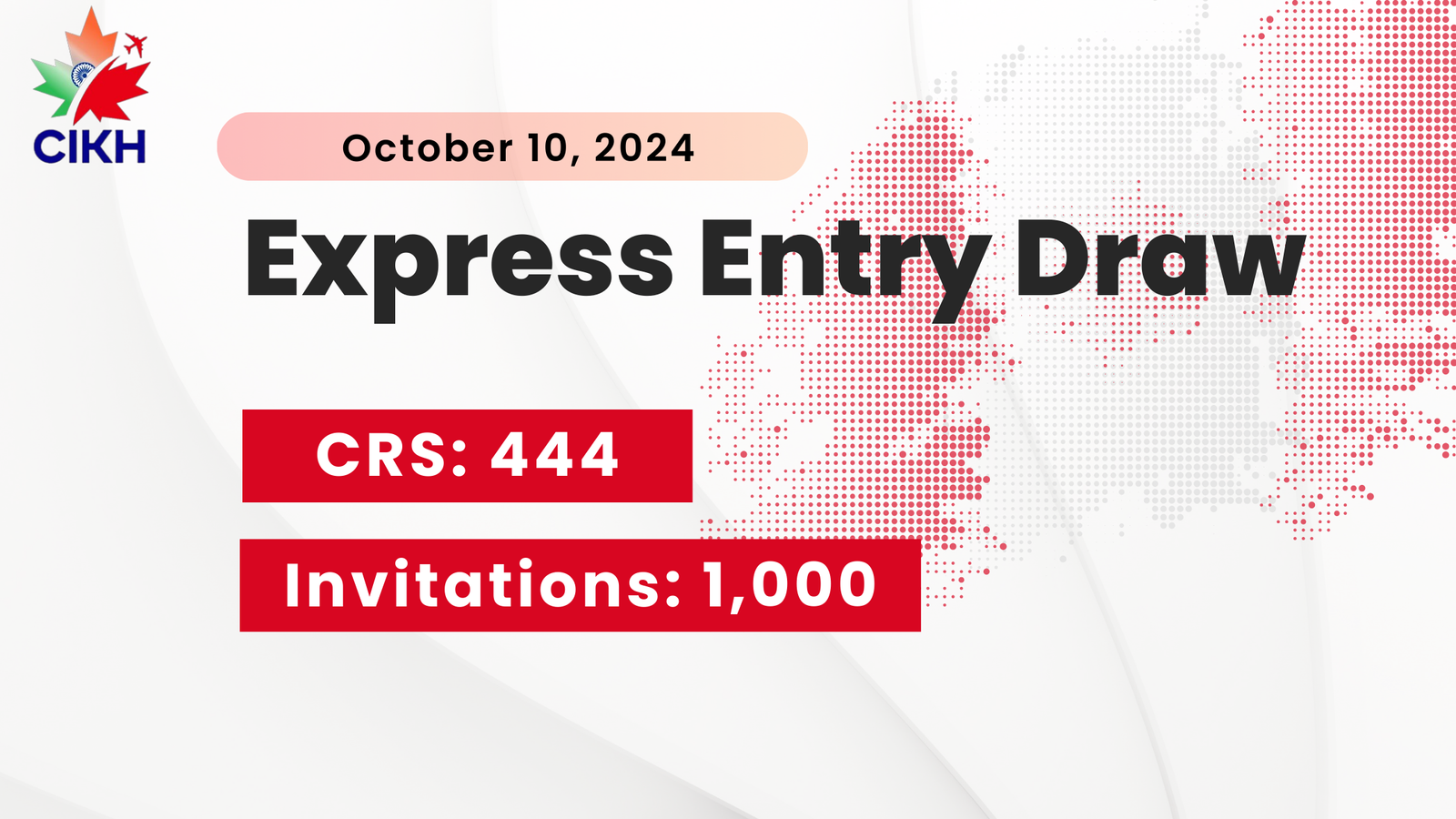
IRCC issues 1,000 Invitations to Apply in the third Express Entry draw held this week
Immigration, Refugees, and Citizenship Canada (IRCC) has extended Invitations to Apply (ITAs) in the latest Express Entry draw. A total of 1,000 ITAs were issued in a category-based draw focusing on French-speaking candidates. To qualify, applicants needed a minimum Comprehensive Ranking System (CRS) score of 444. This was the third Express Entry draw of the week. Earlier, IRCC invited 1,613 candidates from the Express Entry pool who had Provincial Nominee Program (PNP) nominations, requiring a minimum score of 743. Additionally, a draw on October 9 invited 500 candidates from the Canadian Experience Class with a minimum CRS score of 539. Full Details of Express Entry Draw: 09 October 2024 Program: French language proficiency Invitations Issued: 1,000Rank Required: 1,000 or aboveDate and Time of Draw: October 10, 2024 at 15:45:35 UTCCRS Score of Lowest-Ranked Candidate Invited: 444Tie-Breaking Rule: September 27, 2024 at 18:56:32 UTC Prior to this week, the last Express Entry draw took place on September 19, where 4,000 candidates from the Canadian Experience Class (CEC) were invited. These candidates needed a minimum CRS score of 509, which was slightly higher than the previous CEC draw on August 27, where the score was 507. In recent months, IRCC has reduced the frequency of category-based draws, with no category-based invitations issued for categories other than French language proficiency since the healthcare-focused draw on July 5. In recent months, IRCC has scaled back the frequency of category-based selection draws. Since the healthcare-focused draw on July 5, no category-based draws have been held for any category other than French language proficiency. Conversely, draws for the Canadian Experience Class (CEC) have become more frequent over the summer, with 21,800 ITAs issued to CEC candidates since July. This aligns with IRCC’s goal to increase “domestic” draws and reduce the number of temporary residents in Canada, helping the department achieve its permanent resident targets for the year. This is the third draw of the month. In comparison, IRCC held four draws in October last year, inviting a total of 9,173 candidates. Summary of Express Entry draw results in 2024

IRCC issues 500 Invitations to Apply to Canadian Experience Class candidates in the second Express Entry draw this week
Immigration, Refugees, and Citizenship Canada (IRCC) has extended Invitations to Apply (ITAs) in its latest Express Entry draw. In this round, 500 ITAs were given exclusively to candidates under the Canadian Experience Class (CEC). To be eligible, candidates needed a minimum Comprehensive Ranking System (CRS) score of 539. Earlier this week, Immigration, Refugees, and Citizenship Canada (IRCC) invited 1,613 Express Entry candidates with Provincial Nominee Program (PNP) nominations, requiring a minimum Comprehensive Ranking System (CRS) score of 739. Prior to this, on September 19, IRCC conducted a draw exclusively for Canadian Experience Class (CEC) candidates, inviting 4,000 applicants with a minimum CRS score of 509, which was slightly higher than the previous CEC draw on August 27, where the minimum score was 507. CEC-specific draws have become more frequent over the summer, with IRCC issuing 21,800 Invitations to Apply (ITAs) to CEC candidates since July. This aligns with the department’s strategy to increase the number of “domestic” draws and reduce the temporary resident population in Canada, helping to meet its permanent residency targets for the year. This draw marks the second round of invitations for October. In contrast, last October, IRCC held four draws, inviting a total of 9,173 candidates. Full Details of Express Entry Draw: 09 October 2024 Program: Canadian Experience Class (CEC)Invitations Issued: 500Rank Required: 500 or aboveDate and Time of Draw: October 9, 2024, at 14:22:23 UTCCRS Score of Lowest-Ranked Candidate Invited: 539Tie-Breaking Rule: February 20, 2024, at 02:57:40 UTC Summary of Express Entry draw results in 2024