
Updated IRCC Processing Times: On October 8, Immigration, Refugees, and Citizenship Canada (IRCC) released the latest monthly processing times for different citizenship and immigration applications. These updates are essential for applicants to remain informed, allowing them to better plan their immigration journeys and establish realistic expectations. Staying up-to-date with the latest IRCC updates enables applicants to make informed choices regarding their applications. IRCC consistently refreshes its processing times to ensure transparency for applicants. Monthly updates are available for citizenship, family sponsorship, and economic immigration applications. Additionally, weekly updates are provided for business immigration, temporary residency, and permanent resident cards. These processing times assist applicants in estimating the duration required for their applications to be reviewed and approved. Below, you’ll find the latest updates on processing times for various immigration categories, including permanent residency (PR) cards, citizenship applications, family sponsorship, economic immigration, and temporary residency applications. Review the IRCC processing times for the categories listed below: Citizenship Processing Times (Updated Each Month) Application Type Processing Times as of October 8 Change Since Last Update on September 4 Citizenship Grant 6 months Reduced by 1 month Citizenship Certificate (Proof of citizenship) 4 months Increased by 1 month Renunciation of Citizenship 16 months No Change Search of Citizenship Records 12 months Increased by 1 month Processing times for citizenship applications Permanent Resident (PR) Card Processing Times (Last Updated Weekly on October 1) Application type Processing time Change Since Last Update on September 24 New PR Card 26 days Increased by 1 day PR Card Renewal 69 days Reduced by 1 day Processing times for PR cards Family Sponsorship Processing Times (Updated on a Monthly Basis) Application Type Processing Times as of October 8 Change Since Last Update On September 4 Spouse/Common-Law Partner (Outside Canada, excl. Quebec) 10 months Unchanged Spouse/Common-Law Partner (Outside Canada, for Quebec) 35 months Unchanged since last update, but overall increased by 3 months since July 3 Spouse/Common-Law Partner (Inside Canada, excl. Quebec) 13 months Unchanged since last update, but overall increased by 2 months since July 31 Spouse/Common-Law Partner (Inside Canada, for Quebec) 27 months Unchanged since last update, but overall increased by 3 months since July 31 Parents/Grandparents (Outside Quebec) 24 months No change Parents/Grandparents (for Quebec) 48 months No change Processing times for family sponsorships and comparative changes Economic Immigration Processing Times (Updated Both Monthly and Weekly) Permanent Residence Programs Processing Times as of October 8 Change Since Last Update Canadian Experience Class (CEC) 5 months No change Federal Skilled Worker Program (FSWP) 5 months No change Federal Skilled Trades Program (FSTP) N/A No updates since March 2023 Provincial Nominee Program (Express Entry) 6 months No change Provincial Nominee Program (non-Express Entry) 12 months Unchanged since last update, but overall increased by 1 month since July 31 Quebec Skilled Workers (QSW) 9 months No change Quebec Business Class 49 months Increased by 2 months Federal Self-Employed 48 months Unchanged since last update, but overall increased by 1 month since July 31 Atlantic Immigration Program (AIP) 8 months Increased by 1 month Start-Up Visa 40 months Unchanged since last update, but overall increased by 2 months since July 31 Processing times for economic immigration programs Temporary Residency Processing Times (Updated Weekly on October 1) Visitor Visa (from Outside Canada) Processing Times Vary by Country Country Processing time Change since last updates India 105 days Increased by 3 days since September 24 and 41 days since August 20 Nigeria 173 days Reduced by 1 day since September 24 and by 2 days since August 20 United States 32 days Reduced by 2 days since September 24 and by 4 days since August 20 Pakistan 26 days Reduced by 1 day since September 24 and by 21 days since August 20 Philippines 21 days Reduced by 1 day since September 24 and by 4 days since September 4 Canada visitor visa processing times Visitor Visa (Inside Canada): Parents or Grandparents Super Visa (Varies by Country): Study Permit (Outside Canada) varies by country India: Nigeria: United States: Pakistan: Philippines: Study Permit from Inside Canada: 16 weeks (No change since September 24, but increased by 5 weeks since August 14) Study Permit Extension: 112 days (Increased by 5 days since September 24 and by 42 days since August 20) Study Permit (Outside Canada) Varies by Country India: Nigeria: United States: Pakistan: Philippines: Other Temporary Residency Categories: For specific inquiries or further assistance, it is recommended to consult the IRCC website or reach out to an immigration professional.

Ontario’s OINP draw on October 8 issued 1,727 invitations for permanent residency candidates.
On October 8, Ontario’s OINP conducted two separate draws, issuing a combined total of 1,727 invitations to apply (ITAs) for permanent residency. These draws, part of the Ontario Immigrant Nominee Program’s (OINP) foreign worker stream, specifically focused on 61 skilled trade occupations and 104 priority occupations. Here is an overview of the Ontario-OINP draws Number of invitations issued Date profiles created Score range Notes 885 October 8, 2023October 8, 2024 48 and above Targeted draw for 61 Skilled trade occupations 841 October 8, 2023October 8, 2024 52 and above Targeted draw for 104 other priority occupations OINP Draws October 8 61 Skilled trade occupations 104 Other priority occupations
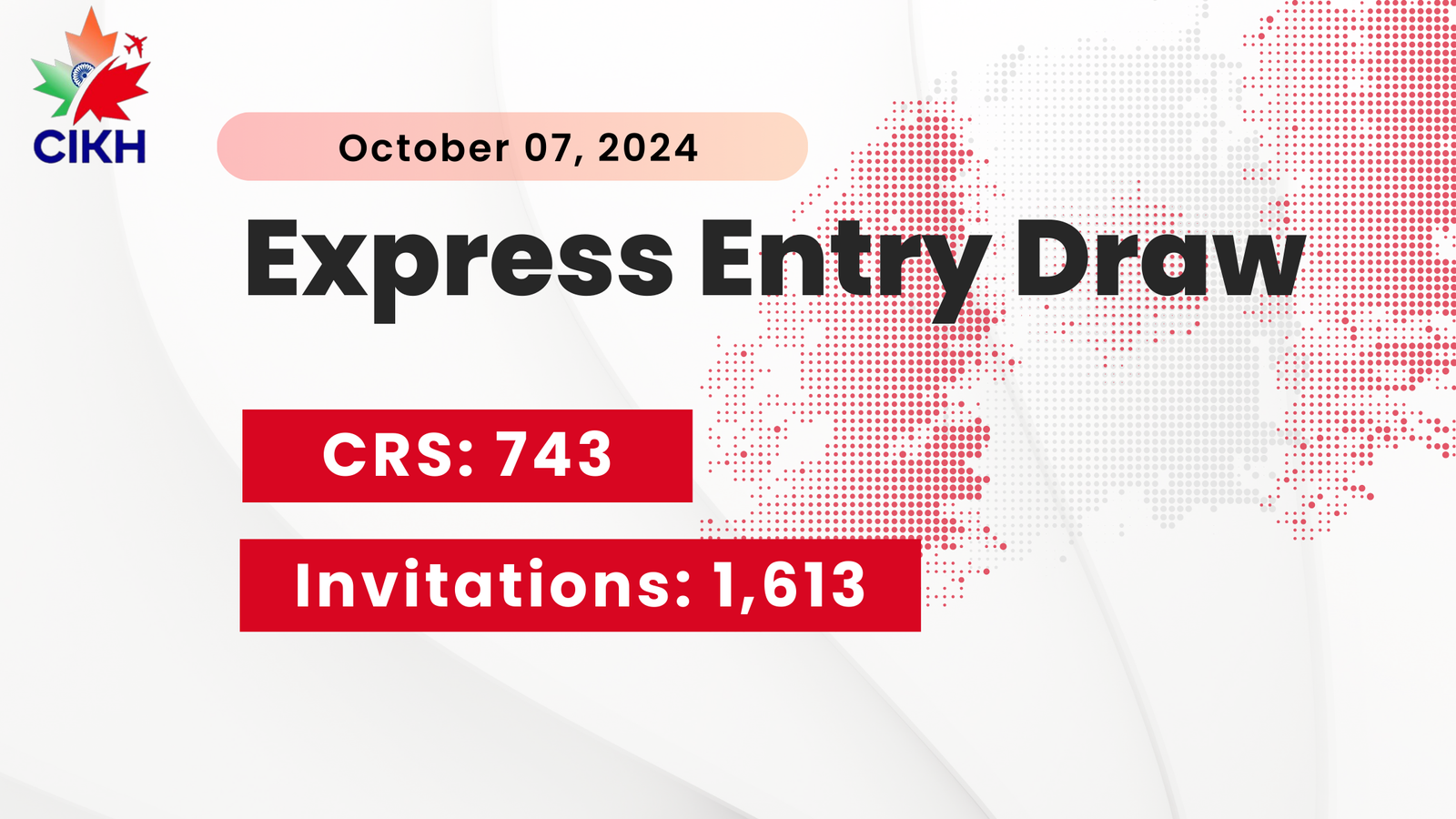
IRCC Invites 1,613 Candidates in Latest Express Entry Draw for PNP candidates
Immigration, Refugees, and Citizenship Canada (IRCC) has extended Invitations to Apply (ITAs) in the latest Express Entry draw. A total of 1,613 ITAs were issued in a draw specifically targeting candidates with a Provincial Nominee Program (PNP) nomination. To be eligible, candidates needed to have a minimum Comprehensive Ranking System (CRS) score of 743. The most recent draw before today took place on September 19, where 4,000 candidates were invited from the Canadian Experience Class (CEC) alone. To qualify, candidates needed a minimum CRS score of 509, which was slightly higher than the previous CEC draw on August 27, where the cutoff was 507. CEC-specific draws have become more frequent throughout the summer, with IRCC issuing a total of 21,800 ITAs to CEC candidates since July. This aligns with IRCC’s plan to increase “domestic” draws and reduce the number of temporary residents in Canada. The approach also supports the department’s effort to achieve its permanent residency goals for the year. Today marks the first draw of the month. In October last year, IRCC held four draws, inviting a total of 9,173 candidates. Full Details of Express Entry Draw: 08 October 2024 Program: Provincial Nominee ProgramNumber of Invitations Issued: 1,613Rank Required to be Invited to Apply: 1,613 or aboveDate and Time of Round: October 7, 2024 at 15:02:50 UTCCRS Score of Lowest-Ranked Candidate Invited: 743Tie-Breaking Rule: March 22, 2024 at 18:36:54 UTC Summary of Express Entry draw results in 2024

Canada extends the exemption for immigration medical exams until 2029
Immigration, Refugees, and Citizenship Canada (IRCC) has extended the temporary public policy that exempts certain low-risk foreign nationals already in Canada from requiring an additional Immigration Medical Examination (IME). Initially implemented two years ago, this policy has assisted more than 286,000 applicants and will now remain in effect until October 5, 2029. This policy extension is anticipated to further streamline the application process, allowing for quicker processing times for eligible foreign nationals while upholding strict public health measures. Eligibility Requirements for the Extended Policy Who Qualifies? This policy extension applies to foreign nationals currently in Canada who meet the following conditions: Advantages of the Policy By waiving the need for an additional medical examination for eligible applicants, this policy helps foreign nationals avoid unnecessary delays in their immigration process. Additionally, it eases the burden on Canada’s healthcare system by reducing the number of medical exams required for low-risk individuals. Who Is Required to Complete an IME? Not all foreign nationals are eligible for this exemption. Those who do not meet the outlined criteria will still be required to undergo an IME as part of the standard health screening process. IRCC will provide direct communication to these individuals, guiding them through the required steps. Reasons for the Policy Extension The initial implementation of this temporary public policy aimed to enhance the efficiency of IRCC in processing immigration applications during the pandemic. Due to its effectiveness in streamlining processes for over 286,000 foreign nationals, the extension grants the Canadian government additional time to evaluate its operational advantages and effects on public health. Furthermore, the extended policy facilitates ongoing collaboration between IRCC and the Public Health Agency of Canada (PHAC) to keep track of current public health issues. This ensures that while immigration processes are improved, public health continues to be a primary focus. Quicker Processing Times for Applicants A key advantage of this policy extension is the expedited processing times for eligible foreign nationals. By eliminating the requirement for a second medical examination, applicants can progress through the immigration system more quickly. This is especially beneficial for those who might otherwise experience delays caused by long wait times for IMEs. For individuals awaiting permanent residency or temporary residence status, this results in reduced time spent dealing with bureaucratic obstacles and allows them to concentrate more on settling into their new life in Canada. How the Policy Benefits Both Applicants and the Healthcare System This extension not only decreases wait times for applicants but also eases the pressure on Canada’s healthcare system. The medical examination process for immigration can generate significant demand for healthcare services, especially in regions with many applicants. By exempting low-risk individuals from needing a second IME, this policy helps mitigate that strain. Furthermore, it has particularly benefited applicants from countries with limited access to medical services or for those who encounter financial challenges in obtaining additional medical exams. What Are the Next Steps for Non-Eligible Applicants? For applicants who do not qualify under the eligibility criteria of the policy, the standard IME requirement remains applicable. IRCC has pledged to reach out directly to these individuals, providing guidance throughout the process. This approach ensures clarity regarding the next steps and enables applicants to take timely action to complete their IME and proceed with their applications. Foreign nationals required to undergo a medical examination are encouraged to adhere promptly to IRCC guidelines to prevent unnecessary delays in their immigration processes. The extension of the temporary public policy that exempts certain low-risk foreign nationals from needing an additional immigration medical exam marks a significant advancement for Canada’s immigration system. It simplifies procedures, shortens wait times, and reduces pressure on both applicants and the healthcare system. As IRCC continues its collaboration with the Public Health Agency of Canada, the advantages of this policy will be closely monitored, ensuring it effectively fulfills its dual purpose of enhancing the applicant experience while upholding strong public health protections.

Understanding the Latest Changes to PGWP Eligibility Criteria: What International Students Need to Know
This explains the newly announced updates to the eligibility criteria for the Post-Graduation Work Permit (PGWP). What remains unaffected Updated Eligibility Criteria If you applied for your study permit before November 1, 2024 If you apply for your study permit on or after November 1, 2024 If you submit your study permit application on or after November 1, 2024, you will need to meet the new requirements relevant to your situation in order to be eligible for a PGWP. Language Requirements You must provide evidence of your language proficiency to satisfy the language criteria for the PGWP when submitting your application. To assess your English or French proficiency, we utilize: Evidence of language proficiency You are required to show your proficiency in each of the following skills: Your test results must be no older than two years at the time you submit your application.The IRCC accepts language test results from the following assessments: Program of Study Requirement If your study program includes a field of study requirement, you must graduate from a program associated with specific occupations that are in long-term demand. The fields of study are categorized into five main groups:

IRCC to issue work permits to candidates nominated under the Yukon program
The Canadian federal government is set to grant work permits to certain foreign nationals employed in Yukon. On Wednesday, October 1, Immigration Minister Marc Miller announced a new temporary policy that will issue work permits to a maximum of 215 candidates under the Yukon Nominee Program (YNP). These permits will allow eligible foreign workers to remain employed in Yukon while their permanent residence applications under the YNP are being processed. Who is eligible?To qualify for these work permits, foreign nationals must: A component of IRCC’s larger initiative This temporary measure for Yukon is part of a broader initiative: In September, IRCC introduced a temporary policy offering open work permits to certain Provincial Nominee Program (PNP) candidates. The policy aligns with IRCC’s goal of addressing provincial labor market needs while facilitating the transition of temporary residents to permanent residency. By increasing pathways to permanent residency, IRCC aims to reduce the proportion of temporary residents in Canada from 6.5% to 5% by 2027. Before Yukon, similar measures were introduced through the Alberta and Manitoba Provincial Nominee Programs. Reduction of temporary resident programsOn September 18 this year, Minister Marc Miller announced several changes aimed at reducing temporary resident programs. Over the next three years, IRCC anticipates that these adjustments will lead to: Upcoming Immigration Levels PlanOn November 1, IRCC is set to unveil its annual Levels Plan, outlining immigration targets for the upcoming year, along with provisional targets for the next two years. The government has signaled that significant changes are on the horizon. This year’s plan will be the first to incorporate targets for temporary resident levels.
IRCC announces updates to the Intra-Company Transferees program
Immigration, Refugees and Citizenship Canada (IRCC) has revised its staff guidelines concerning Intra-Company Transferees (ICTs), with the updates issued on October 3. The most notable changes affect the guidance for section R205(a) under Canadian Interests – Significant Benefit – Intra-company transferees. Additionally, IRCC has updated staff procedures for paragraphs R186(s) and R204(a), impacting several free trade agreements within the International Mobility Program, including: Intra-Company Transferees under R205(a) – Significant Benefit to Canadian Interests Key updates to this section include: The update also highlighted the need for officers to document all relevant evidence for ICT applications within the Global Case Management System (GCMS). Free Trade Agreements under the International Mobility Program – Paragraphs R186(a) and R204(a) IRCC has revised the instructions for these Free Trade Agreements (FTAs) by standardizing the format as follows: Additionally, on the same day, IRCC updated the guidelines for entering information related to representatives in the Global Case Management System (GCMS). What is the International Mobility Program? The International Mobility Program allows employers to facilitate work permits for foreign nationals through Intra-Company Transfers, without the need for a Labour Market Impact Assessment (LMIA). LMIAs are used to verify that hiring a foreign worker will have either a neutral or positive effect on the Canadian labor market, requiring employers to invest more time and effort when obtaining LMIA-based work permits. Part of IRCC’s continuing reforms These updates to the Intra-Company Transfer (ICT) program are in line with IRCC’s broader initiative to reduce the number of temporary resident programs. Immigration Minister Marc Miller aims to decrease the percentage of temporary residents in Canada’s population from 6.5% to 5% within the next three years. On September 18, Miller announced plans to significantly cut the number of study permits, post-graduation work permits (PGWPs), and spousal open work permits during this period. The Temporary Foreign Worker Program (TFWP), which facilitates LMIA-based work permits, is also under review. As of September 26, the government has halted processing for the low-wage stream of the TFWP in all census metropolitan areas with an unemployment rate exceeding 6%. The forthcoming Levels Plan, set to be released on November 1, will be the first to establish targets for temporary residents. This Levels Plan outlines immigration targets for the upcoming year and provides provisional targets for the subsequent two years.

British Columbia’s Latest PNP Draw Issues 167 ITAs on October 2, 2024
On October 2, the latest BC PNP draw issued approximately 167 Invitations to Apply (ITAs) for permanent residency through both general and targeted invitation rounds. In the general draw, 81 invitations were extended to candidates in the skilled worker and international graduate streams, including their Express Entry variants. The cutoff score remained consistent with the previous BC PNP general draw. Additionally, 35 invitations were issued to candidates with experience as early childhood educators or assistants (NOC 42202). Another 28 invitations went to applicants with experience in 39 healthcare-related occupations. Lastly, 23 candidates with experience in 25 construction-related occupations were invited through British Columbia’s newly introduced category-based draw, launched in late 2023. Full Details of Latest BC PNP Draw: October 2 Previous BC PNP Draw : 2024

Canada starts a pilot project to speed up the review process for rejected study permit applications
Individuals whose Canadian study permit applications were denied may soon benefit from a new pilot initiative. The Federal Court of Canada has introduced the Study Permit Pilot Project, which aims to simplify the process for requesting a judicial review of rejected study permit applications. The project begins on October 1. Under the pilot project, individuals applying for leave and judicial review of their rejected study permits may complete the process in less than five months, compared to the current 14-18 month timeframe. This process involves seeking permission from the Federal Court of Canada to challenge an immigration decision. Normally, a judge first decides whether to grant leave (permission) for the judicial review to proceed. If granted, the case is then reviewed based on its merits. However, under the new Study Permit Pilot Project, both the leave request and judicial review will be considered simultaneously. There is no extra cost to participate in the pilot, though the fee to file for leave and judicial review remains $50. Who is eligible? Students may qualify for the Study Permit Pilot Project if they applied for a study permit and received a refusal letter from Immigration, Refugees, and Citizenship Canada (IRCC). The eligibility criteria include: Applicants submitting from within Canada have 15 days from the date of refusal to apply under the pilot, while those applying from outside Canada have 60 days to submit their application. How to apply All documents must be submitted online through the court’s electronic filing system. To participate, applicants need to submit an application for Leave and Judicial Review using Form IR-1, specifying the Pilot Project in three designated areas of the application. More information is available here. Once the documents are filed, a judge will review the application and inform the applicant of the decision. What are the reasons behind the Federal Court and IRCC implementing these measures? In its press release, the Canadian Federal Court highlighted a rise in leave and judicial review requests as a primary reason for launching their collaborative pilot project with IRCC. “The Federal Court is projected to receive 24,000 immigration filings by the end of December, which is roughly four times the annual average the Court handled in the five years leading up to the COVID-19 pandemic.” There has been a surge of new policies regarding Canada’s acceptance of international students and graduates in 2024. The immigration department is aiming to address issues related to affordability and housing shortages by reducing the number of temporary residents (those holding study or work permits or visitor visas) already in Canada. In January, IRCC introduced the first cap on international students, limiting the total number of newly issued study permits to 485,000 for 2024. Initially intended as a temporary measure, this policy affects most undergraduate and college students, while master’s and PhD students are exempt. The federal government has also allocated international student quotas to each provincial and territorial government based on this new cap. In a recent policy update, Immigration Minister Marc Miller held a press conference on September 18, reaffirming his commitment to the international student cap and announcing several additional measures, including:

Avoid These 10 Mistakes to Ensure a Successful Canadian Immigration Application
Applying for immigration can be a complex and time-consuming process, and even simple mistakes can result in rejected applications or lengthy delays. These errors can lead to frustration, lost time, and additional costs. To help ensure a smooth application process, here are the top 10 common mistakes to avoid when submitting your application for permanent or temporary residence. 10 Common Mistakes in Canadian Immigration Applications 1. Forgetting to Sign the Application Forms This mistake happens frequently. Applicants often miss signing in places where signatures are mandatory. For instance, the Additional Family Information form may require up to three signatures on a single page. It’s common for applicants to sign the bottom of the form but overlook the other two signature spots, especially if a spouse or children are involved. Missing signatures or incorrectly signing forms can lead to your application being returned weeks or even months after submission. Another example is a section on certain forms where a signature is needed only if a translator was used. If no translator is involved but you mistakenly sign that section, your application will be rejected and eventually returned. To avoid delays, carefully review your immigration forms, ensuring you sign in all the correct places—and only where necessary. 2. Incorrect Payment of Fees Each immigration program has specific payment methods, which vary based on the location you’re paying from and the type of fee. Depending on the circumstances, fees can be paid online, via bank draft, certified cheque, or money order. For instance, if you attempt to pay the Right of Permanent Residence fee by bank draft to a foreign visa office, it may be returned, causing delays. This fee is typically paid online within Canada. Some visa offices may allow payment in your local currency, but it’s important to check the official website of the visa office to find the correct amount. Do not rely on the current exchange rate, as it often differs from the official fee conversion. Ensure you pay the correct amount through the proper method, as incorrect payments can result in delays or even have your application returned. Pay close attention to both the method of payment and the fee amount to avoid unnecessary complications. 3. Submitting Only IRCC Checklist Documents Why limit your submission to only the documents specified in the IRCC immigration application checklists? In some cases, the documentation listed may not be sufficient for your application to be approved, which can lead to a rejection. For instance, if you are part of a common-law relationship, it’s beneficial to include affidavits from friends and family members that affirm the nature of your relationship, emphasizing that it is exclusive, committed, and similar to marriage. Letters of support can also be valuable in certain situations. For example, if an overseas couple is applying for sponsorship to move to Canada, a letter or affidavit from a Canadian family member offering them accommodation while they settle can help streamline the application process. The additional evidence required for your immigration application will vary based on the specifics of each case, but items such as phone records, bank statements, lease agreements, correspondence, text messages, and social media messages can significantly aid in advancing your application and achieving a favorable outcome. 4. Correctly Sized Images Application guidelines specify that photographs must meet specific size requirements outlined by the IRCC for your particular immigration application type. Photos need to conform to these dimensions to fit correctly on essential forms, such as medical forms for permanent residency applications and other visa documents. If you do not submit photographs of the correct size, your immigration application may be returned to you. 5. Country-Specific Supplemental Forms Residents or citizens of specific countries may need to submit additional forms or information that are not clearly stated on the primary immigration application forms. For instance, individuals residing in Abu Dhabi, United Arab Emirates, must complete a Residency Questionnaire, while those in Islamabad, Pakistan, are required to fill out an Education and Work Experience Questionnaire. It’s essential to include any necessary supplemental information forms with your immigration application to avoid having your application returned or facing significant delays in the decision-making process. 6. Submitting Incorrect Information or Failing to Clarify Missing Details Submitting inaccurate information on an application is a serious violation under Canadian immigration law. The IRCC relies on the information provided by applicants to make informed decisions, and it expects this information to be honest and accurate. Providing misleading information can lead to a rejected application and may even result in a ban from entering Canada for two years or longer. Compounding the issue is the fact that even unintentional mistakes can be viewed as misrepresentation, which can jeopardize your immigration application right away. If your application is missing any requested information, it is crucial to explain why this information is absent and when it will be provided. Failing to do so may result in your application being returned to you. 7. Not Providing a Cover Letter While not critical to the success of an immigration application, omitting a cover letter can lead to processing delays. A cover letter clarifies the identity of the applicant and outlines the primary reasons for their eligibility for immigration, making it easier for the visa officer to review the application—ultimately leading to faster processing in my experience. I always include a comprehensive cover letter with immigration applications, detailing the applicant’s entitlement to immigrate to Canada under current laws and policies. 8. Illegible Writing on Immigration Application Documents All application forms can be filled out online or on a computer using Adobe Reader, which is a free program. While some individuals may prefer to complete forms by hand, this is not recommended. Handwritten forms can be difficult for visa officers to read, leading to applications being returned if there is any uncertainty about the information provided. Additionally, handwritten forms cannot be easily verified. In contrast, forms filled out using Adobe Reader generate barcodes that can be quickly processed by IRCC’s systems, while