

A previous driving under the influence (DUI) conviction can make you inadmissible to Canada. If deemed inadmissible by Canadian authorities, you could be denied a visa, electronic travel authorization (eTA), or entry into the country. If you have a past DUI and are planning to visit Canada, there are various options available to address your criminal inadmissibility. Once the equivalent Canadian offense is identified, you can: Continue reading to explore these options in detail. Avoid attempting to enter Canada if you are deemed inadmissible It is not recommended to attempt entry into Canada if you are aware of your inadmissibility. Repeated attempts could result in Canadian authorities issuing an exclusion order against you. Before trying to enter, ensure you take the necessary steps to resolve your inadmissibility. Identify the corresponding Canadian offense(s) For immigration purposes, Canadian authorities translate foreign offenses into their Canadian equivalents. They will review all aspects of your criminal history, including pending charges, warrants, arrests, and convictions. When assessing your entry, they will evaluate the seriousness of the equivalent Canadian offense(s), the number of offenses on your record, and the timing of those offenses. Obtain a Legal Opinion Letter If you have a pending charge and have not yet been convicted, you may want to consider obtaining a legal opinion letter. A Canadian immigration attorney can draft a letter outlining the charges against you, providing legal insights, and explaining how a potential sentence may affect your admissibility. This letter can be helpful when you present your case to Canadian authorities. Submit an application for a Temporary Resident Permit If you are inadmissible but have a legitimate reason to enter Canada, you can apply for a Temporary Resident Permit (TRP). To qualify for a TRP, you must demonstrate that your need to enter Canada outweighs any health or safety risks to Canadian society, as determined by an immigration or border services officer. You will need to pay a non-refundable application fee of $229.77 for your TRP, and approval is not guaranteed. If you receive approval, you can generally expect the TRP to be valid for the duration of your stay in Canada, up to a maximum of three years. Make sure to leave Canada by your TRP’s expiration date, or apply for a new TRP before the current one expires. If you are a citizen of a country that requires a Canadian visa, you must submit a temporary resident visa (TRV) application online in addition to your TRP application. As a US citizen or a citizen of a visa-exempt country that requires an electronic travel authorization (eTA), you can apply for a TRP online or at the port of entry. Determine your eligibility for deemed rehabilitation You can address criminal inadmissibility by demonstrating your rehabilitation to Canadian authorities. In certain situations, you may qualify for deemed rehabilitation if it has been over 10 years since you completed your DUI sentence and you have only one non-serious conviction. If you have multiple non-serious convictions or your DUI offense occurred after December 2018,* you are not eligible for deemed rehabilitation and must apply for criminal rehabilitation instead. If you meet the criteria for being “deemed rehabilitated,” it may be helpful to use a legal opinion letter to clarify your situation to border officials. If you have any doubts about claiming deemed rehabilitation, it’s advisable to consult with a lawyer. *On December 18, 2018, Canada implemented stricter penalties for impaired driving. Submit an application for criminal rehabilitation If you do not qualify for deemed rehabilitation, you can seek rehabilitation through an individual application, commonly referred to as criminal rehabilitation. Once your application for criminal rehabilitation is approved, you will no longer be deemed inadmissible due to the offenses for which you have been rehabilitated. You are eligible to apply for criminal rehabilitation if you: You can find information on how to calculate the five-year time frame here. In your application, you must show that you no longer pose a risk for criminal activity by providing evidence that the offense was an isolated occurrence.

Alberta will implement its updated permanent residency scoring system beginning September 30.
Alberta’s new permanent residency scoring system will be launched on September 30, 2024, targeting individuals seeking invitations to apply through the province’s worker immigration streams. The Alberta Advantage Immigration Program (AAIP) aims to simplify the selection process, aligning applicants’ profiles with the province’s labour market demands. The Worker Expression of Interest (EOI) program is designed to attract skilled workers to fulfill Alberta’s economic and demographic needs. Candidates will be able to submit their qualifications, skills, and work experience, which will be scored and ranked accordingly. Notably, there is no fee to submit a Worker EOI, making it an accessible option for eligible applicants. Main Highlights of the New AAIP Worker EOI System Understanding the Worker EOI System Upon submitting a Worker EOI, candidates will provide a self-declaration of their qualifications via the AAIP portal. The EOI form requires comprehensive details, which will be assessed using the AAIP’s points grid. This points grid evaluates various factors, each contributing to an overall score with a maximum of 100 points. After submission, candidates will be entered into a Worker Stream pool, where regular draws will take place. These draws are set to commence in mid-to-late October 2024, so there is no urgency to submit an EOI immediately after the system launches. A Guide to the New Alberta Permanent Residency Points Grid The Worker EOI points grid is essential for candidates, as it plays a key role in determining eligibility and ranking in the draws. Here’s an overview of the scoring system: Education (Maximum 22 Points):Higher education levels yield more points. Doctorate holders can earn 12 points, while master’s degree holders receive 10 points, and those with bachelor’s or trade certificates/diplomas can score 7 points. Graduating from an educational institution in Alberta adds 10 points, while education from other Canadian provinces contributes 6 points. Language Proficiency (Maximum 13 Points):Candidates must achieve at least CLB 4 in English or NCLC 4 in French to qualify. Higher language scores provide additional points, with a CLB 6 or above earning up to 10 points. Candidates can also earn up to 3 extra points for being bilingual. Work Experience (Maximum 21 Points):Work experience is vital, with candidates gaining 11 points for 12 months or more. Those with Canadian work experience in Alberta can earn up to an additional 10 points. Age (Maximum 5 Points):Candidates aged 21-34 receive the highest score of 5 points, while other age groups earn slightly fewer points. Family Connections in Alberta (Maximum 8 Points):Having immediate family members residing in Alberta can add up to 8 points, benefiting applicants with established connections in the province. Economic Factors (Maximum 31 Points):Holding a job offer in Alberta, especially in targeted sectors or rural areas, can provide significant points. Job offers in regulated occupations that align with Alberta’s standards can contribute up to 10 points. Getting Ready for Worker EOI Submission Candidates should take several important steps to prepare before submitting their Worker EOI: The Worker EOI system is designed to align Alberta’s immigration processes with the changing demands of its labor market. This focused approach aims to attract the right talent by prioritizing individuals with skills that are in high demand in the province. Conclusion With the Worker EOI system set to launch on September 30, 2024, candidates should thoroughly evaluate their profiles in relation to the points grid and prepare their applications accordingly. By strategically tailoring their EOIs to align with Alberta’s needs, candidates can improve their chances of receiving an invitation to apply. For additional information and to keep up with updates on AAIP draws, visit the official AAIP website and ensure your profile is ready ahead of the upcoming draws.

Three New LMIA Policies Now Active in Canada as of September 26
New rules for Canada’s Labour Market Impact Assessment (LMIA) take effect today, signifying a significant change in the Temporary Foreign Worker (TFW) Program. Initially announced on August 26, 2024, these regulations officially come into force today, September 26. The new policy focuses on metropolitan regions where unemployment rates are at 6% or higher, aiming to give priority to Canadian workers and reduce dependency on foreign labor. Major Updates to the Temporary Foreign Worker Program Now in Force As of today, the following modifications have been implemented in the TFW Program: Earlier Measures Implemented to Prevent LMIA Fraud In response to growing concerns over misuse and fraud in Canada’s Temporary Foreign Worker (TFW) Program, the Canadian government introduced a set of stricter measures on August 6, 2024. These changes aim to reinforce the program’s integrity, ensuring it is used to address genuine labor shortages when no qualified Canadian workers are available. Key Measures Introduced on August 6, 2024: Ongoing Monitoring and Future Modifications The Canadian government will actively monitor these changes and implement additional adjustments as necessary. A comprehensive review of the TFW Program is scheduled within the next 60 days, potentially resulting in further modifications to the high-wage stream, sector-specific exemptions, and the processing of current LMIA applications. Tackling Increasing Unemployment and Program Misuse These changes are part of a comprehensive strategy to adjust the TFW Program in response to the evolving Canadian labor market. With unemployment rising to 6.6% as of August 2024, the government has shortened the validity period of LMIAs from 18 months to 6 months and reduced the cap on temporary foreign workers from 30% to 20%. Additionally, the government has recently granted Quebec’s request to temporarily halt new TFW approvals in Montreal’s low-wage stream, leading to the suspension of LMIA processing for job offers that fall below the province’s median hourly wage of $27.47. Promoting Appropriate Utilization of the TFW Program The updated LMIA regulations demonstrate Canada’s commitment to protecting job opportunities for Canadians and ensuring the TFW Program fulfills its intended purpose. As the economic environment continues to evolve, additional adjustments are anticipated to support a balanced and equitable job market. These changes are now in effect, highlighting the government’s focus on prioritizing Canadian talent and ensuring that the TFW Program adapts to the country’s changing needs.

Canada’s immigration backlog has now surged to almost 1.1 million
Canada’s immigration backlog continues to expand, with newly released IRCC data showing a total of 1,078,300 applications across various categories—marking a 7.57% increase compared to the previous month. The data, published by Immigration, Refugees, and Citizenship Canada (IRCC) on September 24, provides an overview of applications for citizenship, permanent residency, and temporary residency. As of August 31, there are 2,420,800 total applications in process, highlighting the ongoing challenges for those seeking immigration to Canada. Comparison of Canada’s Immigration Backlog As of August 31, Canada’s immigration backlog remains significant, with close to 1.1 million applications delayed across citizenship, permanent residency, and temporary residency categories. Here is a general breakdown of the most recent data: Application Type Applications With Backlog Applications Within Service Standards Total Applications Citizenship 38,600 190,600 229,200 Permanent Residence 300,800 504,800 805,600 Temporary Residence 738,900 647,100 1,386,000 Total 1,078,300 1,342,500 2,420,800 Breakdown of Immigration Processing To understand the current trends in the Canadian immigration system, we can compare the data from August with earlier reports from July 31 and August 31, 2024. Backlog Comparison:Citizenship applications dropped by 1.02% since July, continuing a positive trend.Permanent residence applications increased slightly by 0.60%, showing stable processing.Temporary residence applications surged by 11.21%, the biggest rise, mainly due to higher demand for student, visitor, and work visas. Application Type August 31 backlog July 31 Backlog MoM Change (July to August) Citizenship 38,600 39,000 -1.02% Permanent Residence 300,800 299,000 +0.60% Temporary Residence 738,900 664,400 +11.21% Total 1,078,300 1,002,400 +7.57% Most Recent Backlog Data Applications Processed Within Service Standards: The percentage of citizenship applications processed within service standards decreased by 1.50%, continuing the decline observed in previous months. In contrast, the rate of permanent residence applications processed within the service standards rose by 8.04%, indicating enhanced processing capacity within the department. However, temporary residence applications also saw a decline of 7.77%, suggesting that many of these applications may have entered the backlog. Application Type August 31 Within Service Standards July 31 Within Service Standards MoM Change (July to August) Citizenship 190,600 193,500 -1.50% Permanent Residence 504,800 467,200 +8.04% Temporary Residence 647,100 701,600 -7.77% Total 1,342,500 1,362,300 -1.45% Processing Within Service Standards Predictions for Canada’s Immigration Backlog Looking forward, IRCC is concentrating on various initiatives to alleviate the backlog. The department’s goal is to process a growing number of applications within service standards, especially in the categories of permanent and temporary residence, where the backlog is most significant. Category Backlog projected by end of September 2024 Actual Backlogat the end of August 2024 What IRCC Projectedby End of August 2024 Citizenship 16% 17% 11% Express Entry 15% 16% 15% Express Entry PNP 20% 22% 20% Spouses, partners, and children (except for Quebec) 15% 14% 15% Temporary Resident Visas (TRV) 60% 71% 43% Study Permits 30% 32% 18% Work Permits 14% 47% 22% Backlog projections The IRCC anticipates a 20-30% decrease in the backlog by mid-2025. This reduction will be accomplished by enhancing technological solutions, improving resource allocation, and implementing ongoing reforms to simplify the application process. Much of the success will rely on effectively handling the increasing demand for temporary residence visas, as this category has experienced the greatest rise in both backlog and total applications. Effect on Applicants The increasing backlog, especially within the temporary residence category, continues to impact prospective immigrants, international students, and workers. With 738,900 applications currently delayed, applicants may face longer processing times. On a positive note, the uptick in permanent residence applications being processed within service standards is encouraging for those looking for long-term settlement options. As the IRCC implements its improvements, applicants are advised to closely monitor processing times and ensure their applications are complete and current to prevent unnecessary delays. Key Takeaways:
Eligibility Requirements for Applying for Citizenship
To become a Canadian citizen, you must: There are specific conditions that may prevent you from obtaining Canadian citizenship. Additional or alternative requirements apply if you are: Spouses of Canadian CitizensMarrying a Canadian citizen does not grant you automatic citizenship. As a spouse, you are required to fulfill the same eligibility criteria mentioned earlier, without exceptions. Children and Grandchildren of Canadian CitizensIf your parent or grandparent is a Canadian citizen, you may already hold Canadian citizenship. Permanent Resident StatusNo matter your age, you must hold permanent resident (PR) status in Canada to apply for citizenship. This means you must not: Before applying, it’s important to review the documents you received when you became a permanent resident to ensure your eligibility. A valid PR card is not required to apply for citizenship—you can apply even if your PR card has expired. Time Spent in Canada (Physical Presence)You (and certain minors, if applicable) must have been physically present in Canada for at least 1,095 days (3 years) within the 5 years preceding the date you submit your application. It is recommended to apply with more than 1,095 days of physical presence to account for any potential issues with your calculation. In some cases, you may be able to count time spent: Filing Income TaxesYou may be required to file taxes in Canada for at least 3 out of the 5 years immediately preceding your application date. Language ProficiencyIf you are between 18 and 54 years old when you submit your application, you must demonstrate adequate knowledge of either English or French. This means you should be able to: These language abilities should align with level 4 of the Canadian Language Benchmarks (CLB) for English or the Niveaux de compétence linguistique canadien (NCLC) for French. Your language skills will be evaluated through: A variety of certificates, diplomas, and test results are accepted as proof of your language proficiency. Citizenship TestIf you are between 18 and 54 years old when you submit your citizenship application, you are required to take the citizenship test. The test covers topics such as: You will be invited to take the test after submitting your application. Requesting a Test Accommodation or Waiver In certain cases, you may need assistance with the test (accommodation) or an exemption from taking it (waiver). AccommodationIf you require assistance, you can request accommodations such as: Waiver (Exemption)If your circumstances prevent you from taking the test, you may request a waiver. To be eligible for a waiver, your situation must meet specific criteria. If your waiver request is approved, you will not be required to take the test. Taking the Oath of CitizenshipYou must take the Oath of Citizenship if: Requesting an Oath Accommodation or Waiver In some situations, you may require assistance with the oath (accommodation) or an exemption from taking it (waiver). AccommodationIf you need assistance with the Oath of Citizenship, you can request accommodations, such as sign language interpretation during the ceremony. Waiver (Exemption)A waiver may be granted only in cases where a mental disability (such as an intellectual or developmental disability) prevents an individual from understanding the oath. For instance, if they do not comprehend that taking the oath grants Canadian citizenship. If the waiver request is approved, the applicant is not required to take the Oath of Citizenship. ProhibitionsIf you have committed a crime in or outside of Canada: If you’re uncertain whether these situations apply to you, consult your lawyer or the arresting officer. It’s important to wait until the situation no longer affects your eligibility before applying for citizenship. Each application will be assessed on an individual, case-by-case basis.

BC Latest PNP Draw Issues 145 ITAs Issued in Targeted Rounds on September 24, 2024
In the most recent BC PNP draw held on September 24, approximately 145 Invitations to Apply (ITAs) for permanent residency were issued in targeted invitation rounds. A total of 57 invitations were sent in a specific draw aimed at 35 tech-related occupations under both the Skilled Worker and International Graduate streams, including their Express Entry categories. The cutoff score in this draw remained unchanged compared to the previous general BC PNP draw. Additionally, 42 invitations were extended to candidates with experience as early childhood educator assistants or instructors (NOC 42202). Another 24 invitations were issued to individuals with experience in 39 healthcare-related occupations, offering them a chance to apply for permanent residency. Meanwhile, 22 applicants with experience in 25 construction-related jobs were invited under British Columbia’s newest category-based draw, launched in late 2023. Full Details of Latest BC PNP Draw: September 24 Previous BC PNP Draw : 2024

Sponsoring adopted children and other family members
If you are a Canadian citizen, Registered Indian, or permanent resident of Canada, aged 18 or older, and wish to sponsor, use this application package to: To use this application package, the sponsored individual must meet one of the following criteria: Please note: Adopted children of Canadian citizens may qualify for Canadian citizenship. Explore the citizenship application process for adopted individuals for more information. Use this guide from IRCC to assist in preparing: Adopted children and orphaned relatives A permanent resident visa cannot be granted to an adopted child or an orphaned sibling, nephew, or niece of the sponsor under the family class unless the sponsor or adoptive parents can provide evidence of having obtained information about the child’s medical condition. This requirement is in place to safeguard the best interests of the child. Sponsors must complete and submit a Medical Condition Statement [IMM 0133] (opens in a new tab) if it was not included with their initial sponsorship application. What does it mean to sponsor? When you sponsor individuals under the family class, you are required to sign an undertaking with the Minister of Immigration, Refugees and Citizenship (or with the Ministère de l’Immigration, de la Francisation et de l’Intégration [MIFI] if you reside in Quebec). This undertaking is a formal commitment to provide financial support and meet the basic needs of the family members you are sponsoring. The basic needs include: The purpose of the undertaking is to ensure that the sponsored individuals and their family members do not have to rely on social assistance. The duration of this commitment varies depending on the age and relationship of the individuals being sponsored. Your responsibilities as a sponsor begin as soon as the person you are sponsoring, and their family members if applicable, arrive in Canada. Important note: The undertaking is a binding agreement that cannot be revoked. It remains in effect regardless of changes in circumstances, such as the acquisition of Canadian citizenship, divorce, separation, relationship breakdown, relocation to another province, or a change in your financial situation. Can a Co-Signer Be Included? A spouse or common-law partner can help meet the income requirement by co-signing the sponsorship application. A common-law partner is defined as someone who has lived in a conjugal relationship with you for at least one year prior to signing the undertaking. The co-signer must: Both the sponsor and the co-signer share equal responsibility if the obligations are not met. Note: IRCC does not take into account assets, potential earnings, or financial assistance from other family members. Is More Than One Application Required? Separate applications must be completed for each individual you wish to sponsor. Each application can also include that person’s family members. For instance: If the goal is to sponsor: then two separate applications are required—one for each brother. Each application should clearly identify the respective brother as the principal applicant being sponsored. Sponsorship eligibility To sponsor someone, the following criteria must be met: Note: The minimum income requirement does not apply if the person being sponsored is a child that you have adopted or intend to adopt in Canada, and that child has no children of their own. You cannot sponsor if you.. Defaults You are not eligible to sponsor if you are in default on a previous undertaking. If you submit a sponsorship application while in default, it will be denied, and any sponsorship fees paid will not be refunded or credited toward future applications. You may be considered in default in the following situations: Previous Sponsorship UndertakingYou may be found in default if the family members you previously sponsored received social assistance or welfare while the undertaking was active. You cannot sponsor again until you repay the full amount of any social assistance or welfare payments or resolve the debt to the satisfaction of the relevant government authority. Immigration LoanIf you received a loan for transportation, assistance, or the Right of Permanent Residence Fee (formerly known as the Right of Landing Fee) and have missed payments or are in arrears, you are in default. Sponsorship is not permitted until all arrears on the loan are paid. For further assistance, contact Collection Services at 1-800-667-7301 (available in Canada and the United States only). Support Payment ObligationsIf a court has ordered you to make support payments to a spouse or child and you have failed to do so, you cannot sponsor until this family support issue is resolved. Performance BondIf you agreed to pay a sum of money to ensure that an immigrant would fulfill their obligations under immigration legislation, you are in default until the full bond amount is paid. Sponsorship Bar for Violent Crime The sponsorship bar prohibits individuals convicted of certain crimes from sponsoring family members. If you have been convicted of a crime that caused bodily harm to any of the relatives listed below, you are ineligible to sponsor anyone under the Family Class. Note: Relatives Affected by the Sponsorship Bar: Sponsors Living in Quebec The province of Quebec is responsible for assessing whether sponsors residing in the province have the financial capacity to support their family members and the duration of the undertaking. Quebec has its own immigration regulations. If you live in Quebec and wish to sponsor someone, follow these steps: The Quebec government will review your sponsorship application and determine your eligibility. You may be deemed ineligible if: IRCC cannot make a decision on your application until the Quebec government has rendered a decision on your undertaking application. The Quebec government will notify IRCC if you are approved as a sponsor. If you meet the federal eligibility requirements, IRCC will send the sponsor a letter with instructions to download the MIFI undertaking kit, which should then be completed and submitted to MIFI along with a copy of the letter received from IRCC. Length of Undertaking Your responsibilities as a sponsor begin when your family members arrive in Canada as permanent residents. The following information will help you understand the duration of your undertaking. Dependent

Who are getting affected with Canada’s New Study Permit Capping , PGWP amendments & Spousal Work Permit Changes?
A recent update on September 18, 2024, introduced new rules, including limits on international student numbers and changes to the Post-Graduation Work Permit (PGWP) program. The SOWP policy is also becoming stricter. These changes are being made to: Check out our latest video where we discuss the new immigration policies in Canada and who will be affected by them The goal is to maintain a balance between welcoming newcomers and managing challenges like housing and job availability. The federal government is tightening immigration policies due to several significant issues. One of the main concerns is the sharp rise in asylum claims, especially from international students, which have increased by nearly 650 per cent over the past five years, according to The Globe and Mail. Additionally, there has been growing misuse of the system, with fraudulent documents being used to obtain student visas. For instance, 700 Indian students who applied through Education Migration Services, Jalandhar, run by Brijesh Mishra, face deportation after their admission offer letters were found to be fake. The students paid Rs 16-20 lakh for all expenses excluding air tickets and security deposits (The Economic Times, 2023-05-08). Most of these students had completed their studies, obtained work permits, and gained work experience, but the issue surfaced when they applied for PR (indianexpress.com, 2023-03-18). Canada’s New Democratic Party (NDP) has urged the government to waive the deportation of 150 Punjabi students involved in the case, as per the Canada Border Services Agency (CBSA) (India Blooms News Service, 2023-05-31). A parliamentary committee has also called on the CBSA to immediately halt the deportations (Toronto Star, 2023-06-08). This growing misuse of the system has caused delays for genuine asylum seekers who are in need of support. The rise in fake asylum claims and increased reliance on welfare is also placing a strain on Canada’s economy, prompting the government to implement stricter immigration controls. The Temporary Foreign Worker Program (TFWP) has witnessed a rise in fraud and an increased number of vulnerable workers across the country. Challenges Faced by International Students under Changing Immigration Policies Recent changes to the Temporary Foreign Worker Program (TFWP) have led to significant consequences for temporary residents, especially international students. New policies are impacting all temporary residents uniformly, including those with genuine intentions to study and work in Canada. One major challenge is the confusion faced by international students already enrolled in Canadian educational institutions. Many of these students are contemplating switching their courses or colleges to align with more in-demand fields, but they fear that doing so could affect their eligibility for the Post-Graduation Work Permit (PGWP). This uncertainty adds a layer of stress for students navigating the already complex immigration system. Beyond policy-related concerns, international students are also grappling with increasing financial pressure. Changing programs mid-way often means higher fees, creating further financial strain. In addition, competition for limited seats in Canadian colleges has intensified as more students aim to enrol in courses deemed more favourable for securing future employment. Unfortunately, this high demand has led to some consultants and institutions exploiting the situation by charging students higher fees under the pretext of helping them secure spots in these sought-after courses. However, there are steps international students can take to increase their chances of success both during and after their studies in Canada. While many suggest improving IELTS scores or securing employment as easy ways to increase immigration points, there are additional strategies to significantly enhance a student’s profile. For instance, completing your graduation before coming to Canada ensures a stronger educational foundation and prevents the need for course changes that could affect PGWP eligibility. Additionally, gaining at least one year of work experience before arriving can make a student’s profile more competitive. Pursuing a master’s program in Canada is another effective approach, as it not only boosts academic qualifications but also enhances the chances of securing employment post-graduation. These steps help to increase immigration points and lay a solid foundation for securing future job opportunities in Canada. Key Points for Consideration: ConclusionThe recent changes to Canada’s immigration policies have brought about significant challenges for international students, particularly concerning the Post-Graduation Work Permit (PGWP) program and the Temporary Foreign Worker Program (TFWP). With increased competition, financial burdens, and concerns over eligibility, international students must navigate a complex system. However, by taking proactive steps such as completing graduation before arriving in Canada, gaining work experience, or pursuing a master’s program, students can strengthen their profiles and increase their chances of long-term success in Canada. Adapting to these changes will require careful planning, but it can pave the way for a brighter future.
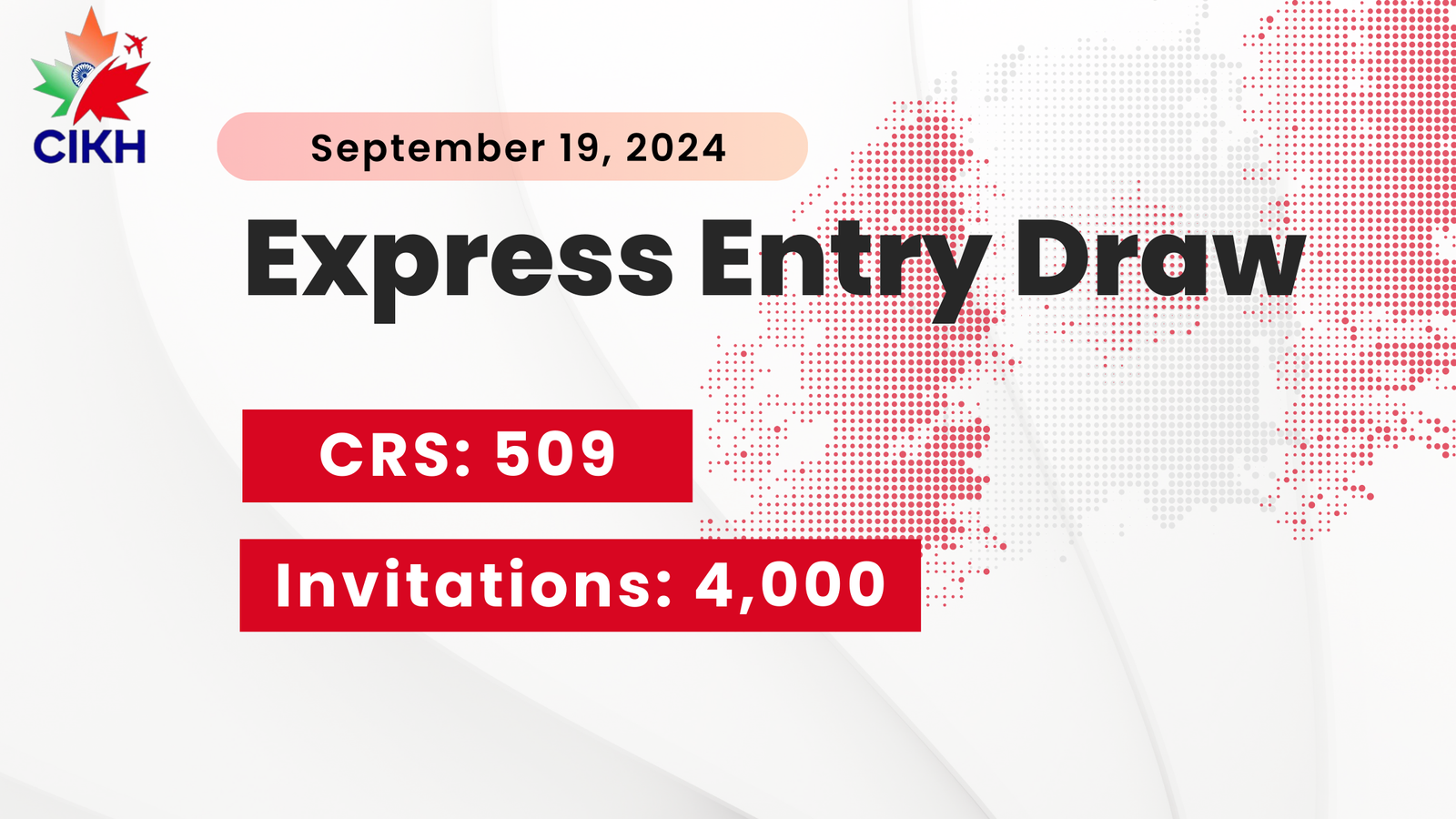
September’s First CEC Express Entry Draw Issues 4,000 PR Invitations
The first Canadian Experience Class (CEC) Express Entry draw of September issued 4,000 Invitations to Apply (ITAs) for permanent residency (PR). Candidates in this draw needed a minimum Comprehensive Ranking System (CRS) score of 509, which is 2 points higher than the previous CEC-specific draw. This is the 6th Express Entry draw in 2024 focused exclusively on CEC candidates, bringing the total number of invitations for this group to 24,800 this year. Despite the recent rise, the cutoff score has dropped by 13 points compared to the first CEC draw in May 2024. The CEC draws resumed following a statement by Immigration Minister Marc Miller, who highlighted that transitioning temporary residents to permanent status is one strategy to manage the country’s growing temporary resident population. Full Details of Express Entry Draw: 19 September 2024 Program: Canadian Experience Class (CEC)Number of Invitations Issued: 4,000Rank Required to be Invited to Apply: 4,000 or aboveDate and Time of Round: September 19, 2024, at 13:12:22 UTCCRS Score of Lowest-Ranked Candidate Invited: 509Tie-Breaking Rule: November 06, 2023, at 07:17:35 UTC Summary of Express Entry draw results in 2024

Ontario Invites 1,424 PR Applicants in Express Entry Human Capital Priorities Stream for New Priority Occupations | September 19
On September 19, 2024, the Ontario Immigrant Nominee Program (OINP) conducted a targeted draw under the Human Capital Priorities stream, inviting 1,424 candidates to apply for permanent residency (PR). The Comprehensive Ranking System (CRS) score range for this draw was between 505 and 528, targeting profiles that were created between September 19, 2023, and September 19, 2024, within the IRCC Express Entry system. Here are the details of the Ontario-OINP draw: Date NOIs issued Number of NOIs issued CRS score range Profiles created in IRCC Express Entry system September 19, 2024 1,424 505-528 September 19, 2023 –September 19, 2024 HCP Draw Other Priority Occupations Candidates received notifications only if their Comprehensive Ranking System (CRS) score was between 505 and 528 and they had work experience in one of the following National Occupational Classification (NOC) codes: You are eligible to apply to this stream if you received a notification of interest on September 19, 2024. To apply: Please note that meeting the eligibility criteria does not guarantee you will receive a notification of interest. Additionally, receiving a notification of interest does not ensure that you meet the stream criteria or that your application will be approved.