Many families in Canada spend years planning to bring their parents or grandparents closer to them. Some save money, collect important documents, and wait patiently for the next sponsorship intake. Hearing that the program will not open this year can be very disappointing.
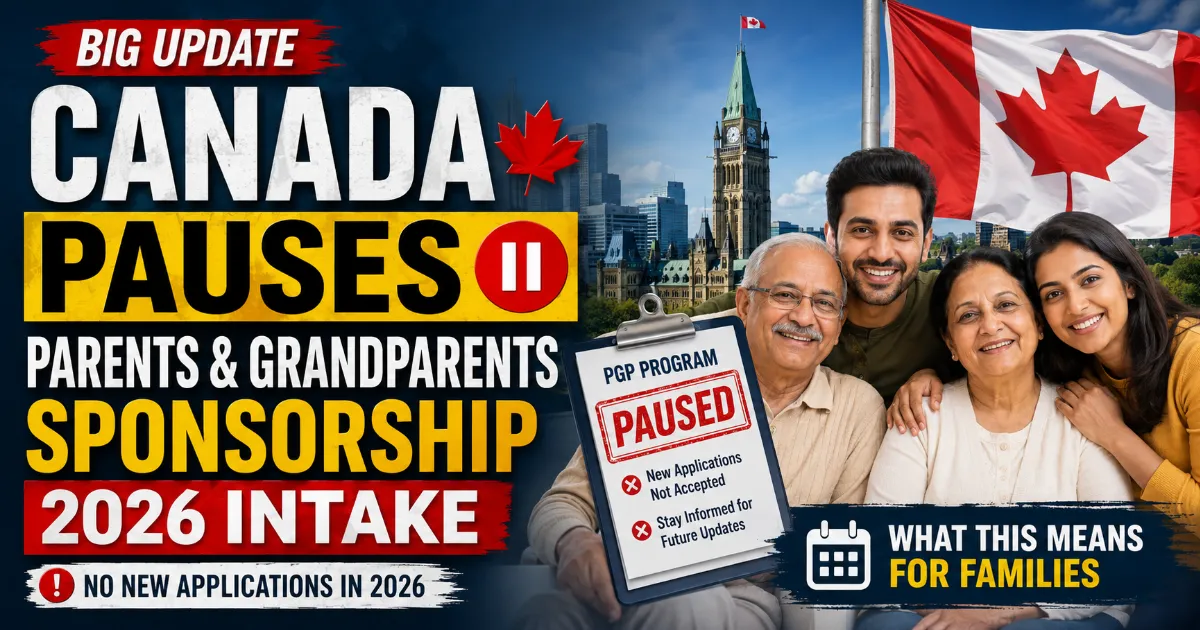
If you were hoping to sponsor your parents or grandparents in 2026, the latest update from Immigration, Refugees and Citizenship Canada (IRCC) is important. The government has confirmed that it will not accept any new Parents and Grandparents Program (PGP) sponsorship applications for the rest of 2026. While this news may feel frustrating for many families, understanding what has changed can help you plan your next steps.
IRCC Confirms No New PGP Intake for 2026
On July 15, 2026, IRCC officially announced that it will not open a new intake for the Parents and Grandparents Program during 2026. This means Canadian citizens and permanent residents cannot submit a new Interest to Sponsor form or expect new invitations to apply this year.
The department explained that the decision is part of its effort to manage immigration programs more effectively. Instead of accepting new applications, IRCC will continue working on the large number of files that are already waiting for review.
For many families, this means they will have to wait longer before they get another opportunity to apply for permanent residence sponsorship for their parents or grandparents.
Why Did Canada Pause the Parents and Grandparents Program?
The biggest reason behind this decision is the growing number of pending applications.
Over the past several years, demand for the Parents and Grandparents Program has been much higher than the number of spaces available each year. Thousands of families have remained in the waiting pool, making it difficult for immigration officers to process applications quickly.
IRCC says reducing the backlog is one of its main priorities before accepting another round of applications.
Another reason is Canada’s current immigration planning. In recent years, the government has been giving more spaces to economic immigration programs that support the country’s labour market and workforce needs. Because of this shift, fewer permanent residence spots are available for parents and grandparents.
Existing Applications Will Continue to Be Processed
Although the program is closed to new applicants, people who already submitted complete applications do not need to panic.
IRCC has confirmed that it will continue reviewing applications that are already in its system. These files will move forward according to the department’s normal processing procedures.
The government expects to approve around 15,000 people for permanent residence through the Parents and Grandparents Program during 2026. This target matches the immigration levels planned by the federal government for the current year.
Applicants who already have an active file should continue checking their IRCC account regularly and respond quickly if additional documents or information are requested.
A Large Backlog Remains
One of the biggest challenges facing the Parents and Grandparents Program is the number of applications waiting to be processed.
According to IRCC, around 60,500 applications are still being handled across Canada. Managing such a large workload takes significant time and resources.
Long waiting periods have become common, leaving many families uncertain about when they will receive a final decision.
Because of this backlog, IRCC believes pausing new applications for now will help officers focus on clearing existing files before opening another intake.
Current Processing Times
Processing times continue to vary depending on where the sponsor lives.
Applicants living outside Quebec generally wait around 33 months for a decision on a Parents and Grandparents Program application.
For families living in Quebec, the process usually takes much longer. Additional provincial requirements mean some applications may take around 66 months before reaching a final decision.
While these timelines are only estimates, they show why many applicants have experienced lengthy delays over the past few years.
| Application Category | Estimated Processing Time |
|---|---|
| Applicants outside Quebec | Around 33 months |
| Applicants in Quebec | Around 66 months |
| Applications currently being processed | About 60,500 |
| Planned permanent resident admissions in 2026 | Around 15,000 |
Canada’s Immigration Plan Is Changing
Canada continues to welcome hundreds of thousands of newcomers every year, but the distribution of immigration spaces has changed.
The federal government’s Immigration Levels Plan now gives greater attention to economic immigration programs that help fill job shortages and support long term economic growth.
Family reunification remains an important part of Canada’s immigration system. However, the number of permanent residence spaces available under the Parents and Grandparents Program has gradually decreased over the past few years.
The government’s current plan aims to admit about 15,000 parents and grandparents through the PGP in 2026. Based on the latest immigration planning, the same target is expected to continue through 2027 and 2028 unless future policy changes are announced.
Parent and Grandparent Admission Targets
| Year | Planned PGP Admissions | Total Family Class Admissions |
|---|---|---|
| 2024 | 32,000 | 114,000 |
| 2025 | 24,500 | 88,000 |
| 2026 | 15,000 | 84,000 |
| 2027 | 15,000 | 81,000 |
| 2028 | 15,000 | 81,000 |
Looking at these numbers, it is clear that admissions under the Parents and Grandparents Program have reduced significantly in just a few years. This change explains why competition for available spots has become much stronger and why many families continue waiting for future opportunities.
What Happens to Applications Already Submitted?
The latest announcement only affects new sponsorship applications. Families who already submitted their complete Parents and Grandparents Program application do not need to apply again.
IRCC has confirmed that officers will continue reviewing applications that were accepted during the previous intake. These applications will be processed according to the department’s normal procedures.
Applicants should regularly sign in to their IRCC online account to check for new messages. If immigration officers request additional documents, updated forms, or medical information, responding on time can help avoid unnecessary delays.
It is also important to make sure that personal details, contact information, and supporting documents remain accurate throughout the processing period.
Why Has the Program Stayed Closed for So Long?
Many people are wondering why Canada has not opened a fresh Parents and Grandparents Program intake for several years.
The main reason is simple. The number of people who want to sponsor their parents is much higher than the number of applications the government can process each year.
When IRCC first introduced the Interest to Sponsor system in 2020, a very large number of Canadian citizens and permanent residents submitted their forms. Even after several invitation rounds, many eligible families are still waiting for an invitation.
Instead of creating another intake while thousands of older applications remain pending, the government has chosen to focus on reducing the existing workload.
This approach is intended to improve processing efficiency and make future application management more predictable.
Can New Sponsors Apply in 2026?
Unfortunately, the answer is no.
At this time, IRCC is not accepting new Interest to Sponsor forms for the Parents and Grandparents Program.
People who were planning to submit a new application this year will have to wait until the federal government announces another intake.
At the moment, IRCC has not provided any confirmed date for reopening the program. Future updates will be published through official government channels.
For this reason, families should avoid relying on unofficial social media posts or online rumors claiming that a new intake is opening soon.
The Super Visa Is Currently the Best Alternative
Although the permanent residence sponsorship program is paused, families still have another option to reunite with their loved ones.
The Super Visa continues to accept applications and remains one of the most practical choices for parents and grandparents who want to spend extended time in Canada.
Unlike a regular visitor visa, the Super Visa allows eligible parents and grandparents to stay in Canada for a much longer period during each visit.
It is designed specifically for parents and grandparents of Canadian citizens and permanent residents.
While the Super Visa does not provide permanent resident status, it allows families to stay together for extended periods without applying for frequent visitor visa renewals.
Many families have successfully used this option while waiting for future immigration opportunities.
Recent Changes Have Made the Super Visa More Flexible
Over the past year, IRCC has introduced several updates that make the Super Visa easier for some families to qualify for.
The income assessment rules have become more flexible in certain situations, giving hosts additional ways to demonstrate that they meet the required financial threshold.
Changes have also been made to health insurance requirements, allowing applicants to purchase eligible medical insurance from approved international providers that meet Canadian government rules.
These updates may help families who previously found it difficult to qualify under the older requirements.
Since immigration policies can change, applicants should always review the latest eligibility requirements before submitting their application.
Super Visa and Parents and Grandparents Program Comparison
Although both options help families stay connected, they serve different purposes.
| Feature | Super Visa | Parents and Grandparents Program |
|---|---|---|
| Immigration status | Temporary resident | Permanent resident |
| Length of stay | Long term visits | Permanent residence after approval |
| Multiple entries | Yes | Not applicable |
| Provincial healthcare | Usually not included automatically | Eligible after meeting provincial rules |
| Private medical insurance | Required | Generally not required after permanent residence |
| Right to work | Not included | Permanent residents may qualify to work |
| Path to Canadian citizenship | No | Possible after meeting residency requirements |
| Accepting new applications in 2026 | Yes | No |
For families who simply want to spend more time together, the Super Visa can be a practical temporary solution until the Parents and Grandparents Program accepts new applications again.
What Families Should Do Right Now
Even though this announcement is disappointing, there are still several practical steps families can take.
- Keep checking official IRCC updates
Immigration programs can change over time. Regularly checking official announcements helps families stay informed about future sponsorship opportunities.
- Prepare your documents early
Even if the program remains closed, collecting important documents now can save time later.
You may want to organize income records, tax documents, identification papers, and civil documents in advance.
- Learn about the Super Visa
Families who cannot wait for a future PGP intake should carefully review the Super Visa requirements.
Understanding the eligibility rules now can make the application process much smoother.
- Avoid unofficial advice
Immigration news spreads quickly online, but not every source is accurate.
Always confirm important information through official government updates before making any immigration decisions or paying anyone for assistance.
- Stay prepared for future announcements
Although there is no confirmed reopening date today, immigration policies may change in future years.
Being prepared with updated documents and financial records can help families act quickly if a new sponsorship intake is announced.
What This Means for Canadian Families
For many Canadians, bringing parents and grandparents closer is about much more than immigration. It is about family support, spending time together, and creating memories across generations.
The pause in the Parents and Grandparents Program may delay those plans, but it does not necessarily end them.
Families with existing applications should continue monitoring their case until a final decision is made.
Those who have not yet entered the program may find the Super Visa to be the most realistic option while waiting for future government announcements.
Although the current situation requires patience, staying informed and planning ahead can help families make better decisions whenever new immigration opportunities become available.
FAQ
No. IRCC has confirmed that it is not accepting new Parents and Grandparents Program applications during 2026. Anyone hoping to sponsor their parents or grandparents will need to wait until the government announces a future intake.
Yes. If you already submitted a complete application through a previous intake, IRCC will continue processing it. Applicants should regularly check their online account and respond quickly if additional documents or information are requested.
No official announcement says the program has been cancelled. At present, the government has only paused new applications for 2026. Any future intake will depend on upcoming immigration plans and government decisions.
Yes. Parents and grandparents can still apply for a visitor visa or, if eligible, a Super Visa. The Super Visa allows longer stays and is currently the main option for families waiting for future sponsorship opportunities.
According to the government, the main reason is the large number of pending applications already in the system. By focusing on existing files first, IRCC aims to improve processing efficiency and reduce waiting times.
Yes. The pause applies across Canada. However, processing timelines may still vary depending on the province, with Quebec generally having longer processing periods because of its separate immigration procedures.
Yes. Even though the program is paused, preparing financial records, tax documents, identity documents, and family records in advance can help you act quickly if a new intake opens in the future.
Final Thoughts
The decision to pause new Parents and Grandparents Program applications in 2026 is disappointing for many Canadian families who were hoping to reunite with their loved ones this year. While the announcement means new sponsorship applications must wait, it does not affect applications that are already being processed.
For families still planning to bring their parents or grandparents to Canada, this is a good time to stay informed, organize important documents, and explore options such as the Super Visa. Immigration policies continue to evolve, and future government announcements may create new opportunities.
Patience can be difficult when family members are living far apart, but staying prepared today can make the application process much smoother whenever the next sponsorship intake becomes available.
Fact Check: The information in this article is based on publicly available updates released by Immigration, Refugees and Citizenship Canada (IRCC), the federal Immigration Levels Plan, and official processing information available at the time of writing. Immigration programs and eligibility rules can change, so readers should always check the latest updates before making any application.
Disclaimer: This article is provided for general informational purposes only. It should not be considered legal or immigration advice. Every immigration case is different. Readers should refer to official IRCC resources or consult a qualified Canadian immigration professional before making decisions related to visas, permanent residence, or sponsorship applications.