
On September 17, 2025, Immigration, Refugees and Citizenship Canada (IRCC) conducted its fifth Express Entry draw of the month, issuing 2,500 Invitations to Apply (ITAs) for permanent residency under the Education Occupations category. This was the second draw in 2025 targeting education-related roles, with a Comprehensive Ranking System (CRS) cutoff score of 462, a significant drop of 17 points compared to the previous education-focused draw held on May 1, 2025. Book Your Consultation for Canadian Immigration The lower cutoff highlights IRCC’s growing focus on critical roles in the education sector, offering increased chances for qualified candidates. Express Entry Draw Details – September 17, 2025 Category Education Occupations (Targeted) Date and Time September 17, 2025 CRS Score (Lowest Ranked) 462 Number of Invitations 2,500 Rank Required to Receive ITA 2,500 Tie-breaking Rule July 9, 2025 at 04:24:19 UTC CRS Score Distribution in the Pool (As of September 14, 2025) CRS Score Range Number of Candidates 601–1200 220 501–600 24,870 451–500 71,427 491–500 12,341 481–490 12,555 471–480 15,569 461–470 16,158 451–460 14,804 401–450 74,178 351–400 52,883 301–350 19,978 0–300 8,074 Total 251,630 Eligible Occupations in the Education Category This targeted category focuses on key roles that are essential to Canada’s education system. The eligible occupations include: How the Express Entry System Works The Express Entry system is a points-based immigration pathway for skilled workers. Here’s a brief overview of how it functions: 6 Ways to Improve Your CRS Score If you missed the latest draw, use these proven strategies to enhance your profile: Frequently Asked Questions (FAQs) What is the most recent Express Entry draw?The latest draw was on September 17, 2025. It targeted candidates in the education category and issued 2,500 ITAs with a minimum CRS score of 462. Will CRS scores go below 500 in 2025?Yes. The September 17 draw had a CRS cutoff of 462. Category-based draws often have lower scores than general draws, which usually range from 490 to 510. Can I get an ITA with a score of 470?Yes. The September 17 draw proves that a score of 470 is competitive in targeted draws. Scores under 470 may also be selected depending on the category and demand. Is a CRS score of 450 enough to get PR?A score of 450 is generally too low for standard draws but may be sufficient for category-based selections. Improving your profile or securing a PNP nomination can significantly boost your chances. What happens after receiving an ITA?You will have 60 days to submit your complete application for permanent residency. IRCC processes most cases within six months. Final Thoughts IRCC’s continued focus on category-based draws offers new opportunities for education professionals and other in-demand occupations. With CRS scores dropping in these targeted draws, now is an excellent time to strengthen your profile. Check your CRS score using the IRCC calculator, explore ways to improve it, and be ready for the next draw. Your path to Canadian permanent residency could be closer than you think.

From Student to Permanent Resident: How International Graduates Can Build a Future in Canada
For many young people worldwide, studying in Canada is about creating a long-term future as much as obtaining a degree. Canada has created procedures over the years that enable foreign students to move from temporary study status to permanent residence (PR). Thousands of graduates make this transition each year, and although the path isn’t always easy, the opportunities are genuine. Book Your Consultation for Canadian Immigration With the help of statistics, real-life examples, and current programs, this article examines how international students can make their Canadian education a permanent part of their lives. Why Canada Values International Graduates International students are seen by Canada as potential future contributors to its society and economy. They are educated, youthful, frequently multilingual, and already accustomed to Canadian workplaces and culture. Over 627,000 international students were in Canada in 2024, and about one-third of them applied for permanent residence within ten years of their arrival, according to Immigration, Refugees and Citizenship Canada (IRCC). Because of this, graduates play a crucial role in Canada’s immigration strategy, particularly during a period of aging populations and labor shortages. The Bridge: Post-Graduation Work Permit (PGWP) For the majority of students, the first step is the Post-Graduation Work Permit (PGWP). Depending on the length of the program, graduates of approved Canadian institutions are permitted to work in Canada for a maximum of three years. In addition to helping them earn Canadian dollars, this work experience earns them valuable points for permanent residence under programs such as Permanent Residency Pathways for Students In order to meet local labor demands, smaller areas like the Atlantic provinces (Nova Scotia, New Brunswick, Newfoundland and Labrador, and Prince Edward Island) aggressively encourage students to remain and apply for permanent residence. Real-Life Example: Sara’s Journey from Student to PR In 2019, Sara, a Kenyan business student, traveled to Toronto, Canada, to complete her bachelor’s degree. She obtained a PGWP after graduating and began working for a financial company. She joined the Express Entry pool under the CEC after gaining a year of work experience in Canada. She was invited to apply in 2023, and within ten months, she was granted permanent residence. Her experience is similar to that of thousands of other students who use their education as a launching pad to land permanent jobs in Canada. Challenges Students Face While the path exists, it isn’t without hurdles: Why Planning Matters Early The smartest students don’t wait until graduation to think about PR. By choosing programs in high-demand fields (healthcare, STEM, trades) and considering provinces with student-focused PNPs, graduates increase their chances dramatically. Consulting immigration professionals or university advisors early on can also prevent missteps. Conclusion: A Path with Promise A Canadian education can be the beginning of a new life for international students, offering them more than just a degree. The fact remains that Canada values the abilities, enthusiasm, and potential that foreign graduates bring, even as regulations continue to change. Education in Canada can genuinely become a route to permanent residency with the right preparation, diligence, and wise decisions. Sources (non-linked, written format): { “@context”: “https://www.schema.org”, “@type”: “Product”, “brand”: “CIKH- Latest Canadian News”, “logo”: “https://cikh.ca/wp-content/uploads/elementor/thumbs/cikhlogo-qnztec4skqad3q8831jbaqtk2d9429qmxwm71nw3m4.png”, “name”: “From Student to Permanent Resident: How International Graduates Can Build a Future in Canada”, “description”: “Explore how international graduates can transition from studying in Canada to becoming permanent residents: PGWP, Express Entry, PNPs, tips, real stories & planning advice.”, “aggregateRating”: { “@type”: “aggregateRating”, “ratingValue”: “5”, “reviewCount”: “219” } }

Latest Express Entry Draw Issues 228 Invitations for Permanent Residency
On September 15, 2025, Immigration, Refugees and Citizenship Canada (IRCC) held a Provincial Nominee Program (PNP)-specific Express Entry draw. A total of 228 Invitations to Apply (ITAs) were issued to candidates with a minimum Comprehensive Ranking System (CRS) score of 746. Book Your Consultation for Canadian Immigration If your CRS ranking in the Express Entry pool was 228 or higher, this draw could be the beginning of your journey toward permanent residency in Canada. Key Details of the September 15, 2025 Draw In situations where multiple candidates had the same CRS score of 746, IRCC used the tie-breaking rule to prioritize those who submitted their profiles earlier. This draw was more targeted compared to broader Canadian Experience Class (CEC) or Federal Skilled Worker Program (FSWP) draws, which typically invite larger numbers. It focused specifically on candidates with active provincial nominations, reflecting the strategic goals of participating provinces and territories. Why a Provincial Nomination Matters The Provincial Nominee Program is a key part of Canada’s immigration strategy. It allows provinces and territories to select candidates who meet specific regional labor market needs. Receiving a provincial nomination adds 600 points to a candidate’s CRS score. This provides a significant advantage when seeking an Invitation to Apply. For this draw, even with the 600-point boost, candidates still needed a base CRS score of at least 146 to qualify. The high cutoff score highlights the importance and impact of having a provincial nomination. Express Entry Pool Overview (as of September 14, 2025) Here is a breakdown of the number of candidates in each CRS score range just one day before the draw: CRS Score Range Number of Candidates 601–1200 220 501–600 24,870 451–500 71,427 491–500 12,341 481–490 12,555 471–480 15,569 461–470 16,158 451–460 14,804 401–450 74,178 441–450 14,719 431–440 16,312 421–430 14,822 411–420 14,714 401–410 13,611 351–400 52,883 301–350 19,978 0–300 8,074 Total 251,630 This data shows a large number of candidates concentrated in the 451 to 500 and 401 to 450 ranges, indicating strong competition within the pool. What to Expect Next IRCC continues to alternate between different types of draws, including those targeting specific programs like the PNP, the Canadian Experience Class, or categories such as healthcare, STEM, and French-speaking candidates. More rounds of invitations are expected soon, possibly on Tuesday, Wednesday, or Thursday of this week. Take the Next Step Toward Permanent Residency The September 15 draw highlights how valuable a provincial nomination can be in the Express Entry system. With a 600-point boost, a PNP nomination can significantly increase your chances of receiving an invitation. As Canada continues to welcome over 395,000 new permanent residents each year, now is a great time to: Your Canadian journey could begin with the next draw. Start planning today and take one step closer to building a successful future in Canada.

Alberta Invites More Than 1,300 Candidates in September Immigration Draws
The Alberta Advantage Immigration Program (AAIP) conducted seven draws in September, inviting candidates with Alberta job offers who are well-positioned to address workforce shortages in high-demand industries and occupations. Overview of September Draws From September 2 to September 10, the AAIP issued a total of 1,376 Invitations to Apply (ITAs), primarily through the Alberta Express Entry stream and the Dedicated Health Care Pathway. By the middle of September, the AAIP had already issued more invitations than in any previous month of 2025. Book Your Consultation for Canadian Immigration The largest draw of the month took place on September 4, when 891 candidates were invited via the Alberta Opportunity Stream. Below is a summary of invitations issued during the nine-day period, including the cut-off scores for each draw: Draw Date Stream Number of Invitations Cut-Off Score September 10, 2025 Alberta Express Entry Stream – Priority Sectors (Aviation) 30 50 September 9, 2025 Alberta Express Entry – Priority Sectors (Health Care) 70 64 September 8, 2025 Alberta Express Entry – Priority Sectors (Construction) 121 61 September 5, 2025 Alberta Express Entry Stream – Priority Sectors (Agriculture) 71 48 September 4, 2025 Alberta Opportunity Stream 891 56 September 3, 2025 Dedicated Health Care Pathway (non-Express Entry) 67 44 September 2, 2025 Dedicated Health Care Pathway (Express Entry) 126 49 The Alberta Opportunity Stream remains the most popular pathway under the AAIP, with the largest nomination allocation of any stream and the highest number of Expressions of Interest (EOIs)—nearly 42,000 in the pool. Earlier this year, the AAIP announced that in 2025, the Alberta Express Entry Stream would issue invitations based on priority sectors, in addition to the stream’s three designated pathways: The sectors prioritized under the Alberta Express Entry Stream include healthcare, construction, agriculture, aviation, and technology. Provincial Nomination Figures As of September 11, the province has allocated the following numbers for the above-mentioned streams: Stream 2025 Nomination Allocation Nominations Issued So Far Nominations Remaining EOIs in the Pool Alberta Express Entry Stream – Priority Sectors 405 348 57 4,619 Dedicated Health Care Pathways (Express Entry & non-Express Entry) 500 353 147 1,633 Alberta Opportunity Stream 2,592 2,016 579 41,848 The AAIP does not provide detailed breakdowns of nomination allocations by individual priority sector within the Alberta Express Entry Stream or by pathway within the Dedicated Health Care Pathway. The total nomination allocation for the AAIP in 2025 is 4,875, and as of September 11, the program has issued 3,749 nominations, leaving 1,126 spaces available for the remainder of the year. Additionally, there are currently 1,768 applications awaiting processing in the AAIP’s inventory. For up-to-date figures on nomination allocations for all AAIP streams, the province provides regular updates.
Temporary Foreign Worker Program Set for Changes, Says Carney
Prime Minister Mark Carney has announced that the federal government is preparing changes to the Temporary Foreign Worker Program (TFWP). Book Your Consultation for Canadian Immigration Speaking to the Liberal caucus in Edmonton on September 10, Carney emphasized the need for a more targeted approach to the program. He stated that, going forward, the TFWP “must have a focused approach that targets specific, strategic sectors, and needs in specific regions.” He confirmed that the government is actively working toward these goals, though he did not disclose specific details about the proposed changes. The TFWP is Canada’s primary mechanism for issuing work permits to foreign nationals. Employers looking to hire through the program must first complete a Labour Market Impact Assessment (LMIA), conducted by Employment and Social Development Canada. The LMIA must show that hiring a foreign worker will have a neutral or positive effect on the Canadian labour market—meaning it must not reduce job opportunities for Canadian citizens and permanent residents. The program has recently come under fire from Opposition Leader Pierre Poilievre, who argues that it has reduced employment opportunities for Canadians. The Conservative Party of Canada has gone so far as to call for the program’s elimination. Over the past 18 months, the federal government has already implemented several measures to scale back the TFWP, including: According to government data, the number of work permits issued under the TFWP dropped significantly in the first half of 2025—down 50% compared to the same period in 2024. During that time, only 33,722 net new TFWP permits were issued.
How Canadians Can Hire Foreign Workers Without an LMIA in 2025
Hiring a foreign worker typically entails going through the Labour Market Impact Assessment (LMIA) procedure, which requires Canadian firms and families to demonstrate that no Canadian worker is available for the position. Employers can onboard foreign talent without the expense, delays, and paperwork associated with an LMIA, as more than half of temporary work permits issued in Canada in 2025 are LMIA-exempt. Book Your Consultation for Canadian Immigration The purpose of LMIA-exempt programs, how Canadians can hire workers through them, and what employers need to know are all covered in this article. Why Canadians Care About LMIA-Exempt Hiring This indicates that Canadian companies are already depending significantly on these initiatives to swiftly address labor shortages. What Does “LMIA-Exempt” Mean for Employers? Employers who use LMIA-exempt hiring are exempt from applying for approval from Employment and Social Development Canada (ESDC) prior to hiring a foreign worker. Rather, you: The Main LMIA-Exempt Pathways Available to Canadians 1. International Mobility Program (IMP) The majority of LMIA-exempt categories are covered under the IMP. Employers in Canada use it to hire under: Exemptions for significant benefits—for employees who contribute to society, culture, or the economy (artists, academics, entrepreneurs). 2. Open Work Permit Holders With open work permits, many foreign workers already in Canada are able to work for any business. Among the examples are: This is the easiest path for Canadians: employing someone with an open permit eliminates the need for an LMIA and an employer compliance filing. 3. International Experience Canada (IEC) Young workers from nations with youth mobility agreements can work in Canada without an LMIA if they have IEC permits. This route is vital to many Canadians who work in hospitality, tourism, and seasonal jobs. 4. Trade Agreement Professionals & Business Visitors The LMIA phase is not required for Canadians to bring in experts, technicians, and business visits under trade agreements such as CUSMA and others. Step-by-Step for Canadians Hiring Without LMIA Because the IRCC can audit employers, keep compliance records, including employment descriptions, salaries, and duties. Example from a Canadian Business A senior developer from a U.S. partner firm was required by a tech startup based in Toronto. The business utilized the Intra-Company Transfer stream rather than waiting months for an LMIA. The project was able to continue when they paid the compliance charge, made the offer online, and their candidate obtained a work permit in a matter of weeks. Common Mistakes Canadian Employers Make Final Word for Canadian Employers One of the quickest and most economical ways for Canadians to add foreign workers to the workforce is through LMIA-exempt hiring. Businesses can avoid thousands of dollars and months of delay by using trade agreements, intra-company transfers, or hiring someone who is currently in Canada with an open permit. Knowing which exemptions apply and making sure your documentation is accurate are crucial. When implemented properly, LMIA-exempt pathways benefit both Canadian employers and workers by providing them with the expertise they require without adding red tape. Sources

New Advertising Requirements for Employers Seeking Labour Market Impact Assessments
Effective immediately, employers hiring for Labour Market Impact Assessment (LMIA)-based positions are required to enable and use the “Direct Apply” feature on Canada’s Job Bank as part of the mandatory advertising process. Book Your Consultation for Canadian Immigration What This Means for Employers To receive a positive LMIA, employers must: Failure to comply with these requirements—either by disabling Direct Apply or ignoring submitted applications—may result in the rejection of the LMIA application due to non-compliance with advertising standards. This marks a stricter enforcement of LMIA recruitment rules. Previously, while employers were required to advertise on Job Bank for at least four consecutive weeks and use two other recruitment methods, enabling Direct Apply was optional. Now, it is mandatory by default. Important: Employers must also ensure Direct Apply is enabled on existing Job Bank postings. The feature can be applied retroactively. Consequences of Non-Compliance Job postings that: may face restrictions on the Job Bank. This could disrupt the required four-week recruitment period, ultimately leading to LMIA application failure. Additional Recruitment Methods Still Required Despite the new rule, employers must continue using at least two additional recruitment methods—such as directing applicants to: About Canada’s Job Bank and LMIA Requirements The Job Bank is Canada’s official government job board. Employers applying for an LMIA are required to post job openings here to demonstrate that they’ve made efforts to hire Canadian citizens or permanent residents before seeking foreign workers. Some LMIA-based positions, however, are exempt from the advertising requirement, including (but not limited to): For a full list of exemptions, please refer to the government’s dedicated webpage. Context: Temporary Foreign Worker Program (TFWP) The TFWP supports Canadian employers by allowing them to hire foreign workers when no Canadians or permanent residents are available. However, it has faced increasing scrutiny over its potential misuse—particularly regarding wage suppression and limited domestic recruitment efforts. The Direct Apply rule is part of the federal government’s broader efforts to: For Job Seekers Job seekers can now apply directly to LMIA-based jobs through the Job Bank using the Direct Apply feature. Those with a Job Seeker Plus account can simply: This streamlined process saves applicants time and removes the need to navigate external application portals or create multiple accounts.

Ontario to Eliminate Interprovincial Barriers for Regulated Professions
On Labour Day, the Ontario government announced new measures to streamline the licensing process for out-of-province workers in regulated professions. This initiative, called the “As of Right” framework, will allow certified professionals from other provinces and territories to begin working in Ontario within just 10 business days—a significant reduction from the current timeline, which can take up to six months. Book Your Consultation for Canadian Immigration What Is the “As of Right” Framework? Starting January 1, 2026, the new labour mobility rules will enable workers in regulated occupations to: These changes apply to over 50 regulatory bodies and more than 300 certifications, covering professionals such as: This is a major shift in supporting labour mobility, especially given that 20% of Canadian occupations are regulated. “With these historic measures, we’re tearing down barriers to create more opportunities for workers and businesses, building a stronger province and country,” said David Piccini, Ontario’s Minister of Labour, Immigration, Training and Skills Development. Who Is Eligible? Eligible Professions: Not Eligible: New Rules for Healthcare Professionals Only specific health professionals are included in the “As of Right” changes. These include: From other Canadian provinces/territories: From the United States: These professionals may start working immediately in Ontario without registering with a health regulatory college, provided they meet 10 eligibility conditions. Steps to Work in Ontario Under the New Rules If you’re certified in another province or territory, here’s how to take advantage of the new process for non-health regulated professions: Reciprocal Mobility for Ontario-Certified Workers The Ontario government has signed 10 interprovincial agreements allowing Ontario-certified professionals to work in other provinces or territories. These agreements aim to foster cross-country mobility by recognizing similar standards in regulated professions across jurisdictions. Ontario Immigrant Nominee Program (OINP) and Labour Mobility For foreign nationals, Ontario also offers permanent residence pathways through the Ontario Immigrant Nominee Program (OINP). Many of the OINP streams align well with the new “As of Right” rules. Employer Job Offer Streams (job offer required): Most occupations under these streams are regulated and could qualify under the new mobility framework. Express Entry-Aligned Streams (no job offer required): As of 2025, Ontario has issued 8,799 Invitations to Apply (ITAs) through its various immigration streams. More Information and Resources

Manitoba Issues Over 3,000 Invitations for Provincial Nomination
This week, Manitoba held a new round of invitations under the Manitoba Provincial Nominee Program (MPNP), inviting thousands of skilled workers and international graduates to apply for a provincial nomination for permanent residence. Book Your Consultation for Canadian Immigration Invitations were issued through three streams: MPNP Draw #253 – Results and Breakdown Date: September 4, 2025Total Invitations Issued: 3,347 Letters of Advice to Apply (LAAs) Stream LAAs Issued Cut-off Score Skilled Worker Overseas 15 844 Skilled Worker in Manitoba 1,466 N/A International Education Stream 1,866 N/A Skilled Worker Overseas – Strategic Recruitment Initiatives The 15 LAAs issued under this category were extended to candidates identified through targeted recruitment efforts: Recruitment Initiative LAAs Issued Employer Services 4 Francophone Community 7 Regional Communities 3 Ethnocultural Communities 1 Special Selection – Ukrainian Citizens A separate draw under the Skilled Worker in Manitoba stream was conducted specifically for candidates who declared Ukrainian citizenship and met the program’s eligibility criteria. International Education Stream A total of 1,866 LAAs were issued to international graduates who met all eligibility criteria under the International Education Stream. Express Entry Candidates Out of the 3,347 total LAAs, 415 were issued to candidates with valid Express Entry profile numbers and job seeker validation codes, indicating alignment with federal immigration pathways. Why Some Candidates May Not Receive an LAA Candidates who meet or exceed the cut-off score may still not receive an invitation due to issues such as: What Are Strategic Recruitment Initiatives? Strategic recruitment initiatives are programs run in collaboration with employers or communities in Manitoba to fill high-demand positions with qualified foreign workers. These initiatives are essential in: To participate, employers must complete Manitoba’s recruitment process and meet position eligibility criteria. Candidates must also meet stream-specific requirements related to: Additionally, the MPNP evaluates whether a candidate has strong ties to another province, which could indicate a risk of not settling in Manitoba. Each application is assessed individually based on the program’s retention criteria.
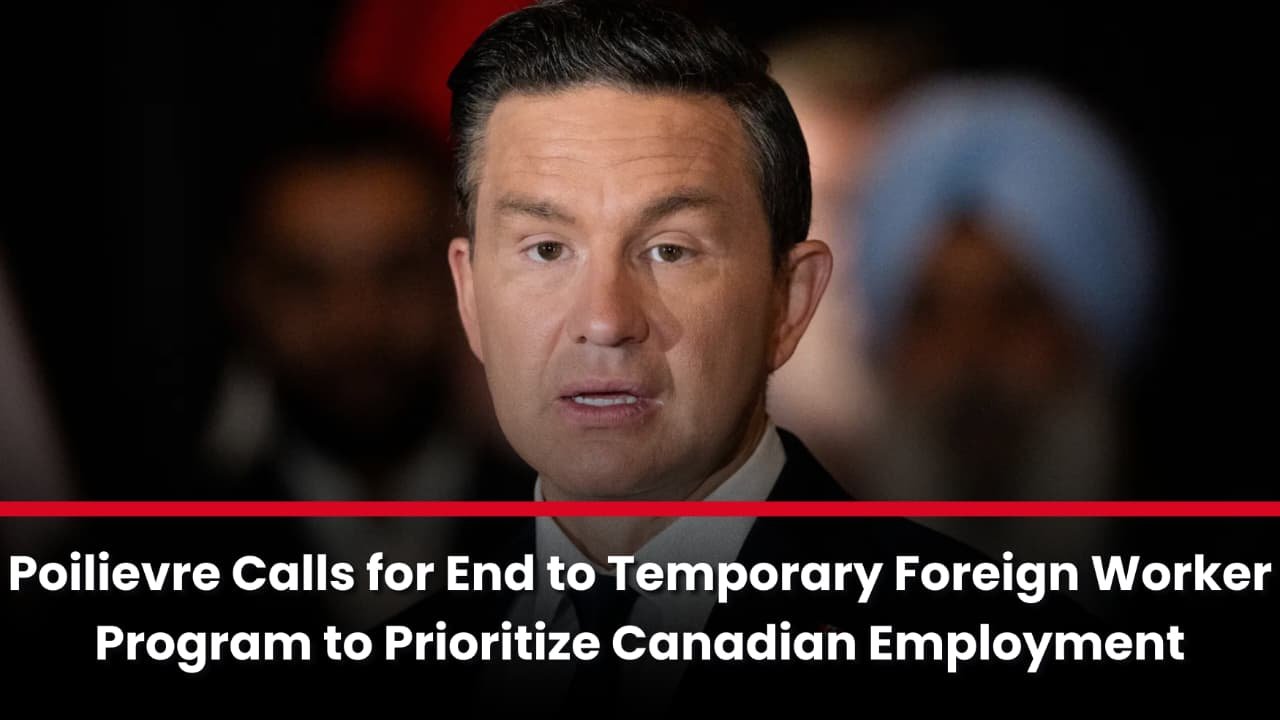
Poilievre Calls for End to Temporary Foreign Worker Program to Prioritize Canadian Employment
In a bold move to address Canada’s worsening economic challenges, Conservative Leader Pierre Poilievre has called for the complete elimination of the Temporary Foreign Worker Program (TFWP). He accused Prime Minister Mark Carney’s Liberal government of putting corporate interests ahead of Canadian workers. Book Your Consultation for Canadian Immigration Speaking at a press conference in Mississauga, Ontario, Poilievre introduced his “Canada First” plan, which aims to restore economic opportunity, particularly for younger Canadians who are struggling in the current job market. Poilievre highlighted a series of troubling statistics. He noted that youth unemployment among Canadians aged 15 to 24 reached 14.6 percent in July 2025, the highest rate since 2010 outside of the COVID-19 period. He also pointed out that 1.6 million Canadians are unemployed, including nearly 400,000 who have been without work for over two years, marking the highest level of long-term unemployment since 1998. “Young people today are a generation screwed,” Poilievre said, blaming a decade of Liberal economic policies for rising housing costs, increased crime, and declining investment in Canada. He cited massive job losses in Ontario as further proof of poor economic leadership, noting that these losses exceed those experienced during the Great Recession. Criticism of the TFW Program A central focus of Poilievre’s critique is the Temporary Foreign Worker Program. He claims the program has saturated the labor market with low-wage workers, making it harder for Canadians, especially youth and working-class individuals, to find decent jobs. In the first half of 2025, the Liberal government issued 105,000 TFW permits, exceeding its own cap of 82,000. According to Poilievre, nearly 75 percent of these permits were for low-wage positions, putting downward pressure on wages and displacing Canadian workers. He pointed to companies like Tim Hortons, which he said increased its use of TFWs by over 1,100 percent in just four years. He also shared examples of firms offering jobs at $36 per hour, such as Booster Juice, exclusively to foreign workers. “The Liberals are shutting our own youth out of jobs and replacing them with low-wage temporary foreign workers,” he said. “These workers are not at fault. They are being used by Liberal-aligned corporate elites.” A Plan to Prioritize Canadian Workers Poilievre outlined a plan to end the TFW program entirely, allowing existing permits to expire without renewal. He proposed a separate, streamlined program to address genuine labor shortages in agriculture but stressed that Canadian jobs must go to Canadian workers first. His broader economic plan includes: Poilievre also criticized Mark Carney for failing to deliver on major promises. He highlighted a projected 13 percent decline in housing starts, no visible progress on critical infrastructure like pipelines and mines, and what he described as a lack of leadership on national projects. Trade, Investment, and Carbon Tax Criticism Poilievre said Carney has mismanaged key trade relationships, especially with the United States and China. He pointed to missed deadlines for securing a U.S. trade agreement and rising tariffs that he believes are damaging Canadian farmers and manufacturers. He also noted that $62 billion in net investment has left Canada since Carney became Prime Minister, blaming policies such as the industrial carbon tax for making Canadian exports uncompetitive. “Mark Carney is failing abroad, and Canadians are paying the price at home,” Poilievre said. Mixed Reactions and Political Response The proposal to scrap the TFW program has sparked intense debate. Critics argue the program is vital for sectors like agriculture and food service, where labor shortages remain a serious challenge. Immigration Minister Lena Diab defended the program, stating that TFW arrivals actually declined to 119,000 in 2025, down from 245,000 in 2024. She added that of the 105,000 permits issued this year, only 33,722 were for new arrivals, with many being renewals or extensions. The government insists it is reforming the program to prevent abuse while supporting essential industries. Supporters of Poilievre’s plan argue that decisive action is necessary to prioritize Canadian workers, especially during a time of high unemployment and a housing crisis that is making homeownership out of reach for many. Clarifying Immigration Stance Poilievre addressed broader concerns about immigration, making it clear that his criticism is directed solely at the TFW program. He praised immigrants who come to Canada to work, contribute, and build their lives. “The Canadian promise is about opportunity for everyone who contributes,” he said. “But right now, that promise is being broken by a system that favors corporate elites at the expense of ordinary Canadians.” With growing economic uncertainty, rising joblessness, and declining investment, Poilievre’s “Canada First” message appears to be gaining traction among frustrated voters. As the federal election approaches, he called on the Liberals to adopt his proposals, offering them as “open source” solutions for the good of all Canadians. “We want every Canadian to have a chance at a great job, a beautiful life, and a home on a safe street,” Poilievre said in closing. “That is the Canadian dream, and we are fighting to bring it back.”