

In the latest BC PNP draw on July 30, more than 146 invitations to apply (ITAs) for permanent residency (PR) were issued in targeted rounds of invitations. British Columbia has been consistently conducting weekly draws without any breaks since we began covering immigration news. However, a new trend has recently emerged: the province has started issuing fewer invitations while increasing the cutoff score. In the targeted draw for 35 tech occupations, 64 invitations were issued to profiles meeting the minimum score eligibility of 120, with the cutoff score dropping by 2 points compared to the previous BC PNP tech draw. Additionally, 33 invitations were sent to profiles with experience as early childhood educators’ assistants or instructors (NOC 42202). 22 invitations went to profiles with experience in 39 healthcare-related occupations, while 27 applicants with experience in 25 construction-related occupations were invited in British Columbia’s new category-based draw, introduced in late 2023. Full Details of Latest BC PNP Draw: July 30
Quebec Arrima Draw Update: New Invitations Issued in Latest Round on July 25, 2024
On July 25, 2024, the latest Quebec Arrima draw issued 1,560 invitations to apply for permanent residency (PR) under the Regular Skilled Worker Program (RSWP). The details of this draw were released by the Minister of Immigration, Francization, and Integration (MIFI) on August 1, 2024. The draw considered valid Arrima profiles as of July 22, 2024, at 6:25 a.m., with the following criteria: Additionally, invitations were extended to individuals with a valid job offer outside the Communauté métropolitaine de Montréal. All The Quebec Arrima Draws 2024
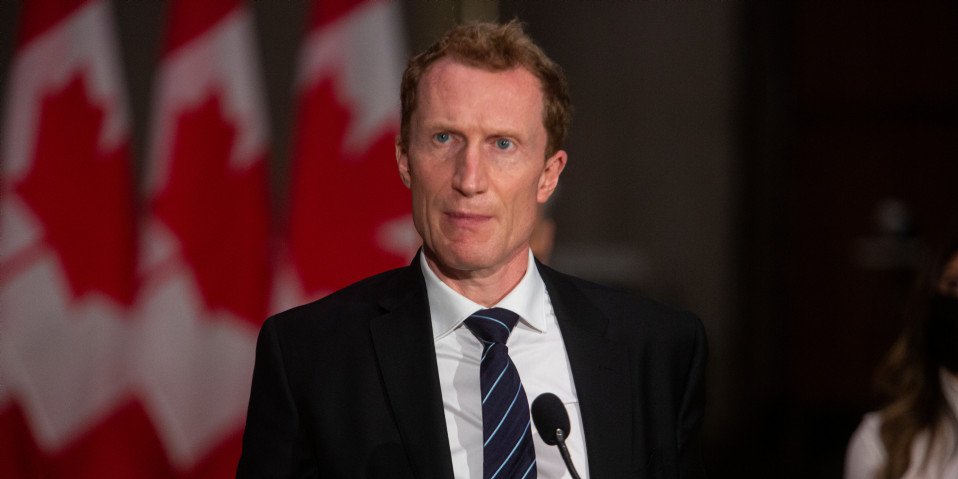
Ottawa has no intention of granting residential status to all undocumented workers, according to the minister
Ottawa has no plans to broadly give residential status to undocumented migrants working in Canada, Immigration Minister Marc Miller says. “As frustrating as that is to hear for people that are in a precarious position of being undocumented in Canada and are contributing to the economy — and perhaps kids that are Canadian — I think we have to be quite clear with Canadians and quite realistic about what’s achievable,” Miller told CBC News. “Despite the economic imperative, despite the very humanitarian imperative that a broad regularization program presents, it is clear to me that Canadians are not there and that’s just reality.” Miller mentioned that he is still “actively considering” the possibility of granting status to undocumented migrants employed in specific sectors, including health care and construction. In late 2021, the Liberals promised to “explore options for regularizing status for undocumented workers who are contributing to Canadian communities.” Prime Minister Justin Trudeau has stated that there is no set timeline for implementing this proposal. Miller has estimated that the number of undocumented individuals in Canada ranges from 300,000 to 600,000. The government has faced pressure from migrant advocacy groups, such as the Migrant Rights Network, which in May called on Miller to advance the government’s proposal. Immigration has increasingly become a contentious issue, particularly in relation to affordability concerns like housing. A Leger poll from July revealed that 60 percent of respondents believe Canada is admitting too many immigrants. In March, Miller announced that Ottawa aims to decrease the proportion of temporary residents from 6.2 percent to 5 percent by 2027. “We need to be practical and realistic about whether we can achieve this goal in a way that reassures Canadians we are capable of doing so within the next year,” he said. Immigration, Refugees and Citizenship Canada (IRCC) stated earlier this month that the upcoming immigration levels plan will include measures to address the rise in temporary residents. “The levels plan will expand to cover both temporary and permanent resident arrivals. It will be presented this fall following consultations with provincial and territorial partners and other stakeholders as part of Canada’s annual levels planning,” the statement explained.

IRCC invites 5000 Canadian Experience Class candidates in Express Entry Draw
Immigration, Refugees, and Citizenship Canada (IRCC) recently conducted an Express Entry draw, issuing invitations to apply (ITAs) exclusively for the Canadian Experience Class (CEC). In this latest draw, 5,000 candidates were invited, with a minimum Comprehensive Ranking System (CRS) score of 510 required to be eligible. This draw marks the ninth of a particularly busy month for Express Entry, with Immigration, Refugees, and Citizenship Canada (IRCC) issuing a total of 25,125 invitations to apply (ITAs) throughout July. This month has seen a mix of program-specific draws, such as those for the Canadian Experience Class (CEC) and Provincial Nominee Program (PNP), as well as category-based selection draws. In the category-based draws, the majority of ITAs have been awarded to candidates with French language skills, totaling 5,000 ITAs across two draws. Additionally, IRCC issued 3,750 ITAs to healthcare professionals on July 5 and 1,800 to candidates in trade occupations on July 4. There has also been a significant number of ITAs issued in program-specific draws. By July 31, IRCC had invited 11,300 Canadian Experience Class candidates and 3,275 PNP candidates. Many of these candidates are already residing and working in Canada as temporary residents. The resumption of program-specific draws on May 30, after a year-long hiatus, aligns with IRCC’s goal of increasing domestic draws. In March of this year, the department set a new objective to both reduce and stabilize the number of temporary residents in Canada while also achieving its permanent resident targets as outlined in the Immigration Levels Plan. Details of Express Entry Draw 31 July 2024 Summary of Express Entry Draws 2024

Canada invites 964 Provincial Nominee Program (PNP) candidates in the latest Express Entry draw.
Immigration, Refugees, and Citizenship Canada (IRCC) has recently conducted an Express Entry draw, issuing invitations to 964 candidates through the Provincial Nominee Program (PNP). To be eligible, candidates needed a minimum Comprehensive Ranking System (CRS) score of 686. This draw marks the eighth of a particularly active month for Express Entry. The draws this month have alternated between program-specific draws—such as those for the Canadian Experience Class (CEC) and PNP—and category-based selection draws. In the category-based draws, the majority of invitations have gone to candidates with French language proficiency, totaling 5,000 ITAs across two draws. Additionally, 3,750 ITAs were issued to healthcare professionals on July 5, and 1,800 were given to candidates in trade occupations on July 4. There has also been a significant number of ITAs issued in program-specific draws. By July 18, IRCC had invited 6,300 candidates from the Canadian Experience Class and 2,311 from the PNP. Candidates in these programs frequently already reside and work in Canada as temporary residents. The return to program-specific draws on May 30, after a year-long hiatus, reflects IRCC’s plan to increase domestic draws. Earlier this year, in March, IRCC set a new objective to balance and stabilize the number of temporary residents in Canada while also achieving its permanent resident targets as detailed in the Immigration Levels Plan. Details of Express Entry Draw 30 July 2024 Program: Provincial Nominee Program (PNP)Number of invitations issued: 964Rank required to be invited to apply: 964 or aboveDate and time of round: July 30, 2024, at 15:25:21 UTCCRS score of lowest-ranked candidate invited: 686Tie-breaking rule: May 27, 2024, at 07:07:21 UTC Summary of Express Entry draw results in 2024
British Columbia’s new guidelines will limit the number of international student enrollments.
British Columbia’s Ministry of Post-Secondary Education and Future Skills has introduced new measures to strengthen the integrity of the province’s international student program. Key updates include: Introduction of Education Quality Assurance (EQA) Code of Practice The EQA aims to improve standards for Designated Learning Institutions (DLIs) in B.C. It has three main objectives: Allocation of Provincial Attestation Letters (PALs) Number of PALs for 2024: B.C. has received an allocation of 83,000 PALs for the year. These letters, introduced by Immigration Refugees and Citizenship Canada (IRCC), are a new requirement for obtaining a study permit in Canada. Distribution of PALs: In B.C., 53% of PALs will be allocated to public post-secondary institutions, while 47% will go to private institutions. The allocation is based on the province’s population, with B.C. being the third most populated province in Canada. Transparent Tuition Fees Economic Impact of International Students Meeting Quality Assurance Standards

New minimum wages implemented in 4 Canadian provinces starting October 1
The new minimum wage in four Canadian provinces, including Ontario, will be implemented on October 1, 2024. All employees will receive the same pay regardless of age or hours worked. However, some provinces may have laws governing minimum wages for students under 18 or special scenarios. The summary of the new minimum wages in these provinces is provided. Check out this video for a quick overview. Ontario’s minimum wage will increase to $17.20 per hour from October 1, 2024, following a previous increase of $16.55. Students under 18 working 28 hours a week or fewer during the school year or breaks or summer vacations will see a rise from $15.60 to $16.20 per hour. The minimum wage will also rise from $18.20 to $18.90 per hour for those working from home. Manitoba’s minimum wage will rise from $15.30 to $15.80 per hour on October 1, 2024. The government will make annual adjustments based on the provincial CPI on October 1st of each year. Saskatchewan’s minimum wage will rise from $14 to $15 per hour on October 1, 2024, a respectable increase compared to current provincial rates. Prince Edward Island’s minimum wage will increase to $16 per hour from $15.40 on April 1, 2024, following a previous increase of $15.40 on April 1, 2024. Minimum wages in Canada and all the provinces Here is a summary of the most recent minimum wage rates. Canada is set to introduce changes to its minimum wage across various provinces to provide fair compensation and support workers amid rising living costs. These changes require careful financial planning but also present opportunities to improve employee satisfaction and retention. Staying informed is crucial for both employees and employers to navigate the evolving economic landscape effectively. As these new rates take effect, they will significantly shape Canada’s economic and social fabric.

Ways to earn quick money, if you are planning for immigration.
Immigration to a new country can be exciting but financially demanding, with expenses including application fees, living costs, travel, and application fees. Quick cash raising is crucial for successful immigration. For Hungary-based gamblers seeking bonuses, online casinos can be a valuable source of income. Ways to earn Freelancing is a quick and flexible way to make money quickly, with platforms like Upwork, Fiverr, and Freelancer offering clients worldwide. Writers, graphic designers, and programmers can take advantage of these platforms by choosing their prices, taking on various tasks quickly, and making quick money. Building an eye-catching profile that highlights your qualifications can increase your income, and positive customer feedback will increase visibility and help secure more jobs. Online tutoring can be a lucrative way for experts in any subject area to quickly make cash. Global teaching opportunities can be found on sites like VIPKid, Tutor.com, and Chegg Tutors, especially if you speak multiple languages well. Create an appealing profile outlining your training, experience, and teaching style before providing free trial sessions. Selling unwanted items quickly is a sure way to generate extra funds. Sites like eBay, Craigslist, and Facebook Marketplace make selling anything from gadgets and clothes to furniture easy. Take excellent photographs and provide thorough descriptions to attract customers quickly. For an efficient way of selling items locally, consider organizing a garage sale or attending flea markets near your house. Gig economy jobs offer numerous opportunities to make quick money, including driving or delivery work for services such as DoorDash and Lyft, Uber rides and Uber Eats delivery services, handyman services, Rover dog walking or pet sitting services, and TaskRabbit task-based employment platforms. These professions often provide immediate pay without requiring a significant upfront commitment. Part-time or temporary jobs can provide a steady source of income as you prepare to move. Retail establishments, eateries, and hospitality enterprises frequently hire part-time employees during busy seasons. Look out for job vacancies on online job portals, local job boards, or classified ads. Temporary agencies can also help you locate temporary positions with consistent salaries and industry experience that offer short-term contracts to put money away for an impending relocation. Renting Out Room or Property Stock Photography and Video Virtual Assistant Work To acquire fast money for immigration, an aggressive strategy is recommended, including using gig economy platforms like Airtasker, selling unwanted items, and exploring additional income-generating opportunities. Early financial goals and optimism are crucial for effective and efficient execution of immigration plans.
How IRCC choose sponsors through the Parents and Grandparents Program?
Immigration, Refugees and Citizenship Canada (IRCC) selects Canadian sponsors for their older loved ones through the Parents and Grandparents Program (PGP). The selection process is based on a lottery system, with the department sending out invitation to apply (ITA) letters to potential sponsors. For the 2024 intake, IRCC sent out 35,700 ITA letters, with the goal of accepting 20,500 complete applications. How the PGP Lottery System Works The PGP selection process operates on a lottery system. Interested sponsors submit their interest through an online form, and IRCC randomly selects potential sponsors from this pool. For the 2024 intake, the invitations were drawn from those who expressed interest in 2020. Requirements for Sponsors Sponsors must provide the same “status in Canada” document submitted with their 2020 interest to sponsor form. Any discrepancies between the interest to sponsor form and the sponsorship application must be explained with satisfactory evidence to demonstrate the application pertains to the same individual identified on the 2020 form. Challenges and Criticisms Despite the program’s growth, the demand consistently outpaces the available spaces. Following the 2023 intake, there were still 108,000 interest to sponsor forms in IRCC’s backlog. This backlog means the department might spend the next three years processing applications from the 2020 pool, even as new sponsors join the queue each year. This has led to criticism of IRCC’s family reunification efforts, highlighting the need for more efficient processing and increased allocations. The Parents and Grandparents Program (PGP) plays a crucial role in reuniting families in Canada. It allows Canadian citizens and permanent residents to sponsor their parents and grandparents to join them. However, due to high demand and limited spots, potential sponsors must stay informed and be ready to navigate the lottery-based selection and application process effectively.

209 PR Invitations for the New Ontario Express Entry Draw Sent
In an Express Entry draw under the Human Capital Priorities stream, OINP has issued 209 invitations for provincial nomination to candidates with at least six months of experience as family physicians and general practitioners. The candidates’ Express Entry profiles indicate that they intend to settle in Ontario. Information about 25 July 2024 OINP Express Entry Draw As the primary NOC, Express Entry profiles must list employment experience in NOC 31102, General Practitioners and Family Physicians. For the purposes of the Canadian Experience Class evaluation, documentation of at least half of a year’s worth of qualifying work experience—six months out of the total—must be submitted. Candidates who have notified their interest may claim provincial nominations within 45 days of receiving the notification. By doing so, they will receive 600 extra points, bringing their CRS score to 995 or 1,044. The OINP HCP Draws for 2024 In the six OINP HCP invitation rounds this year, 10,038 notifications of interest have been sent out, and candidates who met the eligibility requirements even with CRS scores as low as 352 have been invited. How can I be eligible for draws using OINP Express Entry? Applicants must intend to immigrate to Ontario and have a valid express entry profile in order to be considered for OINP express entry draws. After reviewing eligible profiles, Ontario PNP notifies targeted candidates directly of their interest. A notification of interest is not a guarantee for candidates who meet the eligibility requirements, and receiving one does not imply that the application will be accepted or that the stream’s requirements will be met. When answering a notification of interest, it is important to review the program eligibility requirements.