
MAY 2 invited candidates 941 in the Skilled Worker in Manitoba program (Occupation-specific), the International Education Stream and the Skilled Worker Overseas program. Of these, 181 invitations were issued to candidates with an Express Entry profile and job seeker validation code.
Quebec
MAY 6 (INVITATIONS ISSUED ON APRIL 25) announced a April 25 draw inviting 1,415 candidates who had a level 7 oral proficiency or higher in French, and either had a score equal to or greater than 598, or a valid job offer outside Montreal.
BC
MAY 7 invited 41 to apply in a tech draw, and 40 candidates in targeted draws for childcare, construction, healthcare, and veterinary care occupations.
Manitoba
MAY 9 invited candidates 371 in the Skilled Worker in Manitoba program (Occupation-specific), the International Education Stream and the Skilled Worker Overseas program. Of these, 66 invitations were issued to candidates with an Express Entry profile and job seeker validation code.
BC
May 14 invited 37 candidates in a general draw across five streams, plus up to 40 in targeted occupations in healthcare, childcare, construction and veterinary care.

International Students In P3s Are Now Ineligible For PGWPs
The new PGWP eligibility criteria officially came into effect today, May 15, for international students graduating from public-private partnerships (PPPs) colleges in Canada. International graduates of college programs provided under a public-private curriculum licensing partnership were initially informed by the IRCC on January 22, 2024, that they would no longer be qualified for a post-graduation work permit (PGWP) effective September 1, 2024. IRCC, however, changed the date of implementation of these new PGWP regulations from September 1, 2024, to May 15, 2024.According to reports, several of these educational institutions pushed their autumn admission to June or August in order to escape the new PGWP criteria that were published in January 2024, which is why the IRCC decided to move the effective date. This suggests that foreign students will not be eligible for post-graduation work permits if they participate in public-private curriculum licensing partnership programs effective May 15, 2024. In this article, we list the full PGWP eligibility criteria as per the new rules that are now in effect. PGWP Ineligibility for International Students in Curriculum Licensing Agreements (public-private partnerships) If an international student has completed a course or study program at a DLI under a curriculum licensing agreement, they are not eligible for post-graduation work permits (PGWPs) (also termed a P3 or public-private partnership). Students who were enrolled in a program of study at a private college run on behalf of a public university in the same province before to May 15, 2024, may be eligible for a PGWP. However, if they enroll in one of these programs at educational institutions that use public-private partnerships on or after May 15, 2024, they will not be eligible for a PGWP. Additionally, foreign students will not be eligible for PGWP if they began their study program at a public-private partnership school that is providing teaching on behalf of a public college from a different province on or before January 31, 2023. Also, if they enrolled in one of these programs after February 1, 2023, new international students are not eligible to apply for a PGWP. General PGWP Eligibility Criteria After completing their studies at a designated learning institution (DLI) in Canada that qualifies for the PGWP, international students may apply for a post-graduation work permit (PGWP). Every semester of their study program has to be completed as a full-time student. A valid study permit that has been issued within the past 180 days is also required of the students. As per the IRCC official website, a student must also be in one of the below situations to meet the official PGWP eligibility criteria.

The state of the Express Entry pool: April 2024
More people have been drawn for Express Entry in April as immigration is ongoing all year round. Regarding draw sizes and kinds, last month’s results were similar to those of March, suggesting possible trends for 2024. Continue reading to find out about the present status of the Express Entry applicant pool, the April drawings, and how these things may affect your prospects of being granted immigration. The current state of the Express Entry pool What draws occurred in April? Four Express Entry drawings were held in April, the same as in March: two general draws and two category-based choices. The CRS cut-offs for the general drawings were 549 and 524 on April 10th and 23rd, respectively. On April 11 and 24, individuals with expertise in STEM-related fields and fluency in French were invited to apply for category-based selections, which focus on candidates with particular job experience or language skills. In general draws, overall Comprehensive Ranking System (CRS) ratings are still higher than in prior years. There have been three to five drawings every month so far this year, with a roughly equal distribution of general and category-based draws overall. Draw Date Round Type Invitations Issued CRS Score Cut-Off 10-04-24 General 1,280 549 11-04-24 STEM occupations 4,500 491 23-04-24 General 2,095 529 24-04-24 French language proficiency 1,400 410 Immigration, Refugees and Citizenship Canada (IRCC) will issue 110,770 invitations to apply (ITAs) for permanent residency (PR) through the Express Entry system this year, in accordance with the immigration levels plan. 35,970 of these ITAs had been granted as of April. The Express Entry pool There are 214,697 applicant profiles in the Express Entry pool as of April 23rd, 2024—a rise of 2753 profiles from March. All score brackets saw increases at a relatively equal pace, keeping distributions about at the same volume as the prior month. Below is a full table with score distributions and the total number of participants in the pool. These scores have also been visualized in a bar graph format to better understand the distribution. As we can see the most populous score range (with the most candidates) continues to be the 351-400 CRS boundary. What percentile is your score in the pool? Taking the upper bound of each score range we can calculate the percentile of that score relative to the overall pool. The percentile can help us better understand how scores compare to each other, and what percentage of the pool is below that score. While having a score with a higher percentile may not guarantee an ITA, it can still provide some indication as to how one’s immigration chances may be throughout the year. How does the composition of the Express Entry candidate pool influence score cut-offs and draw sizes? Predicting upcoming CRS score cut-offs and draw sizes can be very difficult (if not impossible) due to the multitude of considerations that IRCC takes before conducting each draw (such as category-based selections, which respond to demographic and labor market needs in Canada and put less emphasis on CRS scores). Nevertheless, we can better grasp the patterns that might affect draw sizes and cut-off scores if we comprehend the distribution of these scores as well as the size of the pool as a whole (particularly when considering annual immigration levels). This is due to the fact that, in addition to perhaps taking the distribution of CRS scores into account when deciding on the next cut-off score, all draw sizes eventually need to work toward fulfilling the department’s goals as stated in the immigration levels plan. Therefore, even if the data above cannot provide us with a perfect forecast for the future, it may still be helpful to understand the patterns within and behind the Express Entry pool when assessing an applicant’s likelihood of being selected for an ITA this year.
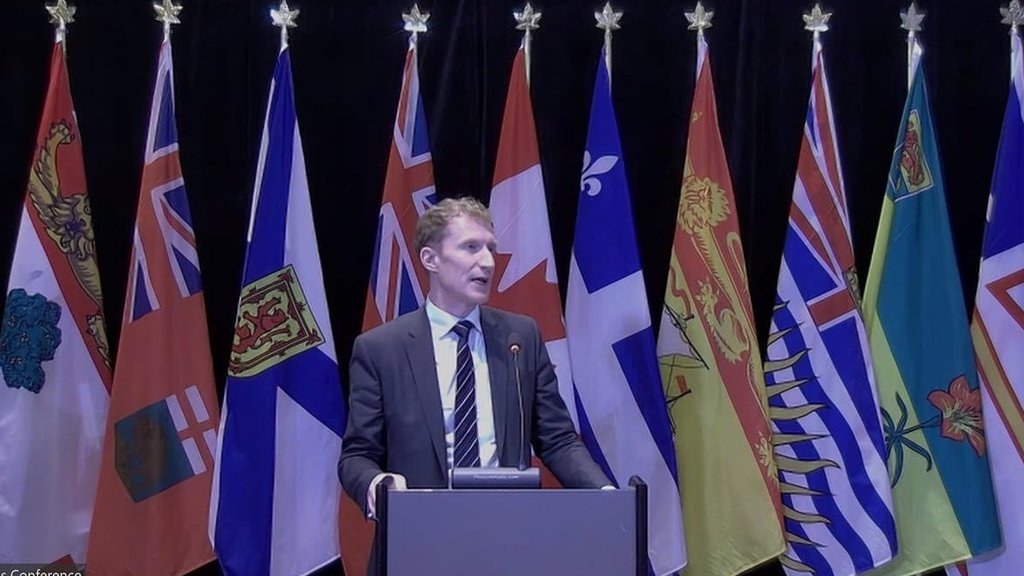
Provincial and federal immigration ministers meet to discuss shared priorities
On May 10, Immigration Minister Marc Miller convened in Montreal with provincial and territory immigration ministers to deliberate on common agenda items concerning immigration prospects in Canada. The Federation of Ministers Responsible for Immigration (FMRI) is the collective name for the ministers. An efficient Canadian immigration system is the goal of the FMRI, a decision-making organization. Its goals are to improve Canada’s immigration laws and initiatives while advancing shared immigration agendas. Immigration ministers convene twice a year at the FMRI to discuss provincial goals and work together with other partners. The previous meeting took place in November of 2023. The Minister repeatedly stated throughout yesterday’s conference that the conversations were generally constructive and fruitful, but she also pointed out that more work needed to be done, especially in relation to Canada’s foreign student program. International students According to him, the program has had a “turbulent” year because of a number of major adjustments that have been made since January. The introduction of Provincial Attestation Letters (PALs), a restriction on the number of foreign student applications that Immigration, Refugee and Citizenship Canada (IRCC) will review, and modifications to the requirements for eligibility for Post-Graduation Work Permits (PGWPs) are some of these changes. The minister said that the IRCC has been asked by several provinces and territories to take into account lengthier PGWPs for graduates of the trades and healthcare industries, both of which have an aging labor population. The IRCC is developing a permanent residence pathway for construction workers, according to Minister Miller. He brought up the existing trades-related Express Entry category for applicants. But in 2024, this category will only make up 5% of the invitations to apply (ITAs) sent out in category-based Express Entry drawings, according to a recent Access to Information request (ATIP). Furthermore, the Minister stated that, as in past meetings, provinces are striving to “cut the red tape” surrounding the procedure so that immigrants may begin working in their chosen sectors more quickly. Many of these occupations also require provincial certification. Recognizing foreign credentials is the province’s obligation. Temporary resident levels The IRCC revealed various new regulations and initiatives pertaining to temporary resident levels in Canada, and this meeting was the first since. In particular, the IRCC intends to start including levels for temporary residents in the yearly Immigration Levels Plan. According to Minister Miller, these goals will serve as a “soft cap” on the total number of temporary residents—those in the country on visit visas as well as work or study permits—for the ensuing three years. As a whole, 6.2% of Canadians are now temporary residents. The upcoming years will see this figure drop to 5% due to the revised goals. Minister Miller stated in his speech yesterday that in order for provinces to effectively prepare for the future and match incoming immigrants to labor force needs, more precise data exchange between the federal government, provinces, and territories is required. Pursuing more domestic draws is one aspect of the IRCC’s goal to lower the number of temporary residents. The IRCC’s decision to renew the work permits of over 7,000 PGWP holders who are eligible for the Manitoba Provincial Nominee Program is an example of this in action. By extending these work permits, Canada will be able to fill labor force deficits without having to admit as many foreign applicants. To aid in the conversion of additional temporary residents to permanent residents, the IRCC stated that it was willing to collaborate in a similar manner with other provinces and territories.

Decrease the number of temporary residents by making them permanent, the federal immigration minister suggests
Marc Miller met with his provincial counterparts for the first time since he announced a plan to set limits on the number of new temporary residents to rein in runaway growth Montreal — The immigration minister stated on Friday that one strategy Canada intends to use to reduce the number of temporary residents is to give them the option to stay permanently. However, this does not mean that everyone who wishes to stay will be allowed to do so. For the first time since announcing an unusual plan to cap the number of new temporary residents, Marc Miller met with his provincial and territorial counterparts. The goal is to control unchecked expansion, which has strained the real estate sector and other sectors. The minister established a target to lower the percentage of temporary residents from 6.2% of Canada’s population in 2023 to 5% during the next three years. A number of ministers cautioned that when temporary residents request to remain in the nation, the new policy will increase demand for their respective province immigration programs. They presented the expansion of their provincial programs as a mutually beneficial way to maintain permanent residency in Canada. “The fact people are already here, their impact on affordability has already been baked in, so it’s smart,” Miller said. “But it doesn’t mean by extension that everyone’s entitled to stay here or be here in Canada.” He said that when it comes to federal permanent residence programs, Ottawa could do more to find those who are currently in the country. Over the course of the summer, the new goals for temporary residents will be established and released in the fall. The administration is still debating how many new visas it should restrict in order to lower the number of temporary residents. Miller requested information from the provinces about the number of temporary residents inside their boundaries, particularly the number of those who remain there permanently as a result of provincial nominee schemes. Additionally, he has requested more information about their ability to accommodate newcomers and the strain that population expansion is putting on their jurisdictions. Miller has already made measures to reduce the number of foreign students by capping new enrollment in January at two years. Along with trying to expedite the processing of asylum applications, the administration also added legislative provisions in the federal budget that will expedite the deportation process in the event that asylum claims are refused. The last and most significant group that has not yet been covered is those with temporary work permits. The emphasis of the discussions was how to distribute a limited quantity of temporary visas, the ministers stated in a press statement following their meeting. There were 337,460 individuals with temporary work permits in 2018. That figure shot up to 605,851 by 2022. According to Miller, the labor market has grown dependent on this workforce in recent times. Each province will have to figure out its own strategy for kicking that addiction. Although his province hasn’t had a similar surge of temporary residents as some others, Saskatchewan Immigration Minister Jeremy Harrison says the objective is still to move as many of them toward permanent status as feasible. However, a massive spike in applications to the provincial nominee program for permanent residency has occurred in Manitoba in response to pronouncements from Ottawa regarding the reduction of temporary immigration. Earlier this week, Miller agreed to Manitoba’s request to extend the federal work permits for some 6,700 newcomers whose visas were set to expire by the end of the year, to give them time to apply to stay in Canada permanently through the provincial nomination program. Manitoba’s immigration minister hopes to see the provincial immigration program expanded down the line as a result. Manitoba Immigration Minister Malaya Marcelino stated, “My understanding was that if we are able to do this successfully then (Ottawa is) going to be looking upon that favorably and be able to increase our federal allocations,” in reference to the province’s immigration policy. The majority of provinces have requested additional authority over immigration and want to customize how the decrease in temporary residents would affect their particular labor markets. The population growth will be considerably slowed by the new temporary visa objective. As per Andrew Grantham, an executive director at CIBC Economics, in research released last month, there might be a result of worker shortages even though it could relieve some pressure on housing costs and availability. Limitations on population growth may push businesses to pay more to get people to stay in or return to labor. If they are unable to use low-paid foreign labor, we could lose certain businesses that are just not lucrative, according to Grantham. While the federal and provincial governments promised to figure out that balance, labor economist Mikal Skuterud said work visas shouldn’t be considered in isolation. According to University of Waterloo economist Skuterud, “You can’t do that; it’s part of the whole system.” He was one of the first to advise the government to moderate the sharp increase in the number of persons coming to Canada temporarily for employment or education. Skuterud attributes that rise to modifications to the requirements for permanent residents, which were made in order to close certain labor shortages. Lower-skilled workers now have an incentive to immigrate to Canada in the hopes of obtaining permanent status thanks to those improvements. That’s what’s drawing in a ton of people, and it’s making the population of (permanent residents) problematic, he claimed.

British Columbia and Manitoba issue provincial immigration nominations
Invitations to apply (ITAs) for immigration have been sent out by Manitoba and British Columbia via their respective Provincial Nominee Programs (PNP). Through streams designated for skilled individuals with expertise in critical employment fields, a job offer from the province, or prior academic coursework in the nominating province, candidates were solicited. Go on for a detailed explanation. Immigration results May 3rd—10th Note: The processes used by various PNPs to rate applicants for immigration are unique. Therefore, it is not appropriate to compare the cut-off scores for immigration drawings in one PNP with those from PNPs in other provinces. Furthermore, certain provinces may refer to ITAs using different words (such as “Notifications of Interest” or “Letters of Advice to Apply”), although they all relate to the same type of invitation. British Columbia (B.C.) B.C. invited at least 77 candidates through the Skilled Worker, and International Graduate (including Express Entry British Columbia (EEBC) option)) streams of the British Columbia Provincial Nominee Program (BCPNP). Candidates were invited for individuals who had eligible professional experience in sectors with in-demand positions that the BCPNP targets (specifically healthcare, childcare, construction, tech, and veterinary care). Minimum scores varied for each draw, with the following cut-offs: Those who have just graduated within the previous three years from an approved Canadian institution or college are the target audience for the International Graduate stream, which also includes the EEBC option. To be eligible for this stream, a job offer from a B.C. company must be secured. The stream is an improved PNP stream that is compatible with the federal Express Entry system, as shown by the “includes EEBC option.” This implies that the BCPNP may provide invitations to qualified applicants in the Express Entry pool to immigrate and establish themselves in the province via this stream. Manitoba This week, 371 individuals were invited by Manitoba via the Manitoba Provincial Nominee Program (MPNP). Three distinct streams of candidates were solicited, along with a draw tailored to a particular vocation. A selection process focused on profiles indicating current employment in occupations where there is a substantial labor shortage in the province was used for the initial draw. Candidates with experience in the following 18 National Occupation Classification (NOC) codes* were awarded ITAs: 242 qualified applicants were called to the second draw, which was an all-program selection held under the Skilled Worker in Manitoba stream, which consists of the Employer Direct Recruitment and Manitoba Work Experience paths. To be invited, candidates had to get a minimum ranking score of 836. The International Education Stream invited 76 qualified applicants for the third draw. Graduates from Manitoban institutions who fit the demands of the province’s labor market are invited to apply for the International Education Stream. The International Student Entrepreneur pathway, Graduate Internship track, and Career Employment pathway are all included in this stream. The last draw, which included 35 applicants with a minimum ranking score of 698, was held under the Skilled Worker Overseas stream. Candidates from overseas with professional expertise and in-demand skills can nominate themselves for immigration to Manitoba under the Skilled Worker Overseas stream. The Human Capital pathway and the Manitoba Express Entry pathway make up the stream. Sixty-six of the 371 invited individuals said they had a valid Express Entry profile and a valid job seeker validation code.