

On November 20, the most recent BC Provincial Nominee Program (PNP) draw was held, and through targeted selection processes, about 15 Invitations to Apply (ITAs) for permanent residency were sent out.In a draw that targeted 35 tech-related jobs under the skilled worker and international graduate streams, including their Express Entry variations, four ITAs were granted. In contrast to the previous BC PNP Tech draw, the cut-off score for this category increased by a noteworthy 13 points.Candidates with prior early childhood education or assistant experience received three more invites (NOC 42202). 4 invitations were sent to profiles that matched 39 occupations related to healthcare in the healthcare category. Last, in late 2023, British Columbia launched its newest category-based draw, inviting four applicants with experience in 25 construction-related occupations.This draw demonstrates BC’s ongoing emphasis on meeting labor market demands in vital industries. Full Details of Latest BC PNP Draw: November 20 Previous BC PNP Draw: 2024

Canada Conducts First Healthcare Express Entry Draw since July
Immigration, Refugees, and Citizenship Canada (IRCC) has invited 3,000 candidates to apply for permanent residence in its latest Express Entry draw. This draw specifically targeted healthcare professionals, requiring a minimum Comprehensive Ranking System (CRS) score of 463. It marks the third Express Entry draw this week, following a Canadian Experience Class (CEC) draw on November 19 and a Provincial Nominee Program (PNP) draw on November 18. This is the second consecutive week of multiple draws under the Express Entry system. Last week, IRCC issued 1,933 invitations across several categories, including the CEC program, PNP streams, and candidates with strong French language skills. Canada plans to increase its immigration targets through the Express Entry system in 2025, as outlined in IRCC’s latest Immigration Levels Plan. The government aims to welcome 124,680 Express Entry candidates next year, with over 82,000 spots allocated to a new “In-Canada Focus” category. This category will primarily cater to CEC candidates but may include those from the Federal Skilled Worker Program (FSWP), Federal Skilled Trades Program (FSTP), and PNP-aligned streams. The remaining 41,700 admissions will fall under the “Federal Economic Priorities” category, which will focus on professionals with experience in high-demand occupations that align with Canada’s labor market needs. Full Details of the Express Entry Draw: November 20, 2024 Summary of Express Entry Draw Results in 2024
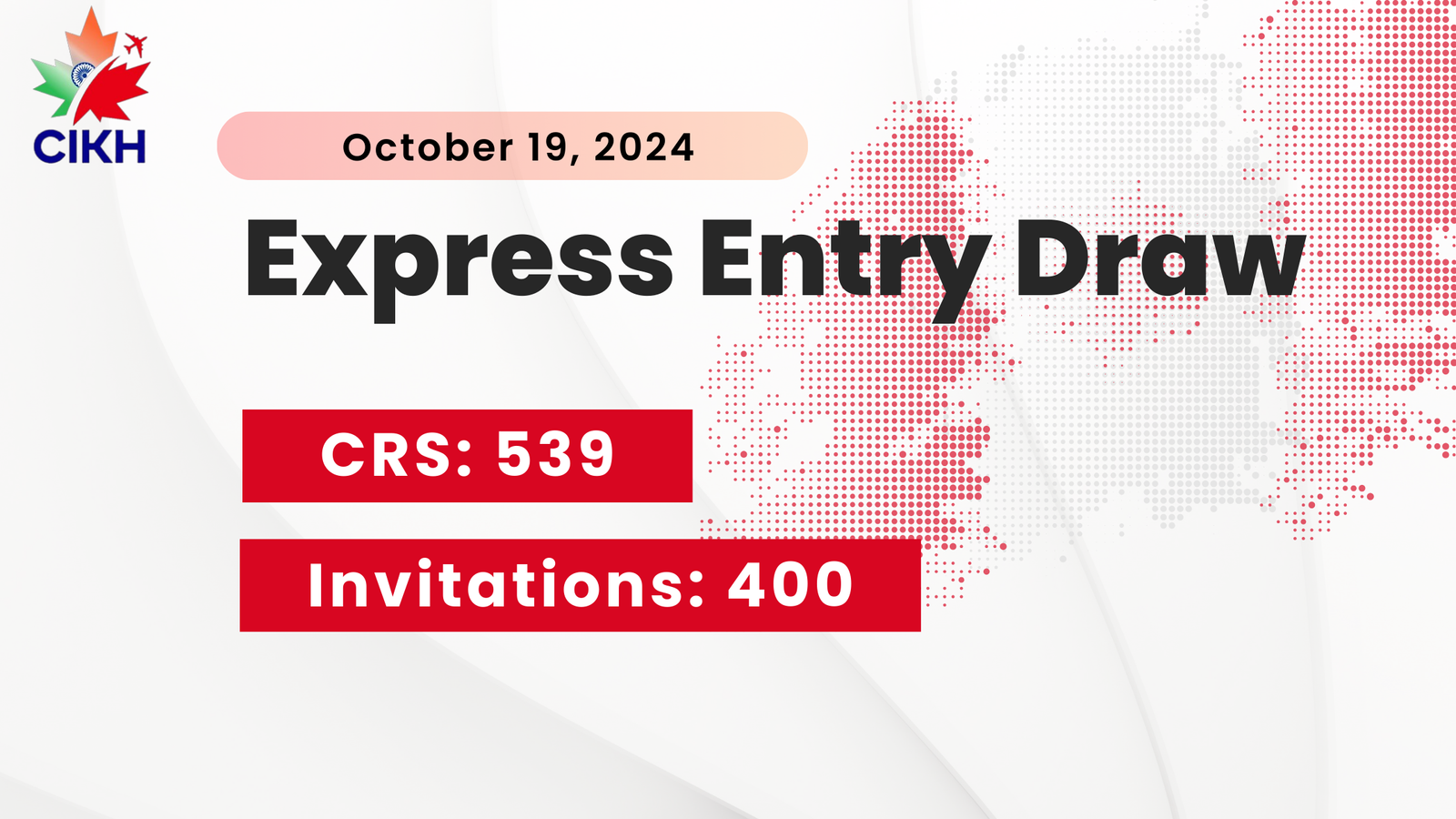
IRCC Issues 400 Invitations in Latest Express Entry CEC Draw
Immigration, Refugees, and Citizenship Canada (IRCC) has invited 400 candidates to apply for permanent residence in its latest Express Entry draw. This draw was for the Canadian Experience Class (CEC), requiring a minimum Comprehensive Ranking System (CRS) score of 539. This draw follows a Provincial Nominee Program (PNP) draw held on November 18, in which 174 candidates with a minimum CRS score of 816 were invited. This is also the second week in a row that Express Entry draws have taken place. Last week, IRCC issued 1,933 Invitations to Apply (ITAs) to candidates across various programs, including CEC, PNP-aligned streams, and those with French-language skills. According to IRCC’s latest Immigration Levels Plan, Canada is set to increase its Express Entry targets for 2025. Next year, Canada aims to welcome 124,680 new immigrants through the Express Entry system. Over 82,000 of these spots will go to a new category called “In-Canada Focus,” which will mainly include CEC candidates and some from the Federal Skilled Worker Program (FSWP), Federal Skilled Trades Program (FSTP), and PNP streams. The remaining 41,700 spots will be in the “Federal Economic Priorities” category, which will focus on candidates with experience in high-demand jobs in Canada. These plans show IRCC’s focus on bringing skilled workers to Canada to meet its economic and labor market needs. Full Details of the Express Entry Draw: November 19, 2024 Summary of Express Entry Draw Results in 2024
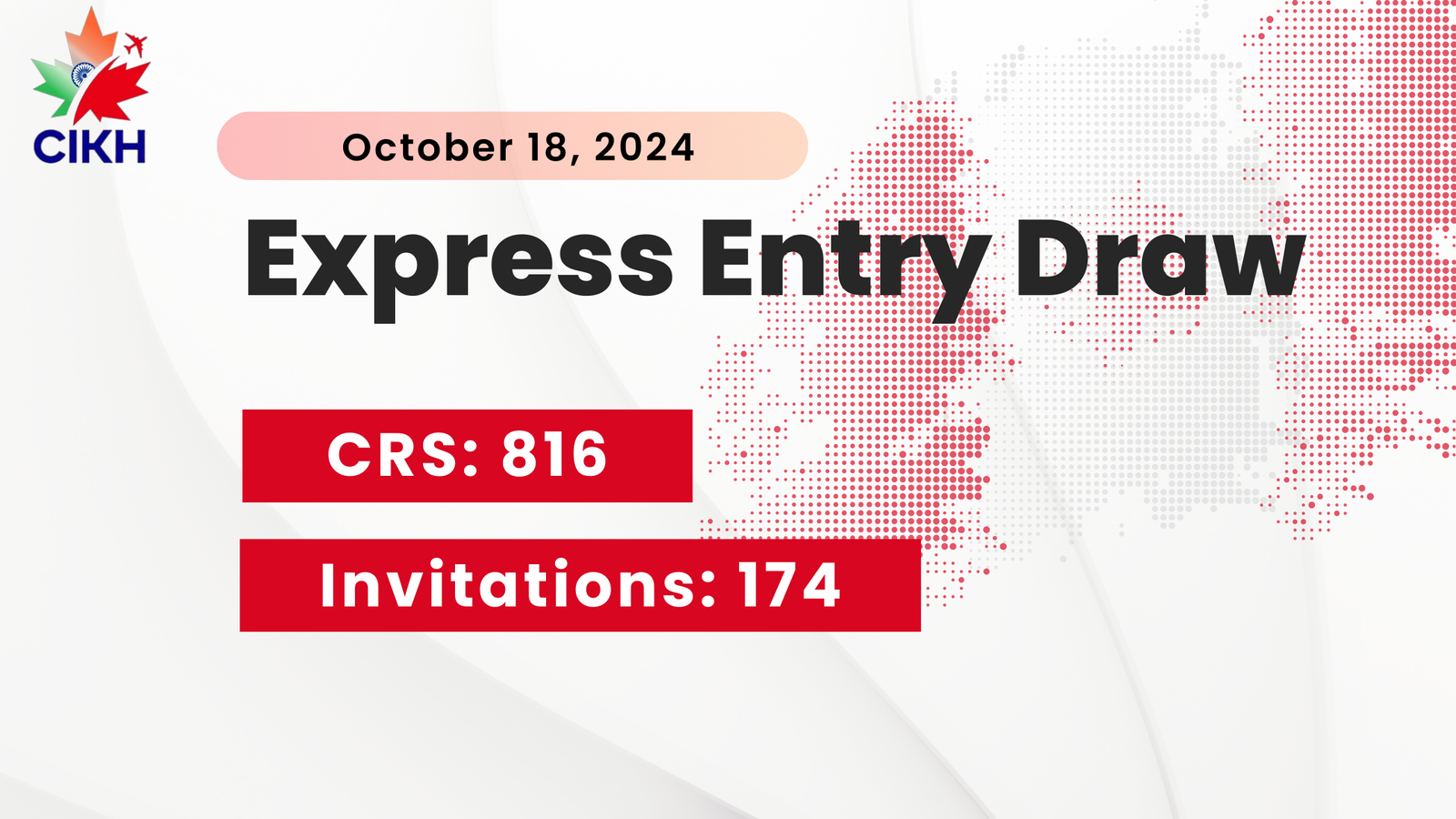
IRCC issues invitations to PNP candidates in the latest Express Entry draw
Immigration, Refugees, and Citizenship Canada (IRCC) have recently issued Invitations to Apply (ITAs) in the latest Express Entry draw. Candidates in the Provincial Nominee Program (PNP) category received 174 ITAs. Applicants needed a minimum Comprehensive Ranking System (CRS) score of 816 to qualify. This marks the second consecutive week of Express Entry draws. Last week, IRCC invited 1,933 candidates from various categories, including the Canadian Experience Class (CEC), Provincial Nominee Program (PNP), and candidates demonstrating French-language proficiency. Looking ahead, federal immigration targets under the Express Entry system are set to rise next year as outlined in IRCC’s updated Immigration Levels Plan. The department aims to admit 124,680 Express Entry candidates to Canada in the coming year. Notably, over 82,000 of these admissions will fall under a newly introduced category called the In-Canada Focus. This category will primarily include candidates from the Canadian Experience Class (CEC). Still, it may also extend to the Federal Skilled Worker Program (FSWP), Federal Skilled Trades Program (FSTP), and PNP-aligned candidates in the Express Entry pool. The remaining 41,700 permanent residence spots will be allocated to the “Federal Economic Priorities” category. This stream will target individuals with experience in high-demand professions aligned with Canadian labor market needs. Full Details of the Express Entry Draw: November 18, 2024 Summary of Express Entry Draw Results in 2024

Canada’s Prime Minister Addresses Issues in Immigration System
In a recent video message, Canadian Prime Minister Justin Trudeau talked about the government’s plans to reform the country’s immigration system. These changes are focused on managing population growth and tackling ongoing issues like exploitation within the system. Trudeau explained the decision to reduce both permanent and temporary immigration levels over the next three years and addressed some of the problems that have arisen with the current immigration system. These reforms aim to relieve pressure on housing, infrastructure, and public services while creating a fairer and more efficient immigration process. The Issue: Rapid Population Growth Canada’s population has overgrown in recent years, drawing comparisons to a modern-day “baby boom.” A large part of this growth comes from immigration, with a noticeable increase in international students and foreign workers entering the country. However, this sudden surge has highlighted weaknesses in the immigration system. Prime Minister Trudeau acknowledged that the system has been exploited by “bad actors,” including fraudulent colleges and unethical employers, undermining its credibility. The government’s new plan focuses on fixing these issues while upholding Canada’s longstanding tradition of welcoming newcomers. A Dual-Track Immigration System Trudeau outlined the difference between permanent and temporary immigration, which are two fundamental components of Canada’s immigration system: Permanent Immigration: This includes families and skilled workers who intend to settle in Canada long-term. Permanent immigration has typically been the main focus of Canada’s annual immigration plans. Temporary Immigration: This refers to individuals who come to Canada for short-term stays, such as international students and temporary foreign workers. In the past, this group was primarily driven by economic needs rather than long-term strategy. For the first time, the government has set specific targets for temporary immigration in its planning. This change allows for better preparation to meet housing and infrastructure needs, while also addressing the demands of the labor market. What Went Wrong? Trudeau acknowledged that the government was slow to respond as post-pandemic labor demands started to decrease. The surge of temporary workers, which was crucial for economic recovery, ended up creating imbalances in the housing market and putting pressure on community resources. At the same time, the system became vulnerable to exploitation. Some businesses circumvented Canadian labor laws to hire low-cost foreign workers, while certain educational institutions took advantage of international students by charging high fees and making false promises about job prospects and residency opportunities. “Looking back, we could have acted quicker and turned off the taps faster,” Trudeau said. Key Highlights of the New Immigration Plan Under the new plan, Canada will reduce the number of both temporary and permanent immigrants over the next three years. The strategy prioritizes sustainability and fairness: Focusing on Skilled Permanent Residents:The plan targets key sectors like healthcare and construction to address labor shortages and support infrastructure growth. Skilled immigrants already living in Canada will be encouraged to apply for permanent residency, helping them integrate more smoothly. Limiting Temporary Immigration:A cap on international students is already helping to stabilize rental prices in major cities. Temporary foreign workers will be admitted more selectively, based on the real needs of the labor market. Fighting Exploitation:The government is taking strong action against fraudulent practices by colleges, businesses, and immigration consultants. Reforms will strengthen the oversight and regulation of international student programs and temporary foreign worker schemes. Reforming the Asylum System:Temporary residents trying to use the asylum system as a shortcut to permanent residency will face tighter scrutiny. Asylum claims will be processed quickly, and applicants who are denied will be deported without delay. Short-Term Advantages Reduced Housing Costs: The limit on international students is already helping to lower rental prices in major cities. Emphasis on Canadian Workers: The reforms aim to encourage businesses to invest in local talent rather than depending on inexpensive foreign labor. Fairness and Transparency: Tighter regulations will safeguard vulnerable immigrants and rebuild public trust in the immigration system. A Way Ahead The new immigration plan represents a careful balance between fostering economic growth, maintaining social stability, and upholding Canada’s reputation as an inclusive country. In closing, Trudeau emphasized the government’s dedication to building a more equitable system for everyone. “Immigration is a great thing, and we’re lucky that so many people dream of coming to our country. But fulfilling that dream depends on having a good job, a decent place to live, and access to healthcare.” As the government rolls out these changes, both Canadians and newcomers will be closely watching how this significant policy evolves. Although challenges persist, this new approach brings hope for a more sustainable and fair immigration system. Frequently Asked Questions Why is Canada reducing immigration levels?Canada is temporarily lowering immigration levels to address housing shortages, ease pressures on infrastructure, and tackle exploitation within the immigration system. What is the difference between permanent and temporary immigration?Permanent immigration involves individuals who settle in Canada long-term, while temporary immigration includes those, like international students and foreign workers, who stay for limited periods. How will this affect international students?The cap on international students is intended to reduce rental demand in major cities and ensure that educational institutions meet higher standards. When will population growth resume?Population growth is expected to slow for the next two years and will gradually pick up again in 2027 at a more sustainable pace. This major shift in Canada’s immigration policy is designed to build a sustainable future while reaffirming the country’s commitment to welcoming newcomers fairly and equitably.
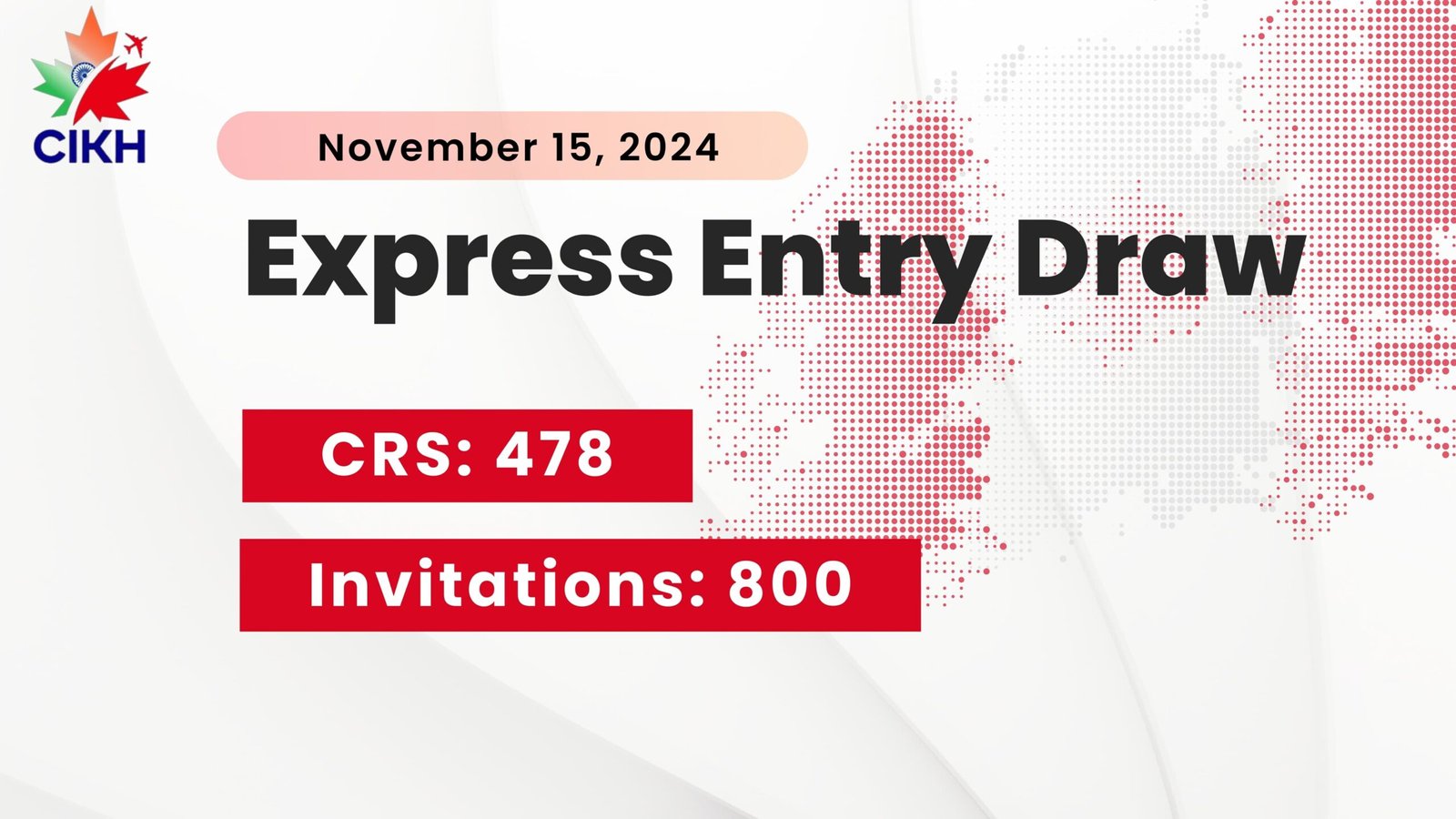
IRCC conducts its third Express Entry draw of the week, inviting new candidates
Immigration, Refugees, and Citizenship Canada (IRCC) has extended invitations to apply (ITAs) in the latest Express Entry draw. A total of 800 ITAs were issued during a draw focused on French-language proficiency. To be eligible, candidates needed a minimum Comprehensive Ranking System (CRS) score of 478. This marks the third Express Entry draw of the week. The previous draw, held on November 13, invited 400 candidates through the Canadian Experience Class (CEC) program. This draw is the third Express Entry round of November and comes shortly after the release of Canada’s Immigration Levels Plan for 2025. Under this plan, IRCC aims to invite 124,680 Express Entry candidates next year. Those who received an Invitation to Apply (ITA) in today’s draw will be considered for the 2025 admissions targets. They may fall under the new In-Canada Focus targets or the Federal Economic Priorities category. The In-Canada Focus target, set at 82,980 permanent resident admissions, will have the most significant impact on temporary residents currently living in Canada. This group represents around 40% of Canada’s overall economic immigration targets for 2025. Many of the candidates invited today are likely to be Express Entry applicants from the Canadian Experience Class (CEC) or the Provincial Nominee Program (PNP). Full Details of the Express Entry Draw: November 15, 2024 Summary of Express Entry Draw Results in 2024

International students in Canada are allowed to work up to 24 hours per week off-campus
International students in Canada are now permitted to work up to 24 hours per week off-campus during their academic terms. This update, confirmed by Minister of Immigration, Refugees and Citizenship Canada (IRCC) Marc Miller, officially took effect on November 15. Previously, the weekly work limit was set at 20 hours. In April 2024, Miller had announced the intention to increase the off-campus work hours to 24 for the fall term, though the specific date of implementation was not disclosed at the time. Unlimited work hours for international students holding study permits The work hour limits apply only to the time international students spend working off-campus while their classes are in session. Students have always been, and continue to be, allowed to work unlimited hours: Reason behind the change Miller stated that the 24-hour limit provides “the right balance,” allowing students the opportunity to work without negatively impacting their academic performance. New condition for study permit holders before switching schools In today’s announcement, it was revealed that international students are now required to apply for a new study permit before switching schools. Students must submit an application for a new study permit, and in some cases, receive approval, before transferring to a different designated learning institution (DLI). Previously, students could change schools under the same study permit, as long as they updated their IRCC online account with the new details. According to IRCC, these changes are part of ongoing efforts to “strengthen the integrity of the International Student Program.” Recent adjustments to the work hour limits for international students Traditionally, international students in Canada were permitted to work up to 20 hours per week during regular academic terms. However, in response to the pandemic, the government introduced a temporary measure that allowed students to work beyond this limit, up to 40 hours per week. This policy was aimed at addressing the country’s labour shortages while providing students with the opportunity to earn additional income. The temporary measure concluded on April 30, 2024. FAQ’s About Working as an International Student in Canada Can students work multiple jobs to meet the 24-hour limit?Yes, students are allowed to work multiple part-time jobs, as long as the combined total does not exceed 24 hours per week during academic sessions. Are remote jobs included in the 24-hour limit?Remote work for Canadian employers is counted toward the 24-hour weekly limit. However, work for employers located outside of Canada is not included in this limit. Can students work while waiting for a study permit extension?Yes, students can continue to work while waiting for their study permit extension, provided they submitted the extension application before the original permit expired and meet all eligibility criteria. What happens if a student’s enrollment status changes?If a student reduces their course load to part-time or leaves their program, they must stop working off-campus until they regain full-time enrollment status and re-establish eligibility. Can students work full-time immediately after finishing their program?Yes, students are allowed to work full-time after completing their program, as long as they apply for a work permit before their study permit expires or if they are transitioning into another study program.
Discover the Latest IRCC Processing Times as of November 2024
Immigration, Refugees, and Citizenship Canada (IRCC) recently shared its updated processing times for immigration and citizenship applications. The monthly update was released on November 5, followed by the latest weekly update on November 13. Keeping up with IRCC’s processing times is vital for anyone navigating their immigration journey, especially with the growing backlogs in Canada’s immigration system. Staying updated on these timelines helps applicants make well-informed decisions and better plan their next steps. To ensure transparency and provide clarity, IRCC frequently updates its processing times. Monthly updates cover categories like citizenship, family sponsorship, and economic immigration, while weekly updates focus on temporary residency, PR cards, and business immigration. Here are the latest processing times for key application categories, such as citizenship, permanent resident (PR) cards, family sponsorship, economic immigration, and temporary residency. Citizenship Processing Times (Monthly Updates) Currently, IRCC is issuing acknowledgment of receipt (AOR) letters for citizenship applications submitted during the week of October 28, 2024. Permanent Resident (PR) Card Processing Times (Weekly Updates) Family Sponsorship Processing Times (Monthly Updates) Economic Immigration Processing Times (Monthly and Weekly Updates) Temporary Residency Processing Times (Updated Weekly) Visitor Visa (Application from Outside Canada) Processing times differ by country, as outlined below: Visitor Visa (Applications from Within Canada) Super Visa (Processing Times Vary by Country) Study Permit (Application from Outside Canada) Work Permit (Application from Outside Canada) Processing times differ by country: Work Permit (Inside Canada): 168 days, an increase of 14 days from last month’s update. Other Temporary Residency Categories FAQs For the most current information, visit the official IRCC website to stay up to date with your immigration process.
BC PNP Issues Over 24 Invitations for PR in Latest November 13 Draw
On November 13, the British Columbia Provincial Nominee Program (BC PNP) held its latest draw, issuing over 24 invitations to apply (ITAs) for permanent residency (PR) through both general and targeted rounds. A total of 10 invitations were issued in a general draw under the Skilled Worker and International Graduate streams, including the Express Entry variants. Notably, the cutoff score in this draw increased by 9 points compared to the previous BC PNP general draw. Additionally, 5 invitations were extended to candidates with experience as early childhood educators or assistants (NOC 42202), while another 5 ITAs went to applicants with expertise in 39 healthcare-related occupations. In a new category-based draw introduced in late 2023, BC PNP invited 4 candidates with experience in 25 construction-related roles. Full Details of Latest BC PNP Draw: November 13 Previous BC PNP Draw: 2024
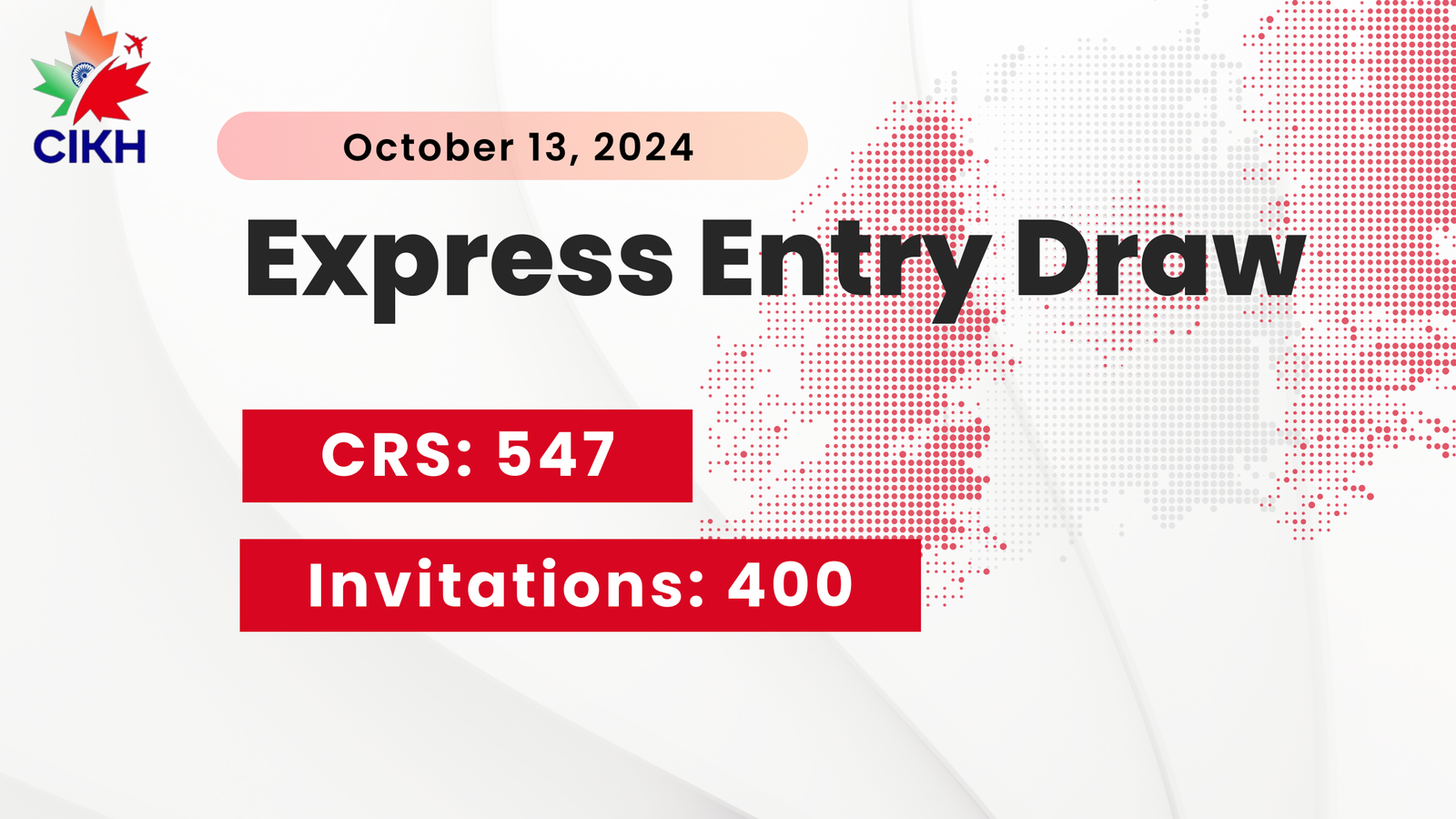
IRCC Issues 400 Invitations to Apply in Latest CEC Express Entry Draw
Immigration, Refugees, and Citizenship Canada (IRCC) recently issued 400 invitations to apply (ITAs) in an Express Entry draw specifically for the Canadian Experience Class (CEC). To qualify, candidates needed a Comprehensive Ranking System (CRS) score of at least 547, marking it as the highest CRS cutoff for CEC draws this year. This is the second Express Entry draw held in November, with the previous one occurring on November 12, which invited 733 candidates in a Provincial Nominee Program (PNP) draw. This draw aligns with Canada’s newly announced Immigration Levels Plan for 2025. This plan includes a target of 124,680 new Express Entry immigrants next year. Those invited in today’s draw will contribute to next year’s admissions, either through the new In-Canada Focus targets or the Federal Economic Priorities category. The In-Canada Focus target aims for 82,980 permanent resident admissions, primarily benefiting temporary residents already in Canada. This category represents about 40% of Canada’s total economic immigration goals for 2025, particularly for candidates in CEC or PNP categories. Meanwhile, the Federal Economic Priorities target seeks to bring in 41,700 permanent residents across all Express Entry programs. This target focuses on candidates who can address skill shortages in healthcare, trades, or contribute to demographic goals, such as increasing French language proficiency among immigrants outside of Quebec. Full Details of the Express Entry Draw: November 13, 2024 Summary of Express Entry Draw Results in 2024