

The black market for LMIAs (Labour Market Impact Assessments) in Canada has been an ongoing issue, but it has now reached unprecedented levels. Following recent measures by the Canadian government aimed at lowering immigration targets and restricting temporary resident numbers, the demand for LMIA-backed jobs in Canada has skyrocketed. CBC’s investigative reports reveal a surge in LMIA advertisements, where recruiters, agencies, and unauthorized agents are offering LMIA-supported job positions to foreign nationals at steep prices. Surge in LMIA Black Market Activity From July to September 2024, investigative reports revealed a sharp increase in advertisements for LMIA-approved jobs in Canadian cities, especially in immigrant-dense areas like Brampton, Ontario. In just two months, online listings for LMIA-backed positions surged from 29 in July to 97 in September. This rapid increase likely stems from recent government efforts to restrict LMIA approvals in major cities with high unemployment, focusing instead on sectors with critical labour shortages, such as healthcare and construction. As a result, demand has pushed the black market to expand, as temporary residents seek work permits to strengthen their pathway to Canadian permanent residency. Why LMIA Jobs Are Highly Desired An LMIA permits a Canadian employer to hire a foreign worker if they can show that the position cannot be filled by a Canadian citizen or permanent resident. For foreign nationals, obtaining an LMIA-supported job is highly valuable, as it adds essential points in Canada’s Comprehensive Ranking System (CRS), which assesses permanent residency applications. A position backed by an LMIA provides 50 CRS points, making it a desirable option for those aiming to strengthen their residency prospects. With the federal government planning to restrict permanent residency opportunities, temporary residents are increasingly motivated to secure LMIA positions—fueling opportunities for unethical practices. The Growing Black Market Prices for LMIA Jobs While Canadian law requires employers to pay all LMIA-related fees, the black market is taking advantage of temporary residents by demanding extremely high charges. Reports indicate that some employers or intermediaries posing as immigration consultants are charging between $20,000 and $40,000 for LMIA-backed jobs. This setup allows certain employers to misuse the LMIA program, letting foreign nationals essentially buy access to work permits and, in some cases, a path to permanent residency. Many temporary workers pay these high fees out of necessity, while others see it as an investment towards permanent residency due to limited options for staying in Canada. Questionable Practices in Canada’s LMIA Black Market The LMIA black market uses several questionable tactics, each with serious consequences for workers and Canada’s immigration image: The Increasing Demand and Few Options for Temporary Residents Canada’s temporary resident population has almost doubled in recent years, increasing from 1.3 million in 2021 to around 2.8 million by mid-2024. This growth includes temporary foreign workers, international students, and asylum seekers. The rise is partly due to the attractiveness of Canada’s economy, stability, and quality of life. However, this influx has left many people in uncertain situations, with few options for obtaining permanent residency. With limited pathways available, temporary residents often turn to LMIA-backed jobs as a last resort to stay in the country legally and improve their chances of gaining residency. Suggestions for Addressing LMIA Exploitation While ESDC’s improved data-sharing initiatives are a positive step, more actions may be necessary to tackle the rising black market. Here are some policy recommendations to help reduce illegal LMIA sales and enhance protections for foreign workers: The black market for LMIA jobs highlights the desperation of temporary residents and the shortcomings of Canada’s immigration and labor systems. While the government is taking steps to combat illegal activities, addressing the underlying issues—specifically, the lack of permanent residency options for temporary residents—could help decrease demand in the black market. Currently, ESDC’s regulatory changes and increased investigations provide some hope, but they appear inadequate to tackle the scale of the issue. To uphold Canada’s reputation as a fair and transparent immigration destination, it is crucial to maintain ongoing vigilance, allocate resources effectively, and implement strategic policy changes. Dealing with the LMIA black market will require not just regulatory enforcement but also broader immigration reforms to create legal and accessible pathways for those who want to contribute to Canada’s growth and success.

Marc Miller Justifies Reducing Canada’s Immigration Targets
Prime Minister Justin Trudeau, along with Immigration Minister Marc Miller, announced the 2025-2027 immigration targets, which will reduce both temporary and permanent resident admissions starting in 2025. This policy shift marks a significant departure from Canada’s previous post-pandemic approach, initially aimed at addressing labor shortages and stimulating economic growth. The decision has sparked considerable debate, with migrant rights groups and business leaders expressing concerns that the reductions disproportionately impact vulnerable populations and may negatively affect the labor market. In response, Marc Miller addressed the criticism in a detailed interview with CBC, where he explained the government’s reasoning and addressed issues raised by advocacy groups and economists. Marc Miller’s Reasoning for Immigration Reductions Minister Miller highlighted that the reduction in immigration levels is intended to alleviate pressures on housing and social services. “There’s been significant positive feedback from everyday Canadians,” Miller stated, presenting the cuts as a “practical” response to challenges linked with rapid population growth. He affirmed that, while immigration remains essential to Canada’s future, unrestricted migration is not sustainable. Miller stressed the importance of a “carefully managed” migration approach, adding, “Open borders and unlimited inflows are certainly not the solution.” Economic Considerations: Striking a Careful Balance Economists are voicing concerns that lowering immigration levels could lead to stagnant economic growth. Scotiabank economist Rebecca Young cautioned that last year’s surge in immigration was “overheated,” while this year’s reduction risks being “too much of a cooldown.” Economic immigration has long been a major driver of Canada’s economy. Miller acknowledged these perspectives, emphasizing that Canada’s immigration policy must balance economic needs with humanitarian priorities. “While we value economists’ insights,” Miller stated, “immigration is not just about numbers. It includes family reunification, humanitarian support, and fostering Francophone communities outside Quebec.” He also highlighted Canada’s demographic challenges, including an aging population and a declining worker-to-retiree ratio. “In 1973, there were seven workers for every retiree. Today, it’s closer to three. We need a younger workforce to sustain our social services,” he explained. Business Leaders Raise Concerns About Workforce Impact The reduction in immigration has sparked concerns among business groups, who worry that cutting temporary foreign workers could worsen labor shortages in essential sectors. “Where will businesses find workers if immigration levels are reduced?” some leaders questioned, voicing fears that the policy might hinder economic recovery. Miller responded to these concerns, emphasizing the importance of ongoing dialogue with stakeholders. “We are actively listening to economists, business groups, and advocacy organizations. However, immigration levels need to be sustainable to prevent system strain and reduce potential abuses in the temporary residence program,” he explained. A Way Forward: Aligning Public Opinion with Policy Miller highlighted that the decision to reduce immigration aligns with public feedback gathered over the past year, with many Canadians voicing concerns over the impact of rapid population growth on housing. He also underscored the need for ongoing, respectful dialogue with those who hold differing views, including individuals with anti-immigration perspectives. The minister reaffirmed the government’s dedication to creating a sustainable immigration framework that balances economic, humanitarian, and social priorities. “Canada remains one of the world’s most sought-after destinations,” Miller stated. “Our goal is to ensure that our immigration system meets both the country’s needs and its core values.” What Comes Next? The federal government’s immigration strategy is poised to remain a contentious issue in the upcoming months, as opposition parties and advocacy groups are likely to continue applying pressure on the Trudeau administration. As the government implements its revised immigration levels plan, several key questions persist: The Trudeau government’s decision represents a crucial turning point in Canada’s immigration policy. Whether this plan will fulfill its intended objectives or exacerbate political divisions will become clearer in the coming months.

Quebec suspends two primary routes to permanent residency
Quebec has paused two significant pathways to permanent residency. As of now, the province has stopped accepting applications for the Quebec Experience Program – Quebec Graduates (PEQ – Diplômés) and will halt issuing invitations for the Regular Skilled Worker Program (PRTQ). Both of these programs serve as routes to permanent residency in Canada. The suspension is set to continue until June 30, 2025. Decrease in PEQ – Diplômés CSQs and reduction in PR admission targets Quebec’s Immigration Levels Plan, unveiled today, anticipates a substantial reduction in Quebec Selection Certificates (CSQs) issued to PEQ Graduates. The projected number for 2024 was 14,500, but this has been adjusted to a target range of 4,500 to 5,700 for 2025. The Ministry states that this suspension will lower the target for permanent residence admissions through the PEQ Graduate program to between 13,500 and 15,000 in 2025. Without the pause, 2025 admissions were expected to range from 15,000 to 19,000. Quebec still aims to meet its overall target of 50,000 permanent resident admissions in 2025. However, this total will now include those selected under the PEQ Graduate program, which was previously counted separately in the province’s annual Immigration Levels Plan. Minister of Immigration, Francisation, and Integration, Jean-François Roberge, explains that these measures are intended to manage the rise in immigration to Quebec in the coming years. Notably, only the PEQ Graduate stream has been paused, while the PEQ Worker stream remains available. Suspension of the Regular Skilled Worker and Skilled Worker Selection Programs The Ministry of Immigration, Francization, and Integration has announced that it will stop issuing invitations for permanent selection under the Regular Skilled Worker Program (PRTQ) and the new Skilled Worker Selection Program (SWSP), set to replace the PRTQ on November 29, 2024. As the leading program for admissions in Quebec’s immigration system, the pause in the PRTQ will allow the province to redesign it before launching the updated Qualified Skilled Worker Selection Program on November 29. According to Quebec’s Immigration Levels Plan for 2025, the province projects up to 32,900 economic immigrant admissions next year. Eligibility criteria for the PEQ Worker Stream To qualify for the PEQ Worker Stream, applicants must: Recent updates Quebec has recently made several adjustments to its immigration system. For instance, earlier this month, the province established a limit on the number of foreign nationals from any single country who can be invited under the Regular Skilled Worker Program. According to this new rule, applicants from any one country may represent no more than 25% of the total admissions under the PRTQ. Additionally, the province declared that it will no longer accept applications from employers in Montreal looking to hire temporary foreign workers for positions that offer wages below the provincial median hourly rate.

BC PNP Draw October 30 | 83 ITAs Issued for PR in Latest General & Targeted Rounds
The British Columbia Provincial Nominee Program (BC PNP) held its latest draw on October 30, issuing approximately 83 invitations to apply (ITAs) for permanent residency through both general and targeted invitation rounds. In a general draw, 31 invitations were extended to skilled workers and international graduates, including those in Express Entry categories. Notably, the minimum score required for this draw rose by 7 points compared to the previous BC PNP general draw. Additionally, 20 invitations were specifically issued to candidates with experience as early childhood educators’ assistants or instructors (NOC 42202). Another 12 ITAs were granted to individuals with expertise across 39 healthcare occupations, while 20 more invitations went to candidates with backgrounds in 25 construction-related occupations, as part of British Columbia’s new category-based draw, launched in late 2023. Full Details of Latest BC PNP Draw: October 30 Previous BC PNP Draw : 2024

Impact of New 2025 Immigration Targets on Express Entry Draws
Canada’s revised immigration targets for 2025-2027, which lower the anticipated permanent resident admissions, are bringing significant shifts, especially for Express Entry draws. With the government adjusting its targets from an ambitious 500,000 down to 395,000, many are left wondering: What will these changes mean for Express Entry draws and Provincial Nominee Programs (PNPs)? This shift signals a fresh immigration approach aimed at meeting Canada’s labor market needs and economic priorities. In this article, we’ll examine how these adjusted targets might impact Express Entry draws, category-based selections, and PNP streams. We’ll also delve into perspectives from various provinces and the shifting landscape of federal immigration policies. Overview of New 2025-2027 Immigration Levels Plan Year Target Low Range High Range 2025 395,000 367,000 436,000 2026 380,000 352,000 416,000 2027 365,000 338,000 401,000 New Canada Immigration Levels Plan 2025-2027 The plan outlines a gradual decrease in immigration targets over the next three years. However, it maintains flexibility within established ranges, allowing adjustments to address shifting economic and demographic needs. Effects on Express Entry Draws: Emerging Federal Economic Priorities Express Entry is set to undergo significant changes with the introduction of new categories: “Federal Economic Priorities” and “In-Canada Focus,” replacing the former “Federal High Skilled” category. The positive news is that the total number of new permanent residents in these two categories has increased to 124,680, up from the previous target of 110,770—a 12.55% rise despite an overall 21% reduction in annual permanent residency targets. The category-based system will prioritize fields such as 35 healthcare occupations, 10 skilled trades, and French-speaking candidates. The 2025 target dedicates 41,700 new permanent resident spots to this category, highlighting a strategic push to fill key labor shortages. Additionally, 82,980 new permanent resident spots will be allocated to the “In-Canada Focus” category, which will primarily draw from the Canadian Experience Class and other regional immigration pathways. These pathways could also include federally skilled workers, skilled trades, and potentially upcoming rural immigration programs. What steps should applicants take? This is encouraging news for temporary residents in Canada seeking pathways to permanent residency. IRCC’s public consultations on setting Express Entry categories for 2025 highlighted a strong focus on selecting candidates already in Canada, including former international students and temporary foreign workers. Additionally, the consultations included questions on boosting francophone immigration outside of Quebec. The message is clear: we can expect more frequent draws for the Canadian Experience Class, or perhaps a new form of draws under category-based selections. For instance, recent healthcare-targeted Express Entry draws (version 2) were exclusively for CEC candidates. Applicants should prioritize the 35 healthcare occupations, 10 trade occupations, and French-speaking categories to enhance their chances of obtaining permanent residency. Other priority fields, such as STEM, transportation, and agriculture/agri-food, are expected to remain a focus under the “In-Canada Focus” category. It’s important to note that the immigration levels plan and targets do not equate to the number of invitations, which are often higher. With CRS scores frequently exceeding 500, candidates may benefit from additional strategies, like learning French or gaining work experience in priority sectors, to improve their prospects. Provincial Nominee Program (PNP) Reductions: A Challenge for Aspirants A significant change in the 2025-2027 immigration plan is the substantial reduction in PNP allocations. Originally set at 120,000 admissions, the new plan reduces this to 55,000 for 2025—less than half of the initial target. It’s essential to recognize that major provincial nominee programs across Canada operate both within and outside of the Express Entry system. For non-Express Entry streams, the PNP quota has dropped by over 50%, though the PNP Express Entry streams remain unaffected by this reduction. What Implications Does This Have for PNP Applicants? What actions should applicants take? The reduction in PNP quotas represents a significant setback for applicants relying on these programs. The federal government’s choice to lower PNP targets is perceived as a tactic to limit provincial control over immigration selection. It appears the federal government intends to hold provinces accountable for managing increased immigration through the PNP. Applicants should focus on PNP streams or programs that are directly connected to the Express Entry system by optimizing their profiles to meet the eligibility requirements of previous similar streams or programs. Trends in CRS Scores and Future Forecasts As of October 2024, the CRS distribution in the pool indicates a substantial number of candidates scoring over 500 points. However, with the shift toward category-based draws, the following trends are anticipated: How French-Speaking Candidates Stand to Gain The government aims to raise the proportion of French-speaking permanent residents outside Quebec to 8.5% by 2025, with a target of 10% by 2027. Francophone Express Entry draws are expected to persist, offering an edge to candidates who are fluent in French, regardless of their profession or work experience. Conclusion The decrease in Canada’s immigration targets signifies a strategic shift toward aligning economic requirements with policy objectives. Although the reductions in PNP programs may be disheartening for some applicants, the focus on in-Canada candidates and category-based draws presents new opportunities for others. Express Entry continues to be a valid route, but achieving success will necessitate thoughtful planning and strategic actions—such as learning French or transitioning to a priority occupation. For many, the essential message is clear: adapt swiftly and submit applications early to maintain a competitive edge in this changing immigration environment.

How Canada’s International Student Cap Affects Everyone
Canada recently announced a temporary cap on international students, aiming to address housing shortages and rising rental costs in cities that host many foreign students. This change, though not yet specified in detail, could reduce the number of students entering Canada and is raising concerns across the country. International students contribute about CAD 22 billion (USD 16.4 billion) to the Canadian economy each year, so limiting their numbers could impact universities, local businesses, and the job market. Here’s what you need to know about how this change might affect Canada. Why International Students Matter to Canada’s Economy Canada is one of the top destinations for international students, especially those from India (40%) and China (12%). Many Canadian banks benefit from these students as they are required to invest in a Guaranteed Investment Certificate (GIC) worth over CAD 20,000, which covers their living expenses. This requirement is beneficial for Canada’s banking industry and boosts the economy. In Ontario, the province that receives the largest number of international students, businesses are already warning of workforce shortages that could worsen with the new cap. Restaurants, retailers, and other industries rely heavily on international students for temporary labor, especially in cities like Toronto and Vancouver. For example, in 2023, international students made up about 4.6% of the food service workforce, with nearly 100,000 positions unfilled in the sector. A cap could mean fewer students available for these jobs, making hiring more difficult. Canadian Universities and Colleges Face Enrollment Challenges Many Canadian universities and colleges had expanded in recent years to accommodate the growing influx of international students. The University of Toronto (U of T) reported that international students comprised nearly 30% of its 86,297 students in the 2022-23 academic year. Without a steady flow of international students, major institutions like U of T might face funding shortfalls and other financial challenges. Smaller institutions are feeling the effects more immediately. Seneca Polytechnic recently announced that it will temporarily close its Markham campus, directly citing anticipated drops in international student enrolment due to the cap. Seneca’s president, David Agnew, explained, “We are losing international students,” indicating that declining enrolment numbers will impact campus operations and resources across Canada. British Columbia’s Additional Regulations for International Students In addition to the federal cap, British Columbia (BC) has implemented a freeze on approvals for new private colleges accepting international students until February 2026. This regulation comes with stricter requirements, including minimum language proficiency standards and a stronger focus on labor market needs to ensure international students are well-prepared for local job demands. BC hopes that these rules will manage the pressure on housing and balance the local workforce. Potential Future Impact of the International Student Cap With these changes, Canada’s approach to international students is entering a new phase. Institutions may need to adjust their recruitment strategies, focusing on students who meet higher language and employment standards. Businesses that depend on student workers might face new labour challenges and may need to explore alternative staffing options. Balancing the economic contributions of international students with the country’s housing and job market needs will be a priority for Canada going forward. Conclusion The temporary cap on international students in Canada will likely reshape the education system, job market, and economy. With universities, businesses, and government leaders working together to manage these changes, the approach to international students in Canada is evolving, aiming to create a sustainable balance that meets both economic and community needs.

Factors Considered by Canadian Insurance Companies in Long-Term Disability Claims
In Canada, long-term disability (LTD) claims go through a thorough and often rigorous evaluation process by insurance companies. These claims apply to individuals who must take extended leave from work due to illness or injury, requiring clear evidence to support the claim’s validity. As noted by experts at Affinity Lawyers, LTD claims can be particularly challenging as insurers carefully scrutinize whether the claimant meets the specific terms of the policy. Insurers consider various elements, such as medical records, the seriousness of the condition, and the claimant’s compliance with prescribed treatment plans. A solid understanding of these factors can enhance the chances of a successful claim and help claimants navigate potential obstacles in the process. 1. Definition of Disability in the Policy A key factor in any LTD claim is how the policy defines disability. Policies vary in their definitions, often using terms like “own occupation” or “any occupation.” Initially, the “own occupation” definition is applied, requiring the claimant to show they are unable to carry out their specific job duties. After a set period—usually around two years—the definition often changes to “any occupation,” meaning the claimant must then demonstrate that they are unable to perform any job for which they are suitably qualified by education, training, or experience. 2. Medical Documentation Comprehensive medical documentation is essential for LTD claims. Insurers require detailed medical evidence from certified healthcare providers to validate the claim. This may include doctors’ reports, specialist evaluations, diagnostic tests (such as X-rays or MRIs), and a full treatment history. Insurers need proof that the claimant’s medical condition truly hinders their ability to work. The thoroughness and consistency of these medical records are key factors in determining whether the claim will be approved. 3. Treatment Compliance Insurance companies anticipate that claimants will adhere to appropriate medical guidance and participate in recommended treatments or rehabilitation programs. If a claimant declines treatment or fails to follow their doctor’s recommendations, the insurer may challenge the legitimacy of the claim. Demonstrating compliance indicates that the claimant is actively working towards recovery and a return to work. Not engaging in rehabilitation or following prescribed treatments could lead to the denial of the claim. 4. Length and Consistency of the Condition It is essential to demonstrate the long-term aspect of the disability. Insurance companies evaluate whether the condition is anticipated to persist beyond the short term, usually defined as six months or longer. To gain approval for an LTD claim, the disabling condition must be significant and expected to be enduring. Chronic conditions, such as mental health disorders (e.g., depression, anxiety), musculoskeletal issues, or degenerative diseases, can qualify for LTD, provided the claimant can prove that the condition is continuous and hinders their ability to work. 5. Ability to Function The insurance company will assess the claimant’s functional capacity, focusing on how their physical or mental limitations influence their ability to carry out job responsibilities. This evaluation may include assessments from occupational therapists, functional capacity evaluations (FCE), or independent medical examinations (IME) requested by the insurer. The objective is to understand how the disability affects the claimant’s work-related activities and daily living tasks. For instance, an individual with chronic back pain may be evaluated to determine how much they can lift or how long they can sit or stand. 6. Claimant’s Employment and Occupation The type of job held by the claimant is a critical factor in the evaluation process. For instance, if the work involves physically strenuous activities, such as construction or manual labor, a physical disability may more readily warrant LTD. On the other hand, for sedentary positions, like office work, the insurer may question whether the claimant is still capable of performing fundamental tasks such as sitting at a desk or typing, even with their condition. The insurance company will also assess whether reasonable workplace accommodations could enable the claimant to continue their employment. 7. Claims Related to Mental Health Disabilities associated with mental health, including depression, anxiety, or post-traumatic stress disorder (PTSD), frequently appear in LTD claims but can be more difficult to substantiate. Insurers require comprehensive medical documentation from mental health experts, such as psychiatrists and psychologists. They also evaluate whether the claimant is receiving consistent treatment, including therapy or medication, and whether the severity of their condition hampers their ability to function in a workplace setting. 8. Continuous Medical Evaluations Insurance companies typically mandate regular medical updates to ensure that the disability remains valid and that the claimant is actively undergoing treatment. This may involve routine doctor appointments or evaluations conducted by medical professionals designated by the insurer. Not providing updated medical information can lead to a suspension or cancellation of benefits. Insurers may also require claimants to undergo independent medical evaluations (IME) to assess the severity of the disability. 9. Calculation of Income Replacement In Canada, the benefit amount for LTD claims is typically calculated as a percentage of the claimant’s income before the disability, generally between 60% and 70%. The insurer will confirm the claimant’s earnings prior to the onset of the disability to ensure that the income replacement adheres to the policy’s terms. If the claimant receives additional compensation, such as workers’ compensation or CPP Disability (Canada Pension Plan), the insurance company may deduct these benefits from the LTD payout. 10. Eligibility for Canada Pension Plan (CPP) Disability Benefits Most LTD policies in Canada mandate that claimants apply for CPP Disability benefits. These benefits are provided by the federal government to individuals with a severe and enduring disability that hinders their ability to work. Insurance companies frequently consider CPP Disability approval as a standard for assessing whether the claimant fulfills the requirements for long-term disability benefits outlined in their policy. While a denial of CPP Disability benefits can occasionally have a negative effect on an LTD claim, it does not automatically result in the denial of the LTD claim. 11. Monitoring and Investigations Insurance companies may initiate surveillance or investigations if they have concerns about potential fraud or exaggeration of the disability. This might involve

Canada’s Immigration Growth Plan for the Years 2025 to 2027
Today, the Minister of Immigration, Refugees, and Citizenship Canada (IRCC) unveiled the updated immigration levels plan for 2025-2027. Official statement from Canadian Prime Minister Justin Trudeau and Immigration Minister Marc Miller: Goals for Permanent Residency The targets for permanent residents are centered on strategies outlined in the 2025-2027 Immigration Levels Plan, which include the following: Facilitating the transition of temporary residents currently in Canada, including students and workers, to permanent resident status Comprising over 40% of total permanent resident admissions in 2025, these individuals are skilled, educated, and well-integrated into Canadian society. They will continue to contribute to the workforce and economy without imposing further pressure on social services, as they are already settled with housing and jobs. Emphasizing sustainable economic growth and critical labor market sectors, including healthcare and trades By 2027, admissions of permanent residents in the economic class are projected to account for 61.7% of all admissions. Enhancing the vitality of Francophone communities outside Quebec and promoting their economic well-being Francophone immigration is expected to account for 8.5% of the total permanent resident admission targets in 2025 and 9.5% in 2026. Targets for Temporary Residents The targets for temporary residents will include the influx of new workers and students coming to Canada: Therefore, the following categories are excluded from the temporary resident targets but are included in the total number of temporary residents: 2025 2026 2027 Overall Arrival 673,650(604,900 – 742,400) 516,600(435,250 – 597,950) 543,600(472,900 – 614,250) Workers (Total) 367,750 210,700 237,700 International Mobility Program 285,750 128,700 155,700 Temporary Foreign Worker Program 82,000 82,000 82,000 Students 305,900 305,900 305,900 Overall, these targets are projected to lead to a net reduction in temporary residents over the next two years. Specifically, compared to each prior year, we anticipate: What makes Canada’s immigration levels plan for 2025-2027 unique? The immigration levels plan details the annual number of new immigrants, both inside and outside Canada, who will receive permanent resident status over the next three years across various categories. Typically, these targets are announced on November 1st each year; however, this year’s immigration goals will be revealed a week earlier. Additionally, this marks the first time in Canadian history that annual targets for temporary residents will also be disclosed. In 2023, Canada had approximately 2.5 million temporary residents, representing 6.2% of the total population. Minister Miller indicated that the upcoming plan will focus on decreasing the number of temporary immigrants admitted in the coming years, aiming to reduce this figure to 5% within the next three years.

Canada announces a 20% reduction in immigration levels starting in 2025
Canada is adjusting its targets for permanent resident admissions. In today’s release of the Immigration Levels Plan, the government has outlined the following reductions in permanent resident intake goals: The targets for economic immigration in 2025 have only decreased by 15%, from 272,000 to 232,000, with 40% of these immigrants expected to already be in Canada. In a rare move, Prime Minister Justin Trudeau led the announcement, typically delivered by the Immigration Minister. Trudeau praised the role of immigration, calling it a key factor in making Canada’s economy “the envy of the world.” This year’s plan also includes temporary resident targets, a shift from previous plans where such targets were absent. Each annual Immigration Levels Plan sets out targets for the coming year and the subsequent two years, with adjustments typically made to the latter. This announcement follows a series of changes this year, particularly related to temporary residents on work or study permits. The government aims to reduce the percentage of temporary residents from 6.5% of the population (as of March) to 5% by the end of 2026. Limit on study permit applications set for 2024 On January 22, IRCC introduced the first-ever cap on international student admissions to help manage the growing number of foreign nationals on study permits in Canada. Originally intended as a temporary two-year policy, the cap aimed to limit the issuance of study permits for undergraduate and college students to 360,000 in 2024. However, this measure has since become a permanent feature of Canada’s international student program, now also applying to master’s and PhD students. In line with these changes, IRCC has revised the eligibility criteria for Post-Graduation Work Permits (PGWPs) throughout the year. In January, it was announced that, starting in September, international students enrolled in programs with curriculum-licensing agreements would no longer qualify for PGWPs. Additionally, reforms have been made to the Temporary Foreign Worker Program (TFWP). Earlier initiatives to limit the issuance of study permits, Post-Graduation Work Permits (PGWPs), and spousal open work permits On September 18, Miller unveiled changes expected to lead to the following reductions over the next three years: *CIKH will provide updates as more information becomes available.
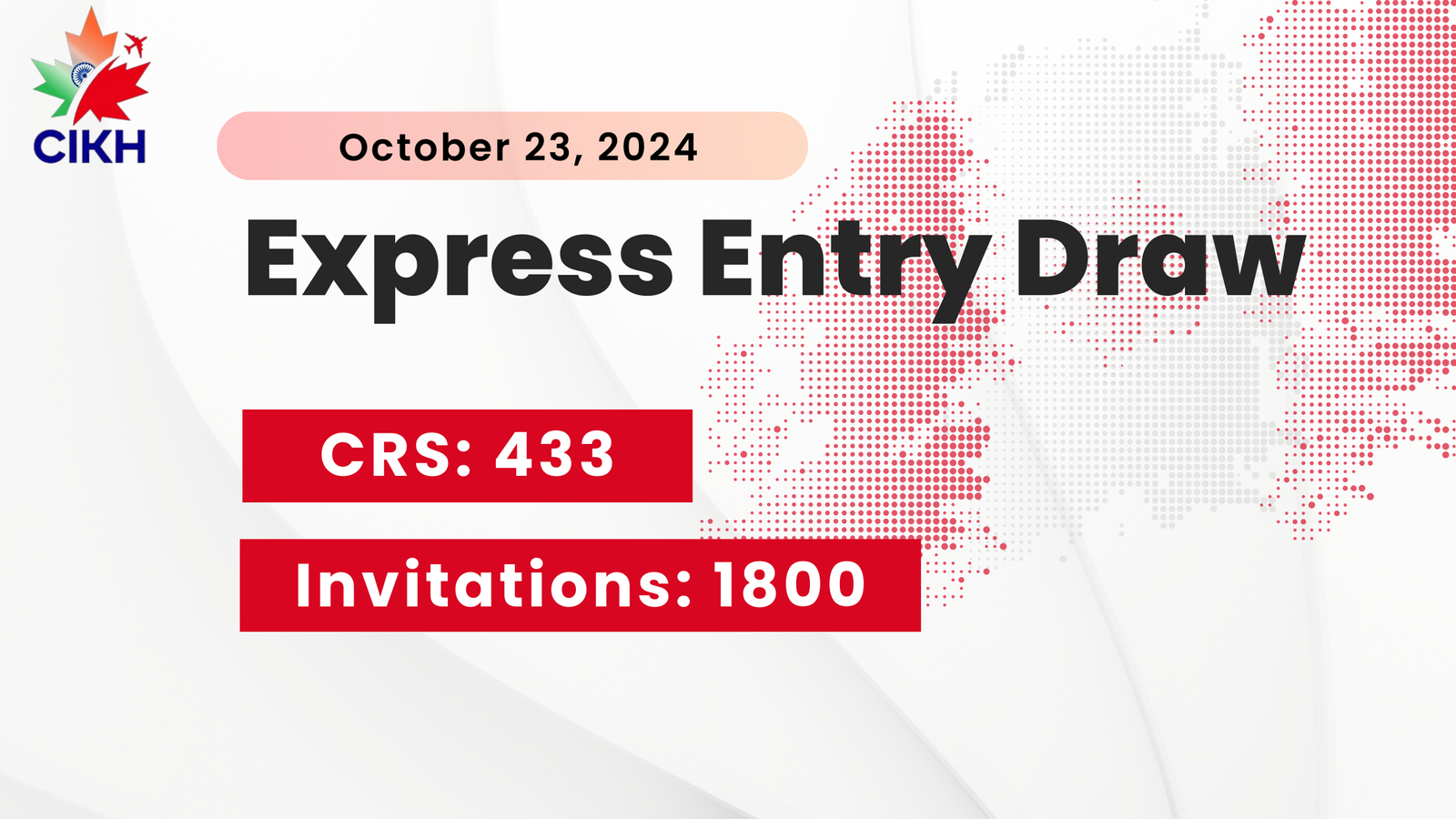
Canada invites 1,800 Express Entry candidates in a trade-specific draw
Immigration, Refugees, and Citizenship Canada (IRCC) has recently issued Invitations to Apply (ITAs) in an Express Entry draw. A total of 1,800 ITAs were issued in a category-specific draw targeting candidates in trade occupations, with a minimum Comprehensive Ranking System (CRS) score of 433 required. This marks the first trade occupation category-based draw since July 4, when 1,800 candidates were invited with a minimum CRS score of 436. It’s also the first category-based draw not focused on French-language proficiency since July 5. This was the third Express Entry draw of the week. On October 22, 400 candidates from the Canadian Experience Class (CEC) were invited with a minimum CRS score of 539. A previous draw on October 21 invited 648 candidates with Provincial Nominee Program (PNP) nominations, requiring a minimum CRS score of 791. In recent months, IRCC has established a trend of conducting multiple Express Entry draws every second week, often featuring draws focused on Provincial Nominee Program (PNP) and Canadian Experience Class (CEC) candidates. This underscores IRCC’s ongoing commitment to increasing domestic draws for Express Entry candidates who are already living and working in Canada as temporary residents. This approach aims to help the department reduce the number of temporary residents while also meeting its yearly target for new permanent residents as outlined in the Immigration Levels Plan. The next plan, expected to be released by November 1, will set targets for 2025-2027. The current plan aimed to admit 110,770 new permanent residents in 2024, although it has not yet been confirmed if IRCC has met this target. Candidates receiving ITAs in the latter half of the year are more likely to gain permanent residency in 2025 due to IRCC’s six-month processing standard for Express Entry applications. Full Details of Express Entry Draw: 23 October 2024