cikhlogo

Blog

  • All Post
  • Blog
  • Business
  • Canada
  • Citizenship
  • CRS Calc
  • Express Entry
  • Immigration
  • News
  • Parents & Grandparents
  • PNP
  • PNP Draw
  • Provinces
  • Quiz
  • Study
  • Trending
  • Visit
  • Work
    •   Back
    • Refugee
January 2025 Immigration Processing Times for Canada

January 11, 2025/

IRCC provides updates on processing times for immigration and temporary visa categories on a weekly and monthly basis. If you’re considering immigrating to Canada, it’s crucial to stay informed about the most current processing times for your application. Immigration, Refugees, and Citizenship Canada (IRCC) regularly adjusts these timelines to reflect changes in their...


Recently, President-elect Donald Trump suggested the idea of Canada becoming the 51st state of the United States, with Elon Musk promoting the notion as well. Trump has expressed intentions to apply “economic force” against Canada, citing potential tariffs of 25% as an example. In response, Canadian Prime Minister Justin Trudeau, opposition leader Pierre Poilievre, and Ontario Premier Doug Ford have all weighed in on the matter. But is there any practical foundation for Canada joining the U.S.? This idea is far from feasible and primarily serves as political rhetoric without any real basis. Let’s explore the reasons why the concept of Canada being annexed by the U.S. is both improbable and undesirable. 1. Trump’s Empty Annexation Threats Trump has previously floated ideas about invading Canada, Greenland, and the Panama Canal—none of which have ever materialized. These statements are meant to excite his base rather than present real plans. The idea of using tariffs, such as a 25% levy on Canadian goods, also holds no real weight. Any such measures would result in retaliatory tariffs from Canada on American exports like oil, gas, and steel, harming both economies and making the strategy counterproductive. 2. Canada’s Federal Structure Canada is a confederation made up of 10 provinces and 3 territories, each with its own legislature and jurisdiction over critical areas like healthcare and education. Integrating this decentralized system into the more centralized U.S. structure would be a logistical nightmare, especially for provinces like Quebec, which have a distinct language and culture. Additionally, the process of adding new states would require amending the U.S. Constitution—an almost impossible task. 3. Provincial Resistance Even if the Canadian government entertained the idea, provinces have significant autonomy and could veto such a move. Provinces like Quebec and Alberta, with their strong regional identities, would likely block any federal attempt to join the U.S., making any such annexation impossible. 4. The Impracticality of Economic Coercion The United States is already dealing with significant internal challenges, including inflation and infrastructure issues. Focusing resources on annexing Canada would only exacerbate these problems. Canada is the U.S.'s largest trading partner, and imposing tariffs would harm industries on both sides of the border, making such a strategy impractical and self-defeating. 5. Canada’s Monarchy Ties As a constitutional monarchy, Canada’s legal and political systems are rooted in British traditions. The monarchy still plays a symbolic role, and Canada’s laws require royal assent. Joining the U.S. would sever these historic ties and jeopardize Canada's distinct identity, making it unlikely that Canadians would ever support such a move. 6. Economic Independence If the U.S. were to impose tariffs on Canadian goods, it might inadvertently strengthen Canada’s economy. The country could become more self-reliant, focusing on its vast natural resources and fostering industries like technology and renewable energy. This shift could make Canada even more economically independent, reducing its dependence on the U.S. 7. Political Distraction The idea of annexing Canada is likely a political tactic by Trump and his allies to distract from pressing domestic issues. It plays on nationalist sentiments and rallies the “Make America Great Again” base, but it’s a diversion, not a serious policy proposal. This rhetoric shifts attention away from the lack of a substantive political agenda on issues like healthcare and infrastructure. 8. Cultural and Political Differences While the U.S. and Canada share a border and strong economic ties, their cultural and political landscapes are vastly different. Canada’s emphasis on social welfare, universal healthcare, and multiculturalism contrasts sharply with the U.S.’s more individualistic approach. Attempting to merge these fundamentally different systems would be extremely difficult and likely unacceptable to most Canadians. 9. Canadian Patriotism Canadians take immense pride in their national identity, cultural diversity, and independence. The idea of giving up their sovereignty to join the U.S. would be met with overwhelming opposition from citizens across all political affiliations. Canada’s patriotism and commitment to its own values make annexation an unthinkable prospect. 10. Diminishing U.S. Global Standing The U.S. has seen a decline in its global standing, with its passport ranking dropping and strained relationships with neighboring countries. Attempting to annex Canada would further damage its reputation, making the U.S. appear as an expansionist power. Meanwhile, Canada maintains strong international relationships, and such an annexation would jeopardize these ties. Conclusion The idea of Canada becoming the 51st state of the U.S. is not only impractical, but also undesirable for both nations. Canada’s unique identity, historical ties, and governance structure make annexation an unrealistic proposition. Economic coercion and political maneuvering would likely backfire, only strengthening Canada’s resolve to remain independent. Ultimately, the U.S. and Canada are better off as strong, independent neighbors, working together on shared interests while respecting each other’s sovereignty. The idea of annexation may make for political drama, but it has no basis in reality, and Canada will continue to proudly stand as a separate, sovereign nation.

January 10, 2025/

Recently, President-elect Donald Trump suggested the idea of Canada becoming the 51st state of the United States, with Elon Musk promoting the notion as well. Trump has expressed intentions to apply “economic force” against Canada, citing potential tariffs of 25% as an example. In response, Canadian Prime Minister Justin Trudeau, opposition leader Pierre...

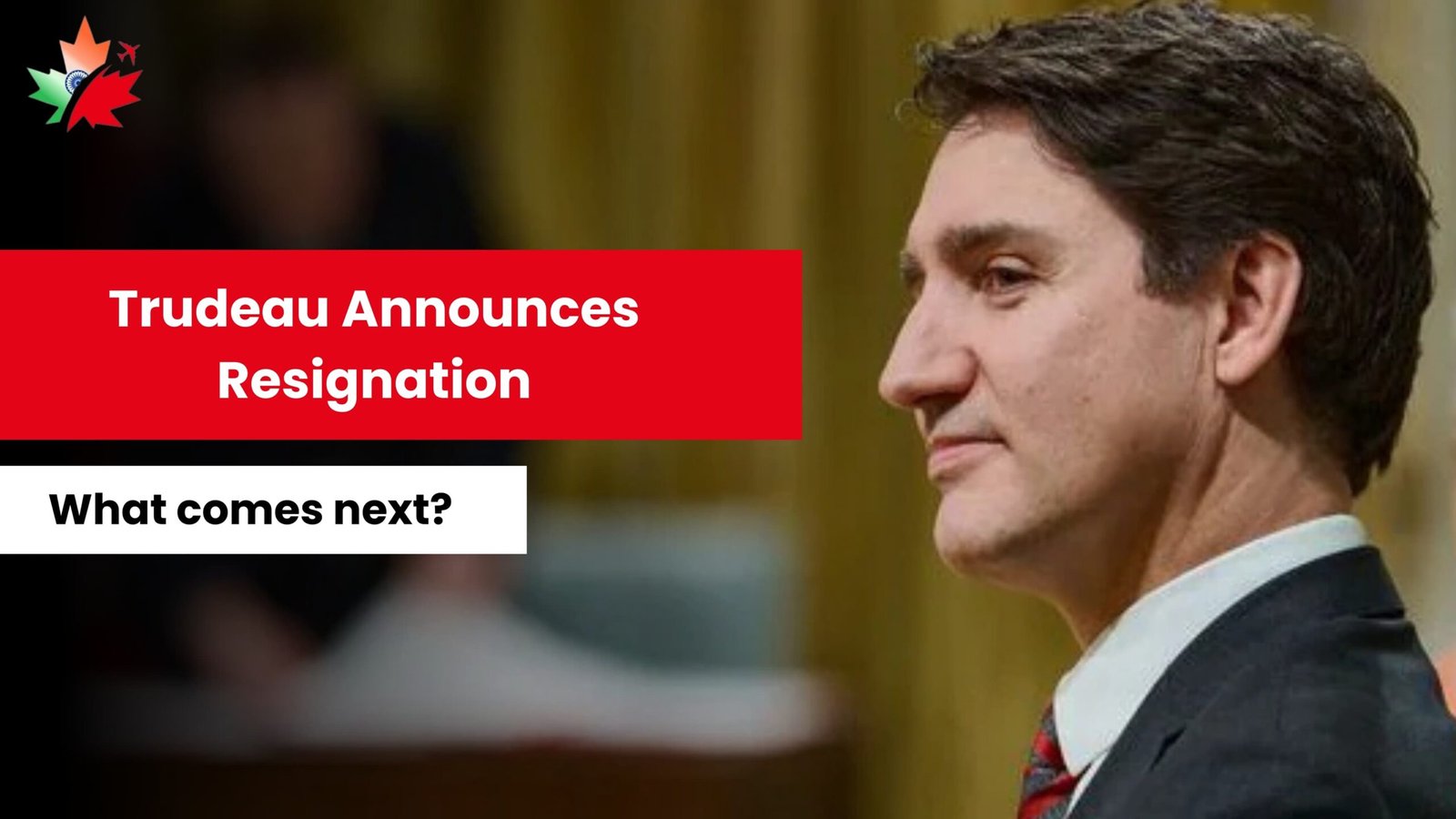
Trudeau Announces Resignation: What Comes Next?

January 7, 2025/

Canadian Prime Minister Justin Trudeau has officially announced his resignation as leader of the Liberal Party of Canada. However, he will remain in office as Prime Minister until a new leader is selected. This morning, Trudeau met with Governor General Mary Simon to request the prorogation of Parliament until March 24, 2025. The...

Is PM Justin Trudeau About to Resign? What’s Next for the Election?

January 6, 2025/

Justin Trudeau is reportedly preparing to step down as leader of the Liberal Party, amid mounting internal dissatisfaction, plummeting public approval, and rising support for Pierre Poilievre’s Conservatives. Although no official statement has been made, sources suggest Trudeau’s resignation could come as early as Monday, just before an important Liberal caucus meeting on...

IRCC Introduces New Fields of Study for PGWP Eligibility

January 3, 2025/

The Immigration, Refugees and Citizenship Canada (IRCC) has in the recent past expanded the list of fields of study eligible for the Post Graduation Work Permit (PGWP) program. The new list came into effect from December 17, 2024, and has a number of new programs particularly in the early childhood education and developmental...

Canada continues to be one of the most popular destinations for international students, offering world-class education and diverse cultural experiences. However, starting in 2025, the Canadian government is implementing several significant changes that could impact your academic and work journey. These updates, announced by Immigration, Refugees, and Citizenship Canada (IRCC), are aimed at enhancing the immigration system’s fairness, aligning education with labor market needs, and promoting a balanced student experience. If you're planning to study in Canada or are currently navigating your student journey there, it’s important to be aware of these new rules. In this article, we’ll break down six key changes you need to know about for 2025, their potential impact, and how you can best prepare for them. 1. New Post-Graduation Work Permit (PGWP) Rules Starting November 1, 2024, Canada will introduce revised eligibility criteria for the Post-Graduation Work Permit (PGWP). These changes focus on aligning students' programs with Canada’s labor market needs. What’s Changing? University Graduates (Bachelor’s, Master’s, Doctoral degrees): No restrictions based on field of study, but a language requirement of CLB 7 (English) or NCLC 7 (French) will apply. Other University Graduates: They’ll need to meet the language requirement of CLB 7, and their field of study must align with high-demand sectors in the labor market. College Graduates: Must have completed studies in areas with labor shortages, like healthcare, STEM fields, or agriculture, with a lower language requirement of CLB 5 (English) or NCLC 5 (French). Why It Matters: These changes are designed to boost employability in high-demand sectors, ensuring international students can contribute effectively to Canada's workforce post-graduation. 2. Changes to Off-Campus Work Hour Limits Effective November 2024, the number of hours international students can work off-campus during academic sessions will increase from 20 hours per week to 24 hours per week. What This Means: Increased Flexibility: Students can now work more hours while maintaining their studies, helping them support themselves better financially. Work-Life Balance: This change helps students gain more Canadian work experience without sacrificing academic performance. In surveys, many international students expressed that 20 hours per week was insufficient to cover living expenses. This increase aims to address that concern, providing more opportunities while ensuring academic priorities remain intact. 3. Ban on Flagpoling for PGWP Applications As of June 21, 2024, the practice of "flagpoling" — leaving Canada and re-entering at the border to process applications like the PGWP — will no longer be allowed. Alternatives: Students must apply for their PGWP online or through standard immigration channels within Canada. Why This Change? This shift is aimed at reducing inefficiencies and making the immigration process more transparent and consistent. 4. End of the Student Direct Stream (SDS) In November 2024, the Canadian government will phase out the Student Direct Stream (SDS), a program that fast-tracked study permit applications for students from certain countries. Why Is It Ending? While the SDS program was beneficial to certain students, it introduced concerns around fairness. By eliminating SDS, the IRCC aims to standardize the process for all international students, ensuring no group receives preferential treatment. What This Means for You: All students will now follow the same application process, which is designed to be fair and consistent for everyone, regardless of nationality. 5. New Restrictions on Spousal Work Permits As part of changes to immigration rules, spouses of international students will now face stricter eligibility requirements for open work permits. Only spouses of students enrolled in professional degree programs will be eligible. These programs include: Medical Doctor (MD) Dental Surgery (DDS, DMD) Bachelor of Nursing (BSN, BScN) Juris Doctor (JD, LLB) Professional degrees in fields like engineering, pharmacy, and education. Why This Change? The focus is to attract high-skilled workers to Canada and address critical labor shortages in various industries. 6. No More Study Permit Applications at Ports of Entry Effective December 23, 2024, study permit applications will no longer be accepted at Canadian ports of entry. What’s Changing? Students must submit their applications online before traveling to Canada. Those on maintained status (formerly known as implied status) cannot resume studies if they leave Canada until their new study permit is approved. Why This Change? This policy aims to improve oversight and ensure that all study permits are processed consistently and efficiently. 7. Impact of the Changes The implementation of these new rules has several broad implications for international students: Improved Work-Life Balance: The increased work-hour limit provides more financial flexibility while still prioritizing academics. Better Alignment with the Labor Market: The revised PGWP rules encourage students to pursue programs that directly contribute to areas of labor shortage, which should lead to better employment outcomes. Fairer System: The end of SDS and flagpoling practices aims to eliminate inconsistencies in the application process, promoting fairness for all international students. 8. How to Adapt and Prepare for the New Policies To successfully navigate these changes, here are a few steps to consider: Choose a Relevant Program: Opt for programs that align with Canada’s labor shortages, particularly in areas like healthcare, engineering, and IT. This will help you meet the new PGWP requirements. Check Program Eligibility: Always verify your program's eligibility for PGWP by confirming its CIP code and ensuring it aligns with high-demand fields. Plan Ahead: Apply for study permits and PGWPs well in advance to avoid delays, especially since processing times could be impacted by the changes. Consult an Expert: Reach out to your school’s international student office or a licensed immigration consultant for advice tailored to your specific situation. Stay Informed: Keep an eye on official IRCC updates to ensure you’re up to date with any further changes. Conclusion Canada’s updated rules for international students in 2025 reflect the country’s evolving approach to immigration and workforce integration. While these changes might seem like a challenge at first, they are designed to create a more streamlined and fair system, while also providing opportunities for students in critical sectors. By staying informed and preparing ahead, you can navigate these updates successfully and continue to enjoy a rewarding academic experience in Canada. Keep these changes in mind as you plan your studies and work opportunities, and ensure you are always aligned with the latest requirements.

January 2, 2025/

Canada continues to be one of the most popular destinations for international students, offering world-class education and diverse cultural experiences. However, starting in 2025, the Canadian government is implementing several significant changes that could impact your academic and work journey. These updates, announced by Immigration, Refugees, and Citizenship Canada (IRCC), are aimed at...

manitoba pnp draw 27 december

December 28, 2024/

On December 27, 2024, the Manitoba Provincial Nominee Program (MPNP) held its most recent draw, sending 276 invites for permanent residency across many streams. Candidates with valid Express Entry profile numbers were invited to 56 of these. The specifics of this draw are broken down as follows: Skilled Worker in Manitoba Stream All...

See More

End of Content.

Company

Welcome to CIKH (Canada Immigration Knowledge Hub), your go-to resource for the latest and most comprehensive updates on Canadian immigration policies, news, and guidelines. Whether you are a prospective immigrant, a current resident, or an immigration professional, CIKH is designed to empower you with the knowledge you need to navigate the complexities of Canada’s immigration system.

At CIKH, we understand that staying informed is crucial when it comes to immigration matters. Our dedicated team of researchers, writers, and immigration experts work tirelessly to gather, verify, and present the most up-to-date information directly from official sources. We strive to be your trusted partner throughout your immigration journey.

Features

Most Recent Posts

Category

GET IN TOUCH

JOIN OUR COMMUNITY

Subscribe to our newsletter for the latest Updates directly in your mail box.

Welcome to CIKH (Canada Immigration Knowledge Hub), your go-to resource for the latest and most comprehensive updates on Canadian immigration policies, news, and guidelines.

×