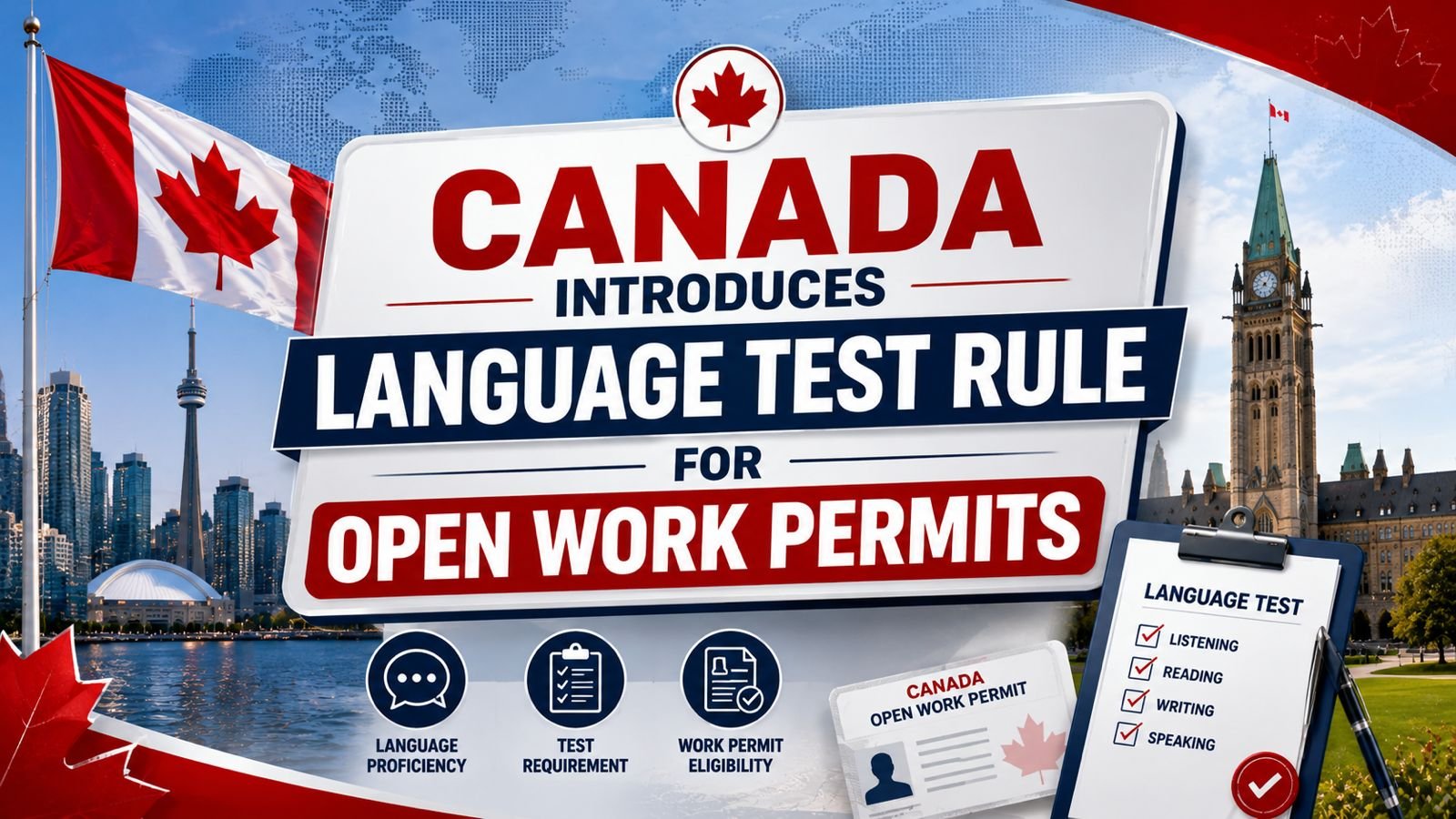
Canada’s proposed language testing rules for certain work permit applicants are moving closer to becoming official, with IRCC now targeting spring or summer 2026 for publication in the Canada Gazette.
The proposed change is not yet in effect, and IRCC has still not confirmed which specific International Mobility Program (IMP) streams will be affected.
However, the latest update to IRCC’s Forward Regulatory Plan shows the proposal has advanced significantly since it first appeared in 2025. Government consultations have already been completed, and a formal 30-day public comment period is expected once the draft regulations are pre-published.
Book Your Consultation for Canadian Immigration
Here’s a detailed look at IRCC’s latest 2026 update, what the proposal could mean for open work permit applicants, and the key details that remain unknown.
What Changed in IRCC’s 2026 Regulatory Update
IRCC first added this initiative to its Forward Regulatory Plan on July 2, 2025, but the initial listing included limited details about timing or implementation.
The updated page, dated April 7, 2026, includes several major developments.
Most importantly, IRCC now plans to pre-publish the proposed amendments in the Canada Gazette, Part I, during spring or summer 2026.
The department also confirmed that consultations with provinces and territories were completed in February 2025, while private-sector stakeholders were consulted in November 2025.
Following publication in the Canada Gazette, a 30-day public consultation period will allow applicants, employers, immigration professionals, and members of the public to submit feedback on the proposal.
This means the initiative has progressed well beyond the preliminary planning stage and is now approaching formal regulatory publication.
What IRCC Is Proposing
The official initiative is titled:
“Regulations amending the Immigration and Refugee Protection Regulations, language testing requirements for certain work permit applicants under the International Mobility Program.”
Under the proposal, IRCC would gain authority to require certain IMP work permit applicants to submit language test results from designated third-party testing organizations.
According to IRCC, the goal is to improve the reliability, transparency, and consistency of language assessments under the International Mobility Program.
The department also says the change could help ensure temporary workers are better positioned to integrate into Canada’s labour market and transition to permanent residence in the future.
The International Mobility Program includes several temporary work permit streams designed to support Canada’s economic, cultural, and social priorities.
Why the Rule Is Not Final Yet
Despite the progress, the proposed language testing requirement is not yet law.
No draft regulatory text has been published so far, and no official implementation date exists.
Publication in the Canada Gazette, Part I, is only the consultation phase of the federal regulatory process.
After pre-publication, the public will have 30 days to submit comments. IRCC may then revise the proposal before final publication in Canada Gazette, Part II, which is when the regulation would officially come into force.
As a result, the proposal could still change significantly before becoming final.
At this stage, no applicant is currently required to submit language test results because of this proposal.
Which Work Permit Streams Could Be Affected
IRCC’s regulatory update refers broadly to “certain work permit applicants under the International Mobility Program” without identifying the exact categories involved.
The International Mobility Program includes both employer-specific and open work permits, such as:
- Post-graduation work permits (PGWPs)
- Spousal open work permits (SOWPs)
- Working Holiday visas
- Bridging open work permits
- Intra-company transfers
- Reciprocal employment permits
- Free trade agreement work permits
Among these, spousal open work permits are widely expected to be one of the most likely categories affected, although IRCC has not officially confirmed this.
The final list of affected permit streams will only become clear once the draft regulations are published.
Expected Language Test Requirements
IRCC has confirmed that applicants may be required to submit language test results from designated third-party organizations, but the department has not yet revealed:
- Which tests will be accepted
- Minimum score requirements
- Which work permit streams will be included
- Exemptions or transitional measures
- When the rules would take effect
Other immigration programs currently use approved English and French tests such as:
- IELTS General Training
- CELPIP General
- TEF Canada
- TCF Canada
It is possible IRCC could rely on a similar framework for IMP work permits, but no specific test or score requirement has been confirmed.
Applicants should avoid assuming that any current language standard will apply until official regulations are published.
What This Could Mean for Open Work Permit Applicants
If open work permit categories are included in the final regulation, some applicants may need to meet language requirements before receiving approval.
IRCC has not yet confirmed whether all open permits or only selected streams would be covered.
Open work permits make up a significant share of IMP admissions, which the 2026–2028 Immigration Levels Plan has set at 170,000.
Anyone currently holding an open work permit or planning to apply should closely monitor upcoming Canada Gazette publications for updates affecting their category.
Until official regulations are published, no new language testing requirement applies.
Spousal Open Work Permit Applicants Should Watch Closely
Although IRCC has not specifically named spousal open work permits, immigration observers expect this category could be included.
SOWP eligibility rules have already tightened considerably in recent years through new occupation and TEER-level restrictions.
Whether language testing becomes another eligibility condition will depend entirely on the wording of the final regulations.
For now, SOWP applicants should treat the proposal as an important development to monitor rather than a confirmed rule change.
Why This Matters for Temporary Residents Seeking PR
IRCC has suggested that stronger language ability may improve long-term worker retention and support transitions from temporary status to permanent residence.
This aligns with Express Entry, where language proficiency remains one of the most heavily weighted selection factors.
If language testing becomes part of the work permit process, temporary residents may need to demonstrate English or French proficiency much earlier in their immigration journey.
Applicants already planning to apply for permanent residence through Express Entry or Provincial Nominee Programs could potentially benefit from obtaining valid language test results earlier.
What IRCC Still Has Not Confirmed
Despite the latest update, many important details remain unknown.
| Issue | Confirmed by IRCC | Still Unknown |
|---|---|---|
| Language testing | IRCC may require designated test results | Which IMP streams will be affected |
| Timing | Canada Gazette publication targeted for spring/summer 2026 | Final implementation date |
| Public consultation | 30-day comment period planned | Whether changes will follow public feedback |
| Open work permits | Some IMP categories may be included | Which specific permit categories will be named |
| Spousal permits | Not officially mentioned | Whether SOWPs will be included |
Additional unanswered questions include:
- Accepted language tests
- Minimum score requirements
- Possible exemptions
- Transitional rules for pending applications
- Whether current permit holders will be affected
What Applicants and Employers Should Do Next
| Group | What This Could Mean |
|---|---|
| IMP applicants | Some may eventually require language test results |
| Open work permit applicants | Should monitor official updates closely |
| SOWP applicants | Should watch Canada Gazette developments carefully |
| Employers | Candidate eligibility could become more restrictive |
| Immigration professionals | Should prepare for public consultation and regulatory review |
Applicants should not rush to book language tests solely because of this proposal.
The most practical step is to monitor official IRCC announcements and review the Canada Gazette once draft regulations are published.
Employers using IMP streams should also discuss potential impacts with immigration advisors once more details become available.
What Happens Next
IRCC’s proposed language testing requirement for certain IMP work permit applicants is now approaching the formal regulatory stage.
The initiative has already gone through consultations with provinces, territories, and private-sector stakeholders, and draft regulations could appear within weeks or months.
Once published, the Canada Gazette pre-publication will finally reveal:
- Which work permit streams are affected
- Required language proficiency levels
- Accepted tests
- Exemptions and transition rules
- Proposed implementation timelines
Until then, any claims about specific permit categories, minimum scores, or test requirements remain speculative.
The upcoming 30-day public consultation period will provide the first formal opportunity for applicants, employers, and immigration professionals to influence the final version of the regulation.
Frequently Asked Questions (FAQs)
Are language tests currently required for IMP work permits?
Most IMP work permits do not currently require language testing. However, some categories such as certain post-graduation work permits already introduced language requirements in 2024 through separate policy changes.
Will spousal open work permits require language tests?
IRCC has not confirmed whether SOWPs will be included, although many expect they could be affected. Final details will only become available after publication in the Canada Gazette.
When could the new rules take effect?
IRCC is targeting spring or summer 2026 for pre-publication. Since a consultation period and final approval process must still occur, implementation is more likely in 2027.
Which language tests could be accepted?
IRCC has not confirmed specific tests. Existing immigration programs currently use IELTS General, CELPIP General, TEF Canada, and TCF Canada.
Will current work permit holders be affected?
That remains unclear. Future regulations may include transitional rules specifying whether the changes apply only to new applications or also to renewals and extensions.
[cikh_newsletter]