Many Express Entry candidates started 2026 with high hopes. Large invitation rounds in the first few months gave many people confidence that invitations would continue at the same speed throughout the year.
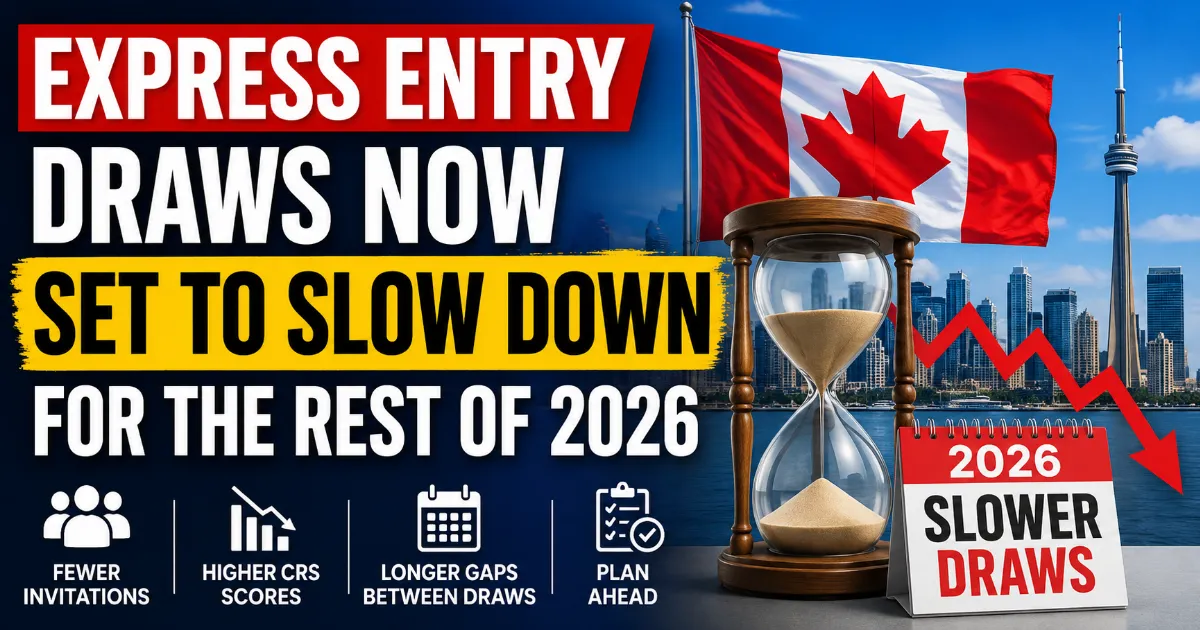
However, the latest Express Entry trends suggest that things are changing. Recent invitation rounds have become smaller, CRS scores are rising again, and long gaps between draws are becoming more common.
If you are planning to apply for Canadian permanent residence through Express Entry, this is a good time to understand what is happening and how it may affect your chances.
Express Entry Started 2026 With Record Invitation Numbers
The first half of 2026 was one of the busiest periods for Express Entry in recent years.
By the second week of July 2026, Immigration, Refugees and Citizenship Canada (IRCC) had already issued around 97,000 Invitations to Apply (ITAs).
For comparison:
| Year | Total Express Entry Invitations |
|---|---|
| 2024 | 98,903 |
| 2025 | Around 114,000 |
| 2026 (Up to July 11) | Around 97,100 |
This means IRCC has already reached almost the same number of invitations that were issued during the entire year of 2024, while several months are still left in 2026.
Because of this fast start, many immigration experts believe the invitation pace is likely to become slower during the remaining months of the year.
Invitation Numbers Have Already Started Falling
The slowdown is not just a prediction. It is already visible in recent Express Entry draws.
During the first three months of 2026, IRCC invited more than 18,000 candidates per month on average.
After that, the numbers became much smaller.
| Month | Approximate ITAs |
|---|---|
| January to March | 55,830 |
| April | 15,797 |
| May | 8,214 |
| June | 9,226 |
| July (First Week) | Around 8,000 |
The recent draw pattern shows that IRCC is issuing fewer invitations compared to the beginning of the year.
If this trend continues, total invitations for 2026 could finish much lower than many candidates originally expected.
Why Is Express Entry Slowing Down?
There are several reasons behind the slower pace.
Most Annual Targets Have Already Been Covered
Since IRCC has already invited a very large number of candidates during the first half of the year, there is less pressure to continue issuing massive draws every few weeks.
Canada’s Immigration Levels Plan also keeps permanent resident admissions at 380,000 annually through 2028. This limits how many additional invitations can realistically be issued.
Future Express Entry Changes Could Affect Draw Schedules
The Canadian government has announced plans to update the Express Entry system.
Although official implementation dates have not yet been confirmed, many observers expect technical changes sometime in late 2026 or early 2027.
If system updates are introduced, temporary pauses or changes in draw schedules may happen while the new rules are implemented.
Canadian Experience Class Draws Have Become Much Smaller
Canadian Experience Class (CEC) candidates received strong support during the beginning of 2026.
IRCC issued several large CEC rounds early in the year, allowing invitation numbers to quickly surpass the total CEC invitations issued during all of 2025.
However, recent draws tell a different story.
Large invitations of 8,000 candidates at the start of the year have now fallen to around 2,000 invitations in recent rounds.
As draw sizes became smaller, CRS cut off scores also increased.
Recent CEC CRS scores have remained close to the 515 to 520 range, making it more difficult for candidates with lower scores to receive invitations.
Higher CRS Scores May Continue
One reason CRS scores remain high is the growing number of candidates inside the Express Entry pool.
Thousands of new applicants continue to create profiles, improve language scores, or gain additional work experience every month.
When fewer invitations are issued while more candidates enter the pool, competition naturally becomes stronger.
Because of this, applicants with CRS scores below 515 should not depend only on regular CEC draws.
French Language Draws Still Look Strong
French language category based draws continue to be one of the strongest immigration pathways in 2026.
IRCC has already invited tens of thousands of French speaking candidates this year.
Canada also has long term francophone immigration targets outside Quebec, making French language draws an important part of the immigration system.
Although CRS scores for these draws have increased compared to earlier months, they still remain much lower than many CEC draws.
Candidates who can achieve strong French language test results may continue to have better opportunities under this category.
Some Express Entry Categories Have Seen No Activity
Several announced categories have not yet received invitation rounds during 2026.
These include:
- STEM occupations
- Education occupations
- Transport occupations
- Canadian Researchers
There is currently no official confirmation about when these categories may receive future draws.
Applicants who qualify under these occupations may wish to explore other immigration options instead of waiting only for category specific invitations.
Provincial Nominee Programs May Become More Important
As regular Express Entry draws become smaller, Provincial Nominee Programs (PNPs) may play an even bigger role.
Receiving a provincial nomination can significantly improve an applicant’s CRS score and increase the chances of receiving an Invitation to Apply.
Candidates should regularly monitor provincial immigration streams that match their education, work experience, and occupation.
What Applicants Can Do Right Now
Instead of waiting for CRS scores to fall, applicants should focus on improving their overall profile.
Some practical steps include:
- Improve IELTS or CELPIP language scores.
- Learn French if possible.
- Keep work experience records updated.
- Monitor Provincial Nominee Programs.
- Update your Express Entry profile whenever your qualifications improve.
- Check official IRCC announcements regularly.
Small improvements today could make a significant difference in future invitation rounds.
Common Mistakes Applicants Should Avoid
Many candidates lose valuable opportunities because they make simple mistakes.
Avoid these common issues:
- Waiting only for CRS scores to decrease.
- Ignoring Provincial Nominee Programs.
- Allowing Express Entry profiles to become outdated.
- Missing language improvement opportunities.
- Depending on unofficial immigration rumors instead of verified government updates.
What Could Happen During the Rest of 2026?
Based on current trends, applicants may expect:
- Smaller CEC invitation rounds.
- Higher CRS cut off scores.
- Continued French language draws.
- Selective healthcare and trades invitations.
- Ongoing Provincial Nominee Program draws.
- Possible schedule changes if Express Entry reforms move forward.
While invitations are expected to continue, the extremely large rounds seen earlier this year may not return soon.
FAQ
No. There is no official announcement that Express Entry will stop. Draws are expected to continue, although invitation sizes may change.
Smaller draw sizes and more candidates entering the Express Entry pool have increased competition, resulting in higher CRS cut off scores.
Yes. French language category based draws continue to offer one of the strongest pathways for many applicants who meet the required language level.
Waiting alone may not be the best strategy. Improving your language score, applying through a Provincial Nominee Program, or qualifying under another category can improve your chances.
There is currently no official confirmation from IRCC regarding future invitation rounds for these categories.
Fact Check
The information in this article is based on recent Express Entry draw results, publicly available IRCC updates, Canada’s Immigration Levels Plan, and official government announcements available at the time of writing. Future immigration policies, draw schedules, and CRS scores may change as new updates are released.
Disclaimer: This article is provided for general information only and should not be considered legal or immigration advice. Immigration policies, invitation numbers, and eligibility rules can change at any time. Applicants should always verify the latest information through the official IRCC website or consult a licensed Canadian immigration professional before making important decisions.