

One of Canada’s biggest challenges in the job market is in the trades industry. A recent study by Statistics Canada (StatsCan) shows that the national job market is under pressure due to many baby boomers (born between 1955 and 1965) retiring. As a result, Canada’s workforce participation rate has dropped to its lowest point in 20 years, standing at 65% in 2021, 2022, and 2023. To address this, both the federal and provincial governments are actively seeking skilled workers to strengthen the workforce in this sector. While Immigration, Refugees and Citizenship Canada (IRCC) is working to address these urgent shortages, Alberta has introduced financial incentives to attract skilled workers to the province. What is Alberta offering skilled trade workers who immigrate? In April 2024, the Government of Alberta launched the Alberta is Calling program. This program offers a one-time refundable tax credit of $5,000 to up to 2,000 skilled tradespeople who qualify. To be eligible, applicants must meet the following criteria: For more details and the full eligibility criteria, visit the Government of Alberta’s website. Regarding Alberta’s trades industry Alberta’s trades industry has faced a significant labor shortage for a long time, making trade careers some of the most in-demand jobs in the province. Currently, nine different trades are listed as high-demand occupations by the Government of Alberta. Here they are, in no specific order, along with their National Occupation Classification (NOC) 2021 codes: For those interested in immigrating to Canada and working in Alberta’s trades industry, the provincial government’s trades website offers valuable information, including: Job vacancies in Alberta As of May 2024, StatsCan data shows that Alberta has a large number of job vacancies, ranking third among Canadian provinces, after Ontario, Quebec, and British Columbia. Here are the job vacancies by province: This suggests that newcomers to Alberta, whether in the trades industry or other fields, may have better job opportunities compared to other provinces in Canada.

Here’s a guide for international students in Canada on how they can switch their Designated Learning Institution (DLI)
International students can switch to a different Designated Learning Institution (DLI) after arriving in Canada on a study permit. It’s completely normal for international students to change schools in Canada, but it’s important to do it the right way. If you don’t inform the IRCC, you might not meet the conditions of your study permit, which could cause problems when applying for a work permit after graduation or even lead to deportation. Quick Navigation When can international students change their DLI You can change your DLI while your study visa application is still being processed, after it’s approved but before you enter Canada, or even after you arrive in Canada and receive your study permit at the airport. You can switch your DLI before starting classes for your chosen intake or even after completing your first semester. International students typically have 150 days from the time they stop attending classes at their current college or university to enroll in a program at another DLI. How to change the DLI Whenever you decide to change your post-secondary institution, you must inform the IRCC. However, you don’t need to make any changes to your study permit conditions. Simply follow the steps outlined below: Step 1 First, obtain an offer letter from the new course or college/university in Canada. This is the initial step in the process. Since it might take some time for colleges or universities to issue an offer letter, it’s best to wait until you receive it before taking any further actions. Step 2 Log in to the GCKey account you used when you first applied for your study visa. If you applied through an agent or consultant and don’t have your own GCKey credentials, you can either: After logging into your GCKey account, under the ‘Transfer from DLI number’ section, click on ‘Designated Learning Institution Student Transfer‘ Step 3 Enter your current study permit application number and click the ‘Search for my application’ button. Your study permit number starts with the letter ‘S’ and is found in the upper right corner of your permit. If needed, you might also have to provide extra details about your original study permit application, as listed below: Step 4 Enter the new DLI number, your new Student ID number, and the start date of your new school from the acceptance letter you received in Step 1. Then click the ‘Submit Transfer’ button. After clicking ‘Submit Transfer,’ you’ll be asked to review the details you provided about the new DLI. Once you click ‘Submit Transfer,’ you’ll be prompted to check the details you entered about the new DLI. All done! Your transfer to the new DLI is now complete. Can I switch my DLI while in Canada? Yes, international students in Canada can change their DLI or program, but they must follow the correct steps to inform IRCC about the change. If you don’t do this, you could face problems, including possible deportation and difficulties applying for a work permit after graduation due to not meeting your study permit conditions.

IRCC Publishes Annual Express Entry Report
The newly released Express Entry Year-End report for 2023 reveals that more than twice as many Invitations to Apply (ITAs) were issued in Express Entry draws in 2023 compared to 2022. Immigration, Refugees and Citizenship Canada (IRCC) issued 110,266 ITAs across 42 Express Entry draws held between January 11 and December 21, 2023, marking a 136% increase from the 46,539 ITAs issued in 2022. In total, 488,571 profiles were submitted, with 343,875 (67%) deemed eligible, while 144,696 (33%) were not. Express Entry is a system that helps manage and speed up the processing of applications for people who want to immigrate to Canada through programs like the Federal Skilled Worker Program (FSWP), the Canadian Experience Class (CEC), and the Federal Skilled Trades Program (FSTP). It uses a points system called the Comprehensive Ranking System (CRS) to give each applicant a score out of 1200. The higher the score, the more likely an applicant is to receive an Invitation to Apply (ITA). In 2023, a new type of draw was introduced called category-based selection. These draws consider candidates from all Express Entry programs but focus on specific occupations or language skills. Who were the candidates that received ITAs? Programs The report shows that most ITAs (40,052) were given to candidates in the Canadian Experience Class (CEC). Next came the Provincial Nominee Program (PNP) with 26,445 ITAs, and the Federal Skilled Worker Program (FSWP) with 17,898 ITAs. Only eight ITAs were given to candidates in the Federal Skilled Trades Program (FSTP). However, IRCC follows a processing hierarchy when issuing ITAs. If a candidate is eligible for both the CEC and the FSTP, they are invited under the CEC, which might explain the low number of ITAs for FSTP. After the introduction of Category-Based Selection Rounds in June, IRCC issued 25,870 ITAs, making up 23% of all ITAs. By program, 12,073 went to CEC candidates, 13,790 to FSWP candidates, and 7 to FSTP candidates. CRS Scores Most CRS scores in the pool fell between 300 and 550, making up 93% of all candidates. After category-based selection was introduced, the average CRS score in all-program draws increased to above 500. Draw Type Minimum Score Maximum Score Score Range to Receive an ITA Generic (includes FSWP, CEC, and FSTP) 484 561 484 – 561 Provincial Nominee Program (PNP) 691 791 691 – 791 Federal Skilled Workers Program (FSWP) 489 (Only one draw occurred in 2023) 489 CBS Healthcare Occupations 431 476 431 – 476 CBS Science, Technology, Engineering, and Mathematics (STEM) Occupations 481 486 481 – 486 CBS French Proficiency 375 486 375-486 CBS Trades Occupations 388 425 388-425 CBS Transport Occupations 435 (Only one draw occurred in 2023) 435 CBS Agriculture Occupations 354 386 354-386 Gender The data reveals that most Express Entry applicants were men. Overall, 57% of ITAs were given to men, while 43% went to women. By program, more men received ITAs through the CEC (52%) and PNP (26%) than women. However, like in 2022, women were more likely to receive an ITA through the FSWP (33% compared to 22% for men). Occupation A candidate’s work experience plays a role in their eligibility for Express Entry, and some occupations are more in-demand or more likely to receive an ITA. In 2023, many ITAs went to candidates in computer, tech, and finance jobs. However, 48% of all ITAs went to candidates in occupations not specifically listed in the report. For the second year in a row, software engineers and designers were the most likely to receive an ITA (7,259), followed by software developers and programmers (5,183). Out of the 15 occupations listed in the report, 10 are classified as TEER 1 under the National Occupation Classification (NOC) system, which typically requires a university degree. Primary Occupation Training Education Experience and Responsibilities (TEER) Ranking ITAs Issued in 2023 NOC 21231; Software engineers and designers 1 7,259 (6.5%) NOC 21232; Software developers and programmers 1 5,183 (4.7%) NOC 62020; Food service supervisors 2 3,277 (2.9%) NOC 21222; Information systems specialists 1 2,951 (2.6%) NOC 13110; Administrative assistants 3 2,538 (2.3%) NOC 21223; Database analysts and data administrators 1 2,151 (1.9%) NOC 11202; Professional occupations in advertising, marketing and public relations 1 2,142 (1.9%) NOC 11100; Financial auditors and accountants 1 2,090 (1.8%) NOC 22221; User support technicians 2 1,844 (1.6%) NOC 20012; Computer and information systems managers 0 1,841 (1.6%) NOC 13100; Administrative officers 3 1,747 (1.5%) NOC 21211; Data scientists 1 1,654 (1.5%) NOC 21221; Business systems specialists 1 1,600 (1.4%) NOC 12200; Accounting technicians and bookkeepers 2 1,599 (1.4%) NOC 21230; Computer systems developers and programmers 1 1,475 (1.3%) Other 70,915 (64.3%) Total 110,266 (100%) Countries of Residence and Citizenship Similar to 2022, the majority of candidates who received ITAs in 2023 listed Canada as their country of residence, with 76,791 ITAs. India remained in second place with 7,394 ITAs. Notably, Cameroon moved into the third spot with 3,828 ITAs, narrowly surpassing Nigeria, which received 3,822 ITAs. Lebanon dropped out of the top ten, while Pakistan, which wasn’t in the top 10 in 2022, received 1,173 ITAs this year. Country of Residence ITAs Issued in 2023 Canada 76,791 (69.6%) India 7,394 (6.7%) Federal Republic of Cameroon 3,828 (3.4%) Nigeria 3,822 (3.4%) United States of America 2,526 (2.2%) Morocco 1,681 (1.5%) Algeria 1,349 (1.2%) Pakistan 1,173 (1.0%) United Kingdom and Overseas Territories 1,157 (1.0%) United Arab Emirates 1,051 (0.9%) Other 9,494 (8.6%) Total 110,266 (100%) It’s important to note that these numbers reflect the country of residence, not the country of citizenship. India is the leading source country for Express Entry ITA recipients based on citizenship, followed by Nigeria and China. Country of Citizenship ITAs Issued in 2023 India 52,106 (47.2%) Nigeria 7,263 (6.5%) People’s Republic of China 5,854 (5.3%) Federal Republic of Cameroon 4,335 (3.9%) Iran 2,693 (2.4%) Philippines 2,593 (2.3%) Pakistan 2,565 (2.3%) Morocco 2,049 (1.8%) Brazil 1,777 (1.6%) Algeria 1,592 (1.4%) Other 27,439 (24.8%) Total 110,266 (100%) Education As in previous years, the majority of ITAs were issued to

Even though immigration to Canada has slowed, it’s still on track to pass 500,000
After two months of increasing immigration to Canada, the number of new permanent residents slightly declined in June. The latest data from Immigration, Refugees and Citizenship Canada (IRCC) shows that 44,540 new permanent residents arrived in June, a 4.9% decrease from May. Even with this drop, Canada is still on pace to have a record year for immigration and may exceed its 2024 targets. A Year of Consistent Growth with a Mid-Year Drop The year started with a slow pace of immigration, with only 34,870 new permanent residents arriving in March. However, April and May experienced notable increases, with 42,595 and 46,835 newcomers, respectively. This upward trend fueled optimism that Canada might meet or even surpass its ambitious immigration targets for the year. Although the number of new permanent residents dropped to 44,540 in June, this decline doesn’t significantly impact the overall positive trend for the year. If the current pattern holds, Canada could welcome around 511,410 new permanent residents by the end of 2024. This would be an 8.4% increase over the 471,815 new permanent residents in 2023, which was already a record year for Canadian immigration. Additionally, the projected 511,410 new permanent residents would exceed the government’s target of 485,000 for 2024, as set in the 2024-2026 Immigration Levels Plan. This level of immigration would also surpass the goal of 500,000 new permanent residents set for both 2025 and 2026. However, it’s important to remember that monthly immigration numbers can fluctuate significantly due to various factors, including seasonal trends, global events, and policy changes. Ontario is the top choice for newcomers. Ontario, the most populated province in Canada, remains the top choice for new immigrants. In the first half of 2024, 106,500 new permanent residents settled in Ontario, making up more than 41.6% of all newcomers to the country during that time. Ontario’s appeal comes from its strong economy, wide range of job opportunities, and well-established immigration programs. The province’s ability to attract immigrants is bolstered by various programs like the Ontario Immigrant Nominee Program (OINP), the Canadian Experience Class (CEC), and the Federal Skilled Worker (FSW) program. These programs helped bring 56,155 new permanent residents to Ontario in the first half of 2024, making up about 52.7% of all newcomers to the province. Besides economic immigrants, Ontario also welcomed 25,610 new permanent residents through family sponsorships and 19,755 through Canada’s refugee and protected persons programs between January and June. Immigration by Province Across Canada Province Number of NewPermanent Residents Ontario 106500 British Columbia 34530 Alberta 34375 Quebec 13315 Manitoba 13420 Saskatchewan 13015 New Brunswick 8890 Nova Scotia 8330 Newfoundland and Labrador 3020 Prince Edward Island 2495 Yukon 535 Northwest Territories 230 Nunavut 25 Province or Territory Not Stated 20 Total 255,700 Provinces Details Although Ontario is the top destination, other provinces and territories also welcomed many new permanent residents in the first half of 2024. Temporary Immigration and What to Expect in the Future While permanent immigration is a major focus, temporary immigration to Canada has also increased, especially during the COVID-19 pandemic. Programs like the Temporary Foreign Worker Program (TFWP) and the International Mobility Program (IMP) have driven this growth. Immigration Minister Marc Miller has announced that temporary immigration will soon have its own immigration plan, which will be revealed in September. This plan will likely aim to balance temporary and permanent immigration, making sure Canada’s immigration system stays sustainable and meets the country’s economic needs. What to Expect for the Rest of 2024 As Canada enters the second half of 2024, it looks set to exceed its immigration targets for the year. However, factors like the new temporary immigration plan and possible changes in policies at the federal and provincial levels could affect the final numbers. Even with a slight drop in June, immigration continues to be a major factor in Canada’s population growth and economic success. With strong programs and ongoing interest from people looking for new opportunities, Canada is likely to remain one of the top destinations for immigrants. As the year goes on, everyone will be watching the monthly immigration numbers to see if Canada can keep up its pace and achieve another record year for new permanent residents. Canada’s commitment to welcoming immigrants through economic programs, family sponsorships, and refugee protection helps ensure its continued success in a globalized world.

New Alberta Immigration Expression of Interest (EOI) System Launching on September 30
New AAIP Update: The Alberta Advantage Immigration Program (AAIP) will implement a new Expression of Interest (EOI) system on September 30, 2024, to streamline its selection process. This update is intended to improve efficiency and better match the immigration process with Alberta’s labour market needs. Under the EOI system, candidates will express their interest in immigrating to Alberta through a points-based mechanism. Once an EOI is submitted, candidates will join a selection pool, akin to the Express Entry pool. At regular intervals, the AAIP will select the highest-ranking candidates from this pool who meet the province’s labour market demands and invite them to apply for immigration. Highlights of the New EOI System Continuous Intake: The new EOI system accepts and processes EOIs continuously, unlike the old system with fixed application dates and quotas. Candidates can express their interest at any time, without waiting for specific dates. Ranking and Selection: We evaluate and rank candidates based on their skills, work experience, and potential to meet the province’s economic needs. Higher-ranked candidates are more likely to receive invitations to apply. Labor Market Focus: We designed the selection process to closely align with labor market requirements, ensuring the province attracts individuals who can significantly contribute to its economy. Transition to the New System With the launch of the EOI system, we will discontinue the remaining monthly application acceptance dates for 2024. This change ensures a smooth transition to the new system, enabling us to continuously intake and process EOIs. Application Intake Summary Application Acceptance Opening Date Alberta Opportunity Stream Rural Renewal Stream Tourism and Hospitality Stream June 11, 2024 430 142 134 July 9, 2024 N/A 154 143 July 11, 2024 441 N/A N/A summary of application acceptance for various streams Effects on Prospective Immigrants The new EOI system aims to be more flexible and responsive, which could shorten waiting times for candidates and better match Alberta’s labor market needs. Here’s what to expect: Preparing for the New System If you’re looking to settle in Alberta, get ready for the new EOI system by: The introduction of the new EOI system on September 30, 2024, represents a major step forward for Alberta’s immigration program. This new system enables continuous intake and focuses on selecting candidates based on labor market needs, with the goal of attracting skilled individuals who can support the province’s economic development. Prospective immigrants should actively prepare by understanding and adapting to the new system, improving their profiles to boost their chances of receiving an invitation to apply. With this update, Alberta reaffirms its commitment to welcoming skilled immigrants and promoting a vibrant, thriving economy.
BC PNP Latest Draw: 149 Invitations Issued on August 7, 2024
In the latest BC PNP draw on August 7, over 144 invitations to apply (ITAs) for permanent residency were issued across general and targeted rounds. In the general draw, 59 invitations were extended to candidates who met the minimum score requirements—132 for most streams and 110 for the entry-level and semi-skilled stream. This represents a 2-point decrease in the cutoff score compared to the previous BC PNP general draw. Additionally, 32 invitations were issued to candidates with experience as early childhood educators’ assistants or instructors (NOC 42202). Another 24 invitations were extended to profiles with experience in 39 healthcare-related occupations. In a special category-based draw introduced in late 2023, 29 applicants with experience in 25 construction-related occupations were invited to apply for permanent residency in British Columbia. Full Details of Latest BC PNP Draw: August 7 Previous BC PNP Draw : 2024

Further measures to regulate temporary resident levels are coming soon : Miller
In a recent interview with Reuters, Minister of Immigration, Refugees and Citizenship Marc Miller discussed upcoming “suite of measures” aimed at further reducing the number of non-permanent residents in Canada, including those on study or work permits. Miller indicated that the new measures might involve changes to Post-Graduation Work Permits (PGWPs) and stricter enforcement. “The era of uncapped programs to come into this country is quickly coming to an end. This is a big shift….” said Miller in the interview. What changes to the PGWP are being planned? In June, Immigration, Refugees and Citizenship Canada (IRCC) distributed surveys to key stakeholders in post-secondary education, seeking feedback on potential changes to the Post-Graduation Work Permit (PGWP). According to the survey and the Deputy Minister Transition Binder 2024, the department is considering aligning the issuance of PGWPs with labor market needs. Specifically, they aim to manage “access to work permits for students entering occupations in shortage, while reducing access for graduates from other programs.” The survey also indicated that IRCC and Employment and Social Development Canada (ESDC) have collaborated to link educational programs (as detailed in the Classification of Instructional Programs (CIP)) with job titles (as categorized by the National Occupation Classification (NOC) system). For example, the survey uses the relevant NOCs for “carpenters” connected to “three programs of study: construction trades, carpentry, and woodworking/general.” A segment of a comprehensive approach Earlier this year, IRCC set its first-ever target for non-permanent resident (NPR) levels, including it in this year’s immigration levels plan. IRCC aims to reduce NPR numbers and stabilize their proportion in the Canadian population to five percent over the next three years. As of April, NPRs made up nearly seven percent of the total population. To support this goal, IRCC has already implemented a two-year cap on international students, limiting the number of new post-secondary students to 292,000 for this year. They will review this cap in 2025 and may adjust international student levels for that year. Additionally, Minister Miller plans to increase “domestic draws” for both federal and provincial permanent residence (PR) pathways. This strategy will reduce the number of temporary residents by prioritizing them for PR draws and avoiding the recruitment of new PRs from abroad, which could exacerbate housing and affordability issues. These measures come as Canadians intensify their scrutiny of immigration. “Immigration will be a top issue, if not the top issue, in the next election,” Miller said in the Reuters interview.

How to Gather the Right Documents for Your Study Permit Application
To apply for a study permit, you will need the following documents: Additionally, you might need: Proof of acceptance Letter of Acceptance Your school must provide you with a letter of acceptance (LOA). Include the original or electronic copy of this letter with your study permit application. Post-secondary Students Your school will be required to verify the validity of your letter of acceptance. If the school does not respond by the specified deadline, your application will be returned, and the processing fee will be refunded. Confirm with your school that they will validate your letter of acceptance before resubmitting your application. When uploading documents for your online application, ensure you attach your LOA only in the designated LOA-specific space. Attaching other documents in this space implies your consent to disclose these additional documents to your school. All other required documents should be attached in their corresponding spaces in your online application. Conditional Acceptance and Prerequisite Courses If you have been conditionally accepted and need to take prerequisite courses, such as English or French as a second language, you must complete these courses before starting your main study program. In this case, your study permit will be issued only for the duration of these courses plus one year. After being accepted into your main program, you will need to apply for a new study permit to extend your stay as a student. Exceptions If you are a family member of someone whose study permit or work permit application has been approved in writing before your arrival in Canada, you do not need a letter of acceptance. Provincial attestation letter or territorial attestation letter Most study permit applicants need to provide a Provincial Attestation Letter (PAL) or Territorial Attestation Letter (TAL). Unless you qualify for an exception, you must submit a PAL/TAL: Validity of PAL/TAL Your PAL/TAL only needs to be valid when we receive it with your application. Unless it has an expiry date, it remains valid until January 21, 2025. You can resubmit a study permit application with the same PAL/TAL if it is still valid. Who Doesn’t Need a PAL/TAL You are exempt from providing a Provincial Attestation Letter (PAL) or Territorial Attestation Letter (TAL) when applying for a study permit if any of the following apply: If you do not provide a PAL/TAL with your study permit application, you must provide proof that you meet one of the above exceptions. Proof of identity What to Include in Your Application When applying for your study permit, you and each family member accompanying you to Canada must include: Proof of financial support You must demonstrate that you can support yourself and any accompanying family members while in Canada. Accepted Proof of Funds You can provide evidence of your funds with at least one of the following: If your country has foreign exchange controls, you must prove that you will be allowed to export funds to cover all your expenses. Required Funds All Provinces/Territories Except Quebec Number of family members (including the applicant) Amount of funds required per year (not including tuition) 1 CAN$20,635 2 CAN$25,690 3 CAN$31,583 4 CAN$38,346 5 CAN$43,492 6 CAN$49,051 7 CAN$54,611 If more than 7 people, each additional family member CAN$5,559 Example If you and 2 family members want to come to a province or territory (other than Quebec) for a year, you’ll need $31,583 for living expenses. Quebec To study in Quebec, applicants must prove they meet the financial requirements outlined by the ministère de l’Immigration, de la Francisation et de l’Intégration. Other documents you may need Letter of Explanation This letter assists the visa officer in understanding your goals and motivations. It explains: You should include this letter if you decide to apply for a study permit, even if your program does not require one. Medical Exam You may need a medical exam if any of the following apply: Find out if you need a medical exam. Custodian Declaration (Minor Children) If the minor requires a custodian, you must include the Custodianship Declaration form (IMM 5646) with your application. This form has two pages that must be notarized (certified by a notary) and included with your study permit application. The custodian in Canada must sign the first page, and the parents or legal guardians of the minor child in the child’s home country must sign the second page. Other Supporting Documents Check the visa office instructions for your country or region for local requirements. If you are not currently in your home country, you may need to prove your immigration status in the country from which you are applying. If the government that issued your passport or travel document requires a re-entry permit, you must obtain one before applying for a Canadian visa. You may also need other documents.

Latest Manitoba MPNP Draw for 2024: New Rounds of Invitations on August 1
The most recent MPNP draw (Manitoba Provincial Nominee Program) of 2024, held on August 1, issued 203 permanent residency invitations under the Skilled Worker in Manitoba and Skilled Worker Overseas categories. Below are the complete details of the MPNP draw announced on August 1. Skilled Worker in Manitoba Occupation-specific selection:Profiles indicating current employment in Manitoba within the unit group and broad occupational category listed below. Number of Letters of Advice to Apply issued: 145National Occupational Classification (NOC) 2021 unit group considered in this draw: Broad occupational category considered in this draw: Skilled Worker Overseas Profiles that were directly invited by the MPNP through a Strategic Recruitment Initiative. Number of Letters of Advice to Apply issued: 58Ranking score of the lowest-ranked candidate invited: 724Out of the 203 Letters of Advice to Apply issued in this draw, 29 were given to candidates who had declared a valid Express Entry profile number and job seeker validation code. All MPNP draws 2024
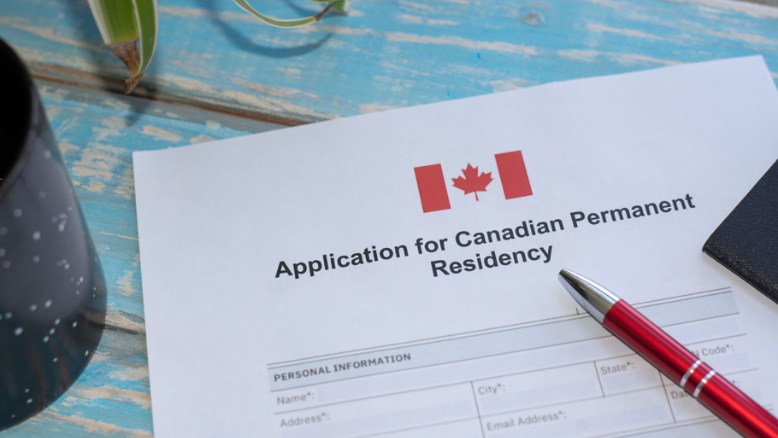
Permanent residence class proposed specifically for semi-skilled workers.
Immigration, Refugees and Citizenship Canada (IRCC) has proposed an amendment to the Immigration and Refugees Protection Act (IRPA) to create a new permanent economic immigration category for workers with experience and training at Training, Education, Experience and Responsibilities (TEER) levels 4 and 5. The department states that this pathway would “support the modernization of the economic immigration system by broadening the selection of permanent residents to include candidates with a wider variety of skills and experience.” According to IRCC, ministerial instructions providing more details about the new category and any pathways will be published this fall in the Canada Gazette. Canada’s TEER system Canada’s TEER system, introduced in 2022 as an update to the National Occupation Classification (NOC) system, categorizes occupations into “TEERs,” replacing the “Skill Levels” used in NOC 2016. TEERs 0-3 cover occupations that typically require post-secondary education or specific-length apprenticeships. TEERs 4 and 5 encompass jobs that require only a high school education, on-the-job training, or, for TEER 5, no formal education but some short-term work demonstration. Currently, TEERs 4 and 5 are generally ineligible for federal economic immigration programs like Express Entry, making it more difficult for newcomers in these occupations to become permanent residents, thus contributing to the number of temporary residents in Canada. Many newcomers to Canada start as temporary residents, and due to the current labor market, some end up in what Statistics Canada defines as “low-skilled” positions. A study released earlier this year by Statistics Canada noted a shift in the employment of temporary foreign workers (TFWs) and international students toward low-skilled industrial sectors, such as accommodation and food services and retail trade. The study indicated that these shifts could lead to a higher proportion of low-skilled TFWs among new immigrants. Consequently, TFWs and international students face low earnings and slow earnings growth, hindering their integration into Canada’s economy. Temporary resident levels The creation of new permanent resident pathways for TEER 4 and 5 newcomers exemplifies IRCC’s effort to reduce the number of temporary residents in Canada. Earlier this year, the department announced its goal to stabilize these numbers, which peaked at over 2 million in 2023. The department stated that these levels were unsustainable for Canada’s economy. Immigration Minister Marc Miller noted that Canada has recovered 138% of the jobs lost during the COVID-19 pandemic. Traditionally, temporary residents such as workers, students, and visitors have not been capped. However, this year, IRCC reversed this policy and introduced a hard cap on the number of international student applications it will process. Temporary resident levels will also be added to the 2025-2027 Immigration Levels Plan, expected by November 1. Another strategy to control the number of temporary residents is increasing the number of “domestic draws,” focusing on converting temporary residents already in Canada into permanent residents before bringing in more foreign nationals from abroad. There has recently been an increase in the number of Express Entry draws for candidates with provincial nominations and those in the Canadian Experience Class, who are typically already living and working in Canada as temporary residents. In July alone, IRCC issued 14,575 invitations to apply to these candidates. These measures help IRCC achieve its annual target for permanent residents and reduce the temporary resident population.