
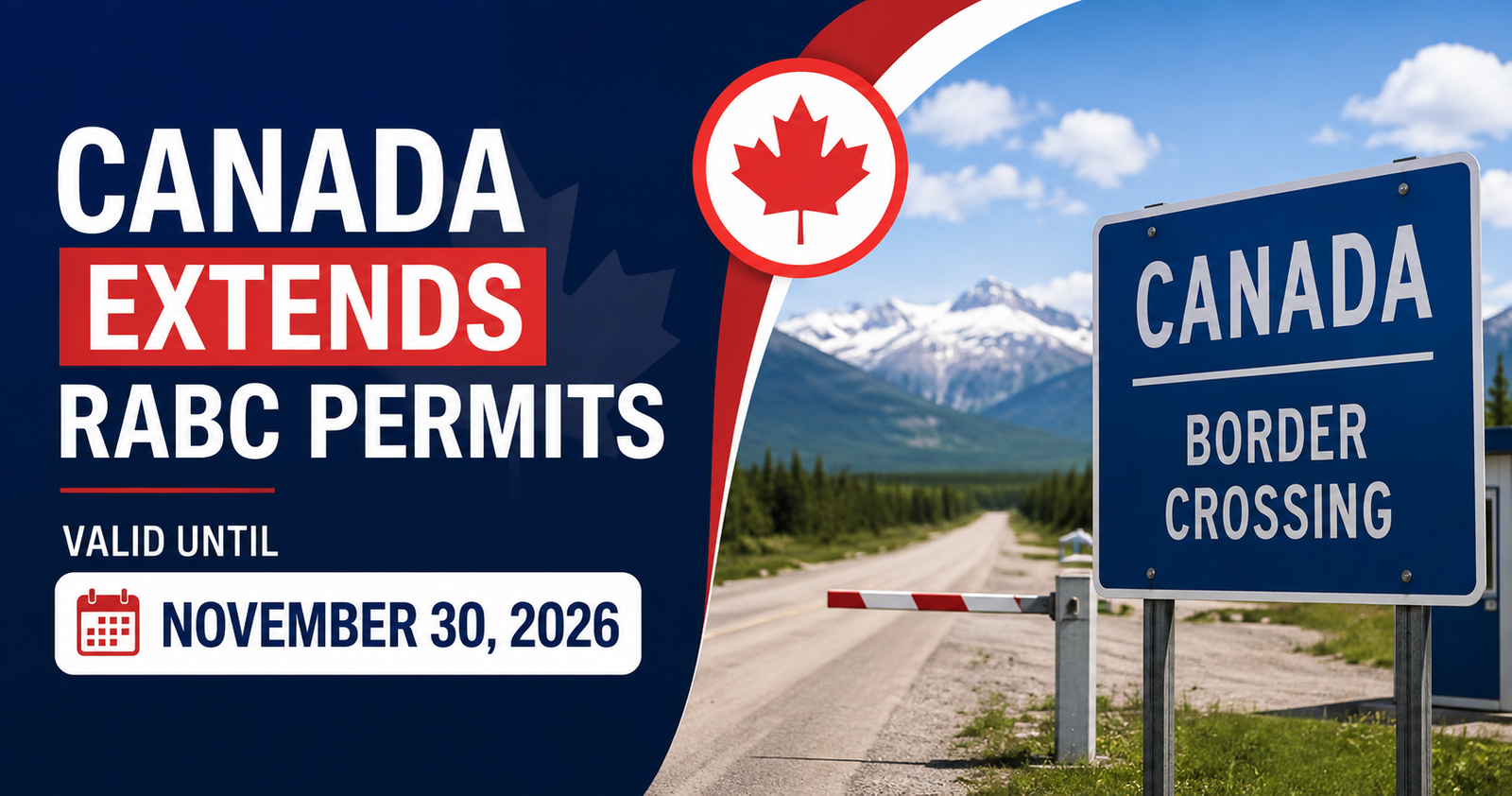
A permit that was originally set to expire in September will now give eligible travellers more time to use remote border crossings into Canada. The Canada Border Services Agency (CBSA) has extended active Remote Area Border Crossing (RABC) permits until November 30, 2026, before the program officially closes on December 1.
The change affects travellers who use designated remote areas along parts of the Canada-U.S. border. It also gives current permit holders additional time to adjust to a new telephone reporting system for entering Canada, which will replace the RABC system in affected areas.
What is changing with Canada’s Remote Area Border Crossing permits?
The biggest change is the new end date for the RABC Program.
The CBSA had previously announced that the program would close in September 2026, with existing permits remaining valid until September 13. The agency has now pushed that transition back. Active RABC permits will remain valid until 11:59 p.m. on November 30, 2026, and the RABC Program will close on December 1, 2026.
This is not a permanent renewal of the program. Rather, it is an extension designed to provide more time for the transition to a different reporting process.
| Key detail | Updated information |
|---|---|
| Program | Remote Area Border Crossing (RABC) Program |
| New permit validity date | November 30, 2026 |
| Program closure | December 1, 2026 |
| Previous permit end date | September 13, 2026 |
| Replacement process | Telephone reporting or reporting at a CBSA port of entry |
| Agency responsible | Canada Border Services Agency (CBSA) |
The latest change was announced by the CBSA on August 10, 2026.
Why is Canada ending the RABC Program?
The RABC system was created to make border reporting easier for people travelling through certain remote areas where a traditional staffed port of entry may not be nearby.
Under the existing system, pre-approved travellers with a valid RABC permit can enter Canada through designated remote border areas without physically presenting themselves at a regular port of entry. The program has been operating since 1990.
The CBSA is now moving away from that permit-based model and introducing telephone reporting in the areas previously covered by the program. According to the agency, the new process is intended to provide a more consistent approach to border reporting while supporting border security.
For travellers, the practical difference is significant: having an RABC permit will no longer be enough once the program ends. People entering Canada through the affected remote areas will have to report their arrival through an approved telephone reporting location or travel to a CBSA port of entry.
Which areas will be affected?
The new reporting system will apply to remote areas that were previously covered by the RABC Program.
The CBSA has identified the following areas:
- Northwest Angle Area
- Pigeon River through to and including Lake of the Woods
- Canadian shore of Lake Superior
- Sault Ste. Marie upper lock system
- Cockburn Island
From December 1, travellers entering Canada through these remote areas will need to report to the CBSA using a designated telephone reporting site or at a port of entry.
The exact locations of the new telephone reporting sites have not all been finalized yet. The CBSA says the locations will be determined in the coming months in consultation with Indigenous communities, local businesses and law enforcement partners.
That point is worth watching if you regularly use one of these crossings. The program’s closure date is now clear, but travellers should not assume that the reporting location they will need to use is already finalized everywhere.
How will telephone reporting work?
The replacement process is intended to allow travellers to report their entry without having to travel to a conventional port of entry every time.
Travellers using the telephone reporting option will need to provide identifying information, explain their travel details and answer questions from the CBSA. Depending on the circumstances, the agency may still require an in-person examination or screening.
The CBSA says telephone reporting is already used in other parts of Canada for certain types of travel, including general aviation and private boats. The agency says expanding this approach will create a more consistent reporting process for remote border crossings.
In practical terms, travellers should think of the change as a move from “permit-based remote entry” to “report-your-entry remote travel.” The ability to use a remote route does not mean the border reporting requirement disappears.
Who currently uses RABC permits?
The program has historically been used by a relatively small but regular group of travellers.
According to the CBSA, there have been approximately 11,000 RABC members each year, and about 90% of them are American.
The program is available to certain citizens and permanent residents of Canada and the United States, as well as registered Indians, subject to the program’s eligibility requirements. U.S. citizens and permanent residents must also meet Canada’s visitor requirements under the Immigration and Refugee Protection Act.
This means the latest announcement will primarily affect people who regularly travel across remote parts of the Canada-U.S. border, rather than the average visitor arriving through a major airport or conventional land border crossing.
What happens to current RABC permit holders?
If you currently hold an active RABC permit, the extension gives you additional time to use it.
Your active permit will remain valid until 11:59 p.m. on November 30, 2026. From December 1 onward, the RABC permit system will no longer be the way travellers report their entry through the affected remote areas.
One detail that current permit holders should not overlook is that the extension applies to active permits. Travellers should not assume that an already expired permit becomes valid again simply because the overall program has been extended. The latest reporting also confirms that expired permits are not eligible for the extension.
The CBSA is also no longer accepting new RABC permit applications as the program approaches its closure.
What should current travellers do?
If you have an active RABC permit and expect to use one of the affected remote crossings after November, it would be sensible to prepare for the new reporting process rather than relying on the permit beyond its final date.
A practical approach is:
- Check that your RABC permit is still active. The extension is for active permits, not expired ones.
- Note the final validity date. Current permits remain valid only until 11:59 p.m. on November 30, 2026.
- Identify which remote crossing you normally use. The replacement arrangements may differ depending on the location.
- Watch for CBSA updates about telephone reporting sites. The agency is still determining their locations.
- Follow the new reporting procedure after December 1. Do not assume that the old RABC permit allows you to skip reporting.
This is one of those border changes where the date matters. A traveller who is used to crossing with an RABC permit should not treat the November extension as an indication that the program itself has been saved or permanently renewed.
What does this mean for travellers entering Canada?
For most travellers entering Canada through regular airports, highways or established ports of entry, this change will have little or no direct impact.
The people who need to pay attention are those who use remote routes covered by the RABC Program. After December 1, they will have to follow the new CBSA reporting arrangements instead of relying on their RABC permit.
Travellers should also remember that remote entry does not remove Canada’s normal border requirements. Goods entering Canada must still be declared, and travellers remain subject to CBSA requirements. Under the RABC rules, permit holders were expected to stay within designated remote areas, present their permits if stopped for verification and declare goods being brought into Canada.
The safest approach is therefore to treat the new telephone system as a change in how you report your arrival, not as a relaxation of Canada’s border rules.
What happens if you do not report your entry?
Border reporting remains a legal requirement.
The CBSA warns that failing to report an entry can result in enforcement action. Depending on the circumstances, consequences can include monetary penalties, seizure of goods or vehicles, and possible criminal charges under the Customs Act.
This is particularly important for travellers who have used the RABC system for years and may be accustomed to entering through a remote location without visiting a traditional border office.
Once the program ends, travellers should make sure they understand the new reporting procedure before making a trip. The fact that a crossing is remote does not mean that the entry can go unreported.
Why the November extension matters
The extension gives existing RABC users roughly another two and a half months under the current system compared with the previously announced September deadline.
That additional time may be useful for travellers, local businesses and communities that depend on remote border access. It also gives the CBSA more time to establish the new telephone reporting locations and work with local stakeholders before the existing permit system disappears.
The agency says the transition is intended to strengthen border integrity while creating a consistent reporting process. It also noted that telephone reporting will more closely align Canada’s approach with how travellers report to U.S. Customs and Border Protection in remote areas.
For regular RABC users, the key takeaway is simple: the program is ending, but the deadline has moved.
Frequently Asked Questions
Are RABC permits still valid in 2026?
Yes. Active RABC permits have been extended and will remain valid until 11:59 p.m. on November 30, 2026. The program will close on December 1, 2026.
Can I apply for a new RABC permit now?
No. With the program approaching its closure, the CBSA is no longer accepting new RABC permit applications.
What happens after the RABC Program closes?
From December 1, 2026, travellers entering Canada through the affected remote border areas will need to report their entry through a designated telephone reporting site or at a CBSA port of entry.
Does the extension apply to an expired RABC permit?
No. The extension applies to active permits. An expired RABC permit does not become valid again because the program’s closure date has been extended.
Who will be most affected by the RABC Program closure?
The change will mainly affect people who regularly use remote Canada-U.S. border routes covered by the RABC Program. The CBSA estimates that around 11,000 people have historically been RABC members each year, with approximately 90% being American.
The Bottom Line
Canada has given current RABC permit holders more time, but it has not reversed the decision to end the Remote Area Border Crossing Program.
Active permits will now remain valid through November 30, 2026, while the program will officially close on December 1. The CBSA plans to replace the permit system with telephone reporting at designated sites, alongside the option of reporting at a regular port of entry.
If you regularly use one of the affected remote crossings, the most useful step right now is to keep track of the CBSA’s updates on the new telephone reporting locations. The transition is still being finalized, and knowing where and how to report before your next trip will be much more important than simply having an old RABC permit in hand.
Fact Check: This article is based on the Canada Border Services Agency announcement, “UPDATE: Permits extended until November 30, 2026,” published August 10, 2026, along with the latest information on the RABC Program.
Disclaimer: This article is provided for general informational purposes only and does not constitute legal, immigration or border-admissibility advice. Travellers should verify the latest requirements directly with the Canada Border Services Agency before travelling.