
Many people have forgotten about an old tax refund or government payment at some point. It might have been sent to a previous address, mixed with old paperwork, or simply left uncashed after a busy time. Most people never think about checking again.
The Canada Revenue Agency has now shared new information that shows this happens more often than many people expect. As of July 2026, more than $1.8 billion in government cheques is still waiting to be claimed by Canadians. If you have received CRA payments in the past, it may be worth taking a few minutes to see if some of this money belongs to you.
CRA Reports More Than 10.8 Million Unclaimed Government Cheques
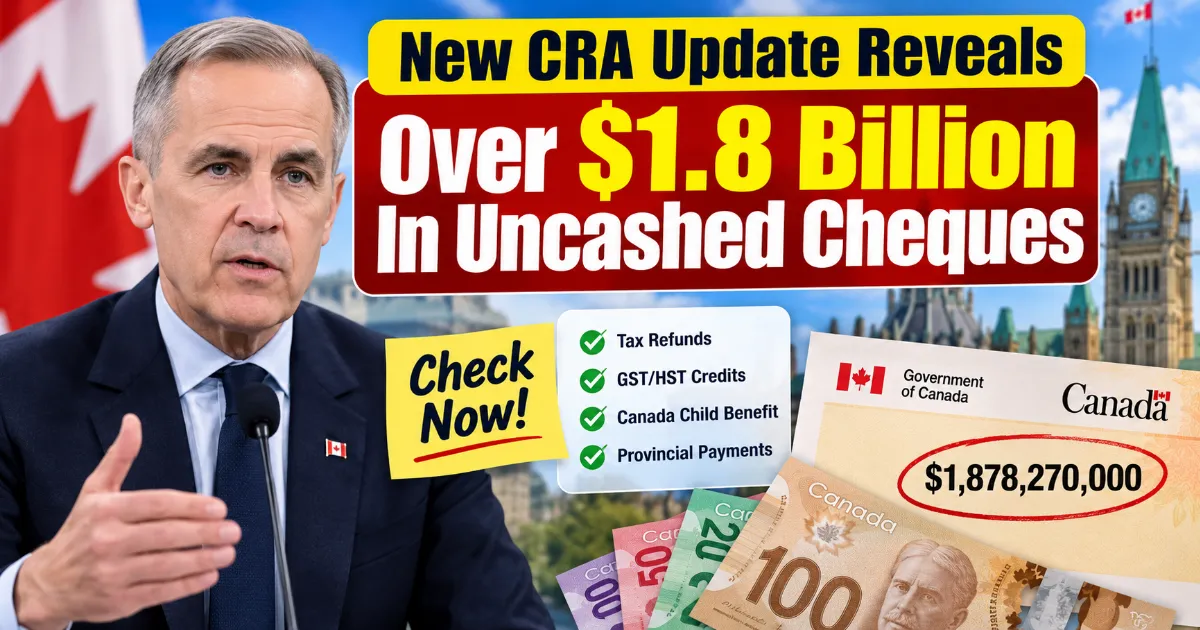
The latest update from the Canada Revenue Agency shows that there are 10,833,150 uncashed government cheques currently on record. Together, these payments are worth about $1.878 billion.
These are not new government benefits or special bonus payments. They are payments that were already approved and issued in previous years but were never deposited by the people who received them.
Many of these cheques were sent for:
- Income tax refunds
- GST and HST credit payments
- Canada Child Benefit payments
- Provincial benefit programs
- Other CRA administered payments
Some of these cheques have remained unclaimed for many years. According to the CRA, a few even date back to 1998.
Based on the latest figures, the average value of each uncashed cheque is around $173, although the actual amount depends on the payment issued to each individual.
CRA Has Already Returned Billions To Canadians
The CRA introduced its online uncashed cheque search feature through CRA My Account in February 2020. Since then, millions of Canadians have successfully found and claimed money that they did not know was still waiting for them.
According to the latest figures, more than 5.6 million previously uncashed cheques have already been claimed. The total value of those payments is more than $2 billion.
This shows that many people have recovered tax refunds and benefit payments simply by checking their CRA account.
Why So Many CRA Cheques Are Still Unclaimed
Most uncashed government cheques are not the result of fraud or complicated tax issues. In many cases, simple everyday situations are responsible.
Some common reasons include:
- The person moved to a new address before the cheque arrived.
- The payment was misplaced with old mail.
- Someone forgot to deposit a small refund cheque.
- The cheque arrived during travel or a major life event.
- Family members were unaware that a payment had been issued after someone passed away.
- People changed provinces and lost track of older government payments.
These situations are more common than many people realize. Since the CRA issues millions of payments every year, even a small number of missed cheques can grow into a very large total over time.
Unclaimed CRA Payments Continue To Increase
The amount of unclaimed government money has continued to grow over the past few years.
Earlier CRA figures showed that in May 2022, there were about 8.9 million uncashed cheques worth roughly $1.4 billion.
By July 2026, that number had increased to:
| Date | Uncashed Cheques | Total Value |
|---|---|---|
| May 2022 | About 8.9 million | About $1.4 billion |
| July 2026 | 10,833,150 | $1,878,270,000 |
Even though millions of people have already claimed their old payments, new government cheques continue to be issued every year. Some of them are never deposited, causing the total amount of unclaimed money to keep increasing.
For this reason, the CRA continues to encourage Canadians to use direct deposit whenever possible.
What Types Of CRA Payments Can Go Unclaimed
Many people think these payments are only income tax refunds. That is not the case.
The CRA says uncashed payments can come from many different government programs, including:
- Personal income tax refunds
- GST and HST credit payments
- Canada Child Benefit
- Canada Workers Benefit
- Ontario Trillium Benefit
- Provincial child benefit programs
- Climate action payments
- Provincial tax credits
- Other CRA administered benefit payments
Some business related payments can also remain uncashed. These may include corporate tax refunds, GST and HST business credits, or payroll related refunds. These business payments follow a different process than personal payments.
For anyone who has received CRA payments over the past several years, checking for an unclaimed cheque could be worthwhile, especially if they have changed addresses or bank information in the past.
Understanding CRA Payment Codes
If you come across an old CRA cheque or notice a payment code in your account, you may wonder what it means. The CRA uses short codes to identify the type of payment that was issued.
Knowing these codes can help you understand why the payment was sent before requesting a replacement.
Some common CRA payment codes include:
| Payment Type | CRA Code |
|---|---|
| Income Tax Refund | T1 |
| Income Tax Reassessment Refund | T1 Reassessment |
| GST and HST Credit | GST/HST Credit |
| Canada Child Benefit | CCB |
| Canada Workers Benefit | CWB |
| Ontario Trillium Benefit | OTB |
| Ontario Child Benefit | OCB |
| Alberta Child Benefit | ACB |
| Saskatchewan Low Income Tax Credit | SLITC |
| Nova Scotia Affordable Living Tax Credit | NSALTC |
The CRA manages many other federal and provincial payments as well. If you are unsure about a payment code, you can review the details inside your CRA My Account or contact the agency for clarification.
How To Check If You Have An Unclaimed CRA Cheque
The easiest way to check is by signing in to CRA My Account.
The online service allows eligible individuals to see whether they have any government cheques that have not been cashed.
The process usually takes only a few minutes.
Follow these steps:
Step 1
Sign in to your CRA My Account using your preferred login method.
You can access your account with:
- CRA user ID and password
- Sign In Partner through your online banking
- A supported provincial digital identity, where available
Step 2
After signing in, open your account overview.
Look for the Uncashed Cheques section. If there is an eligible payment waiting for you, it will appear there.
Step 3
Review the payment details shown in your account.
You can see information about older personal government cheques that meet the CRA requirements for display.
What You Can And Cannot See Online
The online lookup tool is useful, but it does have some limits.
You can usually see:
- Personal income tax refund cheques
- Benefit payments
- Credit payments that qualify for online viewing
Some payments are not available through the online service.
These may include:
- Business tax refunds
- Trust related payments
- Recently issued cheques
- Certain other special payment types
If your payment is not listed online, it does not always mean that no payment exists. In some situations, you may need to contact the CRA directly.
Do Not Have A CRA My Account Yet
If you have never registered before, creating an account is straightforward.
You will generally need:
- Your Social Insurance Number
- Your date of birth
- Information from a recent tax return
Once your account is ready, you can also use it to:
- Check your tax return status
- View benefit payment information
- Update personal details
- Manage direct deposit
- Receive CRA notices online
Having an active CRA My Account makes it much easier to manage your tax information throughout the year.
When You Need To Contact The CRA
Some situations cannot be handled through the online portal.
For example, you may need to contact the CRA if:
- Your payment is related to a business account.
- The cheque belongs to a trust.
- The payment does not appear in your online account.
- You need help understanding your payment history.
Before calling, keep your personal information ready so the CRA can verify your identity.
How To Request A Replacement Cheque
Finding an unclaimed payment is only the first step.
If the original cheque has been lost, destroyed, or cannot be deposited, you can request a replacement from the CRA.
The general process includes:
Step 1
Confirm that the payment appears in your CRA My Account or has been verified by the CRA.
Step 2
Download or request the personalized replacement request form provided by the CRA.
This document is prepared specifically for your payment. It is not a standard form that everyone can download.
Step 3
Print the form and complete all required details carefully.
Remember to sign it using your handwritten signature, as required by the CRA.
Step 4
Submit the completed form using the approved CRA document submission process or mail it to the appropriate CRA office.
After your request is reviewed, the CRA will issue a replacement payment if everything is confirmed.
Direct Deposit Can Make Future Payments Easier
If you are not already using direct deposit, this may be a good time to set it up.
With direct deposit:
- Tax refunds arrive faster.
- Benefit payments go directly into your bank account.
- There is less risk of losing a paper cheque.
- Moving to a new address is less likely to delay your payment.
Many Canadians now receive their CRA payments this way because it is quicker and more secure than paper cheques.
Special Situations You Should Know About
Not every unclaimed CRA cheque follows the same process. Some cases require extra steps before a replacement payment can be issued.
If The Cheque Belongs To Someone Who Has Passed Away
If the payment belongs to a deceased person, the legal representative or executor handling the estate can contact the CRA and request the replacement process.
The payment is normally issued according to the estate rules after the CRA completes the required verification.
If The Payment Was Issued To A Closed Business
Businesses that have been closed or dissolved cannot always use the online service.
In these situations, the business representative should contact the CRA directly to discuss the available options for receiving any outstanding payment.
If You Still Have An Old Or Damaged Cheque
Many people believe government cheques expire after a few months. That is not true for Government of Canada cheques.
Even an old cheque that was issued years ago can still be valid.
However, if the cheque is damaged, torn, or cannot be accepted by your financial institution, you should contact the CRA to request a replacement instead of trying to use the damaged cheque.
What To Do If Your CRA Cheque Is Lost Or Stolen
If you think your cheque has been lost or stolen, do not ignore the situation.
Report it to the CRA as soon as possible.
The agency may ask you to complete additional documents before a replacement payment can be issued.
This process helps protect taxpayers and reduces the risk of fraud.
If someone has already cashed the cheque without permission, the CRA may begin a review before deciding on the next steps.
Why This Update Matters In July 2026
The latest CRA update comes at a time when many Canadians are already checking their tax and benefit information.
Several government benefit programs are being updated during 2026, and many people are reviewing their CRA accounts to confirm upcoming payments.
Checking for an old unclaimed cheque while reviewing your account only takes a few minutes and could help you recover money that has been sitting unclaimed for years.
If your banking details, mailing address, or personal information has changed recently, it is also a good idea to make sure everything is updated with the CRA.
Simple Tips To Avoid Missing Future CRA Payments
If you have received government payments before, these habits can help prevent future problems.
- Keep your mailing address updated with the CRA.
- Register for direct deposit.
- Check your CRA My Account regularly.
- File your income tax return on time each year.
- Open CRA letters instead of setting them aside.
- Review your benefit payment history every few months.
These simple steps can make it much easier to receive future payments without unnecessary delays.
Common Mistakes To Avoid
Many people unknowingly delay receiving their money because of small mistakes.
Avoid these common issues:
- Ignoring letters from the CRA.
- Forgetting to update your address after moving.
- Waiting too long before reporting a lost cheque.
- Assuming an old government cheque is no longer valid.
- Throwing away old financial documents without checking them.
Taking a few minutes to review your CRA account today may save you time later.
FAQ
No. Government of Canada cheques do not expire. Even older cheques may still be valid, although damaged or lost cheques usually require a replacement request.
Based on the CRA’s July 2026 figures, the average amount is about $173 per cheque. The actual payment may be higher or lower depending on the program.
Only authorized representatives can access another person’s CRA information after receiving proper authorization from the CRA.
If you have an outstanding balance, the CRA may apply some or all of the replacement payment toward your debt before sending any remaining amount.
Yes. The unclaimed cheque lookup feature is an official service available through CRA My Account.
Be careful of emails, phone calls, or text messages asking you to pay a fee to receive your money. The CRA does not charge a fee for claiming your own payment.
Final Thoughts
Finding out that an old government payment is still waiting for you can be a pleasant surprise. Many Canadians are unaware that paper cheques issued years ago may still remain unclaimed.
Checking your CRA My Account only takes a few minutes, and if an eligible payment is available, you can begin the replacement process without paying any fee. Keeping your account information updated and using direct deposit can also help prevent similar issues in the future.
Fact Check: The information in this article is based on publicly available updates released by the Canada Revenue Agency regarding unclaimed government cheques as of July 2026. Payment procedures, eligibility requirements, and processing timelines may change. Readers should always verify the latest information through official CRA resources before taking any action.
Disclaimer: This article is published for general news and educational purposes only. It should not be considered tax, legal, or financial advice. Individual situations may be different. For guidance related to your personal tax account or government payments, contact the Canada Revenue Agency or speak with a qualified tax professional.