
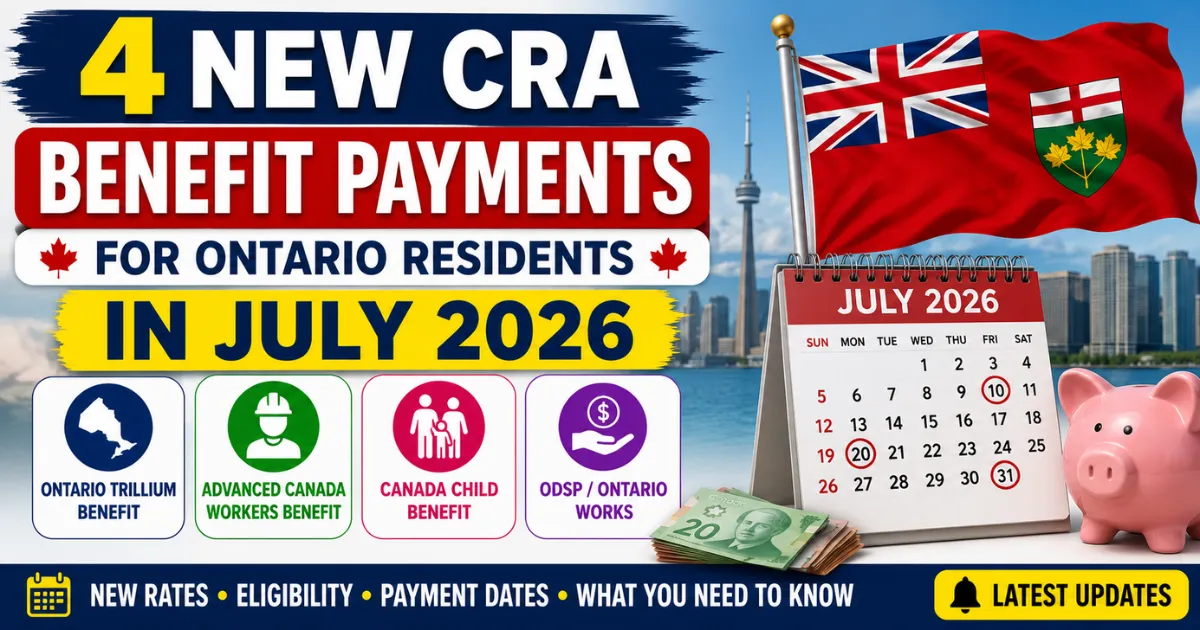
July 2026 Brings New CRA Benefit Rates for Many Ontario Families
If you receive government benefits every month, July is one of the most important months of the year. I always make it a habit to check my payment details in July because this is when many CRA benefits are updated. Even a small change in your yearly income can affect how much you receive.
For the July 2026 to June 2027 benefit year, the Canada Revenue Agency has started using information from 2025 income tax returns. Some benefit amounts have also increased because of annual inflation adjustments. As a result, many Ontario residents may notice that their July payment is different from the amount they received in June.
In this guide, you will learn about the first major benefit payments arriving in July, who may qualify, the expected payment dates, and a few simple steps that can help you avoid payment problems.
Ontario Trillium Benefit Starts the New Benefit Year
The first Ontario Trillium Benefit payment for the new benefit year is expected on July 10, 2026.
This benefit helps eligible Ontario residents with some everyday living costs. Instead of applying for several separate provincial credits, eligible taxpayers may receive them together through one monthly payment.
The Ontario Trillium Benefit may include support from:
- Ontario Energy and Property Tax Credit
- Northern Ontario Energy Credit
- Ontario Sales Tax Credit
Because the new benefit year begins in July, payment amounts are now based on your 2025 income tax return. If your family income changed during 2025, your monthly benefit may also change.
Higher Benefit Amounts for the New Year
Several maximum benefit amounts have increased for the new payment year after annual inflation adjustments.
Some residents may receive a slightly higher monthly payment than last year, while others could receive less if their household income increased.
The exact amount depends on factors such as:
- Your family income
- Your age
- Where you live in Ontario
- Property tax or rent information
- Family size
There is no single payment amount that applies to everyone because each household is assessed individually.
Who Can Receive the Ontario Trillium Benefit?
Many Ontario residents do not realize they may already qualify for this benefit.
In general, you may be eligible if you:
- Lived in Ontario at the end of the tax year.
- Filed your 2025 income tax return.
- Meet the rules for one or more of the provincial tax credits included in the program.
If you qualify, the CRA usually calculates your payment automatically after your tax return has been processed.
Why Your July Payment May Be Different
A higher payment is not guaranteed simply because benefit rates have increased.
For example, if your household earned more income during 2025 than in the previous year, your monthly payment may become smaller.
On the other hand, families whose income decreased may receive a larger payment than before.
That is why many people notice a different payment amount every July.
Advanced Canada Workers Benefit Payments Also Begin in July
Another important payment expected on July 10, 2026 is the Advanced Canada Workers Benefit.
This program gives eligible lower income workers part of their yearly Canada Workers Benefit before tax season. Instead of waiting until they file their next tax return, qualifying workers can receive advance payments during the year.
For many households, this extra money helps cover regular expenses such as groceries, fuel, rent, and utility bills.
Who May Qualify?
Eligibility generally depends on several factors, including:
- Being a Canadian resident for tax purposes.
- Meeting the minimum age requirement or qualifying through your family situation.
- Having employment or self employment income.
- Remaining within the income limits set for the benefit.
The CRA reviews your tax return to determine eligibility, so most people do not need to submit a separate application.
Expected Payment Schedule
The first advance payment for the new cycle is expected in July 2026. Additional payments are generally issued later in the benefit year according to the CRA payment schedule.
If you are already eligible for the Canada Workers Benefit, checking your CRA My Account after your tax return has been assessed is one of the easiest ways to confirm your upcoming payment details.
Simple Tips Before July Payments Arrive
Before the payment dates, it is worth taking a few minutes to review your information.
- Make sure your 2025 tax return has been filed.
- Check that your direct deposit details are correct.
- Update your mailing address if you have moved.
- Report any changes to your marital or family status if required.
- Review your CRA My Account for updated benefit notices.
Doing these simple checks can help reduce the chances of delayed payments and make it easier to understand any changes in your July deposits.
Canada Child Benefit Gets Updated for the New Benefit Year
Many parents look forward to the Canada Child Benefit payment every month because it helps with daily family expenses. From food and school supplies to clothing and childcare, this payment can make a real difference.
The first Canada Child Benefit payment under the new July 2026 to June 2027 benefit year is expected on July 20, 2026.
Like other income based CRA benefits, the payment is now calculated using your 2025 adjusted family net income. This means your July amount may not match what you received in June.
Why Your CCB Amount Could Change
Every family has a different financial situation, so there is no fixed payment for everyone.
Your monthly amount depends on several factors, including:
- Your adjusted family net income
- Number of eligible children
- Age of each child
- Whether your child qualifies for disability related support
- Changes in your family situation during the year
Some families may receive a higher payment because of updated benefit rates. Others may notice a lower amount if their household income increased during 2025.
If your income went down, your benefit could increase after the CRA recalculates your eligibility.
Who Can Receive the Canada Child Benefit?
You may qualify for the Canada Child Benefit if you meet the CRA eligibility rules.
Generally, you should:
- Live with the child.
- Be mainly responsible for the child’s care and upbringing.
- Be a Canadian resident for tax purposes.
- Meet the citizenship, permanent resident, protected person, or eligible temporary resident requirements.
One important point that many families forget is filing taxes every year.
Even if one spouse had little or no income, both partners should file their income tax returns because the CRA uses this information to calculate benefit payments.
What If Your Payment Does Not Arrive?
Most payments are deposited directly into your bank account on the scheduled date.
If you do not receive your payment immediately, do not panic.
Sometimes banks take additional time to process deposits.
Before contacting the CRA, check:
- Your direct deposit information.
- Your CRA My Account.
- Your latest benefit notice.
- Your bank account for any pending deposits.
If the payment is still missing after the recommended waiting period, you can then contact the CRA for further assistance.
Ontario Social Assistance Payments Continue at Updated Rates
Some Ontario residents receive financial support through provincial programs instead of CRA benefits.
Two of the most common programs are:
- Ontario Disability Support Program (ODSP)
- Ontario Works (OW)
These programs are managed by the Ontario government rather than the Canada Revenue Agency.
The next scheduled payment for many recipients is expected near the end of July 2026.
Why ODSP Payments May Be Different
Ontario has announced updated payment rates for the new benefit year.
Because of these adjustments, eligible recipients may notice slightly higher monthly support compared with previous payments.
The exact amount depends on personal circumstances, including:
- Family size
- Living arrangements
- Shelter costs
- Other approved benefits
Each person’s payment is calculated individually, so the deposited amount can vary from one household to another.
Federal and Provincial Benefits Can Work Together
Many people believe receiving one government benefit automatically reduces another.
That is not always the case.
Depending on your situation, you may qualify for both federal and provincial programs at the same time.
If you receive ODSP and also qualify for certain federal disability related benefits, it is important to review the latest provincial rules because some federal payments may not reduce your provincial assistance.
If you are unsure how different programs affect each other, checking with your local office is the safest option.
July 2026 Benefit Payment Calendar
Several important government payments are expected during July.
| Expected Date | Benefit |
|---|---|
| July 10, 2026 | Ontario Trillium Benefit |
| July 10, 2026 | Advanced Canada Workers Benefit |
| July 20, 2026 | Canada Child Benefit |
| July 31, 2026 | Ontario Disability Support Program and Ontario Works |
Payment dates may occasionally change if they fall on weekends, public holidays, or because of banking processing times.
Why July Payments Often Look Different
Every July marks the beginning of a new benefit year for several major CRA programs.
This is one of the biggest reasons people notice changes in their deposits.
The CRA reviews your latest tax return before calculating many income based benefits.
As a result:
- A higher income may reduce your payment.
- A lower income may increase your payment.
- Family changes can also affect your eligibility.
- Annual inflation adjustments may increase maximum benefit amounts.
Many people compare July with June and become worried when the numbers do not match.
In most cases, the difference simply reflects the CRA’s annual recalculation process rather than a payment error.
Check Your Information Before Contacting the CRA
If you notice a different payment amount, it is a good idea to review your account before making a phone call.
Take a few minutes to:
- Read your latest benefit notice.
- Confirm your 2025 tax return has been processed.
- Review your household information.
- Check your banking details.
- Make sure your mailing address is up to date.
These simple checks often explain why a payment has changed and can save you time if you need to contact the CRA later.
What To Do If Your Benefit Payment Is Missing
Waiting for a government payment can be stressful, especially if you depend on it for monthly expenses. Before assuming there is a problem, take a few simple steps.
First, check your bank account and make sure the payment has not been processed later in the day. Sometimes banks take a little longer to update deposits.
Next, sign in to your CRA My Account and review your latest benefit information. If you receive Ontario social assistance, you can also check your MyBenefits account for updates.
If everything looks correct but the payment is still missing after the recommended waiting period, contact the department that manages your benefit. Having your personal information and recent tax details ready can help speed up the process.
Simple Ways To Avoid Payment Delays
Many payment issues happen because personal information has not been updated.
To help avoid delays, remember to:
- File your income tax return every year, even if you had little or no income.
- Keep your direct deposit information up to date.
- Report any change in your address.
- Inform the CRA if your marital status changes.
- Update information about child custody or family changes when required.
These small updates can help ensure your benefits continue without interruption.
Why Keeping Your Tax Information Updated Matters
The CRA uses the latest available tax information to calculate many income based benefits.
If your tax return has not been processed, your payments may be delayed or calculated using older information until your return is assessed.
Checking your account regularly can also help you spot notices or requests from the CRA that may need your attention.
FAQ
July marks the beginning of a new benefit year for several CRA programs. Payments are recalculated using your latest tax return, so your amount may increase or decrease depending on your income and family situation.
Most CRA benefits do not require a new application each year if you already qualify. However, filing your annual income tax return is essential because the CRA uses that information to determine your eligibility and payment amount.
Yes. Many CRA benefits are income based. If your household income changes from one year to the next, your payment may also change.
Start by checking your bank account and your online benefit account. If the payment is still missing after the suggested waiting period, contact the department responsible for that benefit.
Yes. Direct deposit is generally the quickest and most reliable way to receive government benefit payments. It also reduces the chance of delays caused by mailed cheques.
Fact Check
This article is based on publicly available information about CRA and Ontario government benefit programs for the July 2026 benefit year. Payment schedules, eligibility rules, and benefit calculations may change if new government updates are announced. Readers should always verify the latest information through official government sources before making financial decisions.
Final Thoughts
July is an important month because several government benefits begin a new payment year. Even if the increase is small, checking your updated benefit details can help you understand why your payment has changed. Keeping your tax return, direct deposit details, and personal information up to date is one of the easiest ways to avoid delays and receive the benefits you may be entitled to.
Disclaimer: This article is provided for general informational purposes only. It is not financial, tax, immigration, or legal advice. Individual benefit amounts depend on personal circumstances such as income, family size, residency, and tax filing status. If you need advice about your specific situation, contact the Canada Revenue Agency, the Ontario government, or a qualified professional.