
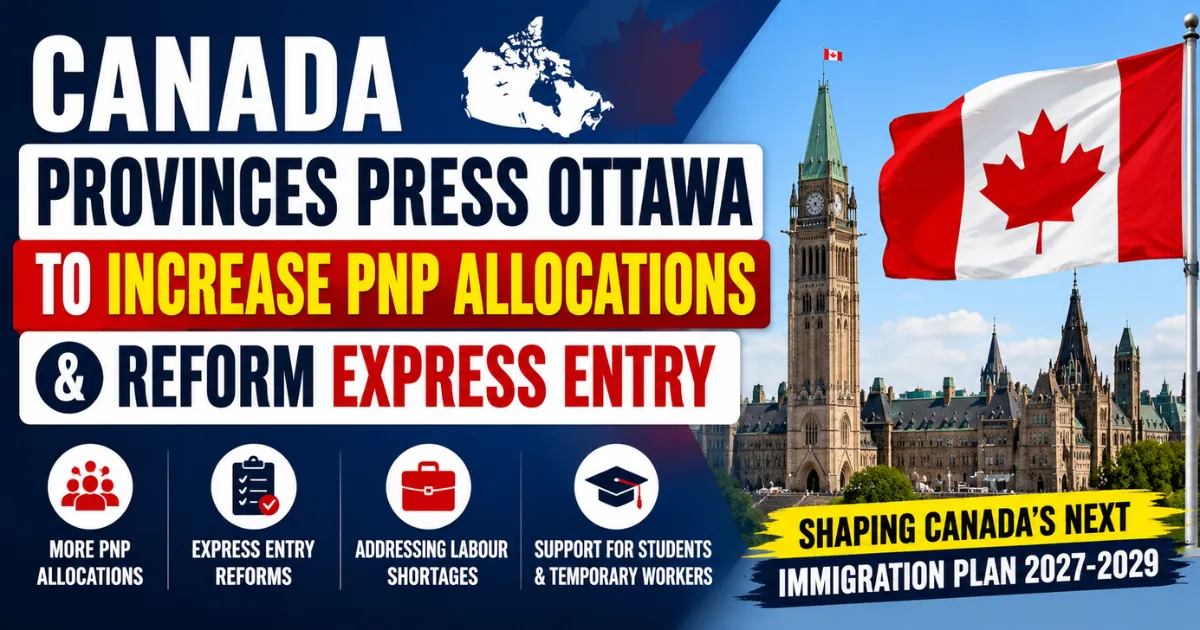
Many people planning to move to Canada keep a close eye on every immigration update because even a small policy change can affect their future plans. If you are waiting for a Provincial Nominee Program invitation or hoping to receive an Express Entry invitation, the latest discussions between Canada’s federal and provincial governments are worth knowing.
While no new immigration rules have been announced yet, provincial leaders have made it clear that they want a bigger role in deciding how skilled workers are selected. These discussions could help shape Canada’s next Immigration Levels Plan for 2027 to 2029.
Provinces Want More Provincial Nominee Program Allocations
During a recent meeting of immigration ministers from across Canada, provinces and territories asked the federal government to increase Provincial Nominee Program allocations.
According to provincial leaders, the PNP is one of the best ways to fill local job shortages because each province can choose workers who match its own labour market needs.
Several provinces believe their current nomination limits are not enough. They say employers in many industries are still struggling to find skilled workers, but limited PNP spots make recruitment more difficult.
The provinces also requested a clearer explanation of how annual PNP allocations are decided. They believe better planning would help them prepare long term immigration strategies and respond more quickly to changing workforce demands.
Express Entry May Continue To Evolve
Express Entry was another major topic during the meeting.
Although no official changes were announced, ministers agreed that the system should continue improving so it can better support Canada’s regional labour market needs.
Over the last few years, Express Entry has already changed with category based invitations and a stronger focus on candidates who have Canadian work experience. The latest discussions suggest that more updates could be considered in the future if they help federal and provincial immigration programs work together more effectively.
For now, applicants do not need to take any immediate action because the current Express Entry system remains unchanged.
More Support For Temporary Residents Already Living In Canada
Another important discussion focused on people who are already living in Canada on temporary status.
Provincial ministers believe that international students and temporary foreign workers who have already settled into Canadian communities should have better opportunities to become permanent residents when their skills match local workforce needs.
The idea is to make better use of people who are already contributing to Canada’s economy instead of depending only on new arrivals from outside the country.
This approach also supports the federal government’s goal of keeping immigration levels more balanced while helping employers fill important job vacancies.
Provinces Want A Bigger Voice In Student Immigration
International students were also part of the discussions.
Provincial governments said they want to continue working with Ottawa on improving the Post Graduation Work Permit Program.
They believe graduates with skills needed in local industries should have better opportunities to remain in Canada and contribute to regional economies after completing their studies.
This comes after several recent federal changes related to international students and post graduation work permits that were introduced to better match Canada’s workforce requirements.
Settlement Services Need More Funding
Immigration is not only about bringing newcomers into Canada. Helping them settle successfully is also an important part of the process.
Provincial ministers said settlement services such as language training, employment support, and community programs require additional federal funding.
They explained that strong settlement support helps newcomers find jobs faster, adjust to life in Canada, and contribute to the economy over the long term.
According to the provinces, funding should reflect the growing responsibilities they have in helping newcomers build successful lives after arrival.
Canada Continues To Support Francophone Immigration Outside Quebec
The meeting also included discussions about growing French speaking immigration outside Quebec.
Federal, provincial, and territorial governments agreed that this remains an important part of Canada’s long term immigration strategy. Officials are continuing work on a shared action plan that aims to increase the number of French speaking permanent residents in provinces and territories outside Quebec.
Canada has already set a long term goal of increasing Francophone immigration outside Quebec by 2029. Provincial leaders believe this will help strengthen French speaking communities while supporting local economies and labour markets.
What This Meeting Means For Future Immigration Plans
No new immigration policies were introduced during the meeting, but the discussions give a clear idea of what provinces want to see in the future.
Their main requests include:
- More Provincial Nominee Program allocations.
- Better transparency on how PNP quotas are decided.
- Future improvements to Express Entry.
- Stronger pathways for temporary residents already in Canada.
- Better alignment of student immigration with regional workforce needs.
- More settlement funding for newcomers.
Whether the federal government accepts these requests will become clearer when it prepares Canada’s Immigration Levels Plan for 2027 to 2029.
Until then, all existing immigration programs continue to operate under the current rules.
What Immigration Applicants Should Do Now
If you are planning to apply for Canadian immigration, there is no need to change your plans because of this meeting alone.
Instead, applicants should continue following the current eligibility rules while keeping an eye on future government announcements.
A few simple steps can help you stay prepared:
- Keep your Express Entry profile updated.
- Follow official immigration announcements before making any decisions.
- Check Provincial Nominee Program opportunities in different provinces.
- Keep important documents ready for future applications.
- Avoid relying on unofficial immigration rumours shared on social media.
Being prepared today can make it easier to respond if new immigration policies are announced later.
Common Mistakes To Avoid
Many applicants become worried whenever immigration discussions make headlines. However, it is important to separate policy discussions from official rule changes.
Here are a few mistakes to avoid:
- Do not assume new immigration rules have already started.
- Do not submit applications based on online rumours.
- Do not expect PNP allocations to increase until the federal government makes an official announcement.
- Always verify immigration updates through trusted government sources before taking action.
FAQ
Provincial governments believe the Provincial Nominee Program helps them select skilled workers who match local labour shortages. They say larger allocations would allow them to respond more effectively to employer demand.
No. The discussions did not introduce any new Express Entry rules. The meeting only showed that governments are considering possible improvements for future immigration plans.
Many temporary workers already have Canadian work experience and skills that employers need. Provincial governments believe giving eligible workers a pathway to permanent residence can help fill labour shortages.
Provincial leaders want work permit policies to better support graduates whose skills match regional labour market needs. This could help retain more qualified graduates across Canada.
At this time, applicants should continue following the current immigration rules. Any future changes will only take effect after official government announcements.
Fact Check
- This article is based on discussions held between federal, provincial, and territorial immigration ministers regarding Canada’s future Immigration Levels Plan.
- No new immigration policy or program changes have been officially announced at this stage.
- Immigration applicants should continue following current government rules until any future updates are formally confirmed.
Final Thoughts
The latest discussions show that Canadian provinces want a stronger role in shaping economic immigration. Their focus remains on increasing Provincial Nominee Program allocations, improving Express Entry, supporting temporary residents, and attracting skilled workers who meet regional labour needs. While no immediate changes have been announced, these conversations could influence Canada’s next Immigration Levels Plan. Applicants should continue following current immigration rules and watch for official updates in the coming months.
Disclaimer: This article is provided for general news and informational purposes only. It should not be considered legal or immigration advice. Immigration policies can change over time. Readers are encouraged to check official Government of Canada announcements or consult a licensed immigration professional before making important immigration decisions.